Demonology: what it studies and where the doctrine of demons originated
Demonology: What It Studies and Where the Teaching of Demons Originated
Demonology is not just a collection of frightening names and rituals. It is a complex system of knowledge that has been built over millennia across different cultures. For the modern person interested in esotericism, demonology opens the door to understanding one's own shadows and hidden forces. In this article, we will examine what demonology truly is, where it came from, and how to apply this knowledge consciously, without falling into superstition and fear.
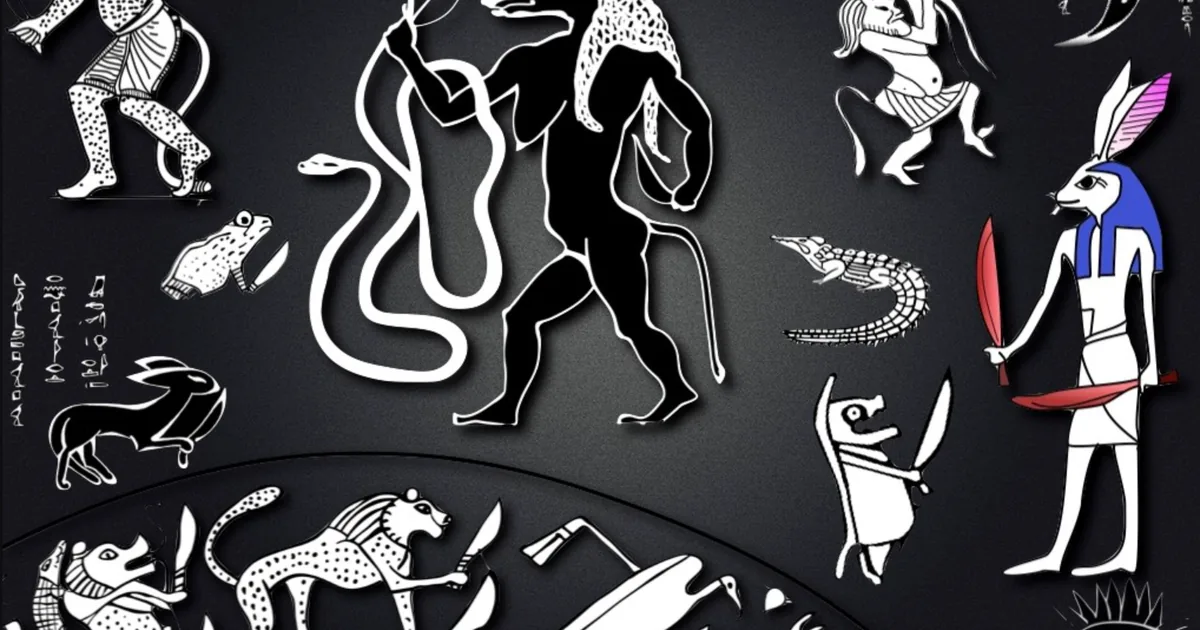
The Origins of Demonology: From Ancient Spirits to Christian Demons
The word "demon" comes from the Greek "daimon," which originally simply meant "spirit" or "divine force." In Ancient Greece, demons were intermediaries between gods and humans, and they could be both good and evil. Socrates, for example, spoke of his "daimon" as an inner voice that warned him against mistakes. This is an important point: demonology was not originally a teaching about evil, but rather about invisible entities that influence our lives.
Christianity radically changed the perception of demons. All pagan deities and spirits were declared to be demons, servants of the devil. Thus, demonology turned into the "teaching of evil spirits." In the Middle Ages, monks and theologians compiled detailed classifications of demons, their hierarchies, abilities, and methods of exorcism. These works, such as the "Malleus Maleficarum" (Hammer of Witches), were aimed at combating heresy, but they also gave rise to the Western demonological tradition.
Interestingly, in other cultures — in Buddhism, Hinduism, and shamanism — demons are not always viewed as absolute evil. They can be wrathful deities, protectors, or simply nature spirits. This suggests that demonology is not a single discipline, but rather a collection of beliefs about the dark aspects of existence, which each culture interprets in its own way.
For the modern seeker, it is important to understand: demons are not necessarily evil monsters from horror films. From the perspective of esotericism and psychology, demons can symbolize our internal conflicts, suppressed emotions, fears, and addictions. Working with them is working with one's own shadow, with those parts of ourselves we do not want to acknowledge.
Demonology in Esotericism: From Kabbalah to Modern Magic
In esoteric traditions, demonology holds a special place. In Kabbalah, for example, there is the teaching of the Qliphoth — "shells" — which represent the dark aspects of divine manifestation. These forces are not evil in their pure form, but their incorrect use can lead to destruction. Kabbalists worked with these energies to achieve spiritual purification and wholeness.
In Western magic, especially in the grimoire tradition, demons were summoned to gain knowledge, power, or material benefits. Grimoires such as "The Lesser Key of Solomon" contain detailed instructions for summoning and subduing demons. However, these practices required immense preparation and willpower. Without proper understanding and protection, they could be dangerous — not because demons "kill," but because an unprepared person might not handle the energies they awakened.
Modern magic and esotericism offer a safer and more conscious approach. Instead of summoning demons, we can study their archetypes and symbols to understand our own internal processes. For example, the demon Mara — the nightmare — can symbolize our fears and anxieties. Working with this archetype can help us see what we are truly afraid of and find ways to cope with those fears.
Demonology is also closely connected to astrology: the dark aspects of planets, such as Saturn in a challenging position, can indicate karmic lessons and inner demons we are meant to face. Astrologers use this knowledge to help people recognize their weaknesses and points of growth.
It is important to remember that demonology is not a call to worship evil, but a way to understand the dark sides of life. As Carl Jung said, "Until you make the unconscious conscious, it will direct your life and you will call it fate." By studying demons, we take a step toward awareness.
Key Symbols and Images in Demonology
Demonology is a language of symbols. Each demon, spirit, or dark image has its own meaning and can manifest in our lives in a specific way. Here is a table to help you navigate the main symbols:
| Symbol / Image | Traditional Meaning | Manifestation in Life | What to Do |
|---|---|---|---|
| Serpent | Temptation, wisdom, hidden knowledge | Trust issues, intrigue, desire for the forbidden | Acknowledge your true desires, do not fear change |
| Fire | Passion, destruction, transformation | Anger, burnout, sudden changes | Channel energy into creativity, learn to manage emotions |
| Darkness | The unknown, fear, mystery | Feelings of anxiety, a sense of dead end | Explore your fears, use meditation for clarity |
| Goat | Fertility, stubbornness, sacrifice | Stubbornness, resistance to change, guilt | Develop flexibility, forgive yourself |
This is only a small part of the images. Each of them can be a key to understanding yourself. If you notice that a certain symbol frequently appears in your life — in dreams, in art, in random events — perhaps your subconscious is trying to tell you something.
For example, if you constantly dream of a serpent, it may indicate unfulfilled desires or a fear of change. Instead of panicking, try asking yourself: "What do I want to do but am afraid to?" The answer may be unexpected.
Practical step: keep a symbol journal. Write down which images attract or frighten you, and analyze their connection to your life situations. This will help you understand yourself better.
Myths and Reality: How to Avoid the Trap of Superstition
There are many myths surrounding demonology that can confuse and even harm. Let us examine the most common ones.
| Common Myth | Why It Is Not True | What Is Actually True |
|---|---|---|
| Demonology is devil worship | Demonology is the study, not worship. Most researchers of demons are not Satanists. | Demonology can be an academic discipline, just like theology. It studies the phenomenon of belief in demons. |
| Summoning a demon can bring wealth and success | Grimoires often promise this, but in practice such rituals are dangerous and unpredictable. | Working with demonic energies is a complex spiritual practice requiring preparation. It is better to focus on inner growth. |
| Demons are always evil beings | In different cultures, demons can be neutral or even benevolent. | Many spirits called demons were formerly pagan deities. They are not the embodiment of evil. |
It is important to understand that demonology is not a toy. But neither is it something to fear. Treat it as a tool for self-knowledge, not as a means to achieve material goals.
If you feel you need protection from negative influences, it is better to turn to proven practices: meditation, space cleansing, energy work. Do not attempt to summon demons without deep understanding.
Practical step: if you have encountered a negative experience related to demonology (watching horror films, reading scary stories, etc.), perform a cleansing: take a shower, light a candle, say an affirmation. This will help restore a sense of safety.
Demonology as a Tool for Self-Discovery: Working with the Shadow
One of the most valuable aspects of demonology is its ability to help us meet our shadow. The shadow consists of those aspects of personality we reject: anger, envy, fears, weaknesses. Jung argued that until we acknowledge our shadow, it will control us from the subconscious.
In this context, demons become archetypes of our internal conflicts. For example, the demon Lilith symbolizes defiance, sexuality, and independence. If you struggle with these qualities in yourself, you may project them onto others or suffer from internal conflict. Working with the Lilith archetype can help you accept your power and independence.
How to practice: choose a demon or dark image that evokes strong emotions in you. Study its history and symbolism. Then reflect on what qualities it embodies and how those qualities manifest in your life. Ask yourself: "What do I fear in this image?", "What is it trying to tell me?", "How can I integrate these qualities into my life in a healthy way?"
This is deep work, and it requires honesty with yourself. Do not be afraid of the dark sides — they are part of us. Accepting them makes us whole.
The "Dialogue with a Demon" Practice for Recognizing Internal Conflicts
One of the safe techniques you can use is a meditative dialogue with a demon. It helps uncover internal conflicts and find ways to resolve them.
Step 1. Sit comfortably, close your eyes, take several deep breaths to relax.
Step 2. Imagine that an image appears before you that you consider your "demon" — it could be a creature, a face, or simply a dark spot. Do not resist; allow it to be.
Step 3. Ask it: "Who are you?" and "What do you want to tell me?" Listen for the answer — it may come as words, feelings, or images.
Step 4. Thank the image and gradually return to reality. Write down your experience in a journal.
This practice helps you become aware of the parts of yourself you ignore. For example, if your "demon" speaks of anger, perhaps you are suppressing it, and this is hindering your life. Awareness is the first step toward transformation.
Remember, this is not summoning a real demon, but working with your own subconscious. Therefore, it is safe if you approach it with respect and a willingness for self-analysis.
Demonology is a teaching that can become a powerful tool for personal growth. By studying dark images, we learn to understand ourselves, our fears, and desires. And this makes us stronger and more conscious.
Light in the Shadow: Your Path to a Conscious Life
Demonology, like any esoteric teaching, is not an end goal but a key to the door behind which your true self lies hidden. We have traveled a long path: from ancient spirits to modern archetypes, from fear of the unknown to respectful dialogue with our own shadow. It is important to remember: this knowledge is not a reason for anxiety, but an invitation to deep self-discovery. When we stop fearing dark images and begin to study their symbolism, we transform fear into wisdom and chaos into harmony.
Esotericism in general and demonology in particular teach us one thing: everything we see outwardly is a reflection of our inner world. Demons, like angels, are parts of ourselves awaiting recognition and integration. The practices at EXETERIC help you gently and safely explore these depths without losing touch with reality. We do not urge you to dive headfirst into the abyss of the unknown; we invite you to go step by step, with respect for yourself and the world.
If you feel ready to continue your studies, check out the EXETERIC blog — there you will find many articles on magic, symbolism, and self-discovery. And to better understand your inner demons, pay attention to the astrology section: the positions of the planets can tell you much about your karmic tasks and hidden talents. Remember that every zodiac sign carries both light and shadow, and it is their balance that makes us whole.
Do not fear the incomprehensible — calmly investigate it. Start small: observe your dreams, write down recurring symbols, ask yourself: "What is my fear trying to tell me?" Practice consciously, with respect for tradition, and you will see how inner demons turn into allies. May the light of your awareness dispel the darkness of ignorance, and may the path to yourself become the most fascinating adventure of your life.
Frequently Asked Questions
How is demonology different from Satanism?
Demonology is an academic and esoteric discipline that studies the nature, hierarchy, and symbolism of demons across various cultures. It does not involve worshiping or venerating these entities. Satanism, on the other hand, is generally a religious-philosophical teaching that either worships Satan as a deity or uses his image as a symbol of freedom and individualism. A demonologist can study demons without any religious affiliation, while a Satanist consciously chooses a Satanic ideology. Thus, demonology is the study of dark archetypes, while Satanism is a faith or philosophy built around a specific image.
Can demonology be safely studied on one's own?
Yes, it can, if approached sensibly and cautiously. Studying demonology as history, mythology, and psychology is completely safe. Read books, analyze symbols, keep a journal — this requires no special rituals. However, if you decide to practice summonings or rites described in grimoires, there are risks: an unprepared person may encounter strong emotions or even psychological issues. Therefore, beginners are advised to study theory rather than experiment with practices. It is better to start with meditations and self-analysis, and if you feel the need for guidance, turn to an experienced mentor or use proven methods, such as the practices at EXETERIC.
Which books on demonology should a beginner read?
For a beginner, it is important to choose books that combine historical and psychological approaches, rather than simply listing demon names. We recommend starting with "Demonology: History and Modernity" — an overview work that explains the evolution of beliefs about demons. Also useful is "Dictionary of Demons" by Michel Vandenbeken — it contains brief descriptions but with an emphasis on symbolism. From the classics, you can take the "Malleus Maleficarum," but remember that it is a historical document, not a practical guide. For a deep understanding of shadow psychology, turn to the works of Carl Jung, especially "Aion: Researches into the Phenomenology of the Self." These books will help form a conscious perspective on the subject.
How do I know if I have an inner demon, and what should I do about it?
An inner demon is a metaphor for suppressed emotions, fears, or conflicts that affect your life. Signs of its presence include: recurring negative scenarios, strong reactions to certain people or situations, an inner voice that criticizes or pushes you toward destructive behavior. To deal with it, start with awareness: keep a journal, note triggers, ask yourself "What am I feeling and why?" Then practice acceptance — do not judge yourself, but explore. The "Dialogue with the Shadow" meditation will help you hear your inner demon. If you feel you cannot cope, consult a psychologist — it is just as much a tool as esotericism. Remember: the main goal is not to destroy the demon, but to integrate its energy into your personality.