Spiritual awakening: secrets of the inner world
What is spiritual awakening and why is it happening right now?
Spiritual awakening is not a mystical call from movies where you suddenly start seeing auras or talking to spirits. It is a much subtler and deeper process that touches the very structure of your perception of reality. Simply put, spiritual awakening is the realization that you are not just your name, profession, and set of habits, but something greater, connected to the deep currents of life and consciousness. It is the moment when you stop automatically reacting to the world and begin consciously choosing how to respond to it.

Why is it happening right now? We live in an era of noise and existential silence. On one hand, we are surrounded by an endless stream of news and stimuli; on the other, a growing sense of disconnection from ourselves and nature. Spiritual awakening often begins as a reaction to this inner crisis, as an attempt to find a foothold in a world that seems to be losing meaning. This is not weakness but, on the contrary, a sign that your psyche and energy body are beginning to operate on a subtler level, demanding greater honesty and authenticity.
From an esoteric perspective, this awakening is linked to the activation of certain energy centers, especially the heart and throat chakras, which govern connection with oneself and the expression of truth. Psychology sees in this process a transformation of the ego structure, a transition from identification with social masks to a more whole Self. It is important to understand: this is not a one-time event but a path that requires patience and honesty. If you feel that something in your life is "off" but cannot explain what — perhaps this is the first sign pointing toward a deeper understanding of yourself.
How to begin spiritual awakening? The first step is not in seeking complex rituals but in the simple practice of mindfulness. Try to set aside 10 minutes each day for quietly observing your thoughts and emotions, without judgment. This could be meditation, journaling, or simply a mindful cup of tea. The goal is to create space where you can hear your inner voice, drowned out by daily hustle. Remember that spiritual awakening is not a race but a process, and every step, even the smallest, matters.
Signs and symptoms: how to recognize that something inside you is changing
Signs of spiritual awakening can be very diverse, and they are often confused with ordinary life changes or even health issues. However, there are several key symptoms that point to a deeper shift in perception. One of the most common is heightened intuition. You may begin to "know" things without logical explanation, or feel others' emotions as your own. This is not magic but the result of your subconscious and energy body working more harmoniously, picking up subtle signals that previously went unnoticed.
Another important symptom is a feeling of detachment from the familiar world. You may feel that your old hobbies, relationships, or work no longer bring the same satisfaction. This is not depression but a natural stage of spiritual awakening, when you stop fitting into old patterns and seek new, more authentic ways of interacting with the world. This is often accompanied by a desire for solitude, a need for silence and reflection. This is not withdrawal but a necessity to reset your energy system.
Physical symptoms are also possible: headaches, sleep disturbances, sudden bursts of energy, or, conversely, fatigue. In esotericism, this is explained by the restructuring of energy flows, especially if the awakening affects the root or sacral chakra. Psychology sees this as a manifestation of stress from ego transformation. It is important not to panic and not to attribute everything to "curses" or negative influences. If symptoms are severe, it is worth turning to grounding and protection practices, as well as consulting a doctor to rule out medical causes.
The table below will help you navigate the main manifestations and distinguish them from banal problems:
| Manifestation | Possible cause | How to distinguish from illness | What to do |
|---|---|---|---|
| Heightened intuition | Activation of higher chakras | Intuition does not cause anxiety but brings clarity | Keep a journal of intuitive feelings, test them in practice |
| Feeling of detachment | Transition to a new level of consciousness | No apathy, but a need for something new | Try new practices, such as meditation or creativity |
| Physical symptoms | Restructuring of the energy body | Symptoms do not intensify over time and do not interfere with life | Grounding: walks in nature, working with clay, warm baths |
| Change in social circle | Vibrational mismatch | You are not avoiding people but seeking deeper connections | Be open, but do not be afraid to say "no" to what drains you |
It is important to remember that spiritual awakening is not an illness but a process of growth. Signs may come and go, and not all of them necessarily manifest in everyone. The main thing is to approach them with curiosity rather than fear. If you notice these changes in yourself, perhaps it is worth deepening your understanding of your human design to see how your unique type responds to transformation.
Stages of spiritual awakening: from the first push to integration
Stages of spiritual awakening are not a strict sequence but rather a wave-like process, where each stage has its own features and challenges. The first stage is often a crisis or a "point of no return." This could be the loss of a loved one, job loss, illness, or simply a deep existential "what next?" This spiritual awakening crisis is not a punishment but a push that forces you to ask questions you previously had no time or courage for. This is where the journey to authenticity begins.
The second stage is exploration and search. You start reading books, attending practices, trying meditation or astrology. This is a time of experimentation when you seek your own language for understanding what is happening to you. It is important not to get bogged down in information and not to try to apply all practices at once. Better to choose one direction, such as working with dreams through dream interpretation, and practice it regularly, observing changes in your perception.
The third stage is integration. You begin to apply new understanding in daily life. This is the hardest part because old habits and beliefs resist change. You may encounter misunderstanding from loved ones or your own doubts. Here, mindfulness practice and community support help. Do not be afraid to turn to trusted sources, such as articles on magic and self-discovery, where you can find practical advice and stories from other people.
The fourth stage is service and sharing experience. When you have gone through transformation and integrated it, a desire arises to help others. This is not missionary work but a natural expression of your new awareness. You can share your experience in conversations, create content, or simply be more attentive and compassionate toward those around you. Remember that spiritual awakening is not about superiority but about connection and mutual understanding.
| Stage | Main theme | Typical challenges | Practical tool |
|---|---|---|---|
| Crisis | Loss of old foundations | Fear, confusion | Journaling fears and questions |
| Exploration | Search for new tools | Information overload | Choosing one practice and doing it regularly |
| Integration | Application in life | Resistance from ego and environment | Mindfulness practice in daily activities |
| Service | Helping others | Temptation to impose your path | Listening without advice unless asked |
Each stage is unique, and you should not compare your path with someone else's. Spiritual awakening is a personal journey, and its pace is determined by your readiness for honesty and change. If you are at the beginning of the path, do not rush: every experience, even the most difficult, carries a lesson.
Spiritual awakening and crisis: how not to break on the path to yourself
Spiritual awakening crisis is an inevitable part of the journey, but not a reason for panic. This crisis arises when the old model of the world collapses and a new one has not yet formed. You may feel lost, irritated, or even furious. This is normal: your ego defends itself against change because it fears losing control. It is important to understand that crisis is not a sign that you are doing something wrong but, on the contrary, a sign that you are on the right path, because true growth requires the destruction of old structures.
One of the main traps during this period is isolation. You may feel that no one understands you and begin avoiding communication. However, this is exactly when it is important to find support. This could be a trusted friend, a practitioner, or even an online community where you can openly talk about your experience. You do not necessarily need to seek a "guru" — enough people who listen without judgment. If you work with esoteric tools, try a Tarot spread or runes to get clues about the nature of your crisis and ways to overcome it.
A practical step for getting out of crisis is grounding. When you feel yourself "floating away" into anxiety or depression, return to the body. This could be physical activity, working with clay, cooking, or simply conscious breathing. Grounding helps restore connection with the physical world and reduce the intensity of emotions. It is also useful to keep a journal, writing down your experiences and observations — this helps structure chaos and see patterns.
Another aspect is working with fear. Fear is a natural reaction to the unknown, but it should not govern your decisions. Try the practice of "naming fear": when you feel anxiety, name it specifically (for example, "I am afraid of losing my job" or "I am afraid of being alone"). This helps separate fear from your personality and view it as a temporary guest. Over time, you will learn to notice fear before it takes over and choose a conscious response instead of a reactive one.
How to begin spiritual awakening: practical steps for a conscious path
How to begin spiritual awakening is the question asked most often, and the answer is simpler than it seems. You do not need to wait for thunder from the sky or a special sign. Awakening begins with something small: with the decision to dedicate time to yourself and your inner world. The first step is the practice of mindfulness. Choose one action per day that you will perform fully present: brushing your teeth, drinking coffee, taking a walk. Notice your thoughts, emotions, and bodily sensations without trying to change them. This trains your attention and creates space for inner dialogue.
The second step is working with intention. Before starting any day or important task, ask yourself: "What do I want from this experience?" This is not about control but about clarity. Intention is like a compass that helps you stay on course when there is noise and chaos around. Try writing down your intention in the morning and in the evening assess how well you followed it. Over time, you will notice how this changes the quality of your decisions and relationships.
The third step is exploring yourself through esoteric tools. This is not about faith but about curiosity. For example, you can study your natal chart in the astrology section to understand your natural talents and challenges. Or try the matrix of fate calculator to see karmic tasks and points of growth. The main thing is to treat these tools as a mirror, not a verdict. They help you see what is already inside but was hidden behind daily concerns.
The fourth step is creating a ritual. A ritual is not magic in the mystical sense but a way to structure your attention and energy. This could be lighting a candle in the morning with intention, an evening card spread, or simply sitting quietly by the window with a cup of tea. Ritual helps switch from "autopilot" mode to mindfulness mode. You do not have to do it every day — start with once a week and observe the effect. Over time, ritual will become a natural part of your life, helping you stay connected with yourself.
Spiritual awakening experience: stories and observations from the path
Spiritual awakening experience is not an abstraction but living stories of people who have gone through this path. Let us look at a few examples so you can see how awakening manifests in real life. The first story is about a 35-year-old woman who, after a divorce, felt deep emptiness. She started with a simple practice: every morning she wrote down three things she was grateful for. After a few months, she noticed her perception had changed — she began noticing beauty in small things and clinging less to the past. This was her first step toward mindfulness, without any complex rituals.
The second example is a 42-year-old man, a successful entrepreneur, who faced burnout. He turned to astrology not for predictions but for understanding. After studying his natal chart, he saw that his nature required more creativity and less struggle. This became the push for change: he began allocating time for drawing and meditation, which helped him restore energy and find new meaning in work. His experience shows that spiritual awakening can be pragmatic and practical, without requiring a rejection of worldly life.
The third story is about a 17-year-old teenager who began noticing repeating numbers and symbols. Instead of being afraid, he started keeping a journal and searching for information. Through the EXETERIC dream book, he learned to interpret his dreams, which turned out to be the key to his subconscious fears and desires. This experience helped him better understand himself and his relationships with his parents. The teenager's story reminds us that spiritual awakening has no age and can begin at any moment in life.
These examples show that spiritual awakening is not about supernatural abilities but about deepening the connection with yourself and the world. Each person's experience is unique, but they are united by one thing: readiness for honesty and change. If you see yourself in these stories, perhaps your path has already begun, and all that is needed is to consciously support it.
Practice "Three Questions": a quick tool for deepening mindfulness
One of the simplest and most effective tools for deepening spiritual awakening is the "Three Questions" practice. It takes only 5 minutes and can be used at any time of day, especially when you feel confusion or a need for clarity. The essence of the practice: ask yourself three questions and answer them honestly, writing the answers in a journal or simply saying them aloud. The first question: "What am I feeling right now?" This helps name emotions and separate them from thoughts. The second question: "What do I need right now?" This focuses on the needs of the body and soul, not external expectations. The third question: "What can I do to support myself?" This shifts from a passive state to an active one, offering a concrete step.
The "Three Questions" practice is especially useful in moments of crisis or doubt because it brings you back to the present moment and helps you see the situation without panic. It requires no special knowledge or tools — only your attention and honesty. Over time, you will notice that answers become deeper and your ability to understand yourself grows. This is the essence of spiritual awakening: not a race for knowledge but the development of the ability to hear yourself and consciously respond to your needs.
If you want to integrate this practice into your life, start with once a week, for example, on Sunday evenings. Gradually, you can increase the frequency, especially during stressful periods. Remember that the goal is not perfection but authenticity. Even if the answers seem simple or trivial, the very act of formulating them is already a step toward greater mindfulness and connection with yourself.
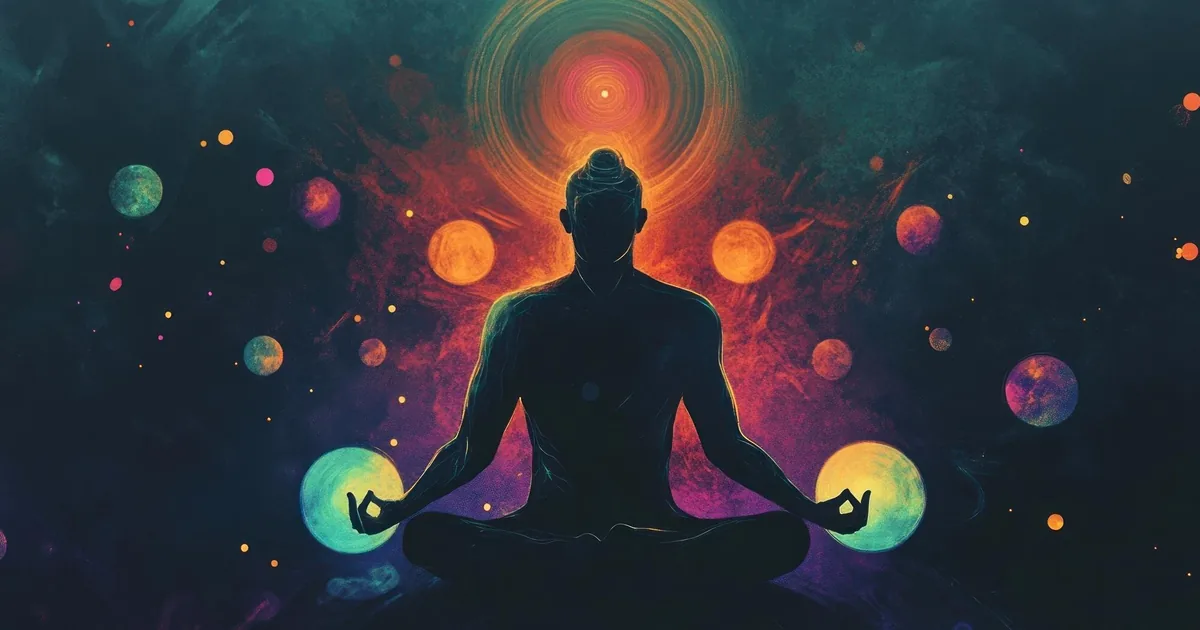
The road home: your awakening is your unique path
We have traveled a long way together — from the first doubts and questions of "what is happening to me?" to the understanding that spiritual awakening is not a verdict or an illness but a natural process of growth in your awareness. This is a path not to becoming someone else but to finally returning to your true self. Esotericism in this context is not a set of superstitions or a mystical haze but an ancient and simultaneously modern tool for self-knowledge. It helps us ask the right questions, to which logic does not always find answers, and hear the quiet voice of our intuition amid the information noise.
It is important to remember that no tool, whether astrology, tarot, or meditation, is a panacea. They are like a compass in a traveler's hands: they point the direction, but the steps are yours to take. Do not be afraid to experiment, try different practices, and, most importantly, trust your inner feeling. If something does not resonate — that is normal, it is simply not your tool at this stage. True awakening happens not in moments of ecstasy but in quiet moments of mindfulness, when you choose honesty with yourself, even if it is uncomfortable.
If you feel ready to take the next step but do not know where to begin, look into the EXETERIC practices. Here you will find not ready-made answers to all questions but honest tools and space for your own discoveries. You do not have to start with something grand — perhaps your first step is studying your zodiac sign to better understand your natural talents and challenges. Or it could be simply reading other articles on the EXETERIC blog, where the experiences of other people can become a mirror or a source of inspiration for you.
Remember: your path is unique, and there is no single correct route. The main thing is to walk with respect for yourself and the process. Do not rush, do not compare yourself to others, and do not fear the unknown. Esotericism is not about fear of mystery but about curiosity toward it. Allow yourself to be curious, ask questions, try practices mindfully and with ease. May your spiritual awakening be not a race for enlightenment but a quiet, confident walk toward your true self. We at EXETERIC believe that everyone is capable of finding their own key to the inner world, and we are here to support you on this path.
Frequently asked questions
Can spiritual awakening begin suddenly, without any prerequisites?
Yes, spiritual awakening can begin suddenly, but most often behind it lies an accumulated inner resource or a experienced crisis that became the last straw. This could be a loss, illness, deep disappointment, or even unexpected joy that makes you look at life anew. Suddenness is often an illusion, as the subconscious has long been preparing the ground for change; you simply did not notice the signals. The main thing in such a moment is not to panic and not to try to return everything to how it was, but to start with a simple mindfulness practice to understand what is happening inside.
How to distinguish a true spiritual awakening from ordinary stress or depression?
A true spiritual awakening, unlike depression, is not accompanied by a feeling of complete hopelessness and loss of interest in everything. It may cause discomfort, but inside there remains a deep sense of meaning and movement toward greater authenticity. Stress is often linked to external circumstances and passes after they change, whereas a spiritual crisis is an inner request for transformation that does not subside until you begin to hear it. If in doubt, it is important to consult a psychologist to rule out medical causes, and in parallel keep a journal of observations about your states.
Is it necessary for spiritual awakening to renounce worldly life, work, and relationships?
Absolutely not. Spiritual awakening is not an escape from reality but a deepening into it. It does not require giving up career, family, or pleasures, but it may change your attitude toward them. You will begin to seek greater authenticity and mindfulness in your actions, which may lead to changes but not to destruction. The main thing is to integrate new understanding into daily life rather than live in two worlds. This can manifest in more honest relationships, a conscious choice of profession, or simply the ability to find joy in small things without giving up big goals.
What simple practices can I start using right now to maintain mindfulness?
Start with the practice of mindful presence: choose one routine action per day (such as washing your face or drinking tea) and perform it with full focus on sensations. It is also useful to keep a short journal, writing down three things you are grateful for, or answering three questions: "What am I feeling?", "What do I need?", "What can I do for myself?" These simple actions train your attention and help you exit "autopilot" mode. Do not chase perfection — even five minutes of mindfulness a day is already a significant step on the path to inner clarity.