Spiritual development: signs and stages of awakening
What spiritual development really is
Spiritual development is not about becoming "holier than thou" or retreating into asceticism. It is a process in which a person gradually begins to see their life not as a chain of random events, but as a meaningful path. In esotericism, this is often called "awakening" — the moment when the inner compass begins to work more clearly, and external circumstances cease to be the main source of happiness or suffering.

Many people confuse spiritual development with accumulating knowledge: read a dozen books on esotericism, learned the terms — and consider themselves advanced. But in reality, spiritual development is the integration of experience. It is when knowledge becomes practice, and practice becomes a way of life. For example, you can know everything about chakras but continue to ignore your body's signals. Or study the laws of karma but fail to notice how every day you create new causes and effects through your actions.
The spiritual development of a person begins with the question: "Who am I really?" And this is not a philosophical question, but a quite practical one. The answer to it changes relationships, work, and habits. A person stops living on autopilot, begins to notice signs, synchronicities, and their own reactions. Gradually comes the understanding that spiritual development is not a separate sphere of life, but a way of perceiving everything.
It is important to note: spiritual development does not mean escaping reality. On the contrary, it is the ability to be here and now, to see beauty in the ordinary, to find meaning in everyday life. It is like tuning an antenna: the more precise the tuning, the clearer the signal. And that signal is your intuition, your inner voice, your connection to something greater than yourself.
Signs of spiritual awakening: how to know the process has begun
Awakening rarely happens like a bolt from the blue. Usually it is a series of changes that at first seem chaotic, but then come together into a picture. Here are several signs that indicate spiritual development is already in full swing.
1. Heightened sensitivity. You begin to react more acutely to the energy of places, people, even food. Crowded gatherings tire you out, and silence becomes a necessity. This is not misanthropy, but a natural reaction to overload — your nervous system and energy body are tuning into finer vibrations.
2. Reassessment of values. What once seemed important — career, status, material accumulation — loses its appeal. A desire appears to do what brings meaning, not just money. Many people during this period change professions, move away from megacities, or take up creative work.
3. Synchronicities. You increasingly notice coincidences that logic cannot explain. You think of a person — and they call. You seek an answer to a question — and find it in a randomly opened book. This is not "magic," but a manifestation of the fact that you are beginning to live in the flow, where the inner and outer mirror each other.
4. Desire for practice. A steady interest in meditation, yoga, and energy work emerges. This is not a tribute to fashion, but an inner need. You seek tools that will help calm the mind and hear yourself.
If you notice at least three of these signs in yourself, you can confidently say that the spiritual development of the individual has already begun. But what next? How do you not get lost on this path and walk it consciously?
Stages of spiritual development: from chaos to harmony
Spiritual development is not a linear process, but it can be divided into several conditional stages. Understanding these stages helps you not despair when it seems you are standing still, and not fall into euphoria when everything goes easily.
Stage 1: Disillusionment. It all begins when old supports crumble. A person realizes that external achievements do not bring inner satisfaction. This could be a midlife crisis, the loss of a loved one, losing a job — any event that forces the question: "Why do I live?"
Stage 2: Seeking. An active search for answers begins: books, seminars, teachers. A person tries different directions — from astrology to human design. This is a period of gathering information, and it is important, but there is a risk of getting stuck in it, turning spiritual development into collecting knowledge.
Stage 3: Practice. Understanding comes that knowledge without practice is dead. A person begins to meditate regularly, work with energy, and keep an observation journal. Gradually, practice becomes not a "burden" but a need.
Stage 4: Integration. Spiritual principles begin to manifest in everyday life. A person becomes calmer, more conscious, and their relationships improve. This does not mean problems disappear, but the attitude toward them changes.
It is important to understand that the stages can repeat cyclically. For example, after integration, a new crisis may follow that leads to a deeper level. This is normal — this is the spiral of development.
Spiritual development directions: how to choose your path
Today there are many spiritual directions: from classical religious traditions to modern esoteric systems. How do you not get confused in this diversity and choose what suits you?
First, trust your body and intuition. If while studying a teaching you feel an inner response, warmth, interest — that is a sign. If tension, fear, or boredom arises — perhaps this is not your direction. But do not rush to discard it: sometimes resistance indicates that there is an important lesson here.
Second, test practice in practice. Theory can be beautiful, but if you do not feel changes in your life after several months of practice, it is worth reconsidering the approach. Spiritual development should make you more whole, not more confused.
Third, study different systems. For example, astrology helps understand your strengths and weaknesses, and human design — how to make decisions. You can combine tools, creating your own unique path. The main thing is that it leads to greater awareness, not to dependence on a guru or system.
Remember that spiritual development directions are not about finding the "one true" teaching, but about finding what resonates with your soul. It is like tuning a musical instrument: each string must sound in unison with your inner melody.
Spiritual development of the family: how not to lose loved ones on the path
Often, having begun spiritual development, a person faces misunderstanding from the family. Loved ones may consider your interests strange, criticize, or mock them. How to maintain harmony in the family without giving up your path?
First, do not try to forcibly "enlighten" your relatives. Your example is the best sermon. If you become calmer, kinder, more attentive, they will notice and appreciate it. Talk about your practices, but without being pushy. Offer to meditate together or watch a film on a spiritual theme, but do not insist.
Second, respect the choices of others. If your spouse or children do not share your interests, it does not mean they are "behind in development." Everyone has their own path and their own timing. Your task is to create a space where everyone can be themselves.
Third, seek compromises. For example, if you want to go on a retreat and the family is against it, agree on a shorter version or combine vacation with practice. The spiritual development of the family is not about everyone sitting in meditation together, but about an atmosphere of respect and love prevailing in the home.
Remember that the spiritual path is not an escape from family, but a way to become better for it. If your practice makes you more irritable or detached, perhaps you are doing something wrong. True spiritual development fills the heart with love, not walls you off from loved ones.
Intellectual and spiritual development: the balance of mind and spirit
Intellect and spirituality are often opposed, believing that the mind hinders spiritual growth. However, this is not so. Intellectual and spiritual development is a harmonious combination of analytical thinking and intuitive perception. The mind can be an excellent tool if it does not become a tyrant.
How to develop the intellectual side of spirituality? First, study primary sources: sacred texts, philosophical works, the writings of modern consciousness researchers. This will help you form a holistic worldview, not a set of scattered beliefs.
Second, practice critical thinking. Do not take on faith everything that gurus or books say. Verify, experiment, ask questions. True spiritual development is not afraid of doubt — it uses it as fuel for growth.
Third, develop the capacity for reflection. Keep a journal, analyze your thoughts and feelings. This will help you see behavior patterns that hinder your life and consciously change them.
Intellectual and spiritual development is not about accumulating facts, but about the ability to see interconnections. When mind and intuition work together, you can make wise decisions that account for both logic and subtle energies.
The path of spiritual development: practical steps for beginners
If you feel ready to begin spiritual development but do not know where to start, here are several concrete steps that will help you get on the path.
Step 1: Create a morning ritual. Start the day with 10-15 minutes of silence. You can simply sit with closed eyes and observe your breath. This will help you tune into the day and hear your inner voice.
Step 2: Keep a gratitude journal. Every evening, write down three things you are grateful for. This will shift your focus from lack to abundance and begin to change your perception of reality.
Step 3: Study yourself through esoteric systems. For example, astrology can show your strengths and tasks, and the matrix of destiny — karmic lessons. This is not fatalism, but a map that helps you navigate.
Step 4: Practice mindfulness in everyday life. When you eat, feel the taste of the food. When you walk, feel the ground beneath your feet. These are simple but powerful practices that bring you back to the present moment.
Step 5: Surround yourself with like-minded people. Find a community where you can share experiences and receive support. This can be an online group or offline meetings. It is important that you feel accepted.
The path of spiritual development is a marathon, not a sprint. Do not expect instant results. Be patient with yourself and remember that every step, even the smallest, brings you closer to your true self.
What spiritual development is: myths and reality
There are many myths surrounding spiritual development that can confuse and even scare people away. Let us examine some of them.
| Common myth | Why this is not so | How it really is |
|---|---|---|
| Spiritual development is retreating from the world into a monastery | A monastery is just one form, but most people live in society | Spirituality can be practiced anywhere: at work, in the family, in transport |
| Spiritual development is only meditation | Meditation is one tool, but there are many other practices | It can be energy work, creativity, service, self-analysis |
| Spiritual development is becoming "white and fluffy" | Spirituality does not deny strong emotions and boundaries | It is the ability to be whole: both kind and firm and vulnerable |
What spiritual development is — it is not about becoming perfect, but about becoming real. It is a path to yourself that includes both light and shadow. Do not fear your imperfections — they are part of your unique pattern.
How to begin spiritual development: simple daily practices
If you are still wondering how to begin spiritual development, here are several simple but effective practices that can be incorporated into daily life.
Practice "Grounding." Every morning for 2-3 minutes, imagine roots growing from the soles of your feet, going deep into the earth. This helps you feel stability and connection to reality.
Practice "Energy shower." Visualize a stream of light (white or golden) washing over your body from top to bottom, washing away fatigue and negativity. This can be done before leaving the house or after a hard day.
Practice "Intention." Before starting any task, formulate an intention: "I do this with love," "I do this for the good of all." This fills actions with meaning and energy.
Practice "Gratitude." Before sleep, recall three good events of the day and mentally thank the universe (or God, if that is closer to you). This develops positive thinking and attracts more good things.
These practices will not take much time, but if you do them regularly, you will notice how your state changes. The main thing is not to turn them into an obligation, but to do them with pleasure.
Start small: choose one practice and do it for a week. Then add the next one. Gradually you will create your own unique ritual that will support you on the path of spiritual development.
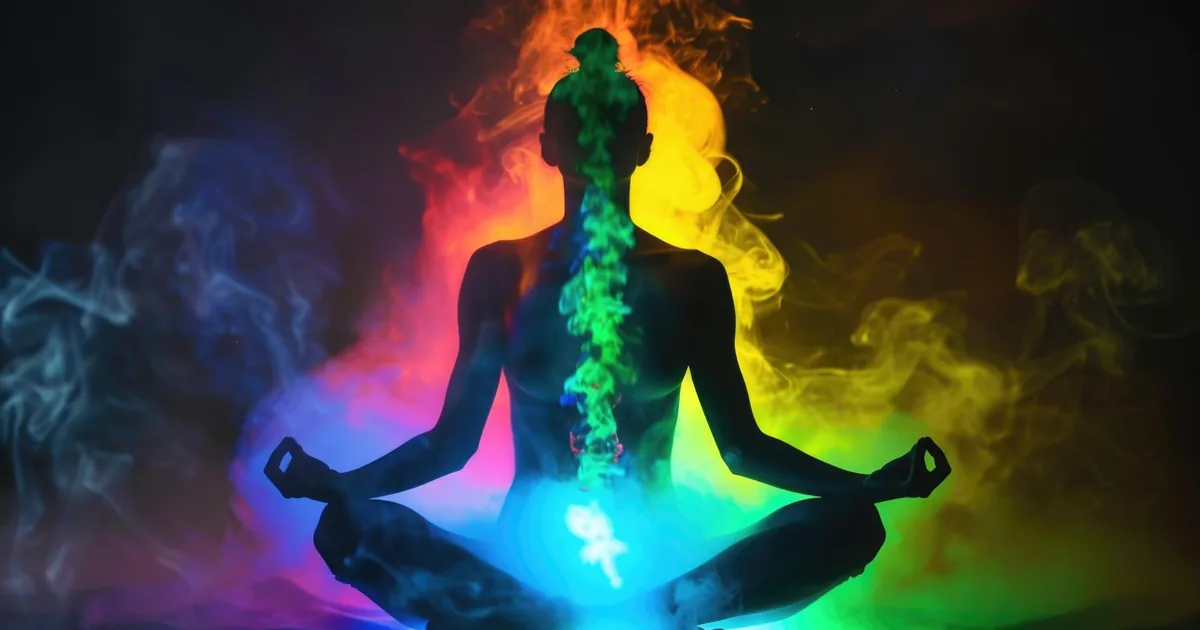
The path to yourself: how not to lose yourself in spiritual development
Spiritual development is not a race and not a competition. It is a path that everyone walks at their own pace, with their own discoveries and difficulties. The main thing is to remember that esotericism and spiritual practices are not a panacea for all ills and not a reason for fear. They are tools that help you better understand yourself, your desires, and your place in the world. They should not lead you away from reality, but on the contrary — make it more conscious and fulfilling.
If you feel confused or tired from the abundance of information, stop. Return to simple things: breath, silence, nature. The EXETERIC practices you will find on our website are created precisely to help you gently and gradually return to yourself without losing connection to everyday life. We believe that true transformation happens not in the mountains or in ashrams, but in ordinary life — in relationships, work, habits.
Do not fear the unknown. Instead of being frightened by new terms or unusual practices, try to understand them calmly, with respect and healthy curiosity. Look into your zodiac sign in the astrology section — perhaps you will find unexpected clues about your strengths there. Or read other articles about magic and self-discovery on the EXETERIC blog — there is plenty of material there to help you find your bearings on this path.
Remember: spiritual development is not about becoming someone else. It is about becoming yourself — real, whole, conscious. And may this path be joyful and inspiring for you. Start small: choose one practice that resonates with you and simply try it. And we will be there to support you at every step.
Frequently asked questions
How do I know that my spiritual awakening has begun?
Spiritual awakening often begins with the feeling that familiar life no longer brings satisfaction. You may notice that you have become more sensitive to your surroundings, people, and even food. Crowded gatherings begin to tire you, while silence, on the contrary, brings relief. A desire also appears to reassess your values: career and material goods take a back seat, and you want to do what brings meaning. If you notice recurring coincidences that are hard to explain by logic, and you develop a steady interest in meditation or other practices — these are sure signs that the awakening process is already underway.
How long does spiritual development take?
Spiritual development is not a final destination, but an endless path. It unfolds differently for everyone: some pass through the early stages in a few months, while others take years. It is important to understand that this is not a linear process — you may experience ups and downs, return to old habits, and move forward again. Do not compare yourself to others or set rigid deadlines. Better to focus on making practices part of your daily life and letting changes happen naturally. Remember that even small steps, taken regularly, lead to big transformations.
Can I engage in spiritual development without joining religious organizations?
Yes, of course. Spiritual development is not necessarily connected to religion or joining any organization. Many people practice meditation, yoga, energy work, or self-analysis independently, without attachment to a specific tradition. You can study different teachings, choose what resonates with you, and create your own system of practices. The main thing is that your path leads to greater awareness and harmony, not to dependence on external authorities. If you feel the need to connect with like-minded people, you can find interest groups, but this is not required. Your inner experience is the main guide.
What should I do if loved ones do not understand my spiritual development?
Misunderstanding from loved ones is a common challenge on the spiritual path. First of all, do not try to forcefully convince them or impose your views. The best way to show the benefits of spiritual development is your own example. If you become calmer, kinder, and more attentive, loved ones will notice. Talk about your practices, but without being pushy, and respect their right to their own choices. Seek compromises: for example, if you want to go on a retreat and the family is against it, agree on a shorter version or combine vacation with practice. Remember that your task is to create a harmonious space where everyone can be themselves, not to remake others.