The Soul After Death: What Esotericism and Religions Say
The Soul After Death: An Eternal Question Everyone Asks
Death is the only absolute certainty in our lives, and yet it remains the greatest mystery. What happens to consciousness when the body stops functioning? Does the personality disappear, or is there something that survives physical death? The question of what the soul after death truly is has troubled humanity since ancient times. Every culture, every religion, and every esoteric school offers its own answer. But is there something common in these answers? And how can we, modern people living in the age of technology but not having lost the thirst for the spiritual, approach this question consciously, without fear and prejudice?
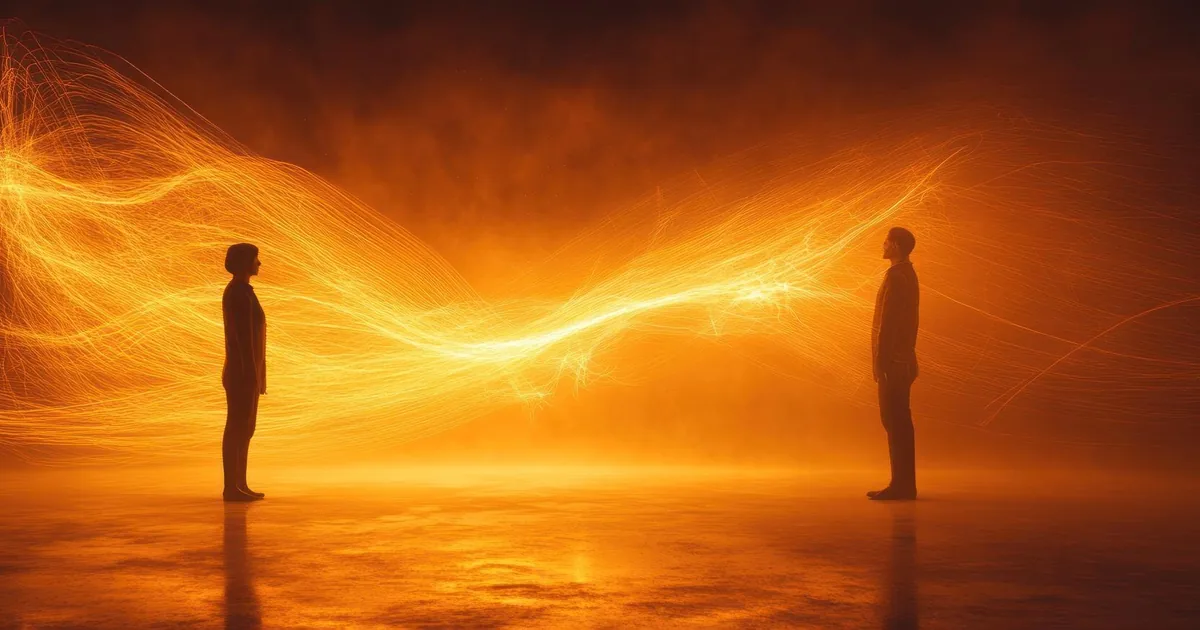
In this article, we will not impose a single point of view. We will examine what the major religions — Christianity, Islam, Buddhism, Hinduism — as well as esoteric teachings, from Theosophy to reincarnation practices, say about the soul after death. We will try to separate the wheat from the chaff: which of these ideas can be useful for our self-knowledge, and which are merely cultural heritage or superstition. Our goal is not to give a ready-made answer, but to offer tools for reflection so that everyone can form their own conscious attitude toward what happens to the soul after death.
The Soul or Spirit of the Deceased Person: What Is the Difference?
Before talking about the afterlife fate, it is important to define our terms. In esotericism and religion, the words "soul" and "spirit" are often used, but not always as synonyms. Understanding the difference between the soul and spirit of the deceased person can shed light on which aspects of personality survive after death.
In the Christian tradition, the soul is an immortal essence created by God that animates the body and carries within itself personality, feelings, and will. The spirit, in turn, is often viewed as the higher part of the soul, capable of communion with God. In Hinduism and Buddhism, the soul (atman) is an eternal, unchanging essence that reincarnates, while the spirit (jiva) is the individual manifestation of atman in the world of forms.
In esotericism, for example in Theosophy, the soul is seen as an intermediate link between the spirit (monad) and the physical body. The spirit is a spark of the Divine, eternal and unchanging, while the soul is accumulated experience, emotions, and thoughts that form individuality. After death, the soul, as an energy-informational structure, can persist for some time, and then either dissolves or transitions into a new incarnation, while the spirit returns to its source.
For practical understanding, we can draw an analogy: the spirit is like a radio wave, and the soul is like the music that this wave carries. The wave is eternal, but the melody can change from incarnation to incarnation. Thus, when we speak of the soul after death, we mean that part of us that accumulates experience and emotions, and which may continue to exist in some form.
What Happens to the Soul After Death: The View of World Religions
Religions offer different scenarios of posthumous existence. Let us examine the main ones to see common patterns and differences.
Christianity: Heaven and Hell as States of the Soul
In Christianity, the soul after death goes to a particular judgment, where its fate is determined until the Last Judgment. The righteous attain bliss in communion with God, sinners — suffering. However, modern theologians emphasize that heaven and hell are not so much geographical places as states of the soul, its closeness to or distance from God. The soul retains memory and individuality but is deprived of the ability to change its fate.
Islam: Barzakh and the Day of Resurrection
In Islam, after death the soul enters barzakh — an intermediate state until the Day of Judgment. There, the souls of the righteous experience peace, while sinners experience torment. On the Day of Resurrection, all souls will be resurrected in new bodies and will stand before Allah. The Quran describes paradise gardens and hellfire, but also emphasizes the mercy of God.
Hinduism and Buddhism: The Wheel of Samsara
In Hinduism, the soul (atman) reincarnates according to the law of karma. Life after death and past lives form a continuous cycle of rebirths (samsara), from which one can escape by attaining moksha (liberation). Buddhism, not recognizing an eternal soul, speaks of a stream of consciousness that transitions into a new existence. Importantly, in these traditions death is not an end but a transition, and how we lived our life determines the next incarnation.
Esotericism: Synthesis and a Practical Approach
Esoteric teachings, such as Theosophy, Anthroposophy, and the Roerich teaching, attempt to synthesize religious and scientific views. They assert that after death the soul passes through a series of states: first it becomes aware of itself in the subtle world, then it undergoes purification (purgatory), and then prepares for a new incarnation. Karma — the law of cause and effect — plays an important role. Esotericism offers practices for conscious preparation for death, such as death meditations, which help overcome fear.
Thus, despite the differences, all traditions agree that the soul after death continues to exist, and its state depends on the life lived. This gives us the opportunity to reflect: what are we doing now so that our soul may be at peace?
Life After Death and Past Lives: Evidence and Practices
Many people interested in esotericism ask themselves: does life after death and past lives truly exist? For some, this is a matter of faith; for others, a subject of research. In this chapter, we will examine what arguments and practices can help bring us closer to understanding.
Regression Hypnosis and Memories of Past Lives
One of the methods that allows one to gain experience of past lives is regression hypnosis. Under the guidance of a hypnotherapist, a person enters an altered state of consciousness and may recall events that are believed to have occurred in previous incarnations. Michael Newton, author of books on soul journeys, described based on regression sessions what happens between lives: the soul meets with spiritual guides, analyzes the past life, and plans the next one.
However, critics argue that such memories may be fantasies or the result of suggestion. Nevertheless, for many people such sessions become a therapeutic tool that helps work through fears and phobias. If you decide to try it, it is important to choose an experienced specialist and approach the process with an open but critical mind.
Meditations and Practices of Conscious Dying
In Tibetan Buddhism, there is the practice of phowa — the transfer of consciousness at the moment of death. It allows the practitioner to consciously leave the body and direct consciousness into a pure dimension. In Western esotericism, death meditations are common, such as vipassana, where the practitioner contemplates the decomposition of the body to realize impermanence. Such practices help reduce the fear of death and prepare the soul for the transition.
There are also techniques of "out-of-body experience" (OBE) that provide the experience of separating consciousness from the physical body. Many who have experienced this lose their fear of death, as they become convinced that consciousness can exist independently.
Scientific Research: What Does Science Say?
Science cannot prove the existence of the soul, but there are phenomena that baffle researchers. For example, studies of near-death experiences (NDEs) show that people who have survived clinical death describe similar scenes: a tunnel, light, meeting deceased relatives. Some scientists explain this as hallucinations of a dying brain, but others, like Dr. Pim van Lommel, believe that consciousness can exist independently of the brain.
There are also known cases of children who remember their past lives. Researcher Ian Stevenson documented thousands of such cases, where children gave precise details about the life of a person they could not have known. Although these cases are not strict proof, they make one think.
The Soul After Death in Esotericism: A Journey into the Subtle Worlds
Esoteric teachings offer detailed maps of posthumous existence. One of the most famous is the "Tibetan Book of the Dead" (Bardo Thodol), which describes the states (bardos) after death. According to this text, the soul after death passes through three stages: Chikhai Bardo (the moment of death), Chonyid Bardo (experiencing reality), and Sidpa Bardo (seeking a new birth). In each of them, the soul encounters visions that are projections of its own mind. If a person practiced mindfulness during life, they can recognize these visions and become liberated; otherwise, they will be reborn.
In Western esotericism, for example in Theosophy, seven planes of existence are described: physical, astral, mental, and so on. After death, the soul leaves the physical body and transitions into the astral world, where it lives out its desires and emotions. Then, after purification, it rises to the mental world, where it experiences its thoughts and ideas. Eventually, the soul rests in the causal body before incarnating again.
It is important to understand that these descriptions are not literal reality but symbolic maps that help navigate invisible processes. They can be useful for meditation and self-knowledge, but should not be taken as dogma.
The Soul or Spirit of the Deceased Person: How to Communicate with the Departed
Many people want to establish contact with deceased loved ones. There are practices and rituals that are believed to help the soul or spirit of the deceased person convey a message. But it is important to approach this with caution and respect.
Spiritualism and Mediumship
Spiritualist séances, mediums, automatic writing — these are all ways of contacting spirits. However, esotericism warns that such practices can be dangerous if conducted without proper preparation. The soul after death may be in a state of confusion, and an inexperienced medium may attract not the highest entities. Therefore, if you want to contact the departed, it is better to turn to a trusted specialist or use protective practices.
Prayers and Memorial Rites
Religions have rites that help the soul of the deceased find peace. In Christianity, these are requiem services; in Islam, reading the Quran; in Buddhism, transferring merit. It is believed that the prayers of the living can ease the soul's fate in the afterlife. From an esoteric point of view, our thoughts and intentions carry energy that can support the soul on its journey.
Dreams and Signs
The deceased often come to us in dreams. This may be a way for the soul to convey a message or simply a reflection of our longing. In the EXETERIC dream book, you can find interpretations of symbols related to the deceased. If you dreamed of a deceased loved one, try to remember the details: what they said, what emotions you experienced. Perhaps this is a clue for your life.
It is also believed that the deceased can send signs: coins, feathers, repeating numbers. It is important to be attentive and open, but not to become fixated on this. It is better to use such signs as a reminder of the love that continues to live.
Karmic Aspects: The Soul After Death and Its Tasks
In esotericism, it is believed that the soul after death does not simply rest but also analyzes the life lived, draws lessons, and plans the next incarnation. This process is connected with karma — the law of cause and effect. Karma is not a punishment but rather an opportunity for growth.
For example, if in this life you constantly encounter betrayal, perhaps your soul chose such an experience to learn forgiveness. Or if you feel an irresistible pull toward a certain culture or era, this may be an echo of a past life. Studying the matrix of destiny or astrology can help you understand your karmic tasks. In the matrix of destiny calculator, you can calculate your arcana and learn what lessons lie ahead of you.
Practical work with karma includes mindfulness, taking responsibility for one's actions, and developing virtues. For example, if you want to purify karma, you can practice charity, meditation, and forgiveness. It is important to understand that karma is not fatal: we can change it through our actions in the present.
Practical Steps for a Conscious Attitude Toward Death
Regardless of what you believe, you can prepare yourself for death and help your soul. Here are a few practical steps recommended by esotericists.
Meditation on Impermanence
Regular meditation on death helps reduce fear and fill life with meaning. A simple exercise: sit comfortably, close your eyes, and imagine that you are dying. Observe your emotions. Then release this image and return to the present moment. Such practice teaches us to cherish every moment.
Keeping a Dream Journal
Dreams can provide clues about your spiritual state and even past lives. Write down your dreams immediately upon waking, pay attention to recurring symbols. In dream interpretation, you can find much that is useful.
Studying Esoteric Teachings
Reading books on esotericism, attending seminars, and communicating with like-minded people broadens your horizons and helps form your own worldview. You can start by studying human design or astrology to better understand your nature.
The Practice of Gratitude
Gratitude is a powerful energy that purifies the soul. Every evening, recall three things you are grateful for. This will help you live in a positive key and accumulate good karma.
Remember that death is not an end but a transition. And how you live now determines what will happen to your soul after death. Be conscious, and you will attain harmony.
The Path to a Conscious Life: Esotericism as a Tool for Self-Knowledge
We have come a long way, exploring what religions and esoteric teachings say about the soul after death. Perhaps you have noticed that, despite differences in details, all traditions agree on the main point: death is not an end but a transition. And how we live our life directly influences what awaits us beyond the threshold. But instead of fearing this transition, we can use this knowledge to live more consciously and fully.
Esotericism is not a set of dogmas or a way to predict the future. It is a tool for self-knowledge that helps us look within ourselves, understand our true desires, work through fears, and find our place in the world. EXETERIC practices, such as meditations, energy work, studying symbols and dreams, allow us to gradually expand our consciousness and draw closer to understanding eternal questions. They do not give ready-made answers but open doors to our own insights.
If you feel that the topic of life after death causes you anxiety or curiosity, do not turn away from it. Instead, allow yourself to explore it calmly and respectfully. Start small: read articles about magic and self-knowledge in the EXETERIC blog, try simple meditations, observe your dreams. Perhaps you will discover amazing things about yourself and the world that will help you live more harmoniously.
Remember that each of us is a soul walking its own unique path. And this path does not end with the last breath. What we do today, what thoughts and feelings we cultivate, shapes not only our current life but also what comes after. Therefore, let us strive toward light, goodness, and understanding — and then our soul will be at peace, wherever it may find itself.
If you want to delve deeper into this topic, check out the astrology section on EXETERIC — perhaps your zodiac sign will hint at which lessons you should learn in this life. And if you are looking for practical guides, pay attention to other articles and practices we offer. And remember: you are not alone in your questions. We walk this path together, and every step toward consciousness makes us stronger.
Do not fear the unknown — explore it with an open heart. Practice consciously, with respect for yourself and the world. And then death will cease to be a frightening unknown and will become a natural part of the great journey of the soul.
Frequently Asked Questions
Can one see the soul of a deceased person?
In esotericism, it is believed that the soul after death transitions into the subtle world, which is usually invisible to physical sight. However, some people with extrasensory abilities can perceive the presence of the soul or even see it as a luminous silhouette. The soul can also manifest through dreams, signs, or sensations. If you want to establish contact, it is important to do so with respect and love, not out of curiosity. It is best to turn to an experienced medium or practitioner who can help establish a connection safely.
What is karma and how does it affect the soul after death?
Karma is the law of cause and effect, according to which every action, thought, and feeling creates certain consequences. In esotericism, it is believed that after death the soul analyzes its lived life and, based on karma, determines which lessons it needs to learn in the next incarnation. Karma is not a punishment but rather an opportunity for growth. If you have performed good deeds, your soul will develop, and if not, you will have to face the consequences to realize your mistakes. Thus, karma influences the conditions and tasks with which the soul is born anew.
Do souls remember their past lives?
Most people do not remember their past lives because the memory of them is erased at birth so that we can focus on the current incarnation. However, some children spontaneously recall details of a past life, which has been documented by researchers such as Ian Stevenson. There are also methods, such as regression hypnosis, that allow adults to recall past incarnations. Memories may come in dreams or as strong déjà vu. If you want to learn about your past lives, you can turn to a practitioner, but it is important to approach this with an open but critical mind.
How to prepare for death from an esoteric point of view?
From an esoteric point of view, preparation for death is, above all, work on oneself throughout one's life. It is important to develop mindfulness, practice meditation, work through fears and negative emotions, and strive for spiritual growth. There are special practices, such as death meditation or the Tibetan practice of phowa, that help prepare consciousness for the moment of transition. It is also recommended to study teachings about life after death to form your own understanding. The main thing is to live in such a way as not to regret the past and to be ready to let go of everything earthly with love and gratitude.