Exorcism: From Ancient Rituals to Modern Practice
Exorcism: An Ancient Practice That Hasn't Gone Out of Style
Exorcism — a word that evokes the Middle Ages: incense, the echoing vaults of churches, incantations in Latin. To the modern person, this seems archaic, but the demand for casting out demons isn't declining — even in the age of the internet and evidence-based medicine. Some seek protection from "dark forces," others look for answers to strange conditions that logic can't explain. We won't fall into panic or, conversely, mock the tradition. Let's look at exorcism as part of spiritual culture, where real psychological and energetic mechanisms lie hidden behind the symbolism.
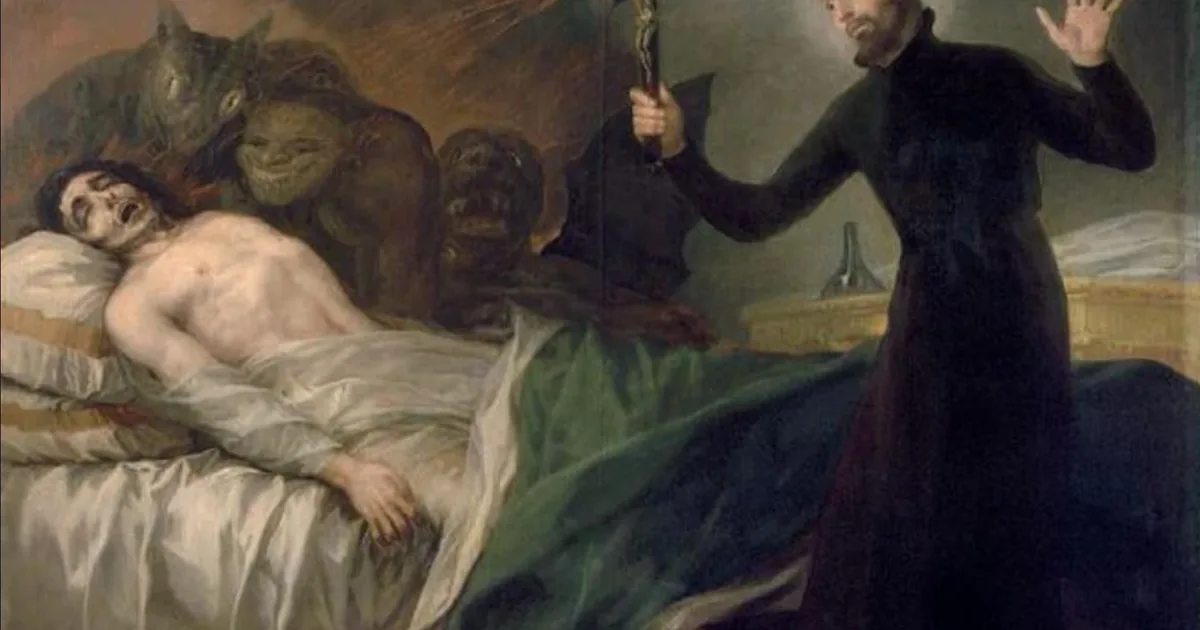
What Is Possession: The Esoteric and Psychological View
Before talking about casting out, it's worth understanding what possession is. In esotericism, it's a state where a foreign entity — a spirit, demon, or clot of negative energy — embeds itself into a person's energy field. In psychology, this is called dissociative states, where the personality seems to "split," and part of it manifests as hostile. But an esotericist will say: not everything can be chalked up to psychology. There are cases where a person physically feels the presence of an "other" within — and no pills help.
Signs of possession mentioned in traditions: a sharp change in voice and behavior, inhuman strength, knowledge of hidden things, aversion to sacred symbols. But in the modern world, "mild" forms are more common: obsessive thoughts, sudden bursts of aggression, loss of control. This isn't necessarily demons — but it's also not always ordinary fatigue. This is where exorcism comes to the rescue as a practice of purification.
| Symptom | Esoteric Interpretation | Psychological Parallel | What to Do |
|---|---|---|---|
| Sudden mood swings | An entity embedding itself that "feeds" on emotions | Bipolar disorder, mood fluctuations | Observation, energy practices, consultation with a psychologist |
| Feeling of presence | Presence of a spirit or an "attachment" | Hallucinations, anxiety | Protection rituals, grounding, energy work |
| Fear of symbols | Rejection of light energies | Phobias related to religion | Gradual desensitization, conscious work with fear |
History of Exorcism: From Ancient Priests to Church Rites
Exorcism is not a Christian invention. The casting out of spirits existed in shamanism, ancient Egypt, and Mesopotamia. Priests and shamans used rhythms, smoke, and incantations to "rescue" a person from the clutches of evil forces. In Judaism, purification through prayer and fasting was practiced. Christianity canonized the rite: specially trained exorcist priests read prayers, using the cross and holy water.
It's important to understand: in different eras, exorcism was also a way of treating the mentally ill. In the Middle Ages, people with epilepsy or schizophrenia were often considered possessed, and "demons were cast out" using harsh methods. Today, the church takes a more cautious approach: doctors first, then the rite. In esotericism, we also advise against diagnosing yourself — instead, consult a specialist.
Modern Exorcism: How It Works
Nowadays, the rite of exorcism is not a scene from a horror film. Practicing esotericists work with energy: they identify "attachments," cleanse the field, and set up protection. Tools such as candles, herbs, and sound vibrations are often used. It's essential that the practitioner themselves be energetically clean, otherwise they risk pulling the negativity onto themselves.
Exorcism in esotericism is not a battle with "demons" in the literal sense, but work with energy. An entity may be the result of severe stress, a ancestral program, or even an entity accidentally "picked up" in places of power. Therefore, the rite is not an expulsion but a transformation: we don't destroy — we convert negativity into light.
Stages of the Exorcism Rite in Esoteric Practice
- Diagnostics: determine whether there truly is foreign energy, or if it's psychosomatic.
- Preparation: cleansing the space, attuning the practitioner and the person.
- Casting out: negativity is expelled through prayers, mantras, sounds, or rituals.
- Protection: establishing an energetic "shield" after cleansing.
- Recovery: filling with pure energy, advice for further practice.
Myths About Exorcism It's Time to Stop Believing
There are a myriad of myths surrounding the casting out of demons. Let's break down the most popular ones.
| Myth | Why It's Not True | How It Actually Is |
|---|---|---|
| Exorcism is only for priests | In esotericism, laypeople also practice, but with caution | The main thing is pure intention and knowledge of techniques |
| Possession is rare | Mild forms are common, they're just not diagnosed | Energetic "attachments" happen to many, especially after stress |
| Exorcism is dangerous for everyone | It's dangerous if done without preparation | With a competent approach — it's safe and effective |
What to Do If You Feel "Possessed"
If you feel like something foreign is inside you, don't panic. First, rule out medical causes: an examination by a doctor is the first step. Then — self-observation: when does this feeling arise, what precedes it? Perhaps it's a signal of an internal conflict you're repressing.
Try a daily grounding practice: imagine roots extending from the soles of your feet into the earth, and light entering through the crown of your head. This will help stabilize your energy. If the feeling doesn't pass, turn to a trusted practitioner — but not to a "grandma healer" with a dubious reputation. Ask for recommendations, read reviews.
Exorcism is not a magic pill. It's a deep process that requires your participation. After the rite, you must continue working on yourself: meditation, journaling, a healthy lifestyle. Otherwise, the negativity will return.
Exorcism as a Path to Self-Discovery
Instead of fearing "demons," look at possession as a metaphor. What inside you is "possessed"? What habits, emotions, and thoughts control you as if by a foreign will? Casting out demons in esotericism is reclaiming authorship of your own life. When you cleanse your space of negativity, you also cleanse your consciousness.
Try this ritual: on a sheet of paper, write down what "torments" you — fears, grievances, addictions. Then light a candle and burn the paper, imagining how the fire transforms negativity into light. This is a simple exorcism for everyday life. Do it regularly — and you'll notice how much easier it becomes to breathe.
Exorcism is not a return to the gloomy Middle Ages, but ancient wisdom that helps us consciously work with our inner world. Remember: true power lies not in casting something outward, but in finding harmony within. And then no rite will be needed — you yourself will become the light that leaves no room for darkness.
Exorcism as a Path to Yourself
We've come a long way — from ancient rituals to modern esoteric practices. And perhaps the main conclusion isn't about how exactly to cast out demons, but why it's needed. Exorcism is not a battle with monsters from the underworld, but a metaphor for our inner work. When we cleanse our space of negativity, we reclaim our right to be masters of our own lives. It's a tool of self-discovery that helps us see what exactly controls us — fears, grievances, habits, foreign beliefs. And if we approach this consciously, without panic and superstition, exorcism becomes not a frightening rite, but a deep practice of transformation.
In esotericism, we don't seek to destroy darkness — we learn to transform it into light. Each of us is capable of this if we're ready to look within ourselves and honestly answer the question: what do I allow to control me? Cleansing practices, meditation, energy work — all of this is available to anyone seeking harmony. And if you feel it's time to sort yourself out, start small: try simple rituals, read about different approaches, find your own path. The practitioners at EXETERIC, who share knowledge and experience without imposing dogma, can help you with this.
Remember: true power lies not in casting something outward, but in finding an inner core that won't break under the pressure of circumstances. Esotericism is not a panacea for all ills, but it provides keys to understanding yourself. And if you're ready to take a step toward the unknown, don't be afraid — just trust the process. Study, practice, ask questions. Look into your zodiac sign to better understand your strengths, or read other articles about magic and self-discovery — perhaps that's where you'll find the answers you're seeking.
Exorcism is not a return to the gloomy Middle Ages, but ancient wisdom that helps us consciously work with our inner world. Remember: true power lies not in casting something outward, but in finding harmony within. And then no rite will be needed — you yourself will become the light that leaves no room for darkness. May this light guide you through life, and we, the practitioners at EXETERIC, are always here to support you on this path.
Frequently Asked Questions
Can exorcism harm a person?
Exorcism, like any energy practice, can be dangerous if approached without proper preparation. An unqualified practitioner may not only fail to help but also worsen a person's condition by pulling negativity onto themselves or disrupting energetic integrity. That's why it's important to turn only to trusted specialists with experience and recommendations. Additionally, before the rite, medical causes of symptoms must be ruled out — sometimes mental disorders requiring medical intervention hide behind "possession." In the hands of an experienced esotericist, exorcism is safe and effective, but it's always important to remember a holistic approach: body, soul, and mind must be in harmony.
How do I know if I need exorcism?
Exorcism may be helpful if you feel a constant presence of something foreign, sudden mood swings, unexplained aggression, or fear of religious symbols. However, these symptoms may also have psychological causes, so first you should see a doctor and undergo an examination. If medical causes are ruled out and the feeling of something "foreign" inside persists, you might consider energy diagnostics with a practitioner. They can determine whether there's truly an attachment or entity, or whether it's the result of stress and internal conflicts. Remember: exorcism is not a first resort, but a last one, when other methods have failed. Trust your intuition, but don't forget common sense.
How does esoteric exorcism differ from church exorcism?
Church exorcism is a strictly regulated rite performed by priests with the blessing of the church, using prayers, the cross, and holy water. It's based on Christian dogma and faith in the power of God. Esoteric exorcism is a more flexible practice that may incorporate elements from different traditions: shamanism, energy techniques, chakra work, sound vibrations. Esotericists aren't necessarily bound to religion — they work with energy as such, striving to transform negativity rather than simply expel it. It's important to understand that both approaches have a right to exist, but the choice depends on your beliefs and the specific situation. Some people combine both methods, finding harmony in this.
Can I cast out demons on my own?
You can perform simple cleansing practices on your own, such as meditations, grounding, and burning negative thoughts on paper. These help with mild forms of energetic contamination and emotional blocks. However, in serious cases — when you feel a strong presence of a foreign will or observe unexplained phenomena — it's better to turn to an experienced practitioner. Self-administered exorcism without preparation can be dangerous — you risk attracting even more negativity or failing to handle the energy. If you do decide to practice on your own, start by studying techniques, consult with specialists, and always set up protection. Remember: exorcism is deep work that requires responsibility and respect for the forces you interact with.