Goetia: 72 Demons of Solomon — Grimoires, Practice, and Safety
Goetia and the "Key of Solomon": What the Grimoires Conceal
When we hear "goetia," the imagination conjures dark circles, candles, and a bearded magician summoning demons. But if we cast aside Hollywood clichés, goetia is one of the most structured and respected traditions of Western esotericism. Its foundation is the "Lesser Key of Solomon," or "Lemegeton," a collection of grimoires containing descriptions of 72 demons, their seals, and methods of invocation and subjugation. This is not a "demonic kitchen," but rather a complex system of communication with archetypal forces that requires knowledge, discipline, and — above all — respect.
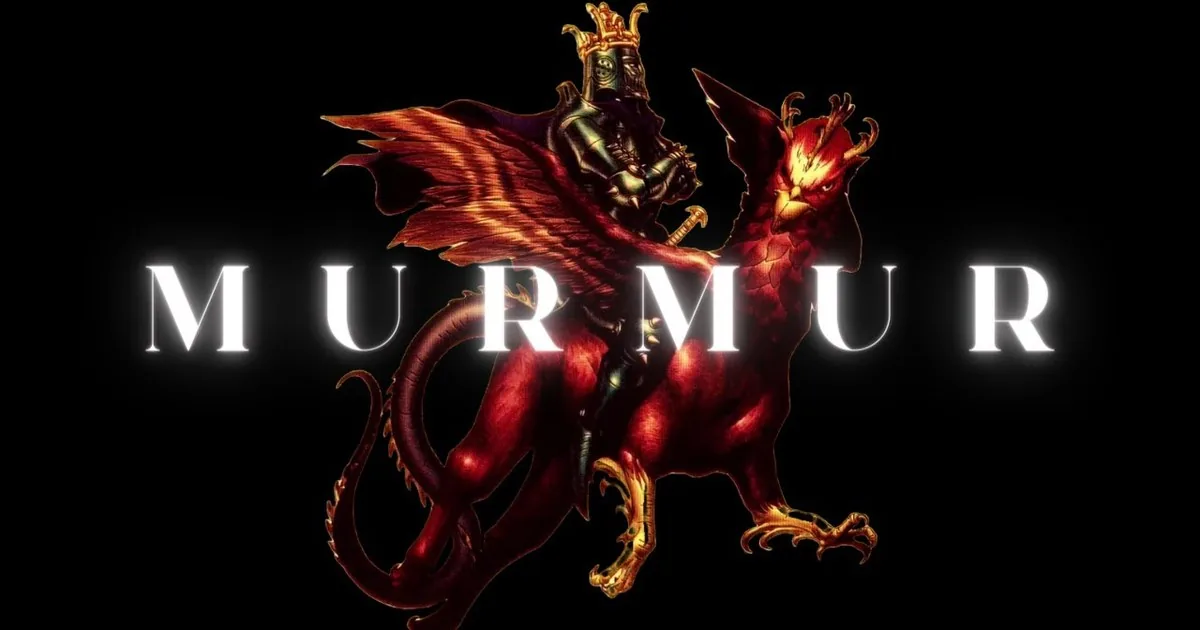
Goetia is not for beginners, but understanding its principles is useful for anyone walking the path of mysticism. Behind each name lies not an "evil spirit" in the Christian sense, but a force that can be used as a tool. Like any tool, it demands caution. We are not talking about summoning entities without preparation — that is like getting behind the wheel of a race car without knowing the rules. But studying the map of this territory means expanding your capabilities.
Where did this knowledge even come from? The name of King Solomon is shrouded in legends. He is credited with power over spirits, which he obtained through a ring with a seal. In later Kabbalistic and magical tradition, Solomon became a symbol of wisdom capable of ordering chaos. The grimoires attributed to him are practical guides for interacting with forces that Christian tradition called "demons," but which may simply be other forms of consciousness. Goetia is not worship, but management. And therein lies its power.
Why exactly 72? The number is symbolic: in Kabbalah, it is the 72 names of God; in astrology, it is 72 decans (3 for each of the 12 zodiac signs). The demons of goetia are connected to celestial influences, each corresponding to a specific decanal period. These are not random monsters, but complex archetypes that can be correlated with planets, signs, and elements. Knowing this, we can use their energy for self-discovery and transformation.
But how do you distinguish real work from fantasy? The key is approach. If you seek quick results or want to "subjugate" spirits for personal gain, goetia will disappoint. If you are ready for dialogue, for exploring your own shadows, for working with symbols — it can become a powerful path. Let us begin with the basics: what grimoires are and how they are structured.
The Grimoires of the "Lemegeton": From "Ars Goetia" to "Ars Paulina"
The "Lesser Key of Solomon" is not a single book, but a collection of five treatises. Each describes a certain level of interaction with spirits. "Ars Goetia" is the first part, the very one that gave its name to the entire phenomenon. It contains a list of 72 demons, their hierarchy, seals, and invocation rituals. But the other parts are no less important:
- "Ars Theurgia" — work with angelic spirits that aid in spiritual development.
- "Ars Paulina" — spirits connected to zodiacal hours, for gaining knowledge of the past and future.
- "Ars Arbatel" — spirits governing the elements and natural phenomena.
- "Ars Notoria" — practices for developing memory and eloquence.
For us now, "Ars Goetia" is the most important, because the demons of goetia are the key theme. But understanding the context is crucial: Solomon did not simply "summon demons," he created an entire system where each spirit has its place and function. It is like a well-run organization: there are managers, executors, and public relations specialists. The demons of goetia are not chaos, but structure.
The structure of "Ars Goetia" includes a description of each demon: name, rank (king, duke, earl, marquis, president), the number of legions of spirits under his command, the ability he can grant, and his seal — a unique symbol for invocation. Seals are usually inscribed on parchment or metal, consecrated, and kept within the ritual circle. These are not mere "pictures," but keys to connecting with the entity.
The ranks of demons are not a social hierarchy, but rather a level of influence and sphere of responsibility. Kings (e.g., Baal, Asmodeus) are forces connected to power and leadership. Dukes (Agares, Vassago) — to logic and teaching. Marquises (Amon, Orias) — to astrology and divination. Presidents (Buer, Botis) — to physical and emotional health. Knowing these correspondences, you can choose a spirit to help in a specific situation.
But do not rush to seek out a seal and circle right away. Goetia is a path, not a one-off ritual. You will need time to understand the symbolism, master meditation and visualization techniques, and learn to distinguish signals from your subconscious. Otherwise, you risk projecting your fears and expectations onto the ritual, and that is no longer magic, but psychotherapy.
How to Work with the Demons of Goetia: Practice Without Fanaticism
Before we move to specifics, let us set the record straight. Goetia is not worship of evil forces, nor is it "selling your soul." It is work with energies that exist within us and in the world. The demons of goetia are archetypes, behavioral patterns, forces of nature. By invoking them, we are actually summoning those aspects of ourselves that are usually suppressed or unconscious. Therefore, the practice of goetia is, above all, shadow work — Jungian shadow work, if you will.
How do you begin if you feel the call? Here are basic steps to help you prepare:
- Study the theory. Read the "Lesser Key of Solomon" in a good translation (e.g., Joseph Peterson's). Study the history, symbolism, and correspondences. Do not skip this stage — an unprepared magician is like an actor who has not learned his role.
- Choose a spirit. Start with one that matches your current need. For example, if you need clarity in communication, look at Buer (president, grants knowledge of languages and diplomacy). For protection, Asmodeus (king, grants a ring of power) may suit. But do not take the "most powerful" — start simple.
- Create a ritual space. This can be a separate room or an altar. The main thing is that no one disturbs you and you feel safe. Purify the space with incense (wormwood, frankincense), light candles, and settle into a meditative state.
- Use the seal. Draw or print the seal of the chosen spirit on the day and hour corresponding to the planet (usually specified in the grimoire). Consecrate it and place it in the center of the circle.
- Visualize. Close your eyes and imagine the seal filling with light, establishing a connection. Chant the spirit's name until you feel a slight shift in the atmosphere — perhaps a tingling sensation or an image appears.
This is a simplified scheme, but it gives a sense of the process. What matters is not mechanical adherence, but inner attitude. The demons of goetia respond to respect and clarity of intention. If you are afraid or doubtful, it is better to postpone the ritual. Work only in a state of calm confidence.
What to do after establishing contact? Ask a question or formulate a request. Be specific, but do not demand the impossible. Spirits do not like empty talk. After you receive an answer (it may come as a thought, image, or sign in a dream), thank the spirit and release it. Close the circle — extinguish the candles, disperse the incense. Do not leave loose ends.
Remember that goetia is a path that requires practice. Not everyone will establish contact on the first try. That is normal. As in any art, persistence and humility before greater knowledge are needed here.
Myths About Goetia: What Frightens and What Truly Matters
There is much fear and misunderstanding surrounding goetia. Hollywood, religious propaganda, and mere rumors have created an image of something horrifying. Let us examine the most common myths.
| Common Myth | Why It Is Not So | How It Really Is |
|---|---|---|
| Summoning a demon is dangerous; you can "lose your soul" | The idea of the soul as a coin you can gamble away comes from folklore, not esotericism | Goetia is work with energies; it does not strip you of free will, but expands it |
| Demons are evil beings that want to harm | In goetia, demons are forces that can be both creative and destructive, depending on intention | Your intention and respect matter; spirits are not "evil," they are simply other |
| Rituals require sacrifices | Goetia does not involve blood sacrifices; classical grimoires use incense and symbols | Sacrifice is the transformation of personal energy, not killing |
These myths hinder a conscious approach. If you are attuned to fear, you will attract negative experiences. Goetia is a mirror: you see what is within you. That is why inner work before any rituals is so important.
On the other hand, there are real dangers worth knowing. Invocation without preparation can lead to mental instability, especially if you are prone to anxiety or depression. The energies you summon can amplify your inner conflicts. Therefore, adequate self-assessment and psychological resilience are mandatory conditions. If you feel you are not ready, it is better to postpone practice until better times.
Another important aspect is ethics. Do not use goetia to manipulate others or cause harm. This goes against the very nature of magic, which should lead to harmony, not destruction. Remember that all actions return.
Seals and Symbols: The Language of Goetia
The seals of the demons of goetia are not mere drawings. They are graphic formulas that contain the vibration of the spirit's name. They work like keys: tuning the magician's consciousness to the entity's frequency. That is why it is so important to reproduce the seal accurately, not relying on "close enough."
Each seal is unique, but they share common elements: geometric shapes (circles, triangles, intersecting lines), letters (sometimes Hebrew or Greek), and planetary symbols. All of this creates a complex structure that, when used correctly, becomes a portal to the spirit's world.
How to work with a seal? Here are some practical tips:
- Draw the seal by hand. This is better than printing, as you invest energy into each stroke. If unsure of your artistic abilities, use tracing paper, but trace with intention.
- Consecrate the seal. Fumigate it with incense corresponding to the spirit (usually specified in the grimoire), or sprinkle it with salt water while speaking the spirit's name.
- Meditate on the seal. Gaze at it for 10-15 minutes until the image is imprinted in your consciousness. This helps establish a connection.
The seal can be used not only in ritual, but also as a talisman. Carry it with you if you wish to attract the spirit's energy into daily life. But be cautious: not all energies are suitable for constant wear. For example, Asmodeus's seal may grant strength but also provoke conflict. So test it in ritual first.
Remember that a symbol is a bridge, but you yourself must cross it. Without inner work, the seal remains just a picture. Combine visualization with feelings and breath. Imagine the spirit's energy entering your aura, interacting with your chakras. This is a holistic process.
Goetia Today: How to Adapt Ancient Rituals to Modernity
Many believe goetia is a medieval relic with no relevance to modern life. But that is not so. The archetypes of the demons of goetia are universal; they manifest in our daily lives: in our fears, ambitions, and desires. Working with them can be relevant now, if approached creatively.
Modern practitioners often adapt rituals: using paper instead of parchment, graphic tablets instead of copper plates. The key is preserving the essence: intention, symbol, connection. Technical details are secondary. For example, you can draw a seal in a graphics editor, but it is important that you invest energy and focus into it.
Modern goetia also often intersects with psychology. The demons of goetia can be used as archetypes for shadow work. For instance, if you feel too much anger within you, you can invoke a spirit connected to that energy to become aware of and integrate it. This resembles Jungian active imagination, but in a more structured form.
It is important not to fall into "historical reenactment" for its own sake. Goetia is a living tradition; it should work for you, not you for it. So do not be afraid to experiment and find your own ways of interacting with spirits. The only rule is respect and safety.
If you want to try but are not ready for a full ritual, start simple: study the list of demons, find one that resonates with your current situation. Meditate on his image, ask for help in a dream. Often that is enough to receive an answer. Goetia is not always a loud invocation in a circle; sometimes it is a quiet conversation.
And remember: the demons of goetia are not toys. Treat them with respect, as senior partners. Then they can become your allies on the path of self-discovery.
The Path of Goetia Is the Path to Yourself
We have traveled a long road: from the history of grimoires to practical aspects of working with demons. But, as in any esoteric tradition, the main thing is not external attributes, but inner attitude. Goetia is not a way to gain power over the world or fulfill desires. It is a way to meet those parts of yourself that usually remain in the shadows and learn to use their strength for good.
If you feel this theme resonates, do not be afraid to begin studying. Start with theory, with contemplating symbols, with meditating on seals. Do not rush to summon spirits — first get acquainted with their images, find those that resonate with your tasks. Remember that in goetia, as in any magical art, respect and purity of intention matter. You do not "subjugate" forces; you enter into dialogue with them, and the result depends on your attitude.
The world of esotericism is vast: from astrology to runes, from Kabbalah to shamanism. Goetia is just one of the doors, but behind it opens an entire universe of knowledge. If you want to expand your understanding, check out the astrology section on the EXETERIC website — perhaps your zodiac sign will hint at which energies you should work with first. And to delve deeper into magical practices, pay attention to the articles on magic and self-discovery in our blog.
Remember: esotericism is not a panacea for all problems, nor a reason for fear. It is a tool that helps us better understand ourselves and the world around us. Use it wisely, and you will open new horizons. Start small: just read, think, dream. And when you feel ready — practice consciously, without fanaticism, with respect for ancient traditions.
May your path be bright and your knowledge deep. And remember: the most important thing is not how many demons you have summoned, but how many truths you have learned. That is the essence of true magic.
Frequently Asked Questions
Who is Solomon and why is he credited with power over demons?
King Solomon is a biblical figure known for his wisdom. According to legend, he received a ring with a seal from God that allowed him to command spirits and demons. In later Kabbalistic and magical tradition, Solomon became a symbol of ordering chaos: he could not only banish spirits, but also use their powers to build the temple and for his own needs. The grimoires attributed to him, such as the "Lesser Key of Solomon," describe a system for invoking and subjugating the 72 demons, each with unique abilities. This tradition emphasizes that wisdom and knowledge allow a person to manage even the darkest forces, turning them into tools for spiritual growth.
Can you summon a demon without preparation?
No, absolutely not. Summoning a demon without preparation is like getting behind the wheel of a race car without knowing how to drive: you will likely crash. In goetia, what matters is not only knowledge of rituals, but also psychological resilience, understanding of symbolism, and the ability to work with energy. Without preparation, you risk not only failing to achieve your goal, but also having a negative experience: heightened fears, anxiety, mental issues. So start by studying theory: read grimoires, master meditation and visualization, work on yourself. When you feel inner confidence and calm, then you can attempt first contacts with simpler spirits.
Is goetia dangerous for the psyche?
Goetia can be dangerous if practiced without proper preparation and respect. The energies you work with are archetypes of your subconscious, and they can amplify inner conflicts. If you are prone to anxiety, depression, or other mental disorders, it is better to avoid such practice altogether. However, with the right approach, goetia can become a tool for psychological integration: you become aware of your shadow sides and learn to interact with them. It is important to be honest with yourself, not fall into illusions, and not try to escape reality. If you feel you are not ready, it is better to postpone rituals and work on yourself through meditation or psychotherapy.
How to choose a demon to work with?
The choice of a demon depends on your specific task. The grimoires specify each spirit's abilities: some grant knowledge and eloquence, others protection or love, still others astrological predictions. Start by formulating your goal: what do you need to change or understand? Then study the list of demons and find those that match your theme. Pay attention to the spirit's rank: kings and dukes are powerful forces that are harder to work with, while presidents and marquises are more accessible for beginners. Try to feel which demon evokes a response in you: perhaps his image will appear in a dream, or you will feel warmth when reading the description. Trust your intuition, but do not forget logic.