Cold spots in the house: what is happening and how to check
You walk into a warm room, but by the wardrobe there is icy air, as if someone opened a freezer. The radiators are hot, the windows are closed, yet your skin is covered in goosebumps. This is exactly how people most often describe the phenomenon popularly known as cold spots in the house. Let's look at it calmly: cold spots in the house what is it — a draft, physics, or really a sign of a presence? We will talk without horror stories, with respect for the tradition of ghost research and with common sense.

Cold Spots in the House: Meaning and Interpretation in the Ghosts Tradition
In short, cold spots in the house meaning in classical parapsychology is a local sharp drop in temperature of 3-10 degrees with no visible physical cause. Researchers of the 19th-20th centuries believed that a manifested entity needs energy for contact, and it "takes" heat from the air. Hence cold spots in the house interpretation as a possible point of contact, a place where the subtle becomes dense.
From the point of view of psychology, it is also quite logical: cold is a bodily marker of anxiety. When the subconscious picks up something unusual — a sound, a smell, movement in peripheral vision — the body reacts with shivering. That is why we always look at the phenomenon from two sides: the energetic and the human. What matters is not whether you believe in ghosts, but how well you can observe and verify.
A living example: a woman moved into her grandmother's apartment. Every evening in the hallway by the mirror — an icy strip a step wide. The cats walk around it. She was already ready to call a medium, but first she took measurements and found a gap under the door to the vestibule plus a cold riser pipe behind the wall. And here is a second case: in a private house the spot appeared only on the anniversary of the death of the owner of the house, in the very same armchair, and the thermometer showed a drop from 22 to 14 degrees in a minute. That is where it is already interesting to work with it as a contact.
Practical step: start a "spot diary". Write down the time, place, weather, who was home, your state. Three or four entries will already show a pattern. A look to the root: cold spots in the house how to understand correctly — not as a sentence "you have a poltergeist", but as an invitation to awareness. The house talks to us through temperature, sounds and dreams, and our task is to learn to listen, not to be afraid. If you are also dreaming of deceased relatives, take a look at the EXETERIC dream book to compare the symbols.
Cold Spots in the House: Signs and Types — How to Recognize an Anomaly
The main question from readers is cold spots in the house how to recognize and distinguish it from an ordinary draft. A true anomalous spot behaves strangely: it has clear boundaries, does not shift with air movement, lasts from several minutes to an hour and returns to the same point. Ordinary cold from a window spreads out, while anomalous cold stands like a pillar or hangs like a cloud at human height.
Let's break down cold spots in the house types as described by ghost hunters. The first type is wandering: they appear now in the bedroom, now in the kitchen, as if someone is walking around. The second is stationary: the same place — a corner, a bed, an armchair, a child's playpen. The third is contact: cold is felt only on the body — icy fingers on the back of the neck, cold breath nearby, although the thermometer barely changes. The fourth is event-related: they arise during spirit practices, quarrels, illnesses, memorials.
| Symbol / image | Traditional meaning | Manifestation in life | What to do |
|---|---|---|---|
| Icy pillar in a passageway | Boundary, presence of an observer | Goosebumps, animals stopping at the boundary | Measure, observe, mentally set an intention |
| Cold armchair / bed | Attachment to a person or memory of place | Spot returns on anniversaries, at night | Memory ritual, conversation, space clearing |
| Cold moving after you | Active contact, request for attention | Accompanied by footsteps, smells, dreams | Keep a diary, ask a question aloud, check the history of the house |
| Icy hands, breath | Close bodily contact | Brief seconds, strong emotional response | Ground yourself, turn on the light, assess your state |
Cold spots in the house signs additional ones worth paying attention to: candles go out at the same time, the phone discharges, there is a smell of perfume or tobacco that is not in the house, animals stare at one point. Individually this means nothing, but a complex of 3-4 signs is already a reason for careful checking. Cold spots in the house examples from practice show: if the spot reacts to being addressed — intensifies or leaves after words — this is no longer physics.
Cold Spots in the House: History and Interesting Facts
Let's talk about cold spots in the house history. For the first time they were systematically described not by mystics, but by researchers of the Society for Psychical Research in London in the 1880s. They walked through "haunted houses" with thermometers and recorded temperature drops in places of phenomena. Later, in the 1930s, Harry Price in the famous Borley Rectory noted icy zones in the corridors where the nun was seen.
Cold spots in the house interesting facts are loved even by skeptics. Fact one: in Hampton Court Palace in England, tourists have complained for decades about an icy draft in the gallery where, according to legend, Catherine Howard screamed. Infrared imaging showed real cold flows from old doors there — mysticism and ventilation met. Fact two: parapsychologists measured that before the appearance of a figure the temperature can drop by 5-7 degrees in 30 seconds, and then return just as quickly. Fact three: cold is more often felt by people in a relaxed, meditative state — when intuition is heightened.
An example from life: a family bought a house from the 1950s. In the children's room by the window in winter and summer — an icy corner. They called a thermal imaging specialist — it turned out to be a void in the wall without insulation. But in another apartment the spot appeared only when the owner was deeply grieving for her deceased mother and crying. As soon as she started the practice of speaking out and lighting a memory candle — the spot became warm. The moral is simple: cold spots in the house facts and breakdown always begin with physics, and end with meaning. If you want to understand the connection between dates and family histories more deeply, look at the Matrix of Fate calculator — sometimes house attachments coincide with family scenarios.
Cold Spots in the House How to Check: Step-by-Step Breakdown Without Mistakes
Now the main thing — cold spots in the house how to check correctly. We need cold spots in the house step-by-step breakdown that will separate a draft from an anomaly. Prepare an ordinary room thermometer, or better two, a notebook and a phone for photos. Ideally — a rented thermal imager or pyrometer, but you can do without them.
Step 1. Record the baseline: measure the temperature in the four corners of the room and in the center. Step 2. Find the center of the spot: slowly move your hand at different heights — at the floor, at chest level, under the ceiling. Mark the boundaries with masking tape. Step 3. Rule out physics: close doors and windows, turn off the air conditioner, check sockets, ventilation, cracks, cold risers and exterior walls. Bring a candle or a light thread — is the air moving. Step 4. Repeat the measurement after 10, 20, 40 minutes. An anomalous spot holds or pulsates, a draft shifts. Step 5. Contact test: calmly say aloud: "If there is someone here, I feel you, I am not afraid. You may stay or leave". Track the change.
Cold spots in the house mistakes typical: measuring only once, measuring with hands after being outside, checking in panic at night, immediately calling "cleansers" and paying for curse removal. Another mistake is ignoring the body: if you feel dizzy, nauseous, heart pain right in the spot — leave, ventilate, check for carbon monoxide and mold. Safety is more important than mysticism. Cold spots in the house facts and breakdown show that in 70% of cases a household cause is found, and that is good news.
| Common myth | Why it is not true | How it really is |
|---|---|---|
| Any cold place is a ghost | Houses are full of cold bridges, cracks and drafts | A ghostly spot has boundaries and repeats |
| You need to immediately expel and set up protection | Aggression increases anxiety and the phenomenon | First observation and dialogue, then clearing |
| A thermometer will always show a spirit | Some sensations are bodily and intuitive | Combine instruments, observation and well-being |
| If it is cold — it is an evil entity | Cold is neutral, it is a way to manifest | Assess the context: dreams, history, emotions |
Cold Spots in the House What to Do: Protection and Conscious Practice
Let's say you checked everything, but the spot remained. Let's break down cold spots in the house what to do calmly and like an adult. First — acknowledge: "Yes, there is something here, and I can interact with it". Fear feeds the phenomenon more strongly than any ritual. Turn on the light, open the window for 5 minutes, wash with cold water — bring back your body and control.
Second — cold spots in the house protection gentle, not combative. Ventilate and clean this corner, throw away broken things, wash textiles. Light a candle with intention: "This is my home, it is safe and light here". Fumigate with wormwood or juniper, ring the corners with a bell. Put salt in a bowl for a day in the place of the spot, then flush it down the toilet. This works both as an energetic practice and as a psychological anchor — you reclaim your territory.
Third — dialogue. Sit nearby, but not inside the spot. Say: "I notice you. If you are connected to this house, tell me through a dream or a sign. It is time for you to go to the light, and for me — to live here in warmth". Many practitioners note that after such acknowledgment the spots leave on their own. If the phenomenon is connected with a deceased loved one and longing, a memory ritual helps: photo, candle, letter. The astrological background also affects sensitivity — at full moon and eclipses people feel the subtle more acutely, take a look at the astrology section to understand your period. Cold spots in the house facts and breakdown confirm: the calm intention of the owner is stronger than any amulet.
When the Spot Is in the Nursery and Bedroom: Special Cases and Subtleties
A separate topic is a spot in a crib or above a pillow. Parents are frightened most of all, and this is understandable. First we check the window, wall, canopy that creates a pocket of cold air, humidifier nearby. Move the bed 10 cm away from the exterior wall, check for mold. Only then do we look at the subtle. Children under 7 are indeed more sensitive, but more often they simply pick up the mother's anxiety.
If a child says "a cold uncle is sitting here", do not deny and do not frighten: "Okay, let's ask him to leave, this is your room". Together light a night light, put a "protective" toy, invent a warm spell. In the adults' bedroom a cold spot on your half of the bed often appears after the loss of a partner, divorce, strong loneliness. This is not always a spirit — sometimes this is how the body shows frozen grief. Bodily practices help: a warm bath, hugs, conversation with a psychologist, grief work.
Cold spots in the house facts and breakdown in such intimate places require delicacy. Do not do harsh expulsions with shouting and aggression in the nursery — you will frighten the child more than any spot. Better a quiet order: light, warmth, order, kind words to the house. Read other practices in the EXETERIC blog about space clearing and sleep protection to put together your own calm ritual. And remember a detail from field observations: a true contact spot almost never causes mold and frost on the wall — if the wall is wet, this is definitely a construction problem, call a repairman, not a medium.
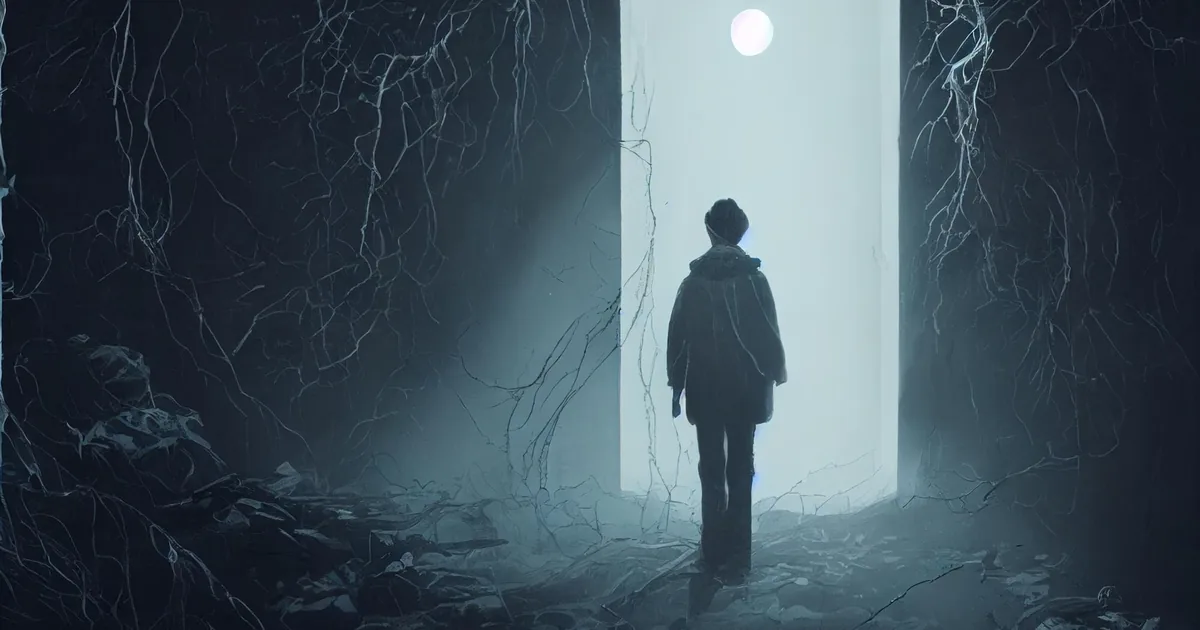
A Home Where You and Your Thoughts Are Warm
A cold spot is not a sentence for the house and not proof of something scary. Most often it is simply a reason to stop and look around more carefully: where the draft passes, where dust and resentment have stagnated, where your warm attention has long been absent. When you approach the phenomenon calmly, with a thermometer in one hand and kind intention in the other, fear leaves on its own. You regain the main thing — the feeling that this is your home and your rules.
Esotericism in this sense is not a way to frighten yourself with spirits, but a tool of self-knowledge and conscious life. It teaches to notice subtle signals of the body, to respect the memory of place and to honestly deal with your emotions — longing, grief, anxiety. Sometimes it is enough to tidy up a corner, light a memory candle and talk aloud for the icy strip to dissolve. And sometimes a check shows a crack in the wall, and this is also a spiritual practice — to care for space like an adult.
The approach of EXETERIC practitioners is exactly this: first physics and common sense, then energetics and dialogue, and always — respect for yourself and your home. If the topic resonated, take a look at the selection of other practices in the EXETERIC blog about space clearing, sleep protection and working with ancestral memory, as well as the astrology section to understand why you have become more sensitive now. Do not be afraid of the incomprehensible — sort it out calmly, try a gentle practice consciously and with warmth. May your home become a place again where both you and your thoughts are warm.
Frequently Asked Questions
Is a cold spot in the house dangerous for health?
The sensation of cold itself is not dangerous, it is dangerous to ignore its possible physical causes. Local cold often indicates cracks, cold bridges, dampness, mold or poor ventilation, which really affect immunity, sleep and breathing. If in the spot you feel dizzy, nauseous, sleepy or have heart pain, leave the room, ventilate it and check the serviceability of gas equipment and ventilation. Separately inspect the wall for dampness and mold, especially in the nursery and bedroom. If everything is fine with the house, but the cold persists, work with it as an energetic phenomenon — calmly and without panic.
Why does a cat avoid a cold place in the apartment?
Animals are more sensitive than humans to drafts, vibration, sounds and smells, so their behavior is a good indicator. A cat may bypass a cold spot simply because there is a draft from under the door, a cold floor or an unpleasant damp smell for it. Only complex behavior is considered alarming: the cat stares at one point for a long time, hisses into emptiness, refuses to enter a previously favorite room, and a dog whines or backs away. Observe for several days and compare with temperature measurements, time of day and your state. If the animal sleeps calmly next to the spot, most likely the cause is household, not mystical.
Can a cold spot appear after the death of a loved one?
Yes, it is during the period of grieving that people most often report local cold in an armchair, on a bed or near a photo of the deceased. From the point of view of psychology this is associated with heightened perception, longing and the bodily sensation of frozen grief. From the point of view of tradition this can be perceived as a form of presence or unfinished farewell, especially if the spot appears on anniversaries, during memories or tears. A calm memory ritual helps: a candle, a letter, words of gratitude and farewell aloud. If longing does not let go for months, interferes with sleep and life, it is important to seek support from a psychologist, not only from esoteric practices.
Do I need to bless the apartment if I found a cold spot?
There is no need to rush with blessing, expulsion or calling specialists, first conduct a calm check. Measure the temperature at different points, rule out drafts, cracks, cold risers and exterior walls, observe the spot for several days and keep a diary. In most cases a household cause is found, and the issue is resolved by repair, cleaning and ventilation. If the spot persists and is connected with emotions, memory of place or a sense of presence, start with gentle actions: cleaning, light, a candle with kind intention, calm dialogue with the house. Blessing and the help of a priest, as well as an experienced practitioner, should be sought when the phenomenon frightens, repeats and affects the sleep and well-being of the whole family.