Yoga for beginners: 5 simple steps to results
Step 1: Understanding What Yoga for Beginners Really Is — It's Not About Flexibility
Let's be honest: most people who first think about yoga imagine something between acrobatics and meditation in a lotus pose. They see perfect bodies on social media, hear Sanskrit terms, and decide it's "not for them." But yoga for beginners what it is — it's not about that at all. It's not about touching your forehead to your knees or standing on your head. It's about consciously returning to your body, your breath, your inner space.
From the perspective of esoterics and energy practice, yoga is a system of working with energy (prana) that circulates in our body. Each pose (asana) is not just a physical exercise but a way to activate specific energy centers (chakras), release blocks, and bring the system into balance. Psychology also plays a role here: when we consciously work with the body, we lower cortisol levels (the stress hormone), train our attention, and learn to be "here and now." This is the first step toward true mindfulness, which we write about in other practices on the EXETERIC blog.
Practical step: Forget about perfect photos. Your yoga is your body, your breath, your pace. Start with simple awareness: stand up, close your eyes, take 5 deep breaths in and out. Feel how your lungs expand, how your belly rises and falls. You are already practicing mindfulness — and that is the heart of yoga.
Looking at the root: The mistake of beginners is thinking that the result is an external change (losing weight, becoming more flexible). In reality, the result is an internal state: calmness, clarity, a sense of connection with yourself. When you understand this, practice becomes not an obligation but a gift.
Step 2: Yoga for Beginners at Home — How to Create Your Space
One of the most common questions is: "Where is it better to practice — at home or in a studio?" To begin with, yoga for beginners at home is an ideal option. Why? Because at home you are in your own environment, you don't need to travel anywhere, you can practice at a convenient time and in comfortable clothes. This removes the entry barrier and helps build a habit.
What do you need for home practice? The minimum: a mat (or just a clean spot on the floor), a quiet space, and 15-20 minutes of time. Energetically, it's important that the practice space is clean and calm. You can place a candle, incense, or simply open a window for fresh air. This is not a mystical ritual but creating an atmosphere that helps the mind switch from "hustle" mode to "I am here" mode.
Practical step: Set aside a corner in the room. Place your mat. Maybe add something that you associate with peace — a stone, a plant, a picture. Before practice, sit in this spot for 2 minutes with your eyes closed. This is a signal to your subconscious: "Something important is about to begin."
Looking at the root: Space is an extension of the inner state. When we create external order and peace, we help the mind find internal order. This works both ways: starting with the external, you will inevitably arrive at the internal.
Step 3: Yoga for Beginners Poses — Basic Poses and Exercises That Actually Work
Now let's move to practice. Yoga for beginners poses are not complex acrobatic tricks but basic body positions that help strengthen muscles, improve flexibility, and activate energy flows. Here are 5 asanas to start with:
- Tadasana (Mountain). Stand straight, feet hip-width apart, arms along the body. Close your eyes. This is a pose of conscious presence. It teaches balance and grounding.
- Virasana (Hero). Sit on your heels (or between them), back straight. Great for knees and hips, relieves tension after long sitting.
- Adho Mukha Svanasana (Downward-Facing Dog). A classic pose that strengthens the arms and back, stretches the back of the body. This is one of the most important yoga for beginners exercises.
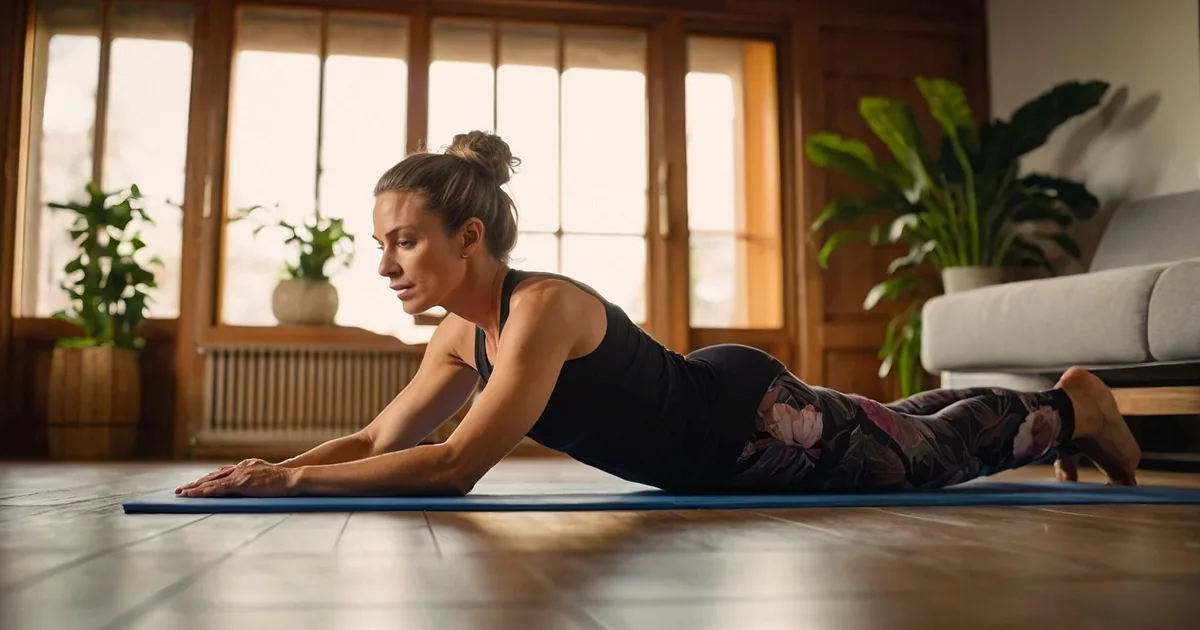
- Bhujangasana (Cobra). Lying on your stomach, lift your chest, resting on your palms. Strengthens the back, opens the chest, activates energy in the heart area.
- Shavasana (Corpse). Lie on your back, relax. This is a pose for integrating the practice. No joke: it is in relaxation that the main transformation happens.
These poses cover all major muscle groups and energy centers. Performing them sequentially, you will create a short but effective sequence.
Practical step: Start with 3-5 cycles of each pose (inhale-exhale = 1 cycle). Don't hold your breath. Pay attention to sensations: if it hurts — back off. Discomfort is acceptable, pain is not.
Looking at the root: Each pose is a mirror. In "Downward-Facing Dog" you may discover tension in your shoulders that has been accumulating for years. In "Cobra" — a tightness in the chest connected to emotional blocks. Yoga helps us see what we usually ignore.
Step 4: Yoga for Beginners Free — Where to Find Resources and How Not to Get Lost
The good news: yoga for beginners free is available in abundance. The internet is full of video lessons, apps, and articles. The bad news: amid this abundance, it's easy to get lost or stumble upon low-quality content. How to choose?
First, look for teachers with basic education (yoga therapy, classical hatha yoga). Second, start with short formats (10-15 minutes). Third, trust your body: if something seems strange or painful — skip it. Here are a few proven resources:
- YouTube channels with an emphasis on technique (for example, Yoga With Adriene).
- Apps for beginners (Down Dog, Insight Timer).
- Our yoga for beginners video — we regularly publish short sequences for home practice.
Practical step: Choose ONE source. Don't download 10 apps or subscribe to 20 channels. One good teacher is better than ten mediocre ones. Practice with them for at least 2 weeks before looking for something new.
Looking at the root: Searching for the "perfect" teacher is often a way to postpone practice. You will never find the perfect mentor, because the perfect mentor is yourself when you start listening to your body.
Step 5: Yoga for Beginners Stretching — Flexibility as a Marker of Progress
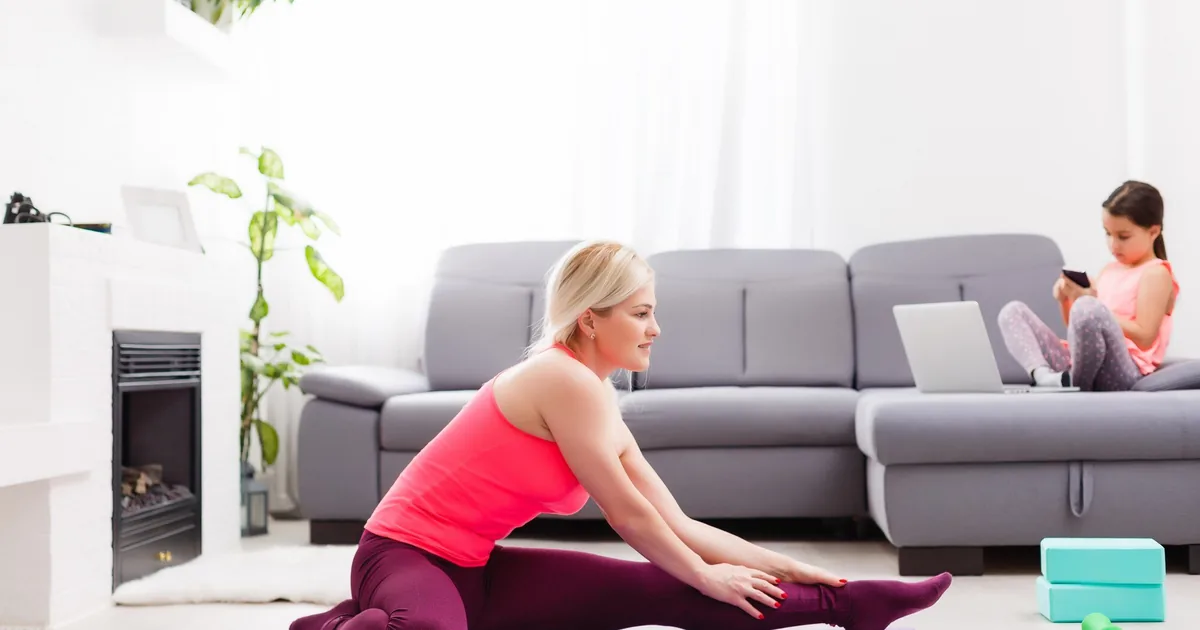
Many people think that yoga for beginners stretching is about doing the splits. In reality, stretching in yoga is about the soft, gradual opening of the body, which reflects the opening of consciousness. When we stretch muscles, we also stretch habitual behavior patterns. Tight hips are often suppressed emotions. A stiff neck is control and anxiety.
Here is a table to help understand what lies behind physical limitations:
| Body Area | Typical Tension | Possible Emotional Connection | How to Work With It |
|---|---|---|---|
| Hips | Tight, painful when stretching | Fear of change, need for control | Gentle lunges, long holds (3-5 minutes) |
| Shoulders | Raised toward ears, tense | Anxiety, responsibility, "carrying everything" | Rotations, forward folds, "thread the needle" |
| Neck | Aches, cracks | Control, unwillingness to see something | Slow turns, tilts, breathing |
| Lower back | Hurts when bending | Lack of support, financial fears | "Cat-cow," twists, "child's pose" |
Practical step: Don't chase results. Flexibility comes with time. Focus on sensations, not on the range of motion. Five minutes of mindful stretching is better than half an hour of forced "stretch-stretch."
Looking at the root: Stretching is a metaphor for life. We cannot force a flower to bloom faster. We can only create the conditions: light, water, warmth. Same with the body — create the conditions (regular practice, attention, patience), and the opening will happen on its own.
Yoga for Beginners — How to Integrate Practice into Life
Now that you have the basic tools, it's important to understand how to make yoga a part of life, not just another task on the list. Yoga for beginners is not about hour-long sessions every day. It's about small, mindful moments that you weave into your day.
Here's a comparison of two approaches:
| Approach | What It Means | Long-Term Result |
|---|---|---|
| "I have to do yoga" | Obligation, pressure, guilt when skipping | Burnout, quitting practice after 2 weeks |
| "I want to be with myself" | Choice, joy, acceptance | Practice becomes a natural part of life |
Practical step: Attach practice to an existing habit. For example: after morning coffee — 5 minutes on the mat. Or before bed — 3 poses for relaxation. Small steps create big changes.
Looking at the root: Yoga is not something you do. It's how you live. When you start noticing your breath in traffic, when you make a conscious choice to respond calmly, when you feel your body — you are already on the path. And this path is endless, and that is beautiful.
Yoga Is Not a Destination, but the Beginning of the Journey to Yourself
We've gone through five steps: from understanding that yoga is not about perfect poses, to creating space for practice, mastering basic asanas, finding resources, and mindful stretching. But perhaps the most important lesson is that yoga for beginners is not a set of exercises but an invitation to a dialogue with your body and mind. It's a practice that teaches us to hear ourselves amid the noise of daily life, to notice where we tighten up, and to gently release tension — not only physical but also emotional.
In a world where we are constantly pulled in different directions, yoga becomes an anchor. It doesn't demand perfection from you — it only asks for honesty and presence. You can practice five minutes in the morning or evening, in sweatpants or pajamas, with an instructor or in the silence of your home. The main thing is to do it mindfully. And it is in this mindfulness that the real magic lies, which the EXETERIC practitioner loves to talk about. This is not mysticism but the science of attention to yourself.
If you feel that yoga is something complex and incomprehensible, remember: any new endeavor seems that way until you start. You've already taken the first step by reading this article. The next one is to try. Not tomorrow, not "when there's time," but now. Stand up, take a deep breath in, exhale. Feel yourself. That's all yoga is. And if you want to go deeper and understand how other practices — meditation, breathing techniques, energy work — can support your journey, check out other practices on the EXETERIC blog. There you'll find not only articles about yoga but also the astrology section, which will help you better understand yourself through the lens of your zodiac sign.
Esoterics, like yoga, is not a panacea or a reason for fear. They are tools of self-discovery that can be used with wisdom and respect. Don't be afraid of what you don't understand. Explore calmly, try things in practice, trust your body and intuition. The journey to yourself is not a race but a slow, conscious return home. And you are already on the way.
Frequently Asked Questions
At what age can you start practicing yoga?
You can start practicing yoga at almost any age if there are no serious medical contraindications. Children can learn simple poses from 5-6 years old, teenagers — more active sequences, and adults and elderly people — adapted practices. The main thing is to listen to your body and not overload it. For elderly people, gentle joint poses and breathing exercises are especially beneficial, as they help maintain flexibility and mental calm. If you have chronic conditions, it's worth consulting a doctor before starting.
How often should you practice yoga to see results?
To begin with, practicing 2-3 times a week for 15-20 minutes is enough. Regularity matters more than duration: a short daily practice will give better results than one long session per week. You'll notice the first changes in 2-3 weeks: improved sleep, reduced stress levels, increased energy. Physical changes (flexibility, muscle strengthening) become noticeable in 1-2 months. But the main result — the inner one: a sense of peace, clarity, and connection with yourself — can come after the very first sessions.
Do you need special equipment for practicing yoga at home?
To start, you don't need anything special. Comfortable clothing that doesn't restrict movement and a yoga mat are enough. The mat is needed not only for comfort but also for safety: it prevents slipping and provides soft support for the joints. If you don't have a mat, you can use a clean towel or blanket. Over time, if practice captivates you, you can purchase blocks and a strap, but at the initial stage this is absolutely unnecessary. The main thing is to start, not to wait for perfect conditions.
Can you practice yoga with back or joint problems?
Yes, in many cases yoga can be beneficial for back and joint issues, but it's important to approach practice mindfully. There are special sequences for people with osteochondrosis, hernias, and arthritis that help strengthen the muscle corset and improve mobility. However, during acute pain or inflammation, you should not practice — first, consult a doctor or a yoga therapy specialist. Always start with gentle poses, avoid sudden movements, and listen to your sensations. Pain is a signal to stop, and discomfort is an acceptable boundary that should not be crossed.