Karma and Fate: How They Are Connected and Whether They Can Be Changed
Fate and Karma: What Is the Difference and Where Is the Intersection
When we say "fate and karma," many imagine two invisible forces pulling a person in opposite directions: one is punishment for the past, the other is a preordained route. In reality, they are not rivals but two layers of one reality. Fate is the vector set at birth: the conditions we start with, our talents, limitations, key encounters. Karma is the dynamics: the sum of our actions, reactions, and choices that constantly corrects this vector.
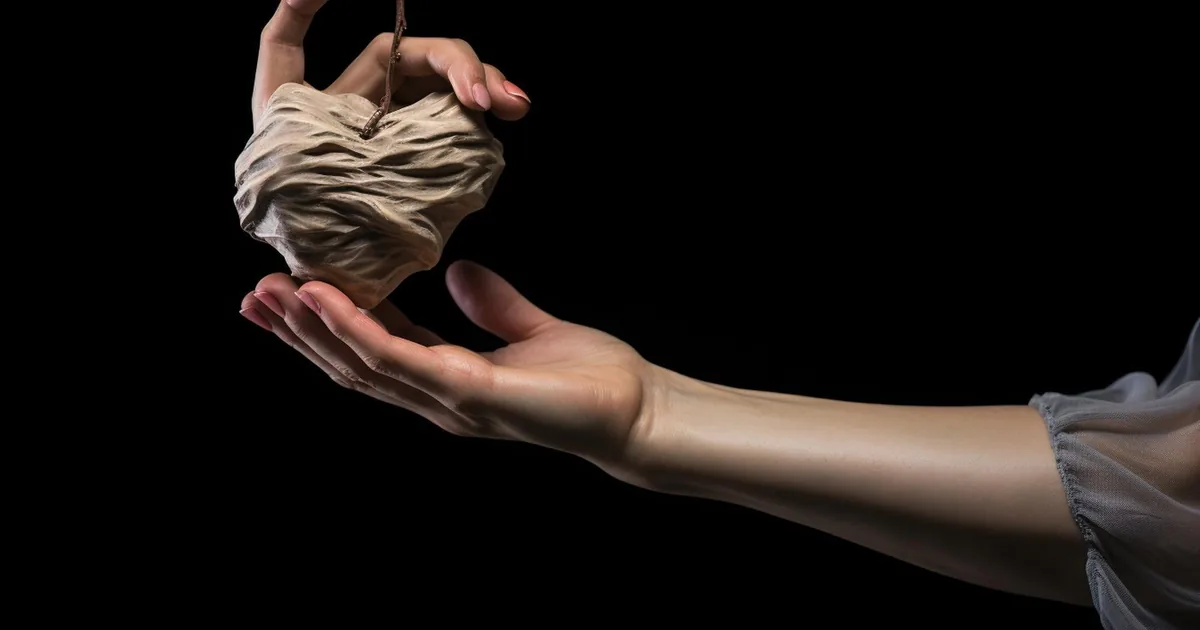
To put it simply, fate answers the question "what did I come with," while karma answers "what am I doing with it." In the esoteric tradition, fate is often described as a drawing painted on a canvas before our appearance, and karma as the paints with which we complete this drawing. This is precisely why karma and human fate are inseparable: without understanding the starting conditions, it is impossible to consciously work with cause-and-effect relationships, and without working with karma, fate turns into a rigid script.
So, what is the difference on a practical level? We read fate through the date of birth, name, ancestral patterns. Karma—through recurring events, the reactions of those around us, our "favorite" pitfalls. If fate is the map, then karma is the compass that shows where we are actually heading, not where we intended to go. And yes, the compass can be recalibrated.
Laws of Karma and Fate: How Cause and Effect Works
The laws of karma are not like a criminal code with fixed sentences. They are more like the physics of the subtle plane: every action creates an impulse that sooner or later returns to its source. In Indian philosophy, this is described as sanchita (accumulated karma), prarabdha (karma manifested in this life), and kriyamana (that which we are creating right now). Fate in this system is the line of prarabdha, that is, the part of the accumulated that is already "activated" in the current incarnation.
Imagine you come to a casino with a certain number of chips. That is fate. How you play—whether you take risks, bluff, or observe—that is karma. Winning or losing depends on both factors, but the strategy is always in your hands. This is precisely why karma, fate, and freedom of choice form a triad without which it is impossible to speak of a conscious life.
Psychologically, these laws manifest through habitual reactions. If a person has internalized since childhood that "the world is dangerous," they will unconsciously choose situations that confirm this belief. This is not punishment from above, but the work of the karmic mechanism: thought → emotion → action → result → reinforcement of the thought. The cycle can only be broken at the level of awareness, when we notice the automatism and consciously choose a different reaction.
Fate and Karma by Date of Birth: What Can Be Seen in the Numbers
Numerology and the matrix of fate offer a concrete tool for analyzing starting conditions. Fate and karma by date of birth are calculated through the sum of digits reduced to one of the 22 arcana (in the matrix of fate system) or to a single number (in classical numerology). Each arcana describes not a sentence, but a range of possibilities and typical traps.
For example, a person with the fate number 8 (arcana "Strength" in the matrix) often faces tests of power and control: either they suppress others or allow themselves to be suppressed. Conscious work with this arcana transforms aggression into healthy confidence. And the number 13 (arcana "Death" in the matrix—don't be alarmed, it's about transformation) indicates the need to regularly let go of what has become obsolete; otherwise, life will do it for you, sometimes painfully.
Important: fate and karma by date are not a diagnosis but a map of the terrain. If you see a "difficult" arcana, it does not mean life will be hard. It means you have a specific area of growth, and by working on it, you gain a tremendous resource. You can read more about calculations and interpretations in the matrix of fate calculator.
Matrix of Fate and Karma: How Arcana Describe Life Scenarios
The matrix of fate is a system that combines numerology, astrology, and tarot. It views the 22 arcana as universal scenarios, each having a shadow and a light side. Matrix of fate and karma are connected through the concept of the karmic tail: certain arcana in the matrix indicate unfinished lessons from past incarnations and ancestral tasks.
Let's take the arcana "Hierophant" (5). In shadow, it gives dogmatism, blind adherence to rules, dependence on others' opinions. In light, it is mentorship, the transmission of knowledge, the ability to build one's own system of values. If this arcana is at the center of the matrix, it is important for the person to learn to separate their own beliefs from imposed ones. Until they do this, fate will present situations where they must choose between "how it should be" and "how they want it."
Working with arcana is not divination but a psychological and spiritual practice. You can meditate on an arcana, keep an observation journal, track when the shadow reaction activates. Gradually, the shadow integrates, and the energy of the arcana begins to work for you. You can read about how to combine this with other practices in other practices on the EXETERIC blog.
Karma and Fate What Is the Difference: Comparison with Examples
To finally distinguish these concepts, let's compare them by key parameters. Karma and fate what is the difference—a question that often causes confusion because in everyday language we use these words as synonyms. But they have different natures and different ways of influencing.
| Parameter | Fate | Karma |
|---|---|---|
| Nature | A set vector, starting conditions | Dynamics, the result of actions |
| Source | Birth, lineage, higher plans | Our choices, reactions, deeds |
| Changeability | Changes slowly, through major stages | Changes constantly, through awareness |
| Analysis Tool | Astrology, numerology, matrix | Self-observation, working with reactions |
| What to Do | Accept and utilize the resources | Work through and redirect |
The table shows: we do not choose fate, but we can learn to read it. We create karma with every moment, and it is here that our freedom lies. Between karma and fate there is no conflict: fate provides the stage, karma is the play we perform. And although the plot is largely determined, we can always change the intonation, pace, and ending.
Karma, Fate, and Freedom of Choice: How Not to Become a Hostage to the Script
Freedom of choice is not the absence of limitations but the ability to act within them. Karma, fate, and freedom of choice form a triangle where each vertex influences the others. If a person denies fate, they waste energy fighting windmills. If they deny karma, they absolve themselves of responsibility and become a victim. If they deny freedom, they turn into a robot executing a program.
The conscious approach involves acknowledging: I have starting conditions (fate), I am responsible for my reactions (karma), and I always have a choice in how to act in a specific situation (freedom). Even in prison, one can choose what to think about. Even in illness, one can choose where to direct attention. This is not a devaluation of suffering but an acknowledgment of the inner territory that always remains with us.
Many books on karma and fate, such as the works of Vadim Shevchenko, emphasize: freedom begins where automatism ends. Vadim Shevchenko fate and karma are examined through the lens of psychology and spiritual practices, offering the reader not just theory but concrete steps for changing habitual scenarios.
How to Cleanse Karma and Ease Fate: Practical Steps
Cleansing karma is not a ritual with a candle and an incantation but systematic work on oneself. How to cleanse karma and ease fate is a question that requires honesty and regularity. The first step: acknowledge that there are recurring problems in your life. The second: find their root—usually it is a childhood trauma, an ancestral belief, or a conviction taken from a significant adult. The third: replace the destructive belief with a supportive one and reinforce it with actions.
For example, if you constantly fall into financial pits, perhaps there was a belief in the family that "money is dirty" or "rich people are bad." Having realized this, you can consciously form a new attitude: "money is a resource I can use for good." Each time you choose a new reaction instead of the old one, you weaken the karmic knot.
It is helpful to keep a journal of karmic lessons: record situations that triggered strong emotions and ask yourself: "What is this teaching me? What weakness does it reveal?" Over time, you will begin to notice patterns and be able to work with them proactively. How to change fate and cleanse karma is essentially the same process: stop being a victim of circumstances and become the author of your life.
Cycles of Fate and Karma: How to Recognize Turning Points
Life develops in cycles, and cycles of fate and karma follow certain rhythms. In numerology, these are seven-year and nine-year cycles; in astrology, planetary transits; in the matrix of fate, transitions between arcana. Knowing these cycles helps avoid panic during crises and use favorable windows for growth.
For example, every seventh year of life is often accompanied by a change in values and a reassessment of the past. This is not a coincidence but a pattern: accumulated experience requires integration. If during such a period you feel apathy or a desire to give everything up, perhaps you are simply entering a new cycle. Give yourself time, engage in cleansing practices—meditation, breathing exercises, journaling.
The numerical mandala fate and karma is another tool for working with cycles. It is built based on the date of birth and name, and allows you to see which energies are active at the current moment. But remember: any tool is just an assistant. The main thing is your intention and readiness to change.
Books About Karma and Fate: What to Read for Deepening
If you want to understand the topic more deeply, it is worth turning to trusted sources. Books about karma and fate can be divided into three categories: classic spiritual texts (Bhagavad Gita, Upanishads), psychological works (Carl Jung, James Hollis), and modern esoteric research (Vadim Shevchenko, Lazarev).
Special attention deserves the book karma fate and freedom of choice—this title appears in various forms by several authors. The essence is the same: a person is not a hostage to the past but the creator of the future. Book karma fate and freedom of choice reviews often emphasize that after reading, one's perspective on their own problems changes: they cease to seem like punishment and become lessons.
When reading such books, it is important not just to agree with the author but to apply what you read. Write down practices, do the exercises, keep a journal. Only in this way does theory turn into life experience. And remember: no book can replace your own honesty with yourself.
Prayer to the Lords of Karma and Fate: Does It Work?
In some spiritual traditions, there is a practice of appealing to the lords of karma—higher forces that govern the law of cause and effect. Prayer to the lords of karma and fate is not a deal or an attempt to "buy off" problems. It is an act of humility and readiness to accept the lesson. In Christianity, an analogue can be considered a prayer for forgiveness and guidance; in Buddhism, the practice of repentance and taking refuge.
Psychologically, such a prayer works by transferring part of the burden to a higher authority. This is not irresponsibility but an acknowledgment: I am not omnipotent, but I am ready to cooperate with life. If this practice resonates with you, use it as a daily ritual: in the morning—an intention for the day, in the evening—gratitude and analysis. The main thing is not to turn the prayer into automatic muttering but to infuse it with a living feeling.
Meaning of the Name and Karma: How the Name Influences Fate
A name is not just a set of sounds but an energetic code that we carry throughout life. Meaning of the name hope karma character and fate is an example of how different aspects intertwine. The name "Hope" carries the energy of faith and expectation, but it can also provoke passivity if the person waits for everything to resolve itself. In this case, karma will present situations where action is needed, not hope.
From the perspective of numerology, each letter of the name has a numerical value, and their sum provides additional information to the fate number. If the name resonates with your arcana, it enhances the resource. If it conflicts, it can create internal tension. In such cases, people sometimes take a pseudonym or change their name, but this is not a mandatory step. It is sufficient to consciously work with the qualities that the name activates.
Try analyzing your name: what associations does it evoke in you and in others? What character traits do you associate with it? This is a simple but effective way to see how the name is woven into your karma and fate.
Number of Karma and Fate: How to Calculate and What It Means
In numerology, the number of karma and fate are calculated differently. The fate number is the sum of all digits of the date of birth, reduced to a single-digit number (or to an arcana in the matrix). The karma number is the sum of the digits of the day of birth, which indicates the specific lessons of the current incarnation. For example, if you were born on the 15th, your karmic number is 6 (1+5), which is connected to themes of responsibility, family, and harmony.
Knowing these numbers, you can understand which areas of life will require attention. But you should not perceive them as a sentence. Numbers are the language in which the universe speaks, and our task is to learn to understand it, not to fear it. If the karma number indicates conflict, it does not mean you will be a troublemaker. It means it is important for you to learn to express aggression ecologically and defend boundaries.
For a deeper analysis, the numerical mandala fate and karma is used, which combines the numbers of the name and date of birth into a single scheme. But even without complex calculations, you can start with something simple: write down your numbers and observe how their themes manifest in your life. This is the first step towards conscious work with karma.
Life and Fate Karma: How to Apply Knowledge in Everyday Life
All these theories are useless if not integrated into daily life. Life and fate karma are connected through daily choices: what to eat for breakfast, how to respond to rudeness, where to direct attention. Each such choice is either a repetition of an old karmic pattern or the creation of a new one.
Start small: choose one habitual reaction you don't like, and for a week, consciously replace it with the desired one. For example, instead of getting irritated in traffic jams, listen to an audiobook or a podcast. This will not change the world, but it will change your karma—because you have stopped being an automaton. Over time, such micro-shifts accumulate and change fate.
Remember: karma and fate are not punishment but tools for growth. And if you are reading this article, it means you are already ready to take them in hand. Next is practice. And if you want to explore related topics, check out the astrology section or the EXETERIC dream dictionary—there you will find even more tools for self-knowledge.

Karma and Fate as Tools, Not a Sentence
Everything we have discussed on these pages is not a reason to worry or look for flaws in yourself. Esotericism is not about fear or fatal predestination. It is about attentiveness: to your reactions, to recurring plots, to the quiet inner voice that sometimes hints at the right direction before logic has time to sort everything out. Karma and fate, in this sense, are not overseers but mirrors. They show where we are stuck and where we are already ready to move forward.
If this approach resonates with you—calm, thoughtful, without mystical fog and intimidation—take a look at the EXETERIC guide to esotericism. It contains materials that help turn abstract theories into understandable daily steps. You don't need to believe everything at once, nor do you need to reject anything outright. It is enough to try: one practice, one week of observation, one honest question to yourself. This is how esotericism transforms from a curiosity into a support.
Some find answers in numerology, others in astrology, others in a simple gratitude journal. There is no universal recipe, and that's normal. If you want to look at your situation more broadly, through the prism of planets and elements, open the astrology section—perhaps your zodiac sign or current transit will explain what previously seemed like chaos. And if your soul asks for more practical topics—from meditations to working with ancestral patterns—then you should definitely browse the articles on magic and self-knowledge on the EXETERIC blog.
The main thing I want to say in conclusion: do not be afraid of the unknown. Karma, fate, arcana, numbers—these are just languages that people have used for centuries to try to describe the inner life. You can choose the one that resonates with you or create your own. Awareness does not require initiation into secret orders—it requires honesty and patience. Start small, treat yourself with respect, and you will see: life does not become simpler, but clearer. And clarity is already half of freedom.
Frequently Asked Questions
Can fate be changed if it is predetermined?
Fate is not a rigid program that cannot be rewritten. It sets the starting conditions: family, body, talents, key encounters, but it does not dictate every step. Within these frameworks, there is always room for choice—how to react, where to direct attention, with whom to build relationships. By changing daily reactions, you gradually change the trajectory of life. This is precisely why esotericists say: fate can be consciously corrected, not broken. The more you understand your starting data, the more freely you can use it.
How to understand that I have a karmic lesson, and not just bad luck?
A karmic lesson is usually recognized by its repetitiveness. If the same situation—conflict with authority, financial pits, painful breakups—returns in different settings, it is a signal. A random misfortune passes and does not leave a deep mark, while a karmic plot hooks emotionally and requires inner work. It is helpful to keep a journal and record what triggers you again and again. When you see the pattern, you have a chance to break out of it. Awareness is the first step to breaking the cycle.
Is working with karma and the matrix of fate dangerous?
Working with karma itself is not dangerous if approached calmly and without fanaticism. Danger arises where a person begins to perceive calculations as a sentence or shifts responsibility onto "evil karma." The matrix of fate, numerology, and astrology are tools for self-knowledge, not diagnoses. They show areas of growth but do not cancel your freedom. If you feel anxious, it is better to slow down, discuss your conclusions with a psychologist or an experienced practitioner. Common sense and self-care are the best protection.
Where to start if you want to work on your karma?
Start with observation, not rituals. For a week, record situations that triggered strong emotions: anger, resentment, fear, shame. Then ask yourself a simple question: "What is this teaching me?" This way, you will begin to see recurring scenarios. In parallel, you can calculate the fate number by date of birth or look into the matrix—this will give you a language to describe your themes. And don't forget about the body: sleep, walks, breathing practices help maintain clarity. Karma changes through daily small choices, not through one heroic act.