Kikimora: how she harms the house and what repels her
If at night in the hut someone tangles the yarn, knocks in the corner and hides the keys, in the village they used to say it briefly: a kikimora has settled in. Let's calmly figure out what is a kikimora, where she comes from and why she was so feared. The kikimora in Slavic mythology is not a fairy-tale bogeyman, but an image of an anxious, neglected home: quarrels, desolation, unspoken grievances and stagnant energy. We will talk about her both as a spirit of place and as a psychological symbol, to understand how to protect the home without panic and superstition.
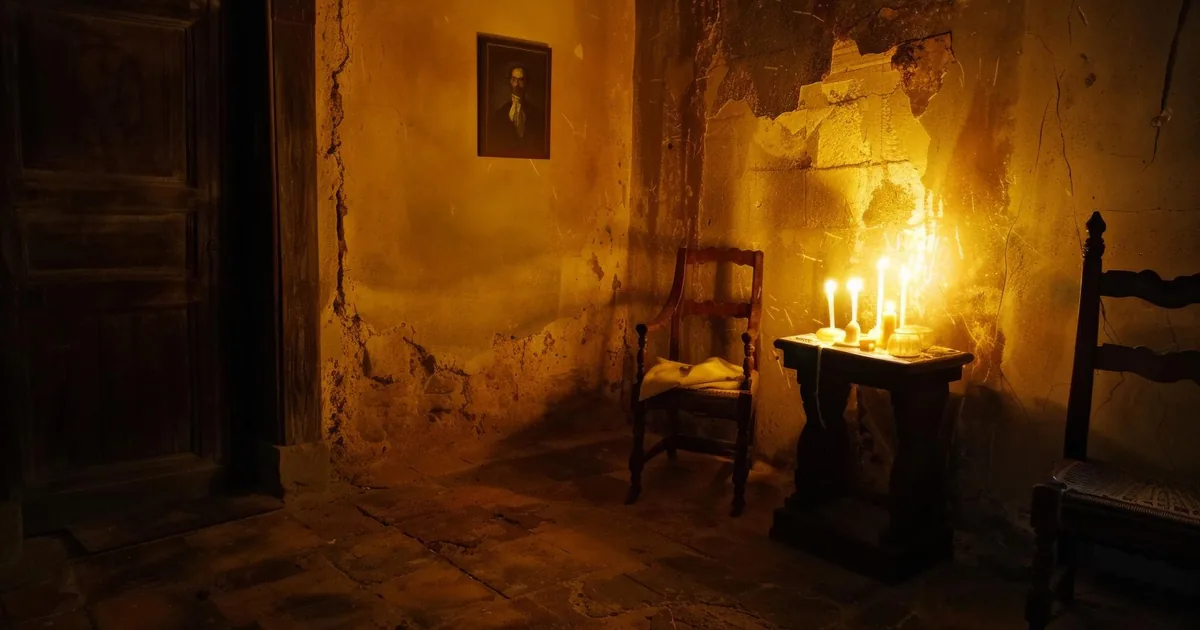
What is a kikimora: meaning and place in Slavic mythology
Kikimora meaning in folk culture is dual: it is both a spirit, and a description of a person and a home. Who is called a kikimora in villages even now? This is what they call a disheveled, grumbling housewife whose everything falls out of her hands, and a neglected dwelling where things get lost by themselves. But originally kikimora mythology describes her as an invisible neighbor of man — a female spirit of the hut and the yard.
Kikimora Slavic mythology divides into two types: house kikimora and swamp kikimora. The first lives behind the stove, in the cellar, in the henhouse or in the women's corner by the spinning wheel. The second — in the forest, in the swamp, by the whirlpools. Kikimora why is she associated with the swamp? The swamp is a place of the boundary, of stagnation, of unexperienced grief. So is the spirit: it appears where energy stands still, where neither the hut nor relationships are aired out. Swamp kikimora photo, of course, cannot be found — it is an invisible image, but she was described as a small hunched old woman in rags or as a long-haired maiden with swamp slime in her braids.
Who is the kikimora's husband according to beliefs? Most often they name the domovoy, more rarely — the leshy or the swamp spirit. This union is restless: the domovoy is the master of order, and his restless companion is of chaos. Therefore kikimora and domovoy difference is huge, although they live side by side. Kikimora folk beliefs associate her with the unclean dead, children cursed by builders, unbaptized infants. It was believed that she could be planted by unkind carpenters if they were not paid: they would lay a small doll or a splinter with a spell into the wall. The practical step here is simple: if you have moved into an old house, start with cleaning and getting to know the space — wash the corners with salt, air it out, light a candle with an intention of peace. A look to the root: the kikimora is a marker that the home lacks attention and care.
Kikimora what does she look like and what does she do in the hut
Kikimora what does she look like? Descriptions vary from province to province, and therein lies all the interest. Kikimora folk names and village stories give dozens of portraits: shishimora, mara, moroka, susedka. Sometimes she is an invisible being of whom only the spindle is heard at night, sometimes a little woman with a chicken leg, with a hump, with an old woman's face and a girl's body. Kikimora what does she do in the hut by day? She hides. She is active at night: she spins, but tangles the threads, tears the yarn, breaks dishes, pulls the hair of sleepers, frightens hens so that they stop laying.
Kikimora what does she do in the hut from the point of view of psychology? She voices repressed tension. A recognizable example: a family in a quarrel, the housewife exhausted, the house in a mess, everyone snapping at each other — and then scissors start disappearing, appliances break, doors creak. They used to say — she is misbehaving. The modern view: the subconscious seeks an external image for inner disorder. Kikimora interesting facts confirm this: she does not like lazy and slovenly people, but even more she does not like evil and quarrelsome ones. That is, she harms where harmony is already broken.
Kikimora signs of appearance are very everyday: skeins tangled in a special knot that the housewife did not make; at night the sound of bobbins is heard, although no one is spinning; milk sours faster than usual; children complain that they are tickled in their sleep. What to do practically? Start a ritual of evening order: 15 minutes of silence, warm light, put yarn and tools away in a closed box. The intention is simple: night is for rest, not for anxiety. This is both respect for tradition and sleep hygiene, which is also written about in the EXETERIC dream book when analyzing night fears.
| Symbol / image | Traditional meaning | Manifestation in life | What to do |
|---|---|---|---|
| Tangled yarn at night | Unfinished women's tasks, anxiety | Insomnia, obsessive thoughts | Evening ritual of completing tasks, putting away needlework |
| Knocking, rustling behind the stove | The spirit demands attention | Quarrels, creaks, breakages in the house | Cleaning corners, fumigating with wormwood |
| Missing trifles | Moroka, leading astray | Absent-mindedness, haste | Say aloud a request to return them, tidy up |
| Frightened hens, livestock | Disturbed harmony of the yard | Restlessness of animals | Cleaning the henhouse, a wormwood amulet at the entrance |
Kikimora how to tell that she lives in your house
Kikimora how to tell that she lives in your house without being suspicious? Folk tradition distinguished three levels of signs: sound, object and bodily. Sound — rustles, patter of little feet, spinning wheel at night, weeping in the cellar. Object — things not in their places, knots on threads, dishes broken for no reason. Bodily — pressure on the chest in sleep, feeling that someone is sitting on the bed, tickling of the heels. Kikimora why does she frighten at night? Night heightens intuition and fears, and silence makes audible what everyday life drowns out by day.
A living example from readers' letters: a young mother moved into her grandmother's house, the child began to sleep poorly, waking up crying at 3 a.m. A grandmother-neighbor said: kikimora stories from villages describe this often — she has taken a dislike to the newcomers. They figured it out calmly: the room was stuffy, the old carpet was dusty, the mother herself was anxious about the move. They aired it out, removed the carpet, introduced a lullaby ritual — and the night awakenings went away. Kikimora why is she dangerous for children? Children are more sensitive to the vibrations of the home and to adults' anxiety, they are the first to react to discord.
Practical diagnostic step for 7 days: keep a house diary. Write down the time of noises, your state, quarrels, fatigue. If noises coincide with tension — this is about energy and psychology, not about an evil spirit. If you want to go deeper into self-knowledge through symbols of dreams and night images, look into other practices in the EXETERIC blog, where we analyze how to distinguish an anxious dream from a sign of the space. A conscious view: the home is a mirror, not an enemy.
Why is a kikimora dangerous and why was she considered the most dangerous spirit of the hut
Why is a kikimora dangerous in reality? Kikimora why is she considered the most dangerous spirit of the hut, if the domovoy is stronger? Because the domovoy is predictable: respect order — he will help. And she is capricious, vindictive and strikes at the most vulnerable — sleep, children, women's labor. Kikimora folk beliefs say: she can send morok, bring to insomnia, drive out of the house, cause a fire or livestock disease. Spinners feared her especially: she tangles the tow — there will be no cloth, and therefore no dowry, and no prosperity.
Kikimora how does she differ from the domovoy in character? The domovoy is a master-man, a guardian of boundaries. He grumbles, but protects. She is the offended, unloved side of the home. The table below shows the difference clearly, for comparisons are better seen structurally.
| Common myth | Why it is not so | How it really is |
|---|---|---|
| The kikimora is always an evil witch | In some villages she was appeased and she helped to spin | This is a mirror-spirit: quiet in harmony, harmful in discord |
| She can only be driven out by force | Aggression intensifies conflict in the house | First harmony, cleaning and agreement, then banishment if needed |
| She is equally dangerous to everyone | Children and tired women suffer most | She strikes the sensitive, so sleep protection is important |
Kikimora and domovoy difference is important for practice: the domovoy is fed to thank him, and with her — to agree on boundaries. Example: the housewife leaves porridge for the domovoy behind the stove with a bow, and for her — a patch and a comb with a request not to tangle the yarn. The energy here is an exchange of attention. Intention decides: not fear, but respectful housekeeping. If there are constant scandals in the house, no offerings will work until peace is restored among the living.
Kikimora how to appease her and how to protect children from her mischief
Kikimora how to appease her, if she is already grumbling? The folk way is gentle: to acknowledge her presence and give her a place. The house kikimora loves a corner, doll clothes, small gifts — a bead, a ribbon, a piece of gingerbread. They left a treat in the cellar with the words: here is for you, mother, a gift, do not touch my children and yarn. Kikimora how to protect children from her mischief? The child's bed was protected: juniper or wormwood was placed under the mattress, rowan crosses were hung over the cradle, a lullaby-prayer was read. The infant was bathed in succession, and the water was poured not at a crossroads, but under a healthy tree.
From the point of view of psychology this gives the child a feeling of security through ritual. Example: a toddler is afraid of the dark, says that there is an auntie in the corner. Instead of ridiculing, mother together with him hangs a dreamcatcher, puts a brave bunny-guard and agrees: the bunny guards, the corner is for toys. The fear goes away, because a symbol of protection and connection with mother appears. Kikimora home protection begins with sleep protection: airing out, dimmed light, warm bath, no quarrels before sleep.
Practical step for the evening: walk around the children's room with an intention of calm, straighten the bedding, say aloud: in this house they sleep peacefully, we protect everyone. Place a sprig of wormwood or juniper by the door. If you are interested in how a child's date of birth affects sensitivity to the atmosphere of the home, you can look at the Matrix of Fate calculator — not as a sentence, but as a hint about subtle places of character. Awareness is more important than an amulet: a calm mother is the best amulet.
Kikimora how to drive her out of the house: rituals and home protection
Kikimora what to do if she starts causing harm seriously: breaks dishes, torments at night, children cry, husband swears? Kikimora how to drive her out of the house according to tradition is a question of the power of place, not the power of fear. Kikimora what rituals help to drive her out were usually performed by knowledgeable people: they swept corners with a juniper broom, fumigated with St. John's wort and wormwood, walked around the hut with an icon and a candle, read a spell against the shishimora. Kikimora banishing ritual often included finding a planted charm: they opened the floor, took out the doll, burned it in the stove with words of release.
Kikimora how to get rid of her without harm to yourself? Step by step and calmly: first day — general cleaning, throw out junk, fix dripping and creaking things. Second — fumigation and airing, washing floors with salt and wormwood decoction. Third — agreement: aloud designate the rules of the house, ask to leave in peace, take a treat to a crossroads or to the forest, without looking back. If you are believers — invite a priest for blessing. If esotericism is closer — set protection with intention, visualize a bright dome over the house. Kikimora home protection rests on three pillars: cleanliness, harmony among the living and clear boundaries.
| Situation | Reactive approach | Conscious practice | Result |
|---|---|---|---|
| Things disappear, threads get tangled | Shout, accuse household members | Cleaning, a box for trifles, request to return aloud | Order and silence in 3-7 days |
| Night fears, pressure in sleep | Watch horror films, drink coffee at night | Sleep hygiene, wormwood by the bed, evening ritual | Peaceful sleep |
| Children are capricious, animals are restless | Punish, panic | Cleaning the children's room, harmony in the family, amulet-ritual together | Trust and calm |
For fine-tuning the atmosphere of the home some check with the rhythms of the moon and their own state — the astrology section helps with this, where you can track tense days and do a lighter cleaning in advance. And if the planted charm is not found, and the mischief continues, do not get fixated on banishment: invite an independent person to spend the night — a fresh look often hears what the owners exaggerate from anxiety, whether it is mice in the wall or the hum of pipes. The home loves when it is cared for with hands, not only with spells.
The home in which it is calm: what to do with the kikimora next
If after everything you have read you feel calmer — this is the main result. The kikimora frightens only until we understand what she is talking about: fatigue, neglected corners, conversations that should long ago have been held kindly. There is no need to divide the world into scary and safe, it is enough to return to yourself the role of a caring housewife or master of your space. Wash the house, make peace with loved ones, put your affairs and your head in order — and night rustles most often go away by themselves, without war and fear.
Treat esotericism as a language in which home and soul suggest where it hurts. This is not a panacea that will solve everything for you, and not a reason to see evil spirits in every fallen spoon. This is a tool of self-knowledge and conscious life: a cleaning ritual, evening silence, a respectful agreement with the place where you live. It is precisely such a careful approach that underlies EXETERIC practices — without intimidation, based on tradition, psychology and common sense.
Do not be afraid of the incomprehensible, figure it out calmly. Try one small practice consciously and with respect: a week of evening order, wormwood by the bed, warm light and kind words to the home before sleep. Observe how sleep, children's mood, family atmosphere change. And to go deeper, look into other practices in the EXETERIC blog and in the astrology section, where you can check with your rhythm and choose a calm day for a big cleansing. May your home be a place you want to return to — quiet, bright and yours.
Frequently asked questions
Does a kikimora settle only in old village houses?
No, the image of the kikimora is not tied to the age of the house, it is tied to the state of the space and the people in it. In tradition she was more often described in old huts, because there were more dark corners, cellars and stories about former residents. In a modern apartment her role is played by the same signs: constant clutter, unthrown broken things, quarrels, insomnia and the feeling that things live their own life. Therefore moving to a new building does not guarantee silence if the habit of disorder and tension remains. It is always worth starting with the simple: decluttering, repairing trifles, honest conversation with loved ones and a calm evening routine.
What repels a kikimora most strongly according to beliefs?
According to folk ideas the kikimora most of all dislikes order, light, prayer and sharp-smelling herbs. The most reliable means were considered general cleaning, washing floors with salt, fumigating with wormwood, St. John's wort and juniper, as well as candle and lampada fire. Clear boundaries spoken aloud worked well: the owners directly stated who is in charge in the house and what rules apply here. Harmony among the living was especially valued — as long as there is peace in the family, the spirit behaves quietly. Therefore it is not one amulet-object that repels her, but a combination of cleanliness, light, calm sleep and respectful but firm housekeeping.
Can a kikimora be appeased rather than driven out?
Yes, in many villages they preferred not to drive her out, but to come to an agreement, especially if she did not cause serious harm. She was given her own corner behind the stove or in the pantry, a patch, a ribbon, a doll, a piece of bread or gingerbread was left there with kind words. They asked her not to tangle the yarn, not to touch children and livestock, not to make noise at night, and in return promised cleanliness and respect. Such an agreement worked as a psychological ritual: people themselves became more attentive to the home and calmer. They began to drive her out by force only in case of obvious harm — insomnia, children's illnesses, constant breakages. Even then they first did cleaning and reconciliation, and only then the banishing ritual.
Are kikimora and insomnia connected?
In the folk picture of the world this connection was direct: night knocking, tickling, pressure on the chest and tangled thoughts were explained by the mischief of the night spirit. The modern view sees the same thing here, but in other words — anxiety, overwork, stuffiness, screen light and unfinished business do not let you fall asleep. The kikimora in this sense is a very accurate image of insomnia: obsessive thoughts like tangled yarn, light sleep, awakenings around three o'clock at night. Therefore sleep protection coincides with protection from her: airing out, silence, warm light, put-away phone, completed small tasks. If insomnia lasts for weeks and is accompanied by severe anxiety, it is important to see a doctor, and leave rituals as supporting, not main, help.