cemetery rites what is it and why it's better not to get involved
If you googled cemetery rites what is it, most likely you were brought here not by idle curiosity, but by anxiety: someone offered to "work through the cemetery," a video about a love spell on a grave popped up in your feed, or a friend whispered that this is the only way to bring back love and money. Let's look at it calmly: cemetery rites what is it in simple words, where they came from, how they are described in tradition, and why even experienced practitioners advise beginners to stay away from them.
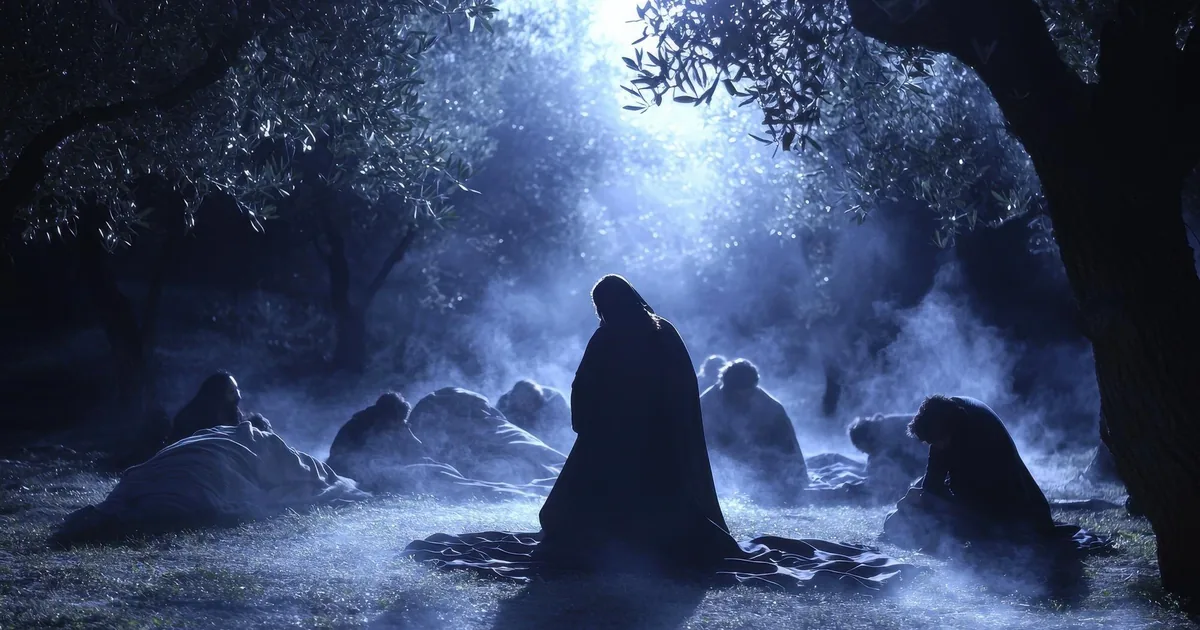
Let's establish the main thing right away: what are cemetery rites in the esoteric sense — this is a group of ritual actions that are performed at the cemetery and appeal to the energy of the place, the spirits of ancestors, the Hosts of the graveyard and the power of the boundary between worlds. In different schools this is called cemetery magic rites, cemetery rites and rituals, cemetery magic and its rites. The meaning is the same: the cemetery is seen as a place of power where the boundary thins and intention sounds louder. But louder does not mean more precise or safer.
Cemetery Rites What Is It and What Is Their Meaning in Tradition
To understand cemetery rites meaning, you need to look not at horror stories from TV series, but at history. The graveyard in Slavic, Western European and Latin American traditions is not just a "territory of the dead." It is a place of transition, where its own rules of respect apply: do not make noise, do not take without asking, come with gifts, say hello and goodbye. That is why cemetery rites at the cemetery always began with a bow to the Master and Mistress of the graveyard, a memorial offering and permission.
What you need to know about cemetery rites for a beginner? First: in tradition the cemetery is not a "socket with free energy," but a living community. A recognizable example: a person comes with grief after a divorce, they are advised to "bury the ex's photo on an unnamed grave so that it lets go." Psychologically this works as an act of symbolic closure — the subconscious receives a sign: that's it, the end. Esoterically, however, you enter into contact with the place and the deceased without their consent. Your intention is to let go, but the action is binding another person to dead earth. Do you see the disconnect?
A practical step, if you are drawn to such practices out of pain: replace the action. Write a letter to the one you are letting go of, read it by running water, burn it safely and scatter the ashes to the wind. This is also a ritual, but without intrusion onto someone else's territory. And to understand your motives it is useful to look into the Matrix of Fate calculator — often behind the craving for harsh influences lies an unpassed arcana of attachment and fear of loneliness, and not "you specifically need cemetery magic."
A look to the root: cemetery rites what is it and types we will examine further, but their essence is working with the boundary. A conscious approach here is respect for the boundary, not an attempt to hack it. If you are seeking connection with yourself and your lineage, start with a home memorial, cleaning the graves of your ancestors and quiet gratitude. This is also cemetery magic rites and spells in the broad sense, only its bright part: remembrance, not coercion.
Cemetery Rites What Is It and Types: From Memorial to Harsh Influences
When people ask cemetery rites what is it and types, they usually expect a list of "recipes." We will not give instructions, but we must give a classification — so that you can recognize what you are being offered and say "no" in time. Conditionally cemetery rites types are divided into three large groups: memorial-protective, contractual and destructive.
Memorial-protective ones are cleaning graves, commemorating ancestors, asking for the protection of the lineage, leaving gifts to the Hosts. Contractual ones are already cemetery magic rites for help in matters, when the practitioner asks a spirit-helper to "lend a hand" for a payoff. Destructive ones are love spells, break-ups, curses, thefts of luck, bindings on a poppet, burials and transfers of illnesses. It is the latter that are most often meant when people say cemetery rites for love and cemetery rites for money.
| Common Myth | Why It Is Not True | How It Really Is |
|---|---|---|
| Cemetery magic for beginners is safe if you do a "white" love spell | The division into "white" and "black" at the graveyard is conditional: any coercion of will is already interference | Even a "soft" rite at the cemetery creates a binding to necrotic energy and requires a payoff and closing |
| It is enough to read a spell from the internet on a grave | Without initiation, protection and contact with the place you are simply making noise in someone else's house | Traditionally, admission was given through training, fasting, memorial and permission of the spirits of the place |
| If it is scary — it means it works | Fear is a reaction of the nervous system, not a marker of power | The working sign is silence, clarity and an even state after, not panic and dreams with the deceased |
A living example: a girl is offered cemetery rites how they are performed — "come at the full moon, bring a photo, vodka, coins, read this at the fence." It sounds simple. But she is not told cemetery rites what is it in terms of price: where to put the payoff, how to close the gate, how to cleanse herself, what to do if anxious dreams and decline began after. A look to the root is simple: if you cannot be clearly explained safety technique, closing and removal — you are facing not a master, but a reteller of forums. Conscious practice in this case is to refuse and choose a ritual on personal power: a candle, a letter of intention, work with the subconscious, which we often write about in other practices in the EXETERIC blog.
Cemetery Rites How They Are Performed and Why This Is Not for Independent Experiments
Let's examine cemetery rites how they are performed in descriptions of tradition — not as an instruction, but to remove the romantic flair. The classic scheme described by ethnographers and practitioners: preparation, entry, work, exit. Preparation — fasting, abstinence, memorial of ancestors at home. Entry — greeting the Hosts of the graveyard at the gates, a gift, a request for permission. Work — addressing a specific grave according to the rules of similarity: namesake, unnamed, child's, family — each has its own reputation and risks. Exit — payoff, gratitude, closing, cleansing, silence on the way home.
What goes wrong here with amateurs? Almost everything. Example: a man wants cemetery rites for money — to bury coins "for growth" or take earth "for trade." He comes in the daytime, without gifts, photographs graves, loudly reads cemetery magic rites and spells from his phone, takes something "as a keepsake." From the point of view of energy and psychology he makes three mistakes at once: disrespect for the place, binding a financial intention to the energy of fading, and violating the personal boundaries of the deceased. Money is vibrations of growth, exchange and life. The graveyard is vibrations of completion and silence. Connecting them directly is like watering seedlings with icy water in the hope that they will "harden."
A practical step, if you have already been persuaded or have already gone: do not panic and do not run to "remove" everything with the first person you meet. Recall the details: what you took, what you left, what you said. Wash your shoes and clothes, remove everything brought from the cemetery from your home, do wet cleaning with salt, take a shower with the intention of cleansing, commemorate your ancestors at home with pancakes or porridge without alcohol. If anxiety, dreams with the deceased and loss of strength persist for more than two weeks — this is a reason to turn to a psychologist and, if you are a believer, to a priest of your tradition, and not to a new "removal" on the internet. This is exactly what an adult understanding of what are cemetery rites in practice looks like.
Cemetery Rites What Is It and Danger: Honestly About the Price
Now about the main query: cemetery rites what is it and danger. Let's speak without intimidation, in the language of facts. Cemetery rites danger has three levels: psychological, social and, if you like, spiritual-energetic. Psychology: after a night trip to the graves the nervous system remains excited for a long time. Intrusive thoughts, guilt, fear of punishment appear. A person begins to see "signs" everywhere — this is a classic effect of anxious focus of attention, and it in itself destroys sleep, relationships and work.
The social level: involvement in dependence on the "master." The scheme is recognizable: you are told that cemetery rites consequences are irreversible without additional payments, that a "second part" is needed, "protection," "to fix." You pay again and again. The energetic level, as tradition describes it: binding to the place, outflow of strength, feeling of heaviness, cold in the house, dreams where you are called by name. Whether to believe this literally or read it as a metaphor of the subconscious is your choice, but cemetery rites consequences are described surprisingly identically in different cultures: apathy, discord in the house, strange losses.
| Symbol / Image | Traditional Meaning | Manifestation in Life | What to Do |
|---|---|---|---|
| Crossroads at the graveyard | Place of decisions and mediator spirits | Pulls to "dump" the problem, shift it onto another | Make decisions in daytime and with a sober head, in writing, without transfer rituals |
| Unnamed grave | Spirit without remembrance, hungry for attention | Offers of "strong" love spells right there | Refuse; if you have been there — commemorate all the departed namelessly in church or at home |
| Payoff with coins and vodka | Payment for disturbance | Illusion that everything is "paid for" and safe | Understand: payoff does not cancel the ethics of influencing someone else's will |
| Earth and things from the grave | Direct channel of connection with the place | Keeping at home gives anxiety and dreams | Return to the place with apologies and gifts, at home — cleaning and airing |
Separately — cemetery rites what is it and consequences for the customer of a love spell. Even if you discard mysticism, you get relationships built on coercion. The person is near, but lethargic, irritated, drinking. You constantly check the phone, fear a "backlash," run for "re-dos." This is not love, but an anxious attachment with a high price for both. A conscious step here is honest work with attachment: therapy, a feelings journal, body practices, restoring self-esteem. Sometimes it is useful to look at cycles in the astrology section to understand why you are drawn to painful scenarios in certain periods — not as a sentence, but as a weather map.
Cemetery Rites What Is It and Protection: How to Think Soberly and What to Do Instead
The query cemetery rites what is it and protection usually sounds when a person is already frightened: went, ordered, found a planted hex. Let's build protection as a system, not as a hasty amulet. The first level is information hygiene: stop watching nighttime analyses of "cemetery magic for beginners" and reading forums with instructions. Each such video increases suggestibility. The second level is body and home: sleep, food, daytime walks, order in the house, light. A tired brain sees mysticism even in a creaking door.
The third level is spiritual, in your tradition: remembrance of ancestors, prayer, meditation, gratitude. An example from practice: a woman after an unsuccessful attempt to "bring back her husband through the grave" could not sleep for a month. We removed the triggers — the photo of the ritual in the phone, correspondence with the "witch," earth in a bag on the balcony. We returned the earth to its place, did a general cleaning, introduced an evening ritual of silence without gadgets and a weekly memorial of her grandmother at home. After three weeks sleep was restored. This is not "curse removal," this is returning control to yourself.
What you need to know about cemetery rites in the context of protection? That the best protection is not to go and not to order. If you are frightened that without cemetery rites what is it removal you cannot live — this is manipulation. Removal in folk tradition does exist, but it always begins with stopping the influence itself: break contact with the performer, remove objects, confess the act, ask forgiveness from ancestors and live on honestly. No candle will outweigh continued violence against someone else's will.
Cemetery Rites What Is It Sin and How to Replace the Craving for Strong Influence
The question cemetery rites what is it sin is asked by both believers and people far from the church. In short: in Christianity, Islam and Judaism, appealing to the dead for the purpose of influence is considered a sin and a prohibition — not because "the priest scolds," but because it is a substitution of trust in God and respect for the departed with magical coercion. Even if you are outside religion, the ethical criterion works: would you like your photo to be buried on someone else's grave without your consent for someone's benefit?
What to replace it with? If you need cemetery rites for love — replace them with practices of attracting the living: analysis of attachment, work with body and voice, open dating, honest conversations. Write a list of 20 points "what kind of relationship I can give," not just "what I want to receive." If cemetery rites for money beckon you — do a financial audit, remove debts, introduce a ritual of tithing to charity and a weekly "money hour." The energy in these actions is living, and intention sounds pure, without intermediaries from the graveyard.
And the last in this section: if you dream of the deceased after you became interested in the topic, do not rush to interpret it as a "call." More often the subconscious is simply processing fear and guilt. Write down the dream, note the feelings, commemorate the person with a kind word in daytime. And if you want to understand the language of images more deeply, look into the EXETERIC dream book and articles on dream interpretation — there is a lot there about how to distinguish an anxious dream from a truly significant one. The graveyard teaches the main thing: respect the boundary, thank for life and solve your tasks on the bright side — at home, in daytime and with open eyes.
The Graveyard Teaches Respect for the Boundary — and for Yourself Too
If after this article you still have a slight excitement — this is normal. The topic of the cemetery always touches the most living things: fear of loss, longing for love, desire to protect yourself and loved ones. But it is here that it is important not to rush. Cemetery rites are not a magic button, but an appeal to a very subtle and demanding force that does not forgive fuss, anger and the desire to control another person. And the most mature conclusion that can be drawn: respect for the boundary between worlds begins with respect for the boundaries of living people.
Esotericism in a healthy form is not a way to bypass life, but a tool of self-knowledge and conscious life. Instead of looking for who will "bind" or "bring back" stronger, try to ask yourself honestly: what do I really lack — love, peace, confidence, money or a sense of support? Such a question in itself removes half of the fear. This is exactly how the approach of EXETERIC practitioners is built: calmly, without panic and intimidation, based on psychology, tradition and common sense.
If you are drawn to a strong and fast result, give yourself a pause of seven days. In these days tidy up your home, get enough sleep, commemorate your ancestors with a kind word, write down your desires on paper and see which of them are really about life, and not about revenge or fear of loneliness. Look into the astrology section and find out the forecast for your zodiac sign — sometimes understanding the period removes the feeling that "everything is collapsing" and you need to urgently run for a harsh ritual. And to go deeper into the topic of safe practices, read other practices in the EXETERIC blog: there is a lot there about intention candles, working with lineage, cleansing the home and interpreting dreams.
Do not be afraid of the incomprehensible — sort it out calmly. You can always choose the bright side: live in daytime, speak honestly, thank for help and solve your tasks without intrusion onto someone else's territory. Try one conscious practice today — with respect for yourself, for others and for those who have gone. And let the graveyard remain for you a place of quiet memory, not fear.
Frequently Asked Questions
Can I just go to the cemetery and read a spell from the internet?
Technically you can go, but this does not make the action safe or working. In tradition the graveyard is considered a living space with its own hosts and rules: greeting, permission, gift, silence and proper closing. Reading text from a phone without understanding whom you are addressing and on which grave you are standing is perceived as intrusion into someone else's house. Psychologically such a trip also hits you: nighttime arousal, guilt, anxious dreams and obsessive thoughts about punishment. If you are drawn to a ritual out of pain, it is better to make a safe replacement at home: a letter, a candle, cleaning, remembrance of ancestors. This gives relief without binding to necrotic energy and without risk to you and others.
Is it true that a payoff completely removes the consequences of a rite?
No, this is one of the most dangerous myths. A payoff in tradition is only a payment for disturbing the place, politeness, not an indulgence. Coins, vodka or sweets do not cancel the ethics of the act, especially when it comes to a love spell, break-up or influence on someone else's will. If you force a person to be near, a payoff to the spirits of the place does not make the relationship alive and healthy. In practice, customers of such work get anxious attachment: the partner is near, but cold and irritated, and you live in fear of backlash. The honest path is to stop the influence, remove objects connected with the ritual, and work with the cause: attachment, self-esteem and fear of loneliness.
What to do if I have already gone to the cemetery for a ritual and now I am afraid?
First and most important — do not panic and do not run for a new paid removal. Calmly recall what you did: what you brought, what you took, what you said and photographed. Remove from your home everything brought from the graveyard, delete the photo of the ritual and correspondence with the performer, wash your clothes and shoes. Do wet cleaning with salt, air out the house, take a shower with the intention of cleansing and commemorate your ancestors at home with simple food. Introduce a silence regime for a couple of weeks: sleep, daytime walks, less scary content. If anxiety, loss of strength and dreams with the deceased persist for more than two weeks, contact a psychologist and, if you are a believer, a priest of your tradition.
Can I bring home earth or things from a grave for protection?
Bringing earth, flowers, ribbons or stones from the cemetery home is strongly not recommended, neither in tradition nor from the point of view of psychology. In the esoteric understanding, such an object becomes a direct channel of connection with the place of completion and keeps you in its field. At home this often manifests as heaviness, anxiety, poor sleep and a feeling of cold. From an everyday point of view, you simply settle a reminder of fear in your space and constantly return to it with your gaze. If such an object is already at home, carefully return it to the same place with apologies and a small memorial gift. At home do cleaning, airing and remembrance of your ancestors — this gives a feeling of protection without dangerous bindings.