Lunar rituals — history, meaning and practice of the Moon phases
Lunar rituals are practices of working with intention, attention, and the symbolism of the lunar cycle. If we answer briefly the question of what are lunar rituals, it is not "magic for magic's sake," but a way to align inner processes with a natural rhythm: the new moon — for beginnings, the waxing Moon — for growth, the full moon — for clarity and completion, the waning Moon — for letting go. In this sense, lunar rituals meaning is primarily psychological and spiritual: they help to formulate desires, notice signs of resistance, and bring back mindfulness.
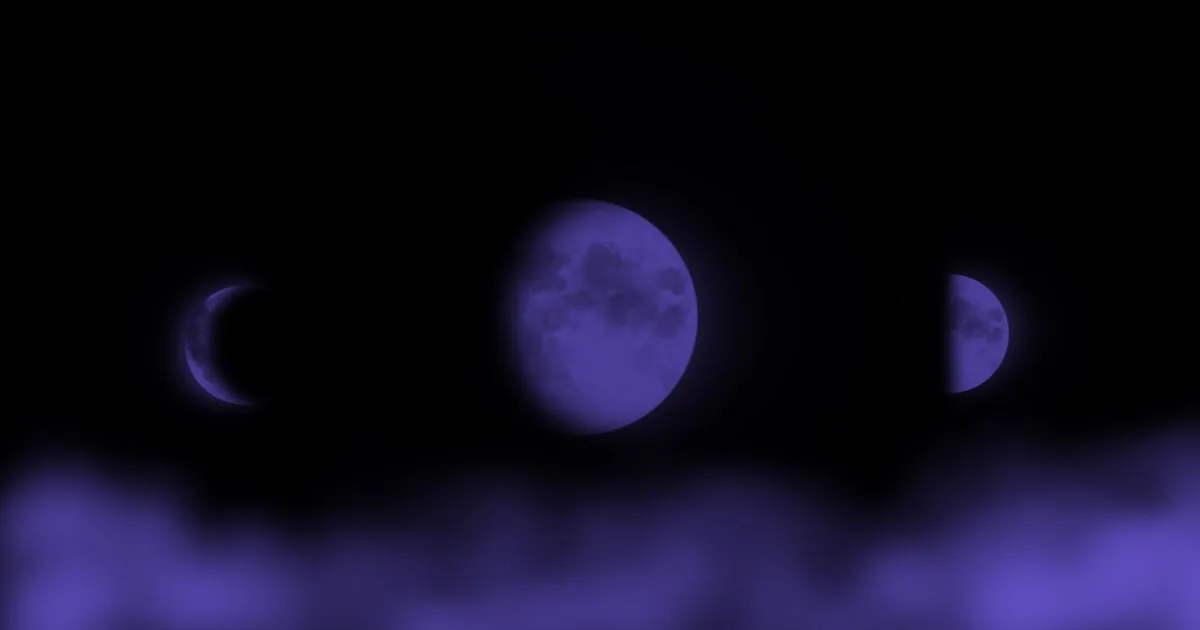
Why has the Moon become such a powerful symbol at all? It is visible, cyclical, and bodily: 29.5 days from new moon to new moon, tides, sleep, menstrual cycles, mood. Our ancestors did not need a calendar in their phone — it was enough to look up. That is why the history of lunar rituals, which spans millennia, is found from Mesopotamia to Scandinavia. And today interest in them is growing not because of a fashion for esotericism, but because people lack rhythm and pauses for reflection. A properly structured practice provides exactly that: a stopping point once every two weeks.
Lunar Rituals: History from Ancient Cults to Modern Esotericism
To understand how to understand lunar rituals and their logic, it is worth looking into the past. In Sumer, the lunar god Nanna was considered the father of the sun god — the Moon was older and wiser. In Egypt, Thoth and Khonsu were associated with the Moon, time, and healing. In Greece, Selene, Artemis, and Hecate formed a triad: light, wild nature, and the threshold between worlds. The Romans celebrated the calends — the first days of the month associated with the new moon, when debts and plans were recorded. This is already a prototype of the modern intention ritual.
A vivid example: imagine a woman in Anatolia 2,000 years ago who at the full moon brings bread and milk to the sanctuary of Hecate at a crossroads. To an outside observer — superstition. For her — the interpretation of lunar rituals is obvious: the crossroads is a symbol of choice, the full Moon is the light by which the road can be seen. She speaks her question aloud and leaves an offering as a sign of the seriousness of her intention. Psychology calls this externalization — bringing an inner conflict outward, where it is easier to work with.
The Middle Ages added herbalism to the lunar theme: gathering herbs on the waxing Moon for strength, on the waning Moon for cleansing. The Wiccan tradition of the 20th century formalized this into a system: esbats — meetings at the full moon dedicated to gratitude and magical work, and new moon rituals — for sowing intentions. Modern practice largely relies on the astrology section, where not only the phase is taken into account, but also the sign the Moon is in. A full moon in Taurus is about the body and finances, in Pisces — about dreams and forgiveness.
What to do with this knowledge in practice? Do not try to copy ancient cults literally, but take the principle: the Moon is a clock. Mark the new moon with a short note of goals for the month, and the full moon with a review. Thus lunar rituals facts and analysis show: the ancients did the same thing, only in the language of myth, and we can do it in the language of journaling and mindfulness.
Types of Lunar Rituals and the Meaning of the Cycle Phases
The main question for beginners is what are the types of lunar rituals that truly differ in meaning. The answer is simple: the type is determined by the phase and the task. New moon — darkness, a blank page. Waxing Moon — accumulation of energy. Full moon — peak illumination, when both the good and the shadow are visible. Waning Moon — shedding the excess. The mistake is to do everything at the full moon because "it is strong." Strong does not mean suitable for everything.
| Symbol / image | Traditional meaning | Manifestation in life | What to do |
|---|---|---|---|
| New moon, dark Moon | Seed, silence, potential | Uncertainty, desire to start from scratch | Write 3-5 intentions, silence meditation |
| Waxing crescent | Growth, effort, faith | First steps and doubts appear | One concrete action per day |
| Full moon | Clarity, culmination, harvest | Emotions are brighter, results and signs of overload are visible | Gratitude, summing up, letting-go practice |
| Waning Moon | Cleansing, forgiveness, rest | Fatigue, desire to declutter | Cleaning, letting go of habits, salt bath |
An example from life: a girl makes a wish at the new moon for "a new job," and at the full moon she cries because nothing has changed. Analysis shows: the intention was without action. Working examples of lunar rituals always include the combination of "symbol + step." At the new moon she writes not only the desire, but also a criterion: "I will respond to 5 vacancies before the first quarter." At the full moon she checks: she responded to two — she honestly records it, gives thanks for the interview experience, and lets go of perfectionism. This is how to recognize lunar rituals that work: after them there is movement in reality, not just a beautiful candle in a photo.
A practical step to start: keep a lunar journal on one spread. On the left — the phase, the Moon sign, and your intention, on the right — the fact two weeks later. After 3 months you will have personal statistics, not faith in other people's promises. This is how to check lunar rituals in practice — through observation, not expecting a miracle.
How Lunar Rituals Work: Psychology, Symbol, and Energy
A skeptic will ask: is this suggestion? Partly yes, and there is nothing wrong with that. A ritual works through three mechanisms. The first is focus of attention: when you formulate an intention by candlelight, the brain singles it out from the noise. The second is bodily anchoring: scent, light, posture, breathing link a state of calm with the goal. The third is cyclicality: regularly returning to the goal every 14 days prevents it from dissolving into everyday life. Therefore the interpretation of lunar rituals from the point of view of psychology is a self-regulation technique packaged in a beautiful symbol.
The esoteric view adds a level of energy and intuition. The Moon traditionally governs the subconscious, dreams, and water in the body. It is no coincidence that many note vivid dreams at the full moon — take a look at the EXETERIC dream book if the images become insistent. Practice at the full moon often brings up what is repressed during the day: irritation, envy, fatigue. The task is not to be frightened, but to name it and decide what to do with it.
A live case: a businessman laughed at "women's practices," but agreed to an experiment — at the full moon for 15 minutes he wrote by hand everything that angered him about the project, then tore up the sheet and took a shower. A month later he admitted: this is the best way not to snap at the team. Here lunar rituals facts and analysis are simple: writing + water + the intention to let go reduce tension. No mysticism, just mental hygiene.
How to apply it consciously? Ask yourself three questions before any rite: what do I want to clarify, what one action am I ready to take, what am I ready to give up. If there are no answers — postpone the ritual. An empty rite for the sake of appearances creates an illusion of control and disappointment. Conscious practice, on the contrary, strengthens connection with yourself.
Step-by-Step Breakdown of Lunar Rituals: New Moon and Full Moon
Let us break down two basic scenarios that cover 80% of needs. This is the step-by-step breakdown of lunar rituals for those who want it without complex tools. You will need only a notebook, a candle, water, and 20-30 minutes of silence. Phone — on airplane mode, this is part of protecting attention.
New moon ritual — sowing. Step 1: clear the space — air out, tidy the table. Step 2: ground yourself — 5 slow breaths, feel your feet. Step 3: write 3 intentions in the present tense and without the particle "not": not "I don't want to be sick," but "I take care of my body: sleep by 11 PM and a walk." Step 4: under each intention — the first step within the next 72 hours. Step 5: light a candle, read the list aloud, imagine how you feel when this is already there. Step 6: close the notebook and thank yourself. The candle can be extinguished. That's all.
Full moon ritual — harvesting and letting go. Step 1: reread the new moon goals, mark the facts: what came true, what has shifted. Step 2: gratitude list — 5-7 items, specifically: not "for all good things," but "for mom's call, for the closed report." Step 3: letting-go list — habits, grievances, things. The classic: a letter that is then burned in a safe dish or torn up. Step 4: water — there is no need to charge a glass of water, just drink slowly with a thought of renewal, take a bath or wash your face. Step 5: lunar pause — 5 minutes looking at the Moon or its image if the sky is cloudy, and just breathing. This calms the nervous system better than affirmations.
Lunar rituals mistakes at this stage are typical: wishing for 20 desires, formulating for other people, doing the practice in a hurry or under the influence of alcohol. A separate topic is protection from lunar rituals: not from "evil spirits," but from overload. Do not look into the bright candlelight for long, air out after incense, do not burn paper under a hood with plastic, do not make promises you are not ready to keep. Gentleness is also part of magic.
Myths, Interesting Facts, and Checking Results
There is a lot of noise around the Moon, so we need lunar rituals facts and analysis without romanticizing. We have collected common misconceptions and how to treat them soberly. The question of how to understand lunar rituals and where the truth is is solved simply: look at the source and verifiability.
| Common myth | Why it is not true | How it really is |
|---|---|---|
| You cannot start anything at the full moon | The ban came from fear of strong energy | You can start, but it is better to complete and show results; leave starts for the new moon |
| The Moon fulfills wishes by itself | Passive waiting removes responsibility | The Moon helps keep focus, human actions fulfill |
| You need expensive crystals and an altar | Marketing of esoteric shops | A notebook, candle, and water are enough; symbols matter, price does not |
| If you missed the exact minute of the full moon — all is lost | Perfectionism and anxiety | The energy of the phase is felt +/- 2-3 days, do it when calm |
And now interesting facts about lunar rituals, which even skeptics love. Fact one: the word "lunatic" is connected with the Moon — it was previously believed that the full moon provokes strange behavior, although research shows only a slight worsening of sleep in sensitive people due to light. Fact two: the Islamic and Jewish calendars are lunar, holidays in them shift across the solar year. Fact three: in gardening, root vegetables are still planted on the waning Moon, and greens on the waxing Moon, and agronomists explain this by soil moisture, not magic. Fact four: NASA is planning the Gateway lunar station — the Moon is again becoming a symbol of a new stage, only a technological one.
How to track the effect without self-deception? Keep three metrics: clarity (on a scale of 1-10 how clear it is what I want), action (how many steps taken), and state (sleep, anxiety). If after two cycles clarity grows and anxiety falls — the practice works for you. If not — change the form: instead of writing, try meditation or a walk under the Moon. You will find more ideas for regular practices in other practices in the EXETERIC blog — combine the lunar rhythm with breathing and body work.
Examples of Lunar Rituals for Love, Money, and Home Cleansing
The last block is specifics. People often ask: what to do about lunar rituals if the topic is relationships or finances? It is important not to "bewitch" and not to "attract a million," but to clarify signs of readiness and remove obstacles. Lunar rituals signs that the request is ripe: you can name it in one sentence, are ready to act, and are ready to accept refusal as an answer.
An example for love and self-acceptance at the full moon in Venus or on Friday: write a letter to yourself from the position of a caring friend — for what you are grateful to your body and heart. Then write what kind of relationship suits you: "calm, with respect for my boundaries, with shared plans." Without names of specific people — this is ethics and common sense. Finish with a warm shower with the intention of washing away old grievances. This is gentle work with the subconscious, not influence on someone else's will.
| Situation | Reactive approach | Conscious practice | Result |
|---|---|---|---|
| Debts and money anxiety | Wish for a win at the full moon and wait | At the new moon outline a budget and one income step, at the full moon close one debt | Reduced anxiety, increased control |
| Quarrel with a loved one | Write him an emotional message at night | Draft letter on the waning Moon, conversation during the day after a pause | Preserving connection, clear position |
| Heavy atmosphere at home | Complain and tolerate the mess | Cleaning clockwise, airing out, candle with intention of coziness | Lightness, better sleep |
For money, the new moon in earth signs works best: write down the figure, the deadline, and the service for which you will be paid. For home cleansing — the waning Moon: throw away 10 things, wipe mirrors and door handles with salt, air out. For protecting boundaries — a short formula before sleep at the full moon: "I keep what is mine to myself, I return what is not mine in peace," plus an early lights-out and silence. Such what are lunar rituals if not everyday magic of attention — simple, verifiable, and respectful to yourself and others.

The Moon as a Mirror: Returning to Ourselves
If you look at lunar rituals without fear and without inflated expectations, what remains is a very simple and human thing: the need to sometimes stop and honestly ask yourself where I am going and what I feel. The Moon here is not a strict teacher and not a magic wand, but a soft mirror. It does not require belief, does not punish for a missed phase, and does not promise a miracle by morning. It simply shows the cycle again and again: darkness gives way to light, tension to release, effort to pause. And when we align our lives with this rhythm, it becomes easier to accept both our lows and our highs.
Treat esotericism as a language of self-knowledge, not as instructions for controlling the world. A ritual does not replace conversation, treatment, work, and decisions, but it helps to approach them more collected and calmer. This is exactly how EXETERIC practices are built: without intimidation, without promises of instant results, with respect for psychology, the body, and common sense. You can take only an intention journal from the lunar tradition, or you can add candles, water, walks under the night sky — what is valuable is what brings you back clarity and warmth toward yourself.
Do not be afraid of the unclear — sort it out calmly. Try to live one lunar month consciously: at the new moon quietly formulate what you want, at the full moon honestly sum up, on the waning Moon let go of the excess. Look into the astrology section to understand what sign the Moon was in and how it resonated with you, and read other practices in the EXETERIC blog if you want to go deeper. Let the Moon become for you not a reason for anxiety, but a kind habit of returning to yourself — attentively, gently, and on time.
Frequently Asked Questions
When is it best to do a lunar ritual if you missed the exact moment of the phase?
Catching the exact minute of the new moon or full moon is not necessary, because the influence of the phase is felt for about two to three days before and after the peak. A calm state and a free half hour are more important than astronomical precision. If you are tired, in a hurry, or irritated, it is better to postpone the practice until the next evening. Choose a time when no one will disturb you, put away your phone, and air out the room. A short conscious ritual on a convenient day will bring more benefit than a fussy rite exactly on schedule.
What does a beginner need for the first Moon ritual?
For the first ritual, a notebook, pen, candle, and glass of water are enough; no expensive tools are needed. Find a quiet place, write down three intentions in the present tense without the particle not and add to each one real step for the coming days. Light a candle, slowly read what you have written aloud, and imagine your state when what you have conceived has already come true. In conclusion, thank yourself and drink the water with a thought of renewal. The main thing is safety and calm: do not leave fire unattended and do not do the practice in a state of severe intoxication or overwork.
Can I do lunar practices if I am a skeptic?
Yes, lunar practices work well even for skeptics if you treat them as a reflection technique rather than magic. Writing down goals at the new moon helps to highlight the main thing from the information noise, and a review at the full moon prevents you from abandoning what you started. Bodily elements — breathing, candlelight, water, walking — reduce tension and improve sleep. Keep a simple journal: record goal clarity, steps taken, and well-being on a scale from one to ten. After two to three cycles, you will see from the facts whether such a rhythm helps you.
Is it dangerous to make wishes at the full moon?
Making wishes at the full moon in itself is not dangerous; inflated expectations and ill-considered promises are dangerous. The full moon intensifies emotions, so during this period it is better not to make abrupt decisions, not to sort out relationships at night, and not to wish for other people. It is more ecological to use the full moon for gratitude, summing up, and gently letting go of grievances and habits. Leave new starts and bold plans for the new moon, when there is less energy but more silence for clear intention. End any ritual with grounding: a warm shower, airing out, and early sleep.