Magic: What It Really Is and How to Distinguish Real Practice from Illusion
Magic: What It Really Is, Not in the Movies
When we hear the word "magic," two extreme images come to mind: either sword and magic from fantasy sagas, where heroes of sword and magic hurl fireballs, or creepy stories about black magic that make you want to hide under the covers. Both poles are myths. Real magic isn't about special effects or deals with dark forces. It's about the connection between intention, attention, and subtle processes that we can't yet measure with a ruler.
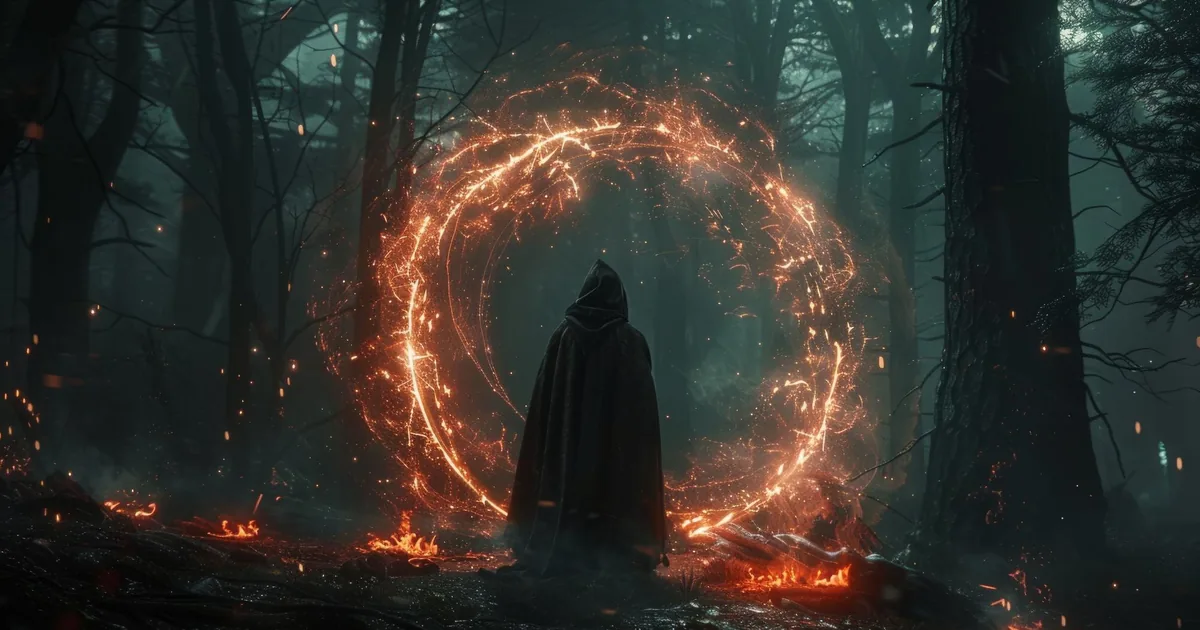
In the esoteric tradition, magic is the art of managing energy and symbols to change reality. Not "supernatural," but rather "super-ordinary": something that works at the level of the subconscious, the collective field, and our own vibrations. Psychologists would put it differently: it's working with archetypes and beliefs. But the essence is the same—the practitioner doesn't wait for a miracle; they create the conditions for change.
At EXETERIC, we've observed for years how people come seeking "magic 2"—quick results without effort. And they leave disappointed because they were looking for a trick, not a practice. Real magic begins where the desire to get everything at once ends. It requires discipline, honesty with oneself, and respect for tradition. And yes, it's not free—not in the sense of money, but in the sense of inner work.
In this article, we'll break down how to distinguish a living practice from an illusion, what directions exist, and why awareness is more important than spells. And if you're just starting out, check out other practices on the EXETERIC blog—we gather proven approaches without mystical pathos.
Myths About Magic: Where's the Truth and Where's Hollywood
The first thing that hinders understanding is myths. They've become so ingrained in culture that we take them at face value. Let's break them down.
| Common Myth | Why It's Not True | How It Really Is |
|---|---|---|
| Magic is an innate gift, available only to the chosen few | Genetics don't determine the ability to practice. Even in traditions that speak of "blood," it's not lineage that decides, but training and mindset. | Magic is a skill. Like playing the violin: it's easier for some, but without practice, no one will play. |
| Black magic is evil, white magic is good | The division into "colors" is conditional. Any practice can be used for harm or for good. | What matters more is intention and consequences. Magic of the blacks isn't about color, but about selfish goals and violating free will. |
| A ritual will work if you do everything exactly by the book | Mechanics without inner state are empty sound. A candle doesn't burn by itself. | What works is not the form, but the engagement. The book of magic is a map, but you're the one who has to walk. |
| Magic in 2026 will be different, since the world is changing | Principles don't depend on the calendar. Tools and language change, but not the laws. | The base remains: intention, energy, symbol. And "magic 2024" or "magic 2026" are just marketing labels. |
Note: even in popular culture, these myths are debunked. Remember "Magic Returns" or "Winx: Magic Returns"—there, the heroines learn, make mistakes, and grow. The school of magic is a metaphor for the path, not a place where you get a magic wand. Both "Billy and Magic" and "Billy and World of Magic" show: power comes through experience and responsibility.
So the first thing to do is to throw out the special-effects picture from your head. Magic isn't about becoming a prince or gaining superpowers. It's about becoming the author of your own life.
Real Practice vs. Illusion: Criteria for Distinction
How do you know you're dealing with real work, not a show? Here are several criteria we've developed over years of observation.
1. There's a system, not a set of tricks. Real practice is based on tradition, even if modern. It has logic, stages, safety techniques. Illusion is when you're promised "magic 3" in one evening without preparation.
2. The result isn't instant, but it's lasting. If everything changed for you immediately after a ritual—it's likely a placebo effect or coincidence. Real shifts come gradually and solidify.
3. No fear-mongering. You're not told: "Protect yourself urgently, otherwise there'll be a curse." A healthy practitioner will explain the risks but won't stoke fear.
4. Respect for free will. No one will perform a love spell or a curse without a request. This is an ethical boundary that distinguishes practical magic from manipulation.
5. Transparency. You're not sold "secret knowledge" for exorbitant sums. Information may be paid, but it's not presented as salvation.
Here's a table to help you quickly orient yourself.
| Situation | Reactive Approach | Conscious Practice | Result |
|---|---|---|---|
| Relationship problems | Immediately do a love spell to "get them back" | Understand your feelings, work on self-esteem, if necessary—harmonization | Relationships either heal, or you let go without destruction |
| Financial difficulties | Look for a ritual for money, without changing habits | Combine practice for attraction with real actions and working on beliefs | Sustainable growth and understanding of your financial patterns |
| Fear of a curse | Run to fortune tellers, set up mirrors | Check the facts, strengthen your energy, consult a psychologist | Calm and real protection without paranoia |
Illusion always plays on emotions: fear, greed, impatience. Practice, however, appeals to your awareness. If you're promised "magic 1" and an instant solution to all problems—that's a red flag.
By the way, in games like "Heroes 3: Magic" or "Sword and Magic 3," there's also its own logic: to learn a spell, you need to level up. In life, it's the same. You can't skip stages.
Main Directions of Magic: From Candles to Sigils
Magic is multifaceted. To avoid getting lost, it's helpful to understand the main branches.
Folk magic. The oldest: incantations, amulets, working with herbs. It's closer to daily life and nature. Here, transmission from elders and precision of formulas are important.
Ceremonial magic. Complex rituals with circles, pentacles, summoning spirits. Requires serious preparation and discipline. This is not for beginners.
Wicca and Neopaganism. Modern systems where the emphasis is on harmony with nature, cyclicality, and ethics. "Magic by seasons" is popular—working with the wheel of the year.
Practical magic. Applied techniques: candles, sigils, working with intention. Affirmations and visualizations can also be included here.
Black magic. Aimed at manipulation and harm. We don't recommend it, but it's worth knowing about to protect yourself.
Separately, it's worth mentioning gaming and fantasy culture. "Heroes of Magic," "Heroes of Sword and Magic," "Magic and Muscles"—all of this shapes the demand but doesn't provide real skills. However, through games, people often come to real practice. The main thing is not to confuse the virtual world with the real one.
If the topic of symbols resonates with you, check out the analysis of the Arcana—there we show how numbers and images work in destiny.
How to Distinguish a Charlatan from a Practitioner: A Checklist
The market for esoteric services is overflowing. How not to fall into the hands of a fraudster?
Signs of a charlatan:
- Promises a 100% result and a "guarantee."
- Demands large sums for "removing a generational curse."
- Uses fear: "If you don't do it now, it will be worse."
- Gives no specifics, speaks in general phrases.
- Refuses to explain exactly what they will do.
Signs of a healthy practitioner:
- Speaks of probabilities, not guarantees.
- Offers a diagnosis first, then the work.
- Respects your freedom and doesn't pressure you.
- Can explain the mechanism in the language of energy or psychology.
- Doesn't promise "magic 2024" as a unique offer.
Remember: a true master doesn't need advertising through fear. They work with those who have come consciously. And yes, they can charge money—it's normal, it's their labor. But the price is fair and transparent.
If you're offered "free magic"—it's likely a lure. There's no such thing as a free lunch. Although there are exceptions: some practitioners give basic techniques for free so you can try them. But global rituals are never free.
Practical Steps: How to Start Your Practice
If you've decided to try, don't jump straight into complex rituals. Start small.
Step 1. Define your intention. What do you really want? Not "to become a magician," but specifically: to improve sleep, find a job, heal relationships. Intention is the compass.
Step 2. Choose a simple tool. A candle, a sigil, an affirmation. For example, a sigil: write down your wish, remove vowels and repeating letters, create a symbol, charge it, and release it.
Step 3. Keep a journal. Record what you did, what you felt, what changed. This will help separate real results from illusions.
Step 4. Work with energy. Meditation, grounding, cleansing. Without energy, a ritual is just theater.
Step 5. Don't be afraid of mistakes. Magic is a path, not an exam. Even if something didn't work, you gained experience.
And remember: "will perfect my magic" isn't about becoming omnipotent. It's about daily practice, like sports. Only then will you feel a real connection with yourself and the world.
If you're interested in how dreams work in a magical context, check out the EXETERIC dream dictionary—there we analyze symbols that come in dreams.
Magic and the Modern World: Where It Lives Today
Many think magic is a thing of the past. But it hasn't gone anywhere—it just changed clothes. Today, it manifests in psychology (working with archetypes), in business (visualizing goals), in art (creating symbols). Even in games like "Magic Prince" or "Magic 3," we see echoes of ancient systems.
The modern practitioner doesn't sit in a tower. They go to work, raise children, but at the same time consciously relate to their thoughts and energy. Magic becomes a tool for self-knowledge. It helps understand that the world isn't hostile, but responds to our actions.
By the way, if you're into astrology, you know that planets also influence our lives. More on this in the astrology section. And for those who want to understand their nature through personality type, there's the Human Design guide.
Magic today isn't about hermitage, but about integration. You can use sigils for your career, meditations for peace, rituals for cleansing space. The main thing is to maintain common sense and not turn practice into a cult.
Magic and Muscles: How Willpower and Energy Are Connected
The title "Magic and Muscles" might seem like a joke, but it holds deep meaning. Magic requires strength—not physical, but energetic and willpower. Without discipline and the ability to concentrate, you won't get anywhere.
Imagine: you decided to do a ritual to attract money. But if you can't manage your attention, your sigil will charge to 10%, not 100%. The muscles of magic are your ability to hold intention without getting distracted and to see things through.
Train this "muscle" just like a bicep: daily, gradually increasing the load. Start with five minutes of meditation, then move to visualization, then to rituals. Over time, you'll notice your practice has become deeper and the results more tangible.
And don't forget: even in fantasy worlds like "Heroes 3: Magic," heroes level up their skills. In reality, it's the same. Want to improve? Practice.
If you feel stuck, try changing your environment: work with natural cycles, for example, with "magic by seasons." Each season carries its own energy: spring for beginnings, summer for growth, autumn for gratitude, winter for rest and planning. Weave your practices into these rhythms, and you'll see how magic becomes a natural part of life.
In the end, magic isn't about becoming a superhuman. It's about becoming yourself—real, whole, aware. And then any illusions will fall away on their own.

Magic as a Path to Yourself: Without Fear and Illusions
Magic isn't something to fear or worship. It's a tool that helps you better understand yourself, your desires, and your boundaries. When you stop waiting for a miracle and start observing your thoughts, energy, and actions, esotericism becomes a quiet helper, not a loud panacea. It doesn't cancel reality but makes it more dimensional: you start seeing connections where there was once chaos.
At EXETERIC practice, we don't promise instant results and don't scare with curses. Our approach is calm, thoughtful exploration. We gather techniques that help establish contact with yourself, not escape from the world. If you feel ready to move forward, check out the articles on magic and self-knowledge—there we break down specific practices, rituals, and ways to work with intention. And if you want to see your situation more broadly, look at the astrology section—sometimes looking through the prism of planets helps accept what seems tangled.
Don't be afraid of the unknown. Fear is a poor advisor, especially in esotericism. It's much more useful to ask a question, try a simple exercise, observe sensations. Magic doesn't require blind faith—it asks for attention and honesty. Start small: hold a candle, write down a wish, take a few breaths with intention. And watch what responds. If something worked—great, reinforce it. If not, that's also experience, not failure.
Remember: real practice doesn't make you chosen or omnipotent. It makes you more alive, aware, and resilient. And then any illusions—about "magic 2026," "guaranteed love spells," "secret knowledge for a million"—fall away on their own. What remains is what truly works: your attention, your intention, and your connection with the world. Want to go deeper? Study the EXETERIC guide to esotericism, try, make mistakes, grow. And let magic become for you not an escape from reality, but a way to truly be in it.
Frequently Asked Questions
Can I practice magic if I've never tried before?
Yes, you can. Magic is a skill, not an innate gift, so starting from scratch is perfectly normal. The important thing is to choose simple techniques: candles, sigils, affirmations, or meditations. You don't need to jump straight into complex ceremonial rituals—they require preparation and discipline. Start small, keep an observation journal, and gradually increase the load. The key is regularity and honesty with yourself, not speed.
How do I know if a ritual worked and it's not just a coincidence?
A journal helps distinguish the result of practice from coincidence. Record what you did, what you felt, and what changed over a week or a month. Real shifts usually come gradually and affect multiple areas of life, not just one. If everything changed instantly after a ritual without your involvement—it's likely a placebo or chance. A lasting result is always tied to your inner changes and actions.
Is magic dangerous for a beginner?
Magic itself isn't more dangerous than any other self-knowledge tool. Danger arises where there is fear, ignorance, or manipulation. If you work with simple techniques, respect others' free will, and don't try to harm, the risks are minimal. Avoid practices that require fear-mongering or promise instant power over people. A healthy approach is clarity, gradualness, and a willingness to learn. If you feel anxious, take a pause and return to grounding.
How is a true practitioner different from a charlatan?
A true practitioner speaks of probabilities, not guarantees, and never pressures with fear. They offer a diagnosis first, explain how things work, and respect your freedom of choice. A charlatan, however, promises a 100% result, demands large sums for "removing a curse," and scares with consequences. Also, a healthy specialist doesn't sell "unique knowledge" as salvation and doesn't hide what exactly they will do. If you're offered "free magic" as a lure—that's a red flag.