Mysticism: secrets and riddles of the universe
What is mysticism: meaning and roots of the word
When we hear the word "mysticism," images of foggy rituals, closed doors, and secret knowledge available only to the chosen often come to mind. But let us set aside clichés and figure out what actually stands behind this concept. Mysticism is, above all, a striving for direct, personal experience of encountering something that surpasses our ordinary, everyday mind. It is not a rejection of logic but its expansion beyond familiar boundaries.

Historically, the roots of the word go back to the Greek "mystikos" — "secret, intended for the initiated." However, in modern understanding, the meaning of mysticism has acquired a broader scope: it is any practice or experience aimed at establishing a connection with deep layers of reality that are not captured by the five senses. This can be meditation, work with dreams, the study of symbols, or subtle attentiveness to the signs that life presents.
It is important to distinguish mysticism from blind faith in miracles. If a person believes that an amulet by itself will bring them wealth without changing their actions — that is superstition. If, however, they use the amulet's symbol as an anchor for their intention and simultaneously work on their skills and beliefs — that is already conscious mysticism in life. There is no magical thinking here; there is work with the subconscious and energy flows, confirmed both by esoteric traditions and modern psychology.
Thus, mysticism is not a set of ready-made answers but rather the art of asking the right questions. It invites us to look at the world not only as a material construction but also as a field of interconnections where thought, intention, and energy play no less important a role than physical laws. It is a perspective that helps us see pattern behind chance and hidden order behind chaos.
Mysticism and esotericism: what is the difference and where they intersect
These two words are often used as synonyms, but there is a subtle yet important difference between them. Imagine that esotericism is a vast library of knowledge, while mysticism is the reader's personal diary where they record their revelations and experiences from what they have read.
Esotericism (from the Greek "esoterikos" — "inner") is a system of hidden knowledge transmitted within certain traditions: Kabbalah, alchemy, Hermeticism, Tantra. It is a structured teaching that can be studied like a science. Mysticism and esotericism are closely connected, but their focus differs. Esotericism provides the map, while mysticism is the journey itself across that map, often with unexpected turns.
For example, in the astrology section we study the positions of planets and their influence on character and events. That is esoteric knowledge. But when you, looking at your natal chart, suddenly feel deep recognition, as if you have finally seen your true self — that is already a mystical experience. Knowledge has become experience.
Another example is tarot. A deck of cards with specific symbols is an esoteric tool. But when in a spread about a current situation a card falls that precisely describes your inner state, which you have told no one about, a feeling of living dialogue with something greater arises. That is the mysticism mysteries that open through practice.
Thus, esotericism is theory and method, while mysticism is experience and practice. One without the other is incomplete: knowledge without experience remains dry information, and experience without knowledge can lead to self-deception or fear.
Mysticism phenomena: how they manifest in everyday life
You do not need to wait for supernatural events to encounter mysticism. It manifests in subtle, often ignored moments of our lives. These mysticism phenomena are not poltergeists or levitation, but synchronicities, prophetic dreams, intuitive insights, and the feeling of deep connection with something greater.
Psychologist Carl Jung introduced the concept of "synchronicity" — a meaningful coincidence that cannot be explained by cause and effect. For example, you think of an old acquaintance, and they call you that very day. Or you are agonizing over a decision, and suddenly you see a sign on a wall that answers your question. This is not magic; it is a manifestation of the fact that our subconscious and the external world are connected more subtly than we are used to believing.
Dreams are another channel. Many cultures consider dreams to be messages from the depths of the subconscious or even from higher powers. Modern psychology sees in them the processing of information and emotions. But no matter how we explain their nature, their symbolic language remains a powerful tool for self-knowledge. If you dream of a dream with a certain image, it makes sense to turn to dream interpretation to understand what your psyche is trying to communicate to you.
Intuition is also a form of mystical knowledge. It is not a "voice from nowhere" but a rapid, unconscious analysis of a huge amount of information that our brain conducts based on past experience. When we say "I have a bad feeling," we are often picking up subtle signals that the conscious mind has not yet noticed. By developing awareness, we learn to trust this inner compass.
To avoid getting lost in the flow of these signs, it is useful to keep an observation journal. Write down unusual coincidences, vivid dreams, moments of strong intuition. Over time, you will begin to see patterns and understand exactly how the world of mysticism speaks to you. This turns random events into a meaningful dialogue.
Myths and reality: what mysticism definitely does not do
The aura of mystery surrounding mysticism has given rise to many myths that hinder a sober attitude toward it. Let us examine the most persistent of them.
| Common myth | Why this is not so | How it actually is |
|---|---|---|
| Mysticism is for the weak who cannot cope with life rationally. | This judgment is based on fear of the unknown and a desire to control everything. It ignores that many great scientists and thinkers (Tesla, Einstein) spoke of intuition and the feeling of the mystery of the universe. | Mysticism is a tool for those ready to look wider. It complements the rational approach, helping to make decisions when data is insufficient and to find meaning in difficult situations. |
| Mystical knowledge gives power over others or material benefits. | This is a dangerous misconception underlying many sects and fraudulent schemes. It turns the spiritual path into an instrument of selfish control. | Real work is aimed at changing oneself, not the external world. Power comes not from control but from inner integrity and clarity. Mysticism teaches responsibility for one's thoughts and intentions. |
| You need to be "special" or have a gift to practice. | This is an elitist myth that scares off beginners and creates a false sense of superiority among the "initiated." | The capacities for intuition and receptivity exist in everyone; they are like a muscle — they can be trained. You can start with simple practices of awareness and observation. |
Conscious mysticism is a path to oneself, not to external bonuses. It requires honesty, patience, and a readiness to confront uncomfortable truths about oneself. If someone promises you quick miracles for money — that is a red flag. True transformation is painstaking but deeply rewarding work.
How to begin your path into the world of mysticism: practical steps
If after reading this you feel interest rather than fear, it means you are ready to take the first steps. Mysticism does not require drastic changes or abandoning your usual way of life. Start small and observe.
Step 1. Develop awareness. This is the foundation. Start with 5-10 minutes a day of simple observation of your breath, thoughts, and bodily sensations. The goal is not to clear the mind but to learn to notice what is happening in it. This trains the "inner observer," which is necessary for distinguishing intuitive signals from ordinary anxieties.
Step 2. Keep a journal of signs. Get a notebook where you will record: unusual coincidences, repeating symbols (for example, the number 11:11 on the clock), vivid dreams, strong premonitions. Do not analyze immediately, just write. After a month, reread — you will see surprising patterns.
Step 3. Study one symbolic language. There is no need to grab everything at once. Choose one direction that resonates: human design, the basics of astrology, dream interpretation, or numerology. In-depth study of one tool will give more than superficial acquaintance with ten.
Step 4. Practice "small rituals." These do not have to be complex ceremonies. It could be a morning ritual with a cup of tea where you consciously set an intention for the day. Or an evening practice of writing down three things you are grateful for. A ritual is a way to translate intention from thought into action, engaging the body and emotions.
Remember that mysticism in life is not a separate sector but a perspective that can be integrated into any activity. Wash dishes with attention, listen to music by tuning into its vibrations, look at clouds seeking images in them. The world around us is full of symbols; you just need to learn to see them.
Working with symbols: an example from practice
One of the most accessible ways to immerse yourself in the world of mysticism is working with personal symbols. A symbol is not just a picture; it is concentrated meaning that speaks directly to our subconscious. It bypasses logical filters and evokes a whole spectrum of associations and emotions at once.
Try a simple exercise. Recall three objects that fascinated you in childhood. It could be an old key, a stone with an unusual pattern, an animal figurine. Write them down. Now think about what qualities or memories they evoke in you. A key might symbolize mystery or access to something forbidden. A stone — stability and connection with the earth. A figurine — the spirit of that animal, its qualities.
These objects are your personal mystical keys. You can use them in meditation, keep them on your desk as a reminder of values important to you, or even create a sigil based on them — a graphic symbol of your intention.
Another powerful tool is working with archetypes. Archetypes are universal images living in the collective unconscious: the Sage, the Hero, the Shadow, the Trickster. Recognizing these archetypes in yourself and others helps understand deep motives of behavior. For example, if you feel irritation toward an overly self-confident colleague, perhaps in them you see a manifestation of your own suppressed Hero archetype.
Studying systems such as the matrix of fate, where each arcana carries its own symbolic set, is a structured way to immerse yourself in the language of symbols. It helps not only to understand yourself but also to see how universal energies manifest in your unique life scenario.
Start simple: choose one symbol (for example, the Moon, a Tree, a Spiral) and spend a week with it. Each day, write down where you encounter it (in advertising, in conversation, in nature) and what thoughts or feelings it evokes. You will be surprised how this dialogue comes alive when you pay attention.
Mysticism as a path to oneself: where to seek answers
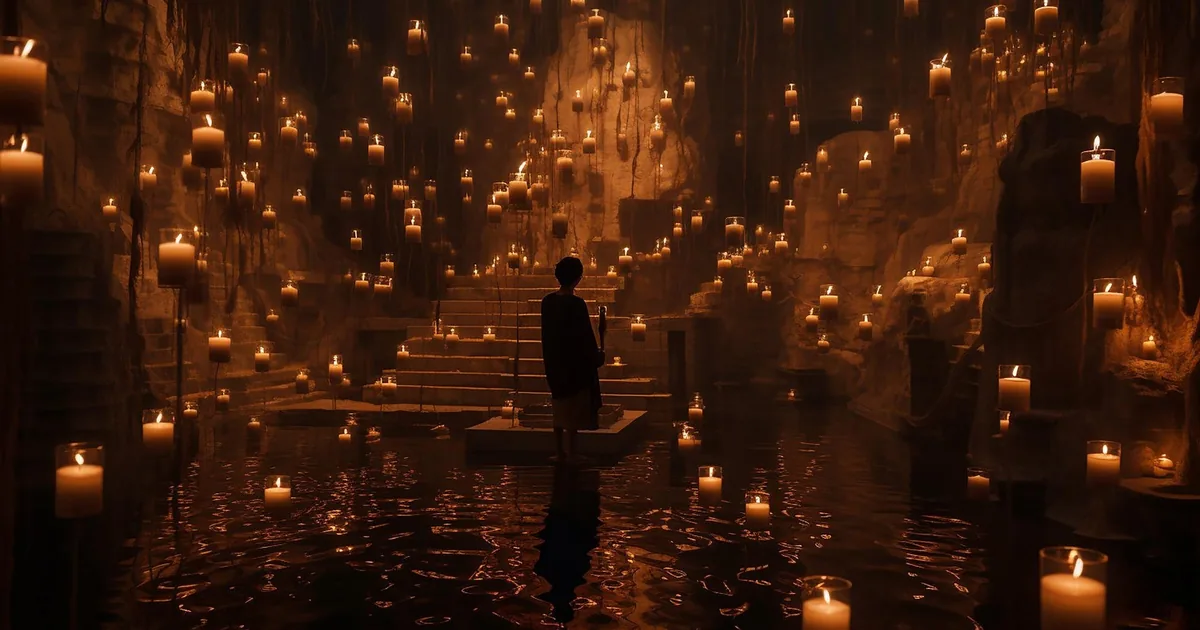
So, we have taken a small journey through the labyrinths of mysticism — from the meaning of the word to practical steps. And perhaps the most important thing to take away is the understanding: mysticism is not an escape from reality but a deeper immersion into it. It is not a set of ready-made answers but the art of asking questions that truly matter. It is a perspective that helps us see pattern behind chance, hidden order behind chaos, and an invitation to growth behind fear.
In a world where we are constantly attacked by informational noise and demands for "quick success," mysticism in life offers a different rhythm — a rhythm of observation, awareness, and respect for mysteries that do not always yield to immediate explanation. It teaches us to be not passive consumers of miracles but active co-creators of our reality, where every sign, every dream, every synchronicity is part of our unique dialogue with the world.
If you feel a resonance with these words, if interest has been sparked in you — do not extinguish it with fear or skepticism. Give it space. Start simple: keep a journal, pay attention to your dreams, listen to your intuition. Look into the astrology section to see how cosmic rhythms reflect in your character, or explore the EXETERIC practices that help structure this path. Remember that mysticism is not a panacea for all troubles nor a ticket to a world of illusions. It is a tool for those ready to look at the world more broadly, who seek not only external successes but also inner integrity, who are ready to take responsibility for their thoughts and intentions.
Do not fear the incomprehensible — examine it calmly, step by step. Do not seek a guru outside — become an attentive observer of your own life. Experiment, but do so consciously and with respect — toward yourself, toward traditions, toward the mystery we all share. The world around us is full of symbols and messages; you just need to learn to hear them. And if you want to go deeper — welcome to other practices in the EXETERIC blog, where together we continue to explore this amazing territory between the known and the unknown. Your path is unique, and only you can walk it with genuine awareness.
Frequently asked questions
Can I practice mysticism if I am an atheist?
Absolutely yes, and this is perhaps one of the most common questions. Mysticism in the broad sense is not necessarily a belief in supernatural beings or religious dogmas. It is, above all, work with subjective experience, symbols, and deep layers of the psyche. An atheist can practice awareness, keep a journal of synchronicities, study archetypes, or work with tarot as a tool for self-knowledge, without attributing magical power to the cards but using them as a mirror for the subconscious. The essence of mysticism lies in expanding perception and seeking personal meaning, not in blind faith. Therefore, if you are drawn to working with symbols and intuition but do not accept dogmatism, you can quite well find your own rational-mystical path where logic and intuition complement each other.
How to distinguish real mysticism from fraud?
This is a critically important skill. Real mystical work is always aimed at inner transformation, not external bonuses. Red flags: promises of quick wealth, health, or power over others through rituals; pressure and creating dependence on a "guru"; intimidation with consequences of refusing to practice; selling "unique" and expensive amulets or initiations as a guarantee of results. The true path, as described in the EXETERIC guides to esotericism, is built on your own responsibility, awareness, and gradual growth. It does not require abandoning common sense and does not promise miracles. It invites observation, experimentation, and honest dialogue with oneself. If someone offers to sell you happiness for money — that is fraud. If they offer tools for independent exploration — that may be the beginning of a path.
What should I do if I feel scared or anxious after practices?
This is an important signal and should not be ignored. Anxiety or fear can arise when we encounter deep layers of our psyche that were previously hidden. This does not mean mysticism is "dangerous," but it does mean that perhaps you have immersed yourself too quickly in material that requires gentler integration. The first rule — slow down. Take a pause from practices and return to simple grounding activities: walks in nature, physical exercise, time with loved ones. Second — analyze what exactly caused the fear. Was it a specific vision, symbol, or sensation? Write it down. Often fear diminishes when we translate it from a vague feeling into concrete words. If anxiety persists, it makes sense to consult a psychologist familiar with esoteric practices or an experienced mentor. Remember that working with mysticism is not a race but a journey, and pauses and returns to basic awareness practices are permissible along the way.
Do I need to believe in tarot cards or astrology for them to work?
No, belief in the literal "magical power" of cards or planets is not a prerequisite. The modern approach promoted by many EXETERIC practices views these tools as powerful systems of symbols that work with our subconscious. Tarot or a natal chart does not "predict" an unchangeable future but reflects current energies, inner conflicts, and potential scenarios. Their power lies in their ability to trigger the process of self-analysis. When you see a card that precisely describes your state, what happens is not magic but a moment of recognition: your subconscious receives an image that helps you become aware of what was already inside. Therefore, working with them requires only openness and a readiness to ask yourself honest questions, not blind faith. It is like a mirror: it does not create your face but helps you see it.