How to read a natal chart: a step-by-step guide for beginners
Where to Begin: Your Chart Is a Map of the Soul
A natal chart is not just a collection of symbols, but a reflection of your inner world and potential. Many beginners are intimidated by the abundance of glyphs and lines, but in reality, everything ingenious is simple. Imagine your chart as a cosmic passport, recording the qualities you brought into this world and the tasks that lie before you. In this article, we will break down how to read a natal chart step by step, so you can use astrology for self-discovery and growth.
Astrology for beginners often seems complicated due to the abundance of terms. But we will take a different path: instead of rote memorization, we will understand the logic. A natal chart consists of three main elements: planets, signs, and houses. Planets show what exactly manifests (for example, Mars — action, Venus — love), signs show how it manifests (Aries — impulsively, Taurus — steadily), and houses show in which area of life (first house — personality, seventh — partnership). When you combine these three levels, you get a three-dimensional picture of your personality.
Planets in the Natal Chart: Your Inner Energies
Let's start with the planets, because they are the foundation. Each planet symbolizes a specific energy within you. The Sun — your core, life force; the Moon — emotions and subconscious; Mercury — thinking and communication; Venus — love and values; Mars — action and passion; Jupiter — luck and expansion; Saturn — discipline and limitations. The outer planets (Uranus, Neptune, Pluto) influence generations, but in a personal chart they are also important, as they show deep transformations.
When you look at your chart, pay attention to which signs the planets are in. For example, if your Venus is in Taurus, you value stability and sensual pleasures, but if it's in Gemini, you need variety and intellectual stimulation. This doesn't mean you must conform to the description, but these energies are active within you, and recognizing them helps you better understand your reactions and desires.
How to Determine Your Planets?
To find out which signs your planets are in, you need to create a natal chart. For this, you will need your date, time, and place of birth. In the internet age, this can be done for free on many websites, such as astro-seek.com or sotis-online.ru. After entering your data, you will receive a circle with symbols. Don't be alarmed — we will break it down piece by piece.
Start with the Sun and Moon: these are the most important planets. The Sun shows your core personality, the Moon — your emotional nature. Then look at Mercury, Venus, and Mars — they are responsible for everyday manifestations. The other planets will add depth, but to begin with, these five are enough.
Zodiac Signs: How Planetary Energy Manifests
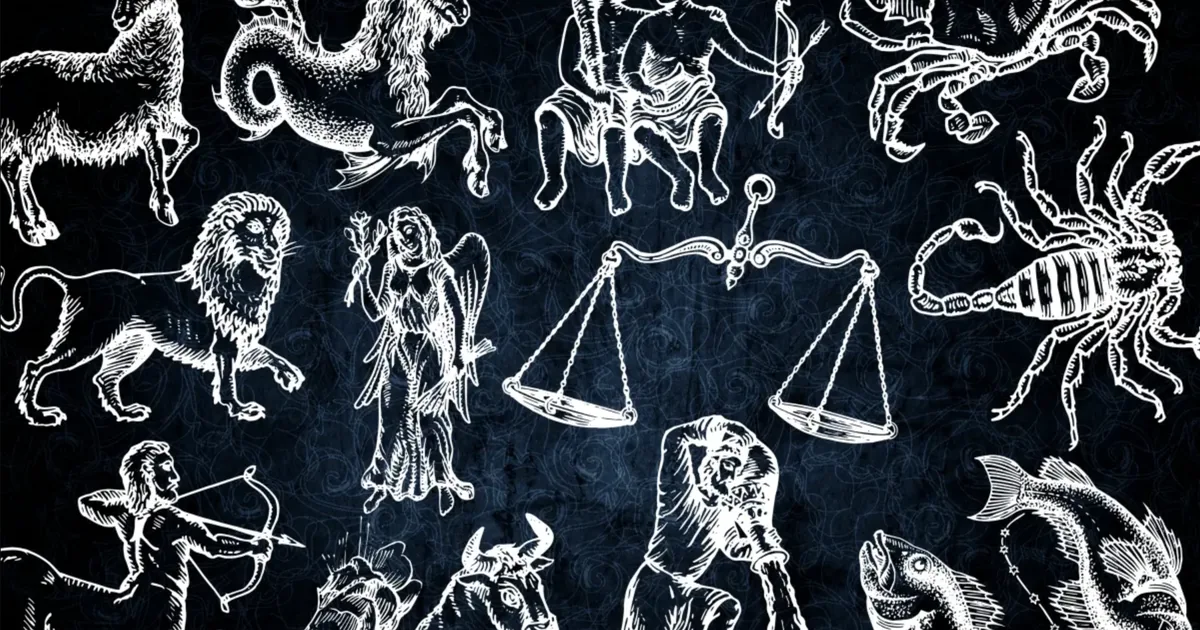
Now let's talk about signs. Signs are the filters through which planets manifest. Each sign has its own characteristics: Aries — initiative, Taurus — patient, Gemini — sociable, Cancer — caring, Leo — creative, Virgo — analytical, Libra — harmonious, Scorpio — passionate, Sagittarius — optimistic, Capricorn — responsible, Aquarius — independent, Pisces — intuitive. For example, if your Mars is in Aries, you act quickly and directly, but if it's in Pisces, you prefer to navigate around obstacles.
It's important to understand that a sign is not a verdict. If you are a Taurus with Mars in Aries, you can be both stubborn and hot-tempered. Astrology for beginners teaches not to attach labels, but to find balance. The sign shows how you can best use the planet's energy. For example, Mars in Pisces can be indecisive, but if you develop intuition, it becomes a source of creative power.
Elements and Modalities
Signs are divided into elements (fire, earth, air, water) and modalities (cardinal, fixed, mutable). This helps to systematize. Fire — energy and inspiration, earth — practicality, air — intellect, water — emotions. Cardinal signs initiate, fixed signs hold, mutable signs adapt. For example, if you have many planets in fire signs, you are energetic and proactive, but you may be impatient. Understanding the balance of elements in your chart gives you the key to your temperamental nature.
Houses: Where Your Life Unfolds
Houses show in which areas of life the planets manifest most strongly. The first house — personality and appearance, the second — money and values, the third — communication and learning, the fourth — family and home, the fifth — creativity and love, the sixth — work and health, the seventh — partnership and marriage, the eighth — transformations and shared resources, the ninth — travel and philosophy, the tenth — career and vocation, the eleventh — friends and communities, the twelfth — the hidden and subconscious.
To understand which houses are activated in your chart, look at which houses your planets are in. For example, if your Sun is in the tenth house, your career is important for self-realization. If you have many planets in the fourth house, family plays a key role. Houses are also connected to the signs projected onto them (house systems may vary, but the logic is generally the same).
Example: Planets in Houses
Let's say you have Venus in the seventh house. This indicates the importance of partnership, that you seek harmony in relationships, but you may also be prone to compromise at your own expense. Or Mars in the sixth house — you work energetically, but you may drive yourself to burnout. Understanding houses helps you realize where your energies find an outlet and where imbalances may occur.
Aspects: How Planets Interact
Aspects are the angles between planets, showing how energies combine with each other. The main aspects: conjunction (0°) — fusion, sextile (60°) — harmony, square (90°) — tension, trine (120°) — ease, opposition (180°) — confrontation. For example, a trine between the Sun and Moon means your conscious and subconscious desires are aligned, you feel inner harmony. A square between Venus and Mars may indicate a conflict between love and passion, which often manifests in complicated relationships.
For beginners, it's not necessary to analyze all aspects at once. Start with the most noticeable ones: conjunctions and oppositions. Look at which planets are in conjunction — they act as one energy. For example, a Mercury-Venus conjunction makes speech soft and diplomatic. An opposition between the Moon and Saturn can create emotional restraint and difficulty expressing feelings.
How to Read Aspects in Practice
Find the red and blue lines in your chart — these are aspects. Red usually indicates tense ones (squares, oppositions), blue — harmonious ones (trines, sextiles). Don't be afraid of red lines — they are zones of growth, not curses. For example, a square between Mercury and Uranus can give unconventional thinking, but also a tendency to argue. By recognizing this, you can channel your originality into creativity rather than conflict.
Remember that aspects don't work in isolation — they form a complex web. To begin with, it's enough to note 2-3 of the strongest aspects and observe how they manifest in your life. This will help you better understand yourself and your reactions.
Your Rising Sign: How Others See You
The rising sign (ascendant) is the sign that was rising on the eastern horizon at the moment of your birth. It determines your appearance, demeanor, and the first impression you make. Many beginner astrologers overlook it, but in fact, the ascendant is an important part of the natal chart. If the Sun is your essence, then the ascendant is your outer shell.
For example, if your rising sign is Leo, you may appear confident and attractive, even if you're shy inside. If the ascendant is in Virgo, you give the impression of a neat and critical person. Knowing your ascendant helps you understand why people often see you differently than you feel yourself to be.
How to Determine the Ascendant
To determine the ascendant, you need an accurate birth time. If you don't know it, an approximate time can significantly change the picture. Enter your data into an astrology program, and it will show your ascendant. It is usually marked as "Asc" and is located on the left side of the chart. Look at which sign it's in — that is your rising sign.
The ascendant also divides the chart into 12 houses, so its position is important for determining which house is your first. If the ascendant is in Aries, then the first house is Aries, and your personality is colored by fiery energies. This adds another layer to understanding your chart.
Practical Exercise: Analyzing Your Chart
Now that you know the basics, let's apply this in practice. Take your natal chart and go through the steps:
- Determine your Sun, Moon, and Ascendant. This is the triad of your personality: Sun — purpose, Moon — emotions, Ascendant — mask.
- Find your Venus and Mars — they show how you love and act.
- Look at which houses these planets are in — the areas of life where these energies manifest.
- Note 2-3 aspects that seem important to you (for example, a conjunction or square).
Write down your observations. For example: "My Sun in Taurus — I'm stable, I love comfort. Moon in Cancer — I'm caring but sensitive. Ascendant in Libra — I come across as a friendly person. Venus in Gemini — I need variety and communication in relationships. Mars in Capricorn — I act methodically and purposefully. Venus in the 7th house — partnership is important to me. Mars in the 10th house — I strive for career. Square between Sun and Pluto — I experience deep transformations, sometimes power struggles." This is already a good start for analysis.
Don't try to cover everything at once. Astrology for beginners is constant practice. Gradually, you will learn to read the chart fluently. But even now, you can use this knowledge for self-discovery.
Common Beginner Mistakes in Reading a Natal Chart
Many beginners make the same mistakes. Let's break them down so you can avoid them.
Mistake 1: Fixating on One Sign
When people say "I'm an Aries," that's a simplification. The natal chart includes all the planets, and your character is not limited to your Sun sign. For example, you may be an Aries by Sun, but have a Moon in Capricorn, which makes you more reserved. Don't attach labels.
Mistake 2: Ignoring the Houses
Signs show "how," and houses show "where." Without houses, the picture is incomplete. For example, if your Venus is in Taurus but in the 10th house, it's not just a love of comfort, but a drive for stability in your career.
Mistake 3: Taking Aspects Literally
Aspects are not a verdict. A square can bring difficulties, but it's a zone of growth. For example, a square between the Moon and Uranus can create emotional instability, but also originality. Use aspects to become aware of your strengths and weaknesses.
Mistake 4: Forgetting the Ascendant
The ascendant is your "calling card." If you ignore it, you may not understand why people perceive you differently than you feel. Include the ascendant in your analysis.
By avoiding these mistakes, you will be able to understand your chart more deeply and use astrology for personal growth.
How to Use Your Natal Chart in Daily Life
A natal chart is not a static description, but a living tool. Use it to better understand your reactions, make decisions, and develop your weak areas. For example, if you know that Mars in Cancer can produce passive aggression, you can consciously work with this: express emotions directly but gently. If you have Saturn in Gemini, you may struggle with learning, but with a systematic approach, you will achieve success.
Astrology for beginners also helps in relationships. Compare your chart with your partner's chart — this can show where you are compatible and where conflicts may arise. For example, if you have Venus in Fire and your partner has Venus in Water, you need to learn to understand different love languages. This is not fatal, but it requires awareness.
Remember that the chart shows potential, not predestination. You can always choose how to respond to your energies. Awareness is the first step toward change.
Planetary Harmony: The "Hello, Planet" Practice
To conclude, I offer you a simple practice that will help you connect with the energies of your chart. Each morning for a week, choose one planet from your chart and reflect on how its energy manifests in your life. For example, on Monday — the Moon: observe your emotions, how you react to events. On Tuesday — Mars: notice when you take initiative or get irritated. On Wednesday — Mercury: pay attention to your thoughts and conversations. And so on.
Write down your observations in a journal. After a week, you will notice that you have become better at understanding your habits and reactions. This is not magic, but awareness. You are establishing a dialogue with yourself, and that's what matters most.
A natal chart is not an instruction manual, but a treasure map. Follow it with curiosity, and you will find much that is valuable about yourself.
The Path to Yourself: Astrology as a Tool for Awareness
A natal chart is not a verdict or a promise, but rather a map of your inner landscapes. When you begin to read it, you don't just learn "facts" about yourself — you learn to see your strengths and areas for growth. This is a fascinating journey in which every symbol is a clue, every planet is a voice of your soul. But remember: astrology is not a panacea for all problems, nor a way to absolve yourself of responsibility. It is a mirror that helps you become more conscious, accept your unique traits, and learn to use them for the greater good.
On this path, it's important not to rush and not to try to grasp the ungraspable. Start small: with observing your reactions, with a journal, with the "Hello, Planet" practice from our article. Gradually, you will notice how the things that once seemed random or incomprehensible begin to make sense. You will start to better understand why you're drawn to certain people, why you act the way you do, and how your talents can fully unfold. This is the magic of self-discovery — not in predicting the future, but in consciously living the present.
If you feel you want to deepen your study of astrology and other esoteric practices, come to the EXETERIC media — there you will find a wealth of materials to help you on this path. Our authors share knowledge and experience so you can grow at your own pace, with respect for yourself and the world. And if you'd like to explore your zodiac sign in more detail, check out the astrology section of EXETERIC — it contains articles about all signs, their characteristics, and compatibility. And, of course, don't forget the blog — even more practices and reflections on magic, self-discovery, and spiritual growth await you there.
Remember that your natal chart is not an endpoint, but the beginning of a big and interesting conversation with yourself. Don't fear the unknown — calmly work through it, step by step. Try, explore, ask questions. And may astrology become not just a hobby for you, but a faithful companion on the path to harmony and self-understanding. You've already taken the first step — and that's the most important thing.
Frequently Asked Questions
What is a natal chart and why do I need it?
A natal chart is a kind of cosmic snapshot of the sky at the moment of your birth. It shows where the planets, Sun, and Moon were located and how they interacted with each other. Astrologers believe that this chart reflects your character, talents, inclinations, and potential life scenarios. Knowing your natal chart is useful because it helps you better understand yourself: your reactions, motivations, strengths, and weaknesses. It's not a prediction of fate, but a tool for self-discovery that allows you to approach your life consciously and make choices based on your true needs. Many people use the natal chart for personal growth, improving relationships, and finding their calling.
Where should a beginner start studying a natal chart?
A beginner should start by creating their natal chart — for this, you'll need your exact date, time, and place of birth. There are many free services online, such as astro-seek.com or sotis-online.ru, where you can get your chart in a couple of minutes. Once you have your chart, pay attention to three key elements: the Sun (your personality), the Moon (emotions), and the Ascendant (the rising sign, which shows how others perceive you). Then study which signs these planets are in and read their characteristics. Gradually add other planets, houses, and aspects, but don't try to cover everything at once. It's better to go deeper into a few elements than to skim superficially over all of them. The key is to practice and observe how these energies manifest in your life.
How do I correctly interpret planets in zodiac signs?
Each planet symbolizes a specific energy, and the zodiac sign shows how that energy manifests. For example, the Sun is your life force and ego, the Moon — your emotional nature, Mercury — thinking and communication, Venus — love and values, Mars — action and passion. When you look at a planet in a sign, imagine that the sign is a filter or style through which the planet operates. For example, Venus in Taurus will manifest as a drive for stability and sensual pleasures, while Venus in Gemini — as a need for variety and intellectual stimulation. It's important not to treat these descriptions as a verdict, but to use them as clues for understanding your inclinations. Over time, you'll learn to see how these energies work in your life and can use them consciously.
What are aspects in a natal chart and how do I understand them?
Aspects are the angles between planets in your natal chart that show how planetary energies interact with each other. The main aspects: conjunction (0°), sextile (60°), square (90°), trine (120°), and opposition (180°). Harmonious aspects (sextile, trine) indicate an easy flow of energy, while tense ones (square, opposition) point to areas of tension and growth. For example, a trine between the Sun and Moon speaks of inner harmony, while a square between Venus and Mars may indicate a conflict between love and passion. For a beginner, it's not necessary to analyze all aspects at once. Start with the most noticeable ones — conjunctions and oppositions. On the chart, they are usually shown as lines: red — tense, blue — harmonious. Look at which planets are involved and observe how these interactions manifest in your life. Remember that tense aspects are not a curse, but a challenge that can become a source of strength if you recognize it and work with it.