What is otchitka and how is it performed: a guide for those seeking answers
If you heard the word "otchitka" for the first time from your grandmother, from a video on the internet or from acquaintances and are now anxiously googling what is otchitka and how is it performed, breathe out. We will go through everything calmly, without horror stories and without fanaticism. In short: this is the name for a special moleben in Orthodoxy with prayers of exorcism, which is read over a person suffering from severe spiritual states. Further — in detail: where the practice came from, what really happens in church, who it is indicated for, and who definitely does not need it.
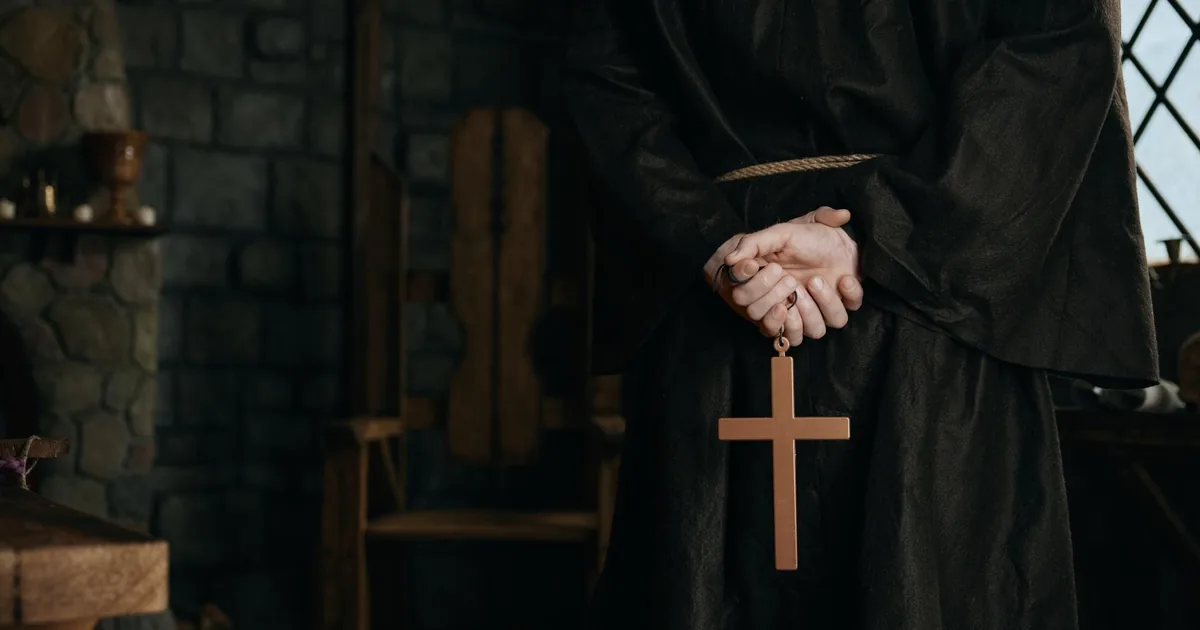
What is otchitka and how is it performed: understanding it without fear
Let's start with the basics, because there is more confusion here than facts. The question what is otchitka is heard in almost every conversation with a priest: people imagine scenes from horror films, screams, convulsions, casting out demons by voice. In reality what is Orthodox otchitka is a rite composed of psalms, Gospel readings, special prayers of exorcism by Saints Basil the Great, John Chrysostom, Gregory the Wonderworker and the prayer of Hieromartyr Cyprian. The priest prays for the person, asks God for protection, healing of soul and body, deliverance from the action of evil spirits, if there is any.
From the point of view of esotericism and psychology, several levels work here at once. The first is symbol and ritual: the solemn Church Slavonic text, the smell of incense, the vibrations of the choir create a special field in which the subconscious receives a clear sign — "you are being helped, you are not alone". The second is intention and awareness: a person comes not as a spectator, but as a participant, he goes to confession, fasts, tunes in to the spiritual path. The third is collective energy: when dozens of people in church pray with one request, it is felt by the body even by skeptics.
A living example: a 38-year-old woman after a divorce and a series of losses feels apathy, anxious dreams, heaviness in her chest, it seems to her that "a curse has been put on her". Doctors say — stress and exhaustion, friends advise "urgently go for an otchitka". She goes to a monastery, stands for three hours at the service, cries, then feels relief. What worked? Both the prayer, and the tears shed, and allowing herself to ask for help, and coming out of isolation. This is exactly how the practice should be perceived — as a tool of connection with yourself and with God, and not as a magic button.
What is otchitka for demoniacs and what is otchitka for the possessed
Let us separately explain the old church words. The phrases what is otchitka for demoniacs and what is otchitka for the possessed came from the Gospel, where demonic possession was the name for severe states in which a person did not control himself: shouted in a strange voice, thrashed about, showed aggression toward holy things. Similar descriptions are found in the lives of the saints. Today psychiatrists would attribute some of such cases to epilepsy, schizophrenia, dissociative disorders, consequences of trauma. The Church recognizes this: in the Book of Needs the rite is called "Moleben Sequence for the infirm, assailed by unclean spirits", that is, for the infirm, the suffering. And what is otchitka for casting out demons in the modern understanding is not a show with a struggle, but a prayerful petition that the person may return to clarity, peace and will.
What is otchitka in Orthodoxy and where the rite came from
To understand what is otchitka in Orthodoxy, let us look into history without conspiracy theories. In the early Church there were special ministers — exorcists, they prayed over the catechumens before baptism. Later the prayers of exorcism entered the catechumenate rite and separate molebens. In Rus the tradition was strengthened through the Kyiv-Pechersk Lavra, the Trinity-Sergius Lavra, Optina Pustyn. Elders read the prayers of prohibition over the sick, and popular rumor turned this into an idea of the omnipotent "reading away of curses".
It is important: in the official church understanding otchitka for deliverance from demons in church is not a sacrament like baptism or unction, but a moleben, that is, an intensified request. It does not "remove a generational curse in one go" and does not replace confession, communion, personal work on oneself. Priests emphasize: without repentance, change of life and treatment, if there is a medical diagnosis, one rite alone will give little. That is why the question what is otchitka in church for should be asked before the trip: for strengthening in faith, for prayerful support in a difficult state, for returning a sense of protection — yes. For punishing enemies, searching for "who put a curse on you", proving one's chosenness — no.
A practical step, if the topic has touched you: before going hundreds of kilometers, talk to your parish priest, tell him about your symptoms honestly. Take a blessing, go to confession. In parallel, if there is anxiety, insomnia, panic attacks, go to a doctor and a psychologist. This does not contradict faith, but complements it. A conscious approach is always stronger than hope for a miracle from outside. You can read more about gentle methods of self-knowledge in other practices in the EXETERIC blog, where we discuss protection and recovery without fear.
| Common myth | Why this is not true | How it really is |
|---|---|---|
| Otchitka is the expulsion of a demon in one session with screaming | The rite is a moleben, not a battle. The screams of individual people present are people's reactions, not a mandatory sign | The priest reads psalms and prayers of exorcism, anoints with oil, sprinkles with holy water |
| Only a "strong elder" helps, an ordinary church will not do | The power is not in the personality, but in the prayer of the Church and the person's readiness to change | Any priest can perform otchitka with a blessing, most often it is done in monasteries |
| Otchitka for deliverance from curses and demons automatically removes any curse | The Church does not operate with magical thinking of "removed-the-curse-became-happy" | Prayer supports, but confession, communion, work with a psychologist and changing habits are needed |
| You must not watch, otherwise the demon will pass on to you | The fear of catching it is superstition, not doctrine | You may be present, but impressionable people and children are better off not staying near severely afflicted people |
The difference between otchitka and exorcism: Catholics, Orthodox and cinema
The query the difference between otchitka and exorcism appears because cinema has mixed everything into one. In the Catholic tradition, exorcism is a strictly regulated rite performed by a priest-exorcist specially appointed by the bishop after medical and psychiatric examination, with the bishop's permission, often one-on-one and confidentially. In Orthodoxy, the analogue is that very otchitka — a conciliar moleben, often with a large gathering of people, without a detective procedure of proving possession.
The difference is not only in form, but also in emphasis. The Catholic rite focuses on diagnosing and expelling a specific entity. The Orthodox rite focuses on healing the person and returning him to God: more psalms, repentance, calls to humility. From an esoteric point of view, both rituals work with the field, intention and the symbol of the power of light over darkness, but no serious priest will make a "diagnosis of possession" based on a video from the internet.
An example from life: a man watches a video titled what is otchitka and how is it performed video, where people scream and fall, and decides that he has the same thing because he yawns during prayer. In fact, yawning is a frequent bodily reaction to relaxation, fatigue, changes in breathing in a stuffy church. A look to the root: observe yourself for a month — sleep, appetite, relationships, work. If life is really falling apart, go to a doctor and to a priest, and do not diagnose yourself from a video. By the way, recurring nightmares and anxious images are better first analyzed through dream interpretation than immediately counting yourself among the possessed.
How is otchitka performed in church and in a monastery: the service step by step
Now the most practical part: how is otchitka performed in church in reality. The scenario may differ in different monasteries, but the core is the same. People are gathered in the church or the lower chapel, usually in the morning after the liturgy on certain days of the week. The priest pronounces the opening prayers, then Psalm 90 "He that dwelleth in the help of the Most High", Psalm 50, the Creed, the Gospel about the healing of the demoniacs are read, and then those very prayers of prohibition. During the reading the priest may make the sign of the cross, anoint the forehead with consecrated oil, sprinkle with holy water, offer the cross and the Gospel to be kissed. The singing of the choir alternates with silence in which only the breathing of the crowd is heard.
Separate questions: how is otchitka performed in a monastery and otchitka for deliverance from demons how the service is conducted in an ordinary parish. In a monastery — more crowded, stricter, longer, sometimes with a sermon on repentance. In a parish — more intimate and shorter. People often ask how is Father Herman's otchitka performed in the Trinity-Sergius Lavra in Zagorsk. Archimandrite Herman (Chesnokov) for many years performed the famous otchitka in the gate church of John the Forerunner: hundreds of pilgrims gathered, the service lasted several hours, with instruction, a confessional attitude, sprinkling. After his repose his successors continue the tradition, but the format is the same — conciliar prayer, not a private reception. Therefore it is worth going not "for the name", but for prayer.
It is logical to ask: what is otchitka and how is it performed how long does it last and what is otchitka and how is it performed what to wear — what to wear. Usually the moleben lasts from 1.5 to 3-4 hours depending on the number of people and the rule of the monastery. You will have to stand for a long time, in stuffiness, sometimes outside in a queue. Clothing — as for church: for women a skirt below the knees, covered shoulders, a headscarf; for men trousers, a closed shirt, no shorts or sports T-shirts. Take water, a handkerchief, for the elderly — a folding stool. Children, pregnant women and people with claustrophobia and epilepsy are better not placed in the thick of the crowd. Practical advice: arrive in advance, check the schedule on the monastery's website, take a blessing for the trip from your priest.
| Situation | Reactive approach | Conscious practice | Result |
|---|---|---|---|
| Anxiety, insomnia, feeling of heaviness | Panic, searching for "who cast the evil eye", going to the first otchitka you come across | Confession, doctor, sleep routine, prayer at home + pilgrimage with a blessing | Reduced anxiety, return of energy and clarity |
| Child is capricious, sleeps poorly | Taking the baby into the crowd for a many-hour service | Pediatrician, calm routine, baptism, moleben for health, short prayer by the priest | Calm child and calm parents without overload |
| Prolonged streak of bad luck | Blaming curses and enemies, going to "folk healers" | Reviewing decisions, financial hygiene, repentance, conciliar prayer | Return of control and connection with oneself |
Who needs otchitka and who definitely does not need it
The church answer to the question how is otchitka performed in church and who it is indicated for sounds restrained. It is indicated for those who experience deep spiritual languor, despondency, passions from which they cannot free themselves, a feeling of unfreedom, attraction to occult practices from which they want to move away, as well as those for whom loved ones ask in case of severe mental ailments — but only with the blessing of a priest. Often what is otchitka and how is it performed reviews describe it like this: it became easier to breathe, tears went away, there was a desire to live more purely, sleep improved. This is the main criterion — a person returns to life, and does not become dependent on trips.
And now who does not need it. If you are impressionable, watch a lot of mysticism at night, are prone to panic — a crowded service with the screams of strangers can traumatize you. If there is a psychiatric diagnosis — first treatment and remission, and only then discussion with your spiritual father and doctor. If the motive is curiosity, desire for thrills, testing "whether the demons will really scream" — this is disrespect for the shrine and for those suffering nearby. Separately about the phrase otchitka for deliverance from curses and demons: in church they do not look for the "person who ordered a curse", do not name the names of enemies, do not give "protective" amulets. If you are promised to name the culprit and punish him with prayer — this is no longer Orthodoxy, but manipulation.
How is otchitka performed in church from the point of view of preparing the soul? For 2-3 days, fasting according to your strength is desirable, abstinence from quarrels and alcohol, reading the Gospel and the Psalter, confession on the eve. On the day of the service come on an empty stomach, if health allows, submit health commemoration notes, place candles calmly, without fuss. During the prayers do not examine other people's reactions, do not film the faces of the suffering up close on your phone, keep an inner intention: "Lord, help me become cleaner and freer". Afterward — do not discuss "whose demon came out how", but quietly give thanks, receive communion if possible, rest. Interestingly, even the astrology section reminds of the same principle: transits and symbols suggest, but decisions and responsibility always remain with the person.
How otchitka is performed in church for adult parishioners
Let us clarify a detail that is often asked about: what is otchitka and how is it performed in church in an ordinary one, without a monastery. Usually the rector announces a day for a moleben with prayers of exorcism once a week or a month. There are fewer people, the priest can give more attention to each person: come up, ask the name, anoint with oil, let them venerate the cross. The phrases how is otchitka performed in church and how is otchitka performed in church describe one and the same thing, just the word order in the query is different. Such a moleben lasts about an hour to an hour and a half. This is a good option for those who cannot endure many-hour monastery services.
Otchitka for a child and sensitive people: a gentle format
The most alarming query is what is otchitka and how is it performed for a child. We answer directly and gently: a many-hour otchitka for deliverance from demons in church in a crowd with screaming is not indicated for children. A child's psyche absorbs other people's emotions like a sponge, and instead of help you can get nighttime fears. What is done instead: they baptize, if not baptized, regularly give communion, submit a forty-day commemoration for health, ask the priest to read short prayers for the sick child, sprinkle with holy water, anoint with oil. At home — calm evening prayer together, routine, warmth, fewer gadgets before sleep.
Example: a mother takes a five-year-old with enuresis and tantrums to a famous service 300 km away, stands with him for four hours in stuffiness. The baby cries, gets frightened by screams, then sleeps poorly for a week. And in the end a pediatrician, a neurologist, calm bedtime rituals and the blessing of the local priest helped. A look to the root: children most often pick up their parents' tension. Start with yourself — your sleep, your anxiety, your prayer. If your spiritual father still blesses the child's presence at a short moleben, stand to the side near the exit, not for long, without fixing on other people's reactions, with water and the opportunity to leave.
And a couple of words about the external: the queries what is otchitka and how is it performed what to wear and what behavior at the service depends on — this is about respect for the place. There is no special "protective" clothing, no need for red threads and pins over your headscarf. Clean modest clothing, a headscarf, a baptismal cross, a calm attitude — the best protection. After the service do not rush to discuss reviews and compare sensations, give your soul silence for at least a day: less news, more walks, warm food and sleep. It is in this silence that the good for which you came is consolidated.
Instead of fear — quiet support: what to take with you from this topic
If after everything you have read it has become a little quieter and calmer inside, then the article has already done its good deed. Otchitka is not a scene from a horror film, not a magic button and not a way to solve all life problems in one visit. This is first of all a pause, an opportunity to honestly look at your life, to admit fatigue, accumulated pain and to ask for support where your own strength is no longer enough. There is no need to tune yourself in advance either for a miracle or for frightening manifestations, just go with an open heart and readiness to change, then even a quiet prayer will work deeper than any spectacular expectations. For some, conciliar prayer returns sound sleep, even breathing and a sense of protection, for some — the desire to go to confession, to make peace with loved ones, to put things in order in the house, in affairs and in thoughts, for some — a quiet and very important feeling that you are not left alone with your trouble. It is from such inner peace, without strain, panic and self-intimidation, that any real recovery and return to oneself begins.
It is important to take with you the main thought: both faith and gentle esotericism are not about fear, but about self-knowledge, responsibility and conscious life. No rite, ritual or ceremony by itself will replace your daily choice — to live cleaner and more honestly, to get enough sleep, to turn to a doctor and psychologist in time, to forgive, to give thanks and to change habits that destroy. Remember that true spiritual help always returns freedom and calm to you, and does not make you dependent on constant trips and other people's opinions. In the approach of EXETERIC practices we always talk about exactly this: the symbol, prayer and collective field of the church strengthen intention and give support, but your small consistent steps change life. Therefore do not rush to attribute curses or possession to yourself from videos on the internet and do not rush to go for a miracle hundreds of kilometers from home. Start with what is simple and accessible — a calm conversation with your spiritual father, confession, care for the body and daily routine, silence without news and fuss, as well as thoughtful study of other practices in the EXETERIC blog, where we discuss protection, recovery and return of energy without mysticism and panic.
And if you want to understand yourself even deeper and gently, without searching for enemies and culprits, look into the astrology section and read about your character, strong periods and vulnerable places — often this helps to calmly explain anxiety, fatigue and recurring life scenarios. Try to start small — evening prayer, a walk without a phone, a warm conversation with loved ones, and then the soul itself will tell you whether you need a trip to a monastery, a conversation with a priest or just a time of silence for recovery. And most importantly — do not be afraid of the incomprehensible. Understand calmly, ask questions to experienced people, check with your spiritual father and doctors, try any practice consciously, with respect for yourself, for other people and for the shrine. May your path be not a flight from fear, but a quiet return to clarity, warmth and inner support. And we are nearby to suggest the next gentle step exactly when you are ready for it.
Frequently asked questions
Can I come to otchitka just out of curiosity?
Coming to otchitka simply out of curiosity, for thrills or to shoot a video for social networks is not worth it, and priests say this directly and quite strictly. This is not a performance and not an excursion, but a conciliar prayer for living suffering people, next to whom their anxious loved ones stand, and any extraneous curiosity violates reverence, silence and respect for someone else's pain. In addition, an impressionable person can be strongly impressed by other people's screams, tears and the tension of the crowd, then sleep poorly, feel anxious and attribute to himself what he does not actually have. If the topic really interests you, it is better to satisfy curiosity gently: talk to your parish priest, read about the meaning of the rite, attend an ordinary liturgy and a moleben for health. One should come to church with a clear respectful intention and readiness to pray, and not from the position of a spectator, and the desire for impressions is better satisfied by conversation and reading than by taking the place of those who need silence and support.
Do I need to prepare for otchitka in any way and what should I take with me?
Yes, calm preparation makes otchitka much easier and more meaningful, although no magical attributes, amulets or special protection are required for it. For two or three days, according to your strength, try to keep a fast, give up alcohol, quarrels and heavy information, sleep more, read the Gospel and the Psalter, and on the eve, if possible, go to confession and take a blessing from your priest for the trip. On the day of the service arrive in advance, having clarified the schedule on the monastery's website, if possible on an empty stomach, if health allows, calmly submitting health commemoration notes and placing candles without fuss and haste. Take with you water, a handkerchief, comfortable modest clothing according to the rule of the church, and for the elderly and weak — a folding stool, because you will have to stand from one and a half to three-four hours, often in stuffiness and crowding. During prayer keep an inner intention for peace and healing, do not examine other people's reactions and do not film the suffering on your phone, and children, pregnant women and people with epilepsy are better kept near the exit so that you can quietly leave.
Is it true that at otchitka you can catch someone else's curse?
No, the idea that during otchitka a demon or curse jumps from one person to another is superstition, not the teaching of the Church, and priests specifically refute it in sermons. You cannot become infected with someone else's trouble like a virus, prayer in church is directed toward protection, repentance and healing, and not toward transferring evil, so you can calmly be present nearby and pray without fear. Another matter is that an impressionable person easily picks up someone else's emotional state: screams, crying and the general tension of a large crowd cause anxiety, insomnia and suspiciousness, which are then mistakenly taken for an induced curse. So that this does not happen, do not peer into other people's reactions, keep your own quiet prayer, stand a little to the side and do not discuss after the service whose demon came out how. The best protection always remains a clean conscience, confession, communion, modest clothing and a baptismal cross, as well as calm sleep and refusal of mystical horror stories, and children and anxious people are better to pray briefly and not stay long among severely afflicted people.
What should I do if I do not feel better after otchitka?
Do not be frightened and think that something is wrong with you if relief did not come immediately after the first service, this happens very often and is completely normal. Otchitka is not a one-time magical procedure with a guaranteed effect, but the beginning of a path, and its fruits usually appear gradually: sleep becomes calmer, there are fewer tears and heaviness, more desire to pray, work and care for loved ones. After the trip give yourself a few days of silence, try to go to confession and receive communion, establish sleep, nutrition and daily routine, and with anxiety, panic attacks and depressive thoughts be sure to turn to a doctor and psychologist without guilt. Discuss your experience personally with your spiritual father, and not with forums and neighbors, he will tell you whether you need to come again, attend an ordinary liturgy or focus on home prayer and repentance. If the condition worsens, aggression, voices or thoughts of harming yourself appear, do not wait for a miracle, but urgently seek medical help, for the true result is always visible in life and returns peace.