Ghosts Exist: Real Stories and Evidence
Ghost: What History and Culture Tell Us
A ghost is perhaps one of the most ancient and universal images in human culture. From whispering shadows in Greek myths to modern urban legends, ghosts have accompanied us throughout history. But what is a what is a ghost really? Esoteric traditions and modern psychology offer different answers, but they agree on one thing: it is not merely fiction or a figment of the imagination.
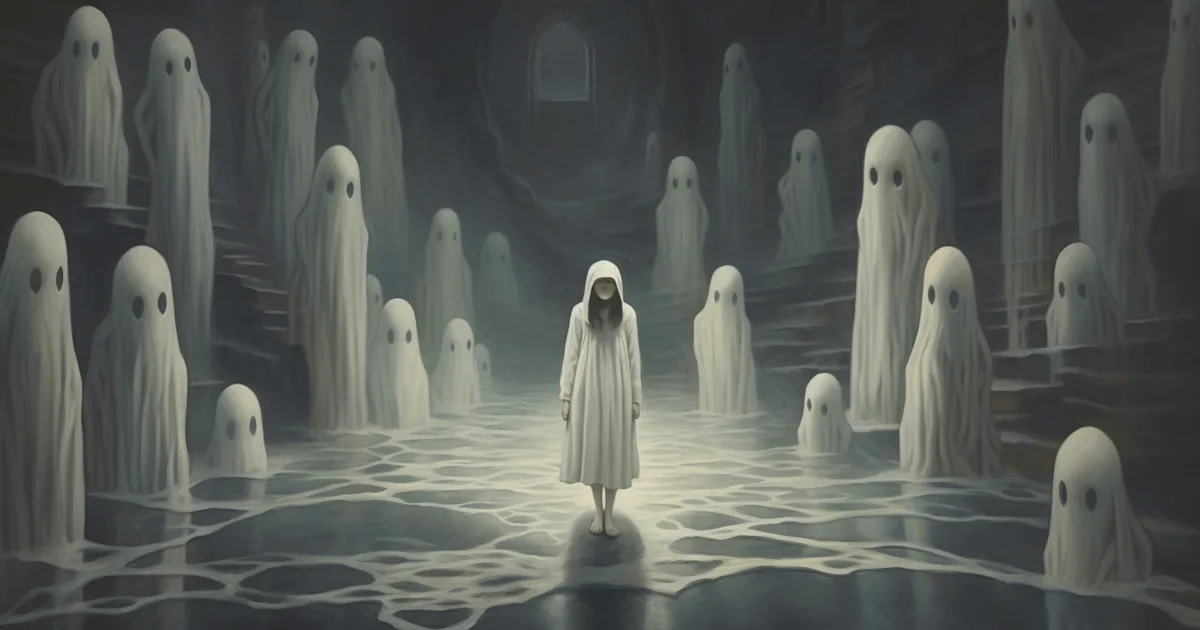
The word "ghost" comes from the Old Slavic "prizrak," which means "apparition" or "vision." In ancient times, people believed that a ghost is the soul of a deceased person who, for some reason, could not leave the world of the living. Most often — because of unfinished business, strong attachment, or a tragic death. This is why folklore is so full of stories about haunted castles where a scary ghost or a sad lady in white resides.
But if we set aside the mystical veneer, we will see that the image of a ghost performs an important psychological function: it helps people cope with loss, explain the inexplicable, and structure the fear of death. So it is no surprise that ghosts appear in cultures around the world — from Irish banshees to Japanese yūrei. Each culture gives this phenomenon its own traits, but the essence remains unchanged: a ghost of a person is a reminder that death is not always the end.
Modern researchers of paranormal phenomena view ghosts as energy clusters, informational "imprints," or even projections of the collective unconscious. From an esoteric perspective, a ghost is an energy-informational structure that can persist after physical death. And it is precisely this approach that allows us to examine the phenomenon without fear, but with respect and curiosity.
Ghosts Exist: Scientific and Esoteric Evidence
The question "ghosts exist?" is one of the most debated in science and esotericism. Scientists have not yet given a definitive answer, but they have accumulated many facts that are difficult to explain from a materialistic point of view. For example, in 2019, a group of physicists from the University of Hertfordshire conducted an experiment in which participants were in a "haunted" room and experienced inexplicable sensations: cold, goosebumps, a sense of presence. Researchers attribute this to infrasound — low-frequency vibrations that can cause such effects. But infrasound does not explain why people see figures or hear voices.
From an esoteric point of view, ghosts are real energy entities. In most spiritual traditions, it is believed that after death the soul leaves the body, but if it is attached to a place or a person, it can become "stuck" in the subtle world. Such entities can manifest as a real ghost — a visible image that we perceive through our senses or extrasensory abilities.
One of the most famous cases often cited as evidence is the case of the house in Enfield (London, 1977). The Hodgson family encountered a poltergeist: flying objects, knocking, voices. Skeptics dismissed it all as children's pranks, but eyewitnesses, including police officers and journalists, claimed they saw something inexplicable. Psychics recorded a powerful energy anomaly in the house.
Of course, one cannot rely solely on eyewitness testimony. In esotericism, there are its own methods of verification: meditation, pendulum work, subtle sensations. If you want to understand whether there is a ghost in your home, pay attention to the following signs:
- Sudden temperature fluctuations without visible causes.
- A feeling that someone is watching you.
- Objects moving on their own.
- Unexplained sounds: footsteps, knocking, whispers.
But remember: not everything that seems paranormal is actually a ghost. Often these are ordinary physical phenomena or our own projections.
Ghost in the House: How to Recognize It and What to Do
When we hear "ghost in the house," the imagination paints a gloomy haunted mansion. But in reality, ghosts, according to esotericists, can appear in the most ordinary apartments. Most often they are connected to places where a tragedy occurred, or to people who cannot "move on." If you suspect that something dwells in your home, here are a few signs that will help you recognize a presence:
| Sign | Description | What It Could Be |
|---|---|---|
| Cold zones | A feeling of cold in a specific place, even when the heating works normally | An energy trace, possibly a ghost |
| Electromagnetic interference | The TV changes channels by itself, light bulbs flicker | Influence on the electromagnetic field |
| Dreams about the deceased | Recurring dreams in which a deceased person says or shows something | An attempt to contact you |
| A sense of presence | You feel that someone is in the room, although no one is there | An energetic presence |
If you have detected these signs, do not panic. In most cases, a ghost is not dangerous — it is simply present in your space. However, if you feel discomfort, you can perform an energetic cleansing of the house. For this, use fumigation with herbs (sage, wormwood), place crystals (black tourmaline, amethyst), or consult a practitioner who can help guide the soul to the other world.
It is important to approach this consciously. Do not try to banish a ghost with aggressive methods — this can worsen the situation. It is better to show respect and the intention to help. As esotericists say, a ghost is a living soul that needs understanding, not war.
How to See a Ghost: Techniques and Warnings
Many people ask: "how to see a ghost?" It sounds intriguing, but do not forget: this is not entertainment. In esotericism, it is believed that people with developed intuition or extrasensory abilities can see ghosts. But there are also techniques that help you tune into subtle vibrations.
One of the most common is meditation on a glow. Sit in a dark room, light a candle, sit in front of a mirror and look at your reflection for 10–15 minutes without distraction. At some point, you may notice changes in the space — a light haze or a shadow. This could be a sign that you are picking up energy structures.
Another method is photography. Take a photo in a place where, according to rumors, a ghost dwells. Glowing orbs or blurred silhouettes may appear in the photograph. However, be careful: orbs are often just dust or lens flares, so do not rush to conclusions.
Remember that attempts to see a ghost can be dangerous for an unprepared person. By opening yourself to the subtle worlds, you risk attracting not only benevolent entities. Therefore, before any practice, be sure to create protection: imagine yourself in a golden cocoon of light, turn to your guardian angel, or say a prayer.
If you do decide to go through with it, do so with respect and the intention to understand, not just to get a thrill. Otherwise, instead of a real ghost, you may encounter something entirely different from what you expected.
Ghost at Night: Why Activity Increases in the Dark Hours
Why do we most often think of a ghost at night? There are several explanations — from banal psychology to energetic characteristics. At night, our brain processes information from the subconscious, and the line between the real and the imagined becomes thinner. In addition, in the dark we are less distracted by visual stimuli, so we may notice things that pass by our attention during the day.
From an esoteric point of view, at night the Earth's energy background becomes calmer, which means ghosts can manifest more easily. The city noise subsides, and we can hear subtle sounds — footsteps, sighs, rustling. It is no wonder that most encounters with ghosts occur at night.
But do not be afraid. If you wake up at night and feel a presence, try not to panic. Take a deep breath, turn on the light, and try to realize that most likely it is just your imagination. If you have indeed encountered a ghost, remember that it is a soul that may need your help. Mentally wish it peace and ask it to leave if it is disturbing you.
Interestingly, many people describe nighttime encounters with ghosts as the most vivid. Perhaps because at this time we are more open and vulnerable. But remember: your strength lies in your intention and inner calm.
Table: Myths and Reality About Ghosts
To dispel the fog around the topic, let us examine the most common myths about ghosts and see what actually lies behind them.
| Common Myth | Why It Is Not True | How It Really Is |
|---|---|---|
| A ghost is an evil entity | Most often, ghosts are simply souls that cannot move on; they are not evil but unhappy | A ghost can be neutral or even benevolent if you treat it with respect |
| A ghost can only be seen at night | Encounters also happen during the day; we just do not pay attention | Ghosts can manifest at any time, but at night the probability is higher due to silence and our state |
| If you see a ghost, it is dangerous | Most encounters are harmless; danger arises only with improper handling | A ghost is energy, and if you do not enter into conflict with it, it will not cause harm |
Ghost of a Person: Why We See Deceased Loved Ones
A special case is when people see the ghost of a person they knew in life. This could be a recently deceased relative or friend. Such encounters often occur during the grieving period and can be highly emotional. From an esoteric point of view, this may be a real contact with a soul that wants to communicate something — to say goodbye, give a sign, or offer support.
Psychologists, on the other hand, explain such visions as the work of our subconscious: we project the image of the deceased to cope with loss. But how to distinguish one from the other? Pay attention to details. If the ghost behaves in an unconventional way — for example, says something you did not know, or conveys information later confirmed by others — this may be a real contact.
What to do if you have encountered the ghost of a loved one? Do not be afraid. Thank them for coming, say everything you did not have time to say in life, and let them go. Remember that the soul must continue its journey, and your task is not to hold it back but to give it freedom.
If you want to learn more about the symbols and signs sent to us by the deceased, check out the EXETERIC dream book — there you will find interpretations of dreams featuring the departed.
Scary Ghost: Why We Fear and How to Overcome Fear
For many, a ghost is associated with something terrifying. A scary ghost is an image actively used in horror films, but in reality such encounters are rarely truly frightening. Fear is a natural reaction to the unknown, but it can be overcome.
Why do we fear? Because a ghost disrupts our understanding of reality. We are used to the world being material, and anything beyond that frightens us. But if you look at a ghost as just another manifestation of energy, the fear will subside.
Here are a few steps to help you cope with fear:
- Realize that fear is your reaction, not a quality of the ghost. You can choose how to respond.
- Study the topic more — knowledge reduces anxiety.
- Practice breathing techniques to calm yourself.
- If an encounter occurs, try speaking to the ghost mentally: "I see you, I respect your presence, but I am uncomfortable. Please leave."
Remember that ghosts are not monsters but souls that may themselves need help. By treating them with compassion, you will not only overcome fear but also, perhaps, help them find peace.
Energetic Protection from Unwanted Contact
Sometimes, even with a conscious approach, we may encounter unwanted contact. If you feel that a ghost in the house is behaving aggressively or draining energy, it is necessary to take protective measures. In esotericism, there are many practices that help restore balance.
One of the simplest is visualizing a protective cocoon. Imagine that you are surrounded by a bright white light that reflects any negative influences. Do this before sleep and after waking. It is also useful to use stones: black tourmaline, obsidian, hematite — they excellently protect against energetic attacks.
Another method is fumigating the house with sage or juniper. Pass the smoke through all corners, especially where you feel a presence. While doing so, state your intention: "This is my space, I cleanse it of everything that does not serve my highest good."
If you want to delve deeper into energy practices, pay attention to the articles on magic and self-discovery — there you will find cleansing and protection techniques that suit you.
And remember: your strength lies in your intention and inner harmony. The calmer you are, the less likely you are to be disturbed.
Practice: Meditation for Tuning into the Subtle Worlds
If you want not just to see a ghost but to understand its nature, try meditation. It will help you tune into subtle vibrations and, perhaps, establish contact with those who are beyond the veil. But be careful: this practice is only suitable for those who are confident in their emotional stability.
Sit comfortably, close your eyes, take a few deep breaths. Imagine that you are descending a staircase into your subconscious. With each step, you become calmer and more open. Reaching the bottom, you see a door behind which lies the space of the subtle world. Open it and enter. Do not expect specific images — simply observe what you feel. You may see colors, hear sounds, or feel someone's presence.
If you encounter an entity, ask mentally: "Who are you? What do you need?" Do not fear the answer — it may be unexpected. Thank it for the contact and return to your body, slowly climbing back up the stairs.
After meditation, write down your impressions — this will help you analyze and not forget important details. If you notice recurring images, they may be connected to your karmic tasks. The destiny matrix calculator on our website will help you understand them.
And do not forget: ghosts are not toys but a serious aspect of existence. Approach them with respect, and they will reveal their secrets to you.
Ghost as a Mirror: Your Path to Awareness
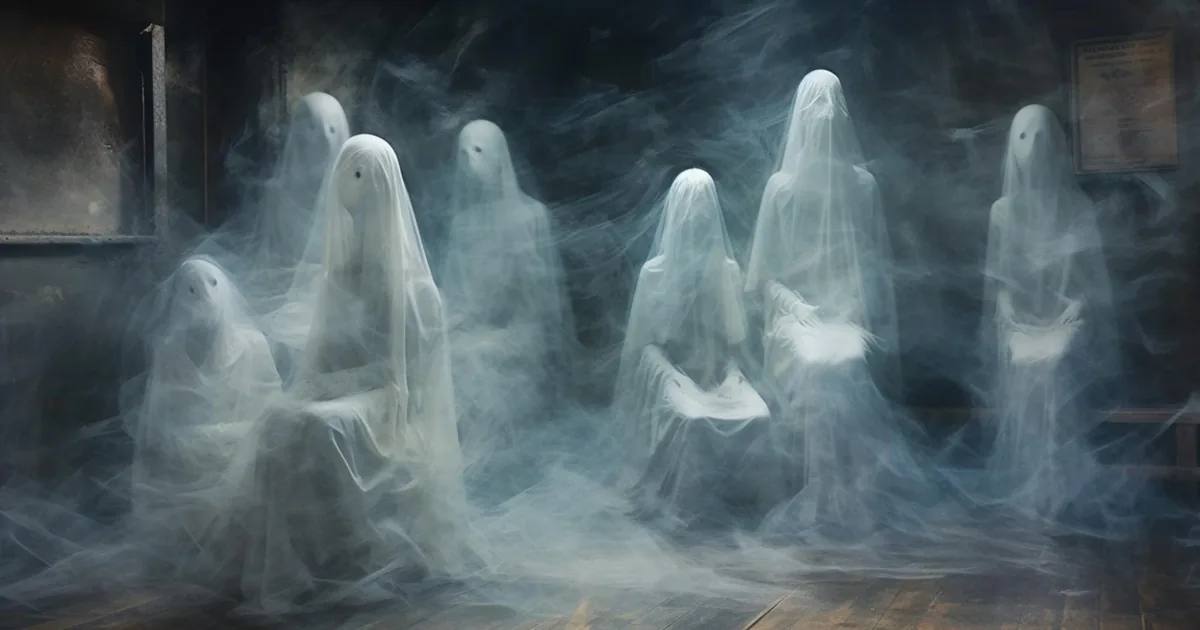
We have come a long way — from ancient legends to modern research, from fear of the unknown to attempts to explain it. And perhaps now you see that a what is a ghost is not just a scare from horror films but a multifaceted phenomenon that touches upon the deepest questions of existence: life after death, the nature of the soul, the power of our emotions and connections.
In esotericism, there is no room for panic or blind faith. What matters here is awareness and respect. When we stop fearing ghosts and begin to see in them souls that may need understanding or help, we become not only braver but also wiser. Esotericism is a tool for self-knowledge. It helps us look beyond the veil of the ordinary, feel a connection to something greater than ourselves, and ultimately better understand our own inner world.
If this article has awakened your curiosity, do not stop here. Continue exploring with us: in the EXETERIC practices you will find meditations, energy protection techniques, and tips for developing intuition that will help you feel more confident in subtle matters. For a deeper dive, check out the other practices in the EXETERIC blog — there we cover many topics, from dreams to karmic tasks. And if you want to learn how the stars influence your sensitivity to the paranormal, consult the astrology section — perhaps your zodiac sign turns out to be especially receptive to the subtle worlds.
The main thing is not to let fear control you. The unknown is frightening, but it is precisely there that the most amazing discoveries are hidden. Approach the topic of ghosts calmly and consciously, as a researcher, not a victim. Try a simple practice: the next time you feel someone's invisible presence, do not brush it off and do not panic. Take a deep breath, mentally greet this energy, and ask what it needs. Perhaps the answer will surprise you.
Remember: your reality is what you believe in. And if you choose to see in ghosts not a threat but an opportunity for growth, they will become your guides in the world of the invisible. Be open, be respectful, and may your path be filled with light, not shadow.
Frequently Asked Questions
Can a ghost cause real harm to a person?
In the vast majority of cases, ghosts are incapable of causing physical harm because they do not have a material body. However, they can influence a person's emotional state and energy, causing feelings of anxiety, fatigue, or fear. Esotericists believe that ghosts are souls stuck between worlds, and their behavior is usually driven by their own pain or confusion, not a desire to harm. If you feel a negative influence, it is important to perform an energetic cleansing of the space and strengthen your protection, but do not panic. Remember that your inner strength and calm are the best defense.
What should I do if I saw a ghost in my apartment?
If you have encountered a ghost in your own home, try to remain calm. Your panic can only intensify the feeling of discomfort. Mentally address the entity with respect, say that you do not wish to harm it, but this is your personal space. Ask it to leave or offer help in transitioning if it needs it. After that, ventilate the room, light a candle, or fumigate the room with sage to cleanse the energy. If the presence becomes intrusive, consult a practitioner who can perform a ritual to guide the soul onward. It is important not to try to banish the ghost aggressively — this can worsen the situation.
Why do some people see ghosts while others do not?
The ability to see ghosts is connected to the development of extrasensory abilities and sensitivity to subtle energies. Some people are naturally endowed with a more open "third eye" and can perceive vibrations that most do not notice. Emotional state also plays a role: in moments of stress, grief, or deep meditation, the boundaries of perception expand, and a person becomes more receptive to paranormal phenomena. Practices such as meditation and energy work help develop this sensitivity. However, do not be upset if you do not yet see ghosts — this is not an indicator of spiritual weakness but rather a feature of your perception.
How to distinguish a real ghost from a figment of the imagination or a play of light?
Real encounters with ghosts are usually accompanied by several signs: you may experience a sudden feeling of cold, goosebumps, a sense of someone's presence, even if you see nothing. Ghosts can manifest as translucent figures, shadows, or glowing orbs, but their appearance often does not depend on lighting conditions. Unlike a play of light, they can move meaningfully, react to your words or actions. If you are in doubt, try asking a mental question and observe the reaction: a real ghost may change its behavior. It is also important to consider that visions can be caused by fatigue or suggestion, so try to analyze the situation soberly and not jump to conclusions.