Working with a pendulum: yes-no answers — training from scratch
Working with a pendulum seems like the simplest esoteric practice: hang a weight on a thread, ask a question, get a yes-no answer. But those who have tried it know — the pendulum sometimes spins like crazy, sometimes stands still, and sometimes gives a clearly wrong answer. Let's figure out what working with a pendulum for beginners really is: how to understand its signals, how not to fantasize the answer, and how to integrate it into a calm daily practice. This is training from scratch, without pathos and intimidation.
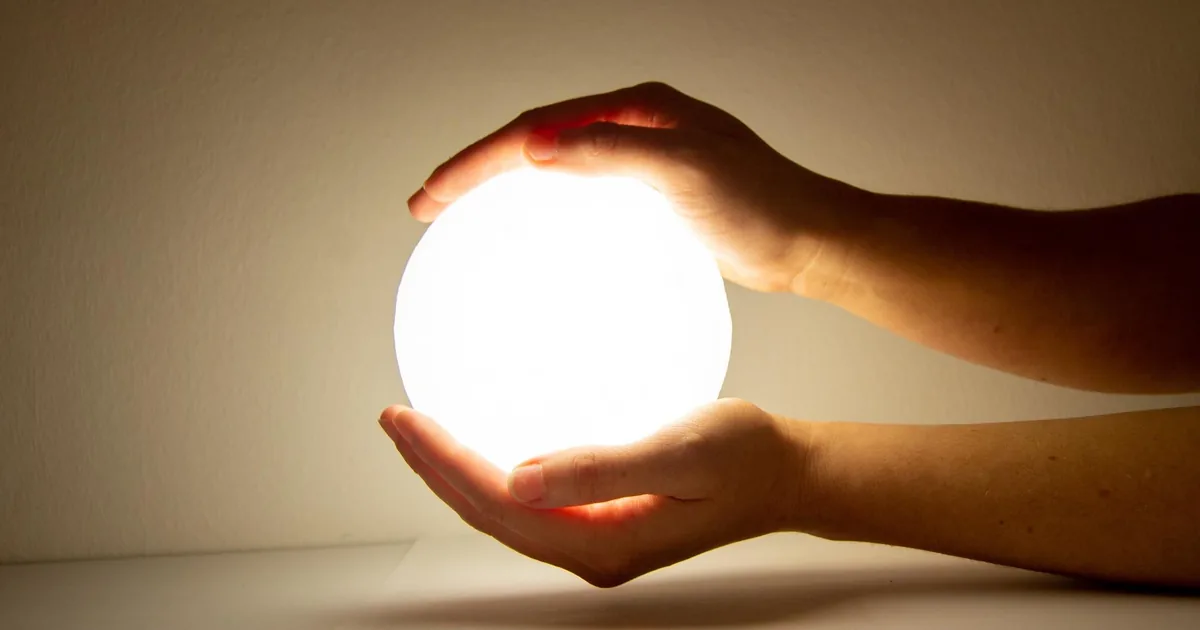
Working with a pendulum: what it is and how to understand the principle of answers
In short, working with a pendulum what is it from a practical point of view? It is a way of dialogue with the subconscious through body micro-movements. You hold a thread 15-20 cm long, relax your hand, ask a clear question — and the ideomotor reaction (those very elusive finger movements) is amplified by the weight and turns into visible swinging. Esotericists speak of connection with the field, intuition and vibrations, psychologists — of bodily access to unconscious experience. Both explanations work for us: the pendulum does not predict fate, it reveals what you already feel but do not dare to admit.
Working with a pendulum meaning lies precisely in calibrating the inner compass, not as an oracle of last resort. A real-life example: a girl is choosing between two job offers. Her mind says — where the salary is higher, her body — tenses at the thought of an office with a rigid schedule. The pendulum to the question “Will this job give me energy in the next six months?” gives a weak “no”, and to the second one — a confident “yes”. This is not the magic of deciding for you, it is the subconscious that has already picked up signs of burnout in the job description.
What to do as a beginner step by step: sit with your elbows supported, feet on the floor, take 3 slow breaths. Formulate the question so that it can only be answered with yes or no, in the present tense and without the particle “not”. Not “Should I not not go?”, but “Is it favorable for me to go to Kazan this weekend?”. Ask calibration questions to which you know the answers: “Is my name Anna?”, “Am I 30 years old?”. Remember how the body shows yes and no. Only after that move on to the real request. One question — one session of 5-7 minutes, after that attention drifts.
How to apply consciously: write down the question, answer and context in notes. Check back in a week. This is how working with a pendulum how to understand where intuition is and where desire is becomes transparent: if the pendulum always says what you want to hear — this is not diagnostics, this is self-suggestion.
Working with a pendulum history and types: interesting facts without myths
Working with a pendulum history goes back to dowsing and biolocation: back in Ancient Egypt and China they searched for water and ore with forked branches and plumb bobs, in the Middle Ages — with a ring on a thread. In the 20th century, French radiesthesists, including working with a pendulum Puchko — Lyudmila Puchko with her multidimensional medicine and diagrams, turned the pendulum into a tool for diagnosing condition and space. On any esoteric forum they still argue: does the pendulum read the field or hand movements? The honest answer — both, and it does not interfere with practice.
Working with a pendulum types are usually divided by material and task. Metal ones (brass, copper) are considered universal and “fast”, stone ones (amethyst, quartz, shungite) — softer, sensitive to the operator’s state, wooden ones — neutral for daily questions. By shape: cone — for precise yes-no answers, ball — for gentle attunement, drop and merkaba — for working with chakras and space. There is no “strongest” pendulum, there is the one with which your hand is relaxed.
Working with a pendulum interesting facts that really help: thread length changes sensitivity — the shorter, the sharper the answers; a heavy weight of 15-25 g is more stable for beginners; cold hands and haste give up to 40% “garbage” in answers because muscles are tense. Therefore practice is first of all hygiene of state, not buying an artifact for big money.
| Common myth | Why it is not true | How it really is |
|---|---|---|
| The pendulum itself knows everything and decides for you | Without a clear question and calibration it amplifies noise | It is an amplifier of micro-movements and intuition, accuracy depends on formulation |
| You need only crystal and initiation | Material affects sensations, not “admission” | Start with a simple metal cone, the rest — as desired |
| Working with a pendulum is it a sin and dangerous | Fear is born from uncontrolled questions about death and damage | With ecological questions and grounding this is a normal practice of self-knowledge, like other practices in the EXETERIC blog |
Working with a pendulum training: yes-no calibration and first charts
Working with a pendulum training always begins not with questions about the future, but with language. Each person has their own working with a pendulum signs of agreement: for some yes is swinging forward-backward, no is left-right, for some yes is clockwise, no is counterclockwise. Do not copy someone else’s scheme from a picture. Spend 2 evenings on calibration — and you will save months of confusion.
Protocol for beginners: day 1 — 10 known facts (name, city, what you ate in the morning). Mark the movement. Day 2 — 10 bodily truths (“Is my body relaxed right now?”, “Did I get enough sleep?”). Day 3 — simple choices with quick checking (“Should I drink water now?” — drink and track the desire). If matches are less than 70%, change posture, thread length, time of day. Often working with a pendulum daytime manifestations are more accurate than morning ones: after coffee the hand trembles, late in the evening attention scatters.
Next, working with a pendulum charts are connected — semicircle diagrams with options. The most useful first chart: yes / no / don’t know / not time to ask / rephrase. The second — a 0-100% scale for questions “How suitable is it for me?”, “How recovered am I?”. The third — choice from 4-6 options (days, products, practices). Hold the pendulum over the center, slowly move your gaze across the sectors and observe where it pulls.
| Symbol / image | Traditional meaning | Manifestation in life | What to do |
|---|---|---|---|
| Swinging forward-backward | Most often “yes” | Confident, wide movement | Fix it as a standard, check on 5 facts |
| Left-right | Most often “no” | Clear transverse movement | Confirm with a question with a knowingly false answer |
| Clockwise circle | Yes / inflow of energy | When diagnosing chakras and products | Use for scales and energy checking |
| Counterclockwise circle / chaos | No / interference / fatigue | The pendulum rushes about, stops | Take a pause, ground yourself, rephrase |
A live example: you ask “Should I go to this meeting tomorrow?”. The pendulum spins chaotically. This is not working with a pendulum nighttime manifestations of spirits, this is the classic “no data” answer: the question is too general. Clarify: “Will the meeting give me clarity on the project?”, “Will my body be resourced to go there in the morning?”. Specifics immediately give a clean yes or no.
Working with a pendulum tips for beginners: formulations, state and hygiene
The main working with a pendulum tips for beginners concern not the pendulum, but you. The pendulum honestly shows your state, so asking in anxiety, after a quarrel or at night half-asleep means getting distortions. Working with a pendulum opinion of esotericists here is unanimous: do not ask questions to whose answer you are not ready, and do not ask the same thing five times in hope for a different yes.
Rules of clean formulations: one question — one meaning, without “or”, without the future a year ahead, without third parties. Bad: “Will we make up and will he call or should I write?”. Good, three separate ones: “Is it useful for me to get in touch first right now?”, “Will a conversation tomorrow reduce tension?”, “Is it better for me to wait three days and observe?”. Add a timeframe and criterion: not “Should I change jobs?”, but “Will changing jobs in the next 3 months improve my condition and income?”.
Operator state: warm hands, water nearby, phone on silent, 2 minutes of 4-6 breathing. If you feel you are persuading the pendulum (“come on, show yes”), put it aside. Working with a pendulum how to recognize self-deception? Double-check: ask the same question the other way around (“Is it unfavorable for me to do this?”) — the answers should mirror. They don’t mirror — you are tired.
Separately about anxious topics that are often searched on forums: working with a pendulum forum is full of stories about working with a pendulum connection with dreams and premonitions. If after practice you have anxious dreams, it is not about mysticism, but about overload. Limit sessions to 10 minutes in the daytime, do not practice before sleep, record dreams in the EXETERIC dream book as a reflection of daytime emotions, not as a sentence. This way daytime and nighttime signals will stop frightening.
Working with a pendulum how to protect yourself: cleansing, prayer and home protection
The question about working with a pendulum how to protect yourself arises for all beginners, and this is normal. From a practical point of view, protection is boundaries and grounding, not fighting entities. Before work, ventilate the room, put your feet on the floor, imagine how weight goes into the earth. Intention aloud: “I ask only about what concerns my good and my decisions. I do not read anything else”.
Working with a pendulum cleansing ritual of the pendulum is simple: hold a new pendulum under cool running water for 30 seconds (if the stone cannot be wetted — wipe with a damp cloth), then hold it in your palms for 1-2 minutes, ask 3 calibration questions. Store in a pouch separately from keys. It is enough to cleanse once a week or after emotionally heavy topics — with wormwood smoke, the sound of a bell or simply with intention and breathing.
For those for whom support in tradition is important, working with a pendulum prayer and a short working with a pendulum rite of attunement are appropriate: light a candle, read your usual prayer or address to your kin, give thanks for clarity. This tunes the nervous system to calmness, not “opens a portal”. If the topic of faith worries you strongly, discuss with your spiritual father precisely your state, not the tool: the plumb bob itself is neutral, like a compass.
Working with a pendulum home protection with the help of a pendulum is diagnostics, not expulsion. Walk around with the question “Does the energy here promote rest?” through the corners of the bedroom, workplace, entrance. Where the answer is “no” — check the everyday: clutter, non-working equipment, lack of light. Practice shows: in 9 out of 10 cases a “heavy zone” is just a cluttered corner. Clear it, ventilate, add light — and repeated measurement often gives yes. For a deeper understanding of your cycles you can check with the astrology section or the matrix of fate calculator to distinguish a bad day by transits from a real problem of place.
| Situation | Reactive approach | Conscious practice | Result |
|---|---|---|---|
| The pendulum answers chaotically | Asking 10 times in a row until the desired answer | Stop, drink water, rephrase and ask tomorrow | Clean signal and trust in the tool |
| Scary: “what if it’s a sin, an entity?” | Googling horror stories at night | Grounding, light, prayer, questions only about your own decisions | Calmness and control over the process |
| You want to ask about another person | Intruding into someone else’s will: “does he love me?” | Shift to yourself: “Is it useful for me to wait? What should I do for clarity?” | Answers are more accurate, ethics observed |
Everyday practice: yes-no answers without dependence
For working with a pendulum for beginners to become a support, not a crutch, introduce the rule of three spheres: body, work, home. Body — “Is a 20-minute walk useful for my body right now?”, “Does this product give me lightness?”. Work — “Is this task my priority today?”, “Is the letter ready to send?”. Home — “To tidy this shelf today?”. Three questions a day is enough to train connection with yourself and not fall into dependence when it is scary to leave the house without a pendulum.
Example of a conscious session: in the morning you calibrate on two facts, ask one main question of the day, get an answer, write down the action. In the evening — one line of checking: did the feeling match? In a month you will have 30 cases — better statistics than any someone else's review. If you notice working with a pendulum what to do upon encounter with an unclear signal — the pendulum stands still, although the question is simple — this is also an answer: pause. The body says “no data yet”, and the wisest thing is not to push.
And about ethics: do not diagnose diseases and do not place “damage” with a pendulum, do not look at third parties without asking, do not make large financial decisions only by the plumb bob. The pendulum is an adviser, not a boss. Check it against facts, body and common sense, study articles about magic and self-knowledge to broaden your horizons, and in case of anxiety and obsessive questions contact a psychologist. Then the practice will remain bright: a quiet weight on a thread, a warm palm and an honest conversation with yourself, where yes means yes.

The pendulum as a quiet conversation with yourself
In the end I want to say the most important thing: the pendulum does not divide the world into permitted and forbidden, it simply teaches you to hear yourself a little more attentively. Yes, at first the hand trembles, answers get confused, and the desire to see what you need is stronger than honesty. This is normal for any new skill. Over time you begin to distinguish a calm inner yes from an anxious wish for it to be yes, and this skill stays with you even without thread and weight in your hands.
Do not treat esoterics as an ambulance or a way to relieve yourself of responsibility. It is a tool of self-knowledge and conscious life, not a panacea and not a reason for fear. The pendulum will not decide for you where to move, whom to live with and how to be treated, but it will help notice body fatigue, quiet joy or doubt that the mind is used to drowning out. This is exactly how gentle practices work in the approach of EXETERIC practices: without intimidation, without dependence, with respect for common sense and your choice.
If after the article curiosity remains — this is a good sign. Try one calm week: three questions a day, short notes, checking against reality. Look into the description of your zodiac sign to better understand your rhythms and days of doubt, and read about other practices in the EXETERIC blog to broaden your view. Do not be afraid of the unclear — figure it out calmly, try consciously, with warmth to yourself. Let your pendulum become not an oracle, but an honest friend: a small plumb bob that reminds — the answer already lives inside you.
Frequently asked questions
Can I ask the pendulum the same question several times?
Asking the same question over and over in a row is not recommended, because each repetition amplifies not intuition, but fatigue and the desire to get a convenient answer. If you asked a clear question in a calm state and received a clear yes or no, record it and stop. Chaotic or changing answers on repetitions usually mean that you are worried, tired, or have already internally chosen an option and are persuading the pendulum. In this case it is better to drink water, take a walk, rephrase the question more precisely and return to it the next day. Trust in practice grows precisely from discipline: one question — one answer — one check in life.
What time of day is best for a beginner to work with a pendulum?
For beginners it is best to practice in the daytime, in calm hours, when the body has already woken up but is not yet overloaded with impressions. Early morning after coffee often gives hand trembling, and late evening before sleep increases anxiety and blurs attention. The ideal moment is 1-2 hours after a light meal, in a ventilated room, in silence and with warm hands. A short session of 5-10 minutes is enough: calibration on known facts and one or two real questions. Regular short practice in the daytime gives much cleaner and more stable answers than long nighttime sessions.
Which pendulum to choose for the first yes-no answers?
For the first yes-no answers, a simple metal cone-shaped pendulum weighing about 15-25 grams on a thread 15-20 centimeters long is best. Such a weight gives a clear, visible movement and does not react as strongly to the slightest hand trembling as light stone models. Material and stone do not give admission to practice, they only change sensations: brass and copper feel faster and sharper, stone and wood — softer. You can start with the most affordable option, the main thing is that it is comfortable for you to hold the thread and your hand relaxes. Later, when the yes-no language becomes clear, you can try other shapes and materials for your tasks.
Why does the pendulum lie and show what I want?
The pendulum most often shows what is desired rather than what is real when you ask in strong excitement, fatigue, or are afraid of a certain answer in advance. In such a state, hand micro-movements are controlled not by calm intuition, but by tension and hope, and the weight only amplifies this inner pressure. The second common cause is inaccurate formulation: double meaning, the particle not, a question about another person or about the distant future. To reduce self-deception, ask the question neutrally, in the present tense and about yourself, and then check with a mirror question the other way around. If the answers do not mirror or the pendulum rushes about, this is a signal to take a pause, ground yourself and return to the topic later.