Vanga dream book: interpretation of dreams according to the Vanga dream book
What is the Vanga dream book and why is it so popular
The Vanga dream book is not just a collection of predictions, but a whole system of images that helps you look into your subconscious and understand what signals your inner world is sending you. Vanga, the Bulgarian seer known for her gift of clairvoyance, left behind unique interpretations that still spark debate and admiration. Unlike classic dream books, such as Miller's, the Vanga dream book focuses not on everyday details, but on deep archetypes and emotional states. Many people search for "Vanga dream book interpretation of dreams" to understand the signs that are believed to warn of important events.
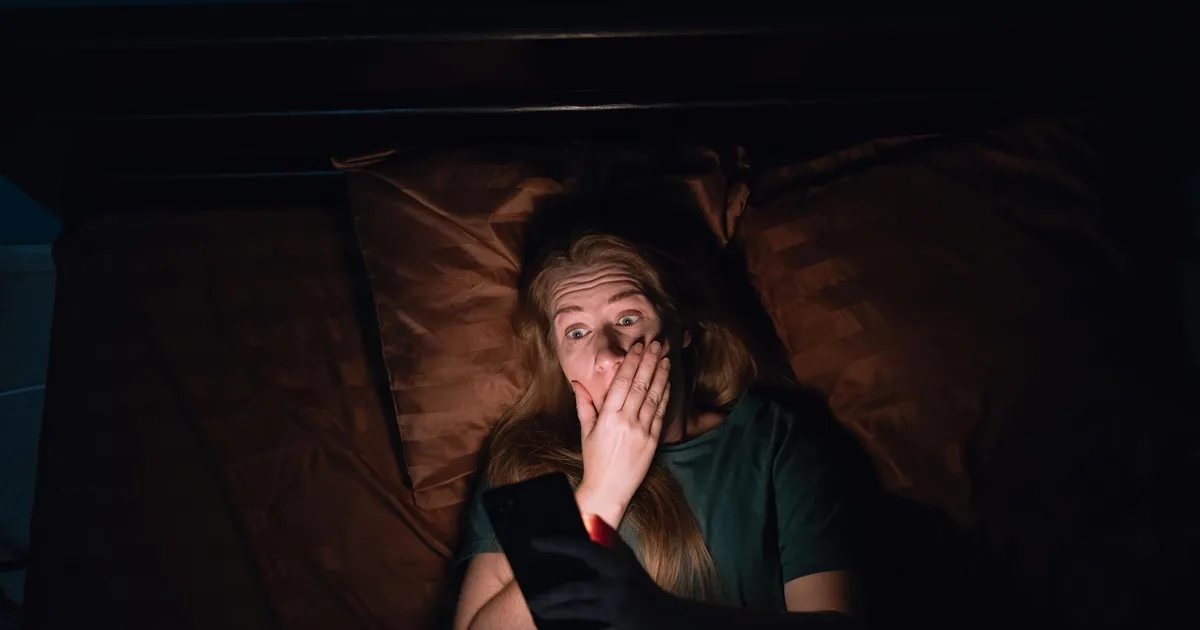
But why Vanga specifically? Her prophecies about the world and people's destinies were striking in their accuracy, and her approach to dreams was no less insightful. She claimed that dreams are the language of the soul, and if you learn to understand it, you can avoid mistakes and find your path. The Vanga dream book is an attempt to systematize this language, to make it accessible to everyone. In our article, we will examine how to work with this dream book, which symbols appear most often, and how to apply interpretations in real life without falling into fatalism.
Key symbols in the Vanga dream book: from house to teeth
The Vanga dream book includes many symbols, but some are especially important and frequently appear in people's dreams. Let's look at several key images and their meanings according to the seer's interpretation.
| Symbol / image | Traditional meaning | Manifestation in life | What to do |
|---|---|---|---|
| House | Symbol of the inner world, family, stability | If the house in the dream is beautiful and cozy — you are in harmony with yourself. A destroyed house — inner conflict or family problems. | Pay attention to your relationships with loved ones and your emotional state. Perhaps it's time to "repair" your inner world. |
| Teeth | Health, vitality, confidence | Losing teeth often appears in dreams before illness or loss of energy. Blood in a dream with teeth — problems with relatives. | Don't ignore your body's signals. Get a medical check-up, take time for prevention. |
| Water | Emotions, the flow of life, purification | Clean water — clarity of thought, calm. Murky water — anxiety and doubt. | If the water is murky, try to sort out your feelings; perhaps you should see a psychologist or take up meditation. |
These symbols are just the tip of the iceberg. The Vanga dream book also attaches importance to the actions and emotions you experience in the dream. For example, if you dream that you see Vanga — this may be a sign that you are seeking answers to important questions. Many people wonder: "dream book of Vanga what does Vanga dream about"? It is believed that such a dream speaks of the need to listen to your intuition. Perhaps you are on the threshold of an important decision, and your subconscious is prompting you to turn to wisdom.
How to correctly interpret dreams according to the Vanga dream book: a step-by-step method
Interpreting dreams is not just a mechanical "looked up the meaning — got the answer." It is a whole art that requires a conscious approach. To make the Vanga dream book work effectively, follow this simple algorithm.
Step 1. Write down the dream immediately after waking up. Even if it seems you remember everything, details fade. Write down not only the plot but also emotions, colors, smells — everything you remember.
Step 2. Identify the key symbols. What stood out most? A house, a person, an action? Don't try to interpret the whole dream at once — break it down into components.
Step 3. Find the meaning in the Vanga dream book. Use our guide to the Vanga dream book or other sources, but remember: the meaning of a symbol is a starting point, not dogma.
Step 4. Connect it to real life. Ask yourself: what is happening in my life right now? What situations are connected to this symbol? The Vanga dream book is a tool for self-analysis, not a prediction of fate.
Step 5. Make a decision or draw a conclusion. If the dream warns of possible difficulties, think about how you can prepare. If the dream inspires you, find a way to channel that energy into reality.
This approach helps you use the Vanga dream book not as a way to know the future, but as a way to better understand yourself. This is the true value of dream books — they reflect our inner processes, not external events.
Vanga dream book and Miller's dream book: what are the differences and what to choose
Many who begin to take an interest in dream interpretation ask: how does the Vanga dream book differ from Miller's dream book? Both dream books are popular, but their approaches are different. Miller, an American psychologist, created his dream book in the early 20th century, based on psychoanalysis. His interpretations are more rational and tied to everyday details. Vanga, being a clairvoyant, interpreted dreams more intuitively, paying attention to symbolic and prophetic meaning.
| Parameter | Miller's dream book | Vanga dream book |
|---|---|---|
| Foundation | Psychological approach | Intuitive, esoteric |
| Symbols | Specific, everyday | Archetypal, deep |
| Purpose | Understand inner conflicts | See signs of fate |
| Style | Rational, systematic | Mystical, figurative |
What should you choose? It all depends on your preferences and situation. If you want to understand the psychological causes of recurring dreams, Miller's dream book may be useful. If you are looking for answers about the future or feel that a dream carries an important message, turn to the Vanga dream book. Many practitioners advise using both dream books in tandem: first look up the meaning according to Miller to understand the psychological subtext, then according to Vanga — to grasp the subtler, energetic meaning. This comprehensive approach gives a more complete picture.
Common dream scenarios: what Vanga says about people, men, and women
Dreams featuring people are among the most common. The Vanga dream book attaches great importance to who exactly appears in your dream: a man, a woman, an ex-partner, or children. Each image carries its own meaning.
If you dream of a woman
A woman in a dream often symbolizes intuition, the emotional sphere, or some part of your personality. If the woman is unfamiliar, this may mean you are coming into contact with unexplored aspects of yourself. If it's a woman you know, think about what qualities she embodies and how they manifest in your life. The dream book of Vanga woman interprets this as a sign that it's time to pay attention to your feelings and inner experiences.
If you dream of a man
A man in a dream is often a symbol of the active principle, action, logic. If you see a man, perhaps you lack these qualities in real life. The dream book of Vanga man may indicate the need to show decisiveness or point to an important event connected to a man in your circle.
Ex-partner in a dream
Dreams about exes are not always nostalgia. The dream book of Vanga ex says that you have not yet let go of the past or that you need to learn a lesson from that relationship. Perhaps you are repeating old mistakes in new relationships. Such a dream is an invitation to reflection.
Children in a dream
Children symbolize purity, new beginnings, potential. The dream book Vanga children interprets this as a sign that something new is being born in your life. If the children in the dream are crying, this may indicate unfulfilled dreams or a need for care.
It's important to remember that interpretation depends on context. For example, if you dream that you see Vanga in a dream, this may be a call to turn to wisdom. Many search for "dream book in a dream saw Vanga" to understand what it means. Vanga in a dream is the archetype of the seer, a symbol of your own intuition. Perhaps you possess the gift of foresight but don't trust it.
How to use the Vanga dream book for self-discovery and decision-making
The Vanga dream book is not just a reference guide, but a tool for personal growth. When you interpret dreams, you learn to better understand your desires, fears, and motives. This helps you make more conscious decisions in everyday life.
For example, if you dream that you are drowning in murky water, the Vanga dream book may indicate emotional overload. Instead of ignoring this signal, you can take steps to reduce stress: do yoga, meditate, or simply rest. In this way, the dream becomes not a prediction but a hint for action.
Another example: a dream in which you are flying is often interpreted as a striving for freedom and new opportunities. If you've been thinking about changing jobs for a long time, such a dream could be the push you need to decide on a change. The Vanga dream book helps you hear your inner voice, which is sometimes drowned out by the hustle and bustle.
It's important not to go to extremes: don't perceive every dream as a prophecy. Dreams are a reflection of our state, and they change along with us. Use the dream book as a tool for dialogue with yourself, and you will notice how your intuition becomes sharper.
Vanga dream book: myths and reality
There are many myths surrounding the Vanga dream book. Some believe it is a precise tool for predicting the future, others think it is mere superstition. Let's figure out what is true and what is not.
| Common myth | Why this is not so | How it actually is |
|---|---|---|
| The Vanga dream book predicts the future 100% | Dreams are a symbolic language, and their interpretation is subjective. The same event can appear in dreams with different outcomes. | The dream book helps you understand trends and warn of possible events, but the final decision is always yours. |
| If you have a bad dream, misfortune will definitely happen | Dreams often reflect our fears, not real events. A bad dream may be a signal that you are anxious about something. | Instead of panicking, analyze what in your life is causing worry and take action. |
| The Vanga dream book is only for the chosen few | Vanga did not distinguish between people; her interpretations are universal. | The dream book is accessible to anyone willing to work on themselves. |
The Vanga dream book is not a magical book, but rather a collection of wise hints. It teaches us to be more attentive to our dreams and use them for personal development. If you want to delve deeper into the topic of dreams, we recommend checking out dream interpretation on the EXETERIC blog, where you will find even more materials on symbols and practices.
Vanga dream book: how to work with recurring dreams
Recurring dreams are a special phenomenon that often points to an unresolved problem or an important message. The Vanga dream book can help decipher why the same scenario keeps returning again and again.
If you have the same dream repeatedly, ask yourself: what do these dreams have in common? What emotions do you experience? What is happening in your life during these periods? Often recurring dreams stop when you resolve an inner conflict or make an important decision.
For example, if you constantly dream that you are missing a train, this may indicate a fear of missing opportunities. The Vanga dream book interprets a train as movement through life, and being late as a feeling that you are not keeping up. In reality, you may have taken on too many commitments or fear change. Once you realize this, you can adjust your plans and reduce anxiety.
For working with recurring dreams, it is useful to keep a dream journal. Write down not only the plot but also your feelings upon waking. Over time, you will notice patterns and better understand what your subconscious is trying to convey. If you want to explore other approaches to dreams, check out articles on magic and self-discovery on the EXETERIC blog, where we examine various practices.
Vanga dream book: interpretation of dreams about death and change
Dreams about death are among the most frightening, but in the Vanga dream book they rarely mean physical death. Most often, death in a dream symbolizes the end of one stage and the beginning of another. This could be the end of old habits, relationships, or a way of life.
If you see the death of a loved one in a dream, don't rush to panic. Vanga interpreted such dreams as a sign of change in your relationship with that person or as a warning of possible conflicts. Perhaps you should pay more attention to that person in real life.
Dreams about your own death may indicate deep inner transformations. You may feel that the old personality is "dying," making way for a new one. This is a natural process of growth, although it may be accompanied by fear.
To correctly interpret such a dream, pay attention to the details: who dies, how you feel in the dream, what happens afterward. The Vanga dream book will show you which aspects of your life need renewal. Remember that dreams are not a verdict, but an opportunity to better understand yourself.

Vanga dream book: your key to understanding yourself
The Vanga dream book is not just a collection of predictions, but rather a wise companion that helps us hear our inner voice. When we turn to interpretations, we learn to notice the signs our subconscious sends us and use them for personal growth. It's important to remember that dreams are not a verdict, but a reflection of our state, our fears, and our hopes. They can hint at what to pay attention to, but the final decision always remains ours.
Esotericism, and dream books in particular, is a tool for self-discovery, not a way to escape reality. Instead of fearing "bad" dreams or blindly believing in "good" ones, it's worth approaching them consciously, with respect for yourself and your inner world. EXETERIC practices will help you develop your intuition and learn to understand the language of symbols. And if you want to look deeper into your nature, pay attention to your zodiac sign — perhaps astrology will reveal new facets of your personality. On our blog, you will find many articles about magic and self-discovery to help you on this path.
Don't be afraid of the unknown. Dreams are a mystery we can spend a lifetime unraveling, and in this process there are no right or wrong answers. Trust yourself, listen to your feelings, and use the Vanga dream book as a compass that points the direction but doesn't decide where to go. May your dreams become a source of wisdom and inspiration, not anxiety. Explore, ask questions, try different practices — and you will surely find what resonates with you.
Frequently asked questions
Why is the Vanga dream book considered accurate if Vanga left no records?
The Vanga dream book is not the seer's personal notes, but the result of researchers' work who collected and systematized her statements about dreams and symbols. Vanga herself did not keep diaries, but her followers and students recorded her interpretations. Therefore, the dream book is more of a collective creation based on her worldview. The accuracy of the dream book is explained by the fact that Vanga relied on archetypal images that are understandable to people of different cultures. However, it's important to remember that any dream book is a tool for reflection, not the ultimate truth.
Can the Vanga dream book predict the future?
The Vanga dream book is not a tool for precise prediction, like, for example, an astrological forecast. It rather helps you see trends and warn of possible events that may occur if you do not change your behavior. Dreams reflect our subconscious, our fears, and desires, so they can hint at which decisions are better to make. But the future depends on many factors, and you can always influence it. Use the dream book as a hint, not a verdict.
How to distinguish a prophetic dream from an ordinary one?
Prophetic dreams are usually distinguished by vividness, emotional intensity, and a feeling of "reality." After such a dream, you may feel that it was not just a dream but an important message. Prophetic dreams often stay in memory for a long time and may repeat. However, you shouldn't immediately attribute prophetic meaning to every vivid dream. The Vanga dream book advises paying attention to recurring scenarios and symbols that appear in your life. If a dream evoked strong emotions or made you think, perhaps it contains a hidden meaning worth analyzing.
What to do if you had a bad dream according to the Vanga dream book?
If you had a dream that the Vanga dream book interprets negatively, don't panic. First of all, analyze your life: perhaps you are experiencing stress or worrying about something. A bad dream is not a curse, but a signal that you need to pay attention to your emotional state. Think about what in your life is causing concern and try to resolve that issue. You can also perform a small cleansing ritual, such as taking a shower or lighting a candle, to symbolically "wash away" the negativity. The main thing is not to dwell on fear, but to use the dream as an occasion for self-analysis.