Entity in a cemetery — protection of home and loved ones
If you are troubled by the topic of an entity in a cemetery, let's start with the main thing: in the vast majority of cases it is not about an "attack", but about a place with a special energy where our psyche becomes more sensitive. A cemetery is silence, a boundary, the memory of the lineage, and that is precisely why it is so easy there to mistake fatigue, anxiety, or grief for someone else's presence. In this article we will examine an entity in a cemetery what is it from the point of view of demonology and psychology, what manifestations occur, and how to build calm protection for your home and loved ones.

Entity in a Cemetery: What Is It and the Meaning of the Place
To understand an entity in a cemetery meaning, it is important to separate two layers: the cultural and the energetic. In the traditions of different peoples, the graveyard was considered a "threshold" — a territory of transition, where its own rules of conduct apply: do not make noise, do not take anything from graves, come with respect, leave before dark. This is not intimidation, but hygiene of contact with a place of mourning. From an energetic point of view, a cemetery is a field of collective memory, where there are many emotions of grief, things left unsaid, and attachment. A sensitive person reads this as heaviness, cold, being watched.
In demonology, an entity in a cemetery interpretation is given quite soberly: spirits of the place, remnants of emotional traces, restless fragments, and sometimes — simply an egregore of fear, which we ourselves feed with films and stories. A real-life example: a woman after her father's funeral felt for a month that "someone was standing behind her back", especially in the evening. A check revealed the classic pattern — lack of sleep, grief, the habit of mentally "finishing" the conversation with the departed. As soon as she introduced an evening ritual of completing the day — a candle, gratitude, a warm shower and airing out, the feeling went away within a week.
The practical step here is one, but important: treat the graveyard as a library of memory, not as a battlefield. Come in daylight, with a clear intention — to visit, to tidy up, to commemorate. Do not conduct "experiments" with summonings there, do not leave your belongings and do not take other people's. And to broaden your horizons about symbols and signs, take a look at other practices in the EXETERIC blog, where we explain how to distinguish intuition from anxiety.
Entity in a Cemetery Types and History of Beliefs
The question about entity in a cemetery types comes up constantly, because different phenomena hide under one word. Tradition distinguishes several types: guardians of the place — spirit-keepers of the graveyard, mentioned in Slavic and Western European demonology; shadows of grief — clots of emotions of the living who come to mourn; the restless — images of those held by unfinished business or strong attachment of relatives; and accidental "fellow travellers" — that which clings not because it is strong, but because a person is open, exhausted and frightened.
If we look at entity in a cemetery history, it is interesting that in almost all cultures protection was built not on aggression, but on respect for boundaries. The Greeks left a coin and a libation, the Slavs — memorial food and a bow, in Catholic countries — a prayer at the entrance and exit. The general meaning is one: "I came in peace and I leave in peace". Entity in a cemetery interesting facts are also telling: caretakers of old cemeteries say that most "strange" things happen not on a full moon, but on days of mass commemorations, when the emotional background goes off the scale. This indirectly confirms the version about collective energy, rather than about "portals of evil".
| Common myth | Why it is not true | How it really is |
|---|---|---|
| Something always "attaches itself" from a cemetery | Most people go there for years without consequences | The risk is higher with exhaustion, alcohol and ritual provocations |
| You need to set up aggressive protection with a "backfire" | Aggression increases anxiety and conflict in the field | Respect, boundaries and calm cleansing of the home work |
| If it got cold — it is definitely a demon | Cold is a normal reaction of the body to stress and the wind of open spaces | Look at the combination of signs and duration |
The root view is this: do not ask "who is scary there?", ask "in what state am I going there?". Awareness is already half of protection. Before visiting, get enough sleep, eat, formulate your intention. After — wash your face, change your clothes, air out your home. This is both psychology and old magical hygiene at the same time.
Entity in a Cemetery Signs: How to Tell and How to Recognize
Let's examine entity in a cemetery signs calmly, without mysticism. Sensations right on the spot — sudden chills without wind, pressure in the temples, ringing in the ears, the desire to leave quickly, the obsessive thought "I am being watched" — are most often explained by stress and sensory deprivation in a quiet place. It is another matter if oddities continue at home for longer than 7–10 days: anxious dreams with the same place, heaviness in the house in the evening, quarrels out of nowhere after a memorial, reluctance to enter the hallway where shoes and clothes from the cemetery remain.
How to resolve the question of entity in a cemetery how to tell that it is not just fatigue? We offer a simple combination of three markers: repeatability, attachment to a place or object, and reaction to cleansing. A one-time fright is the psyche. A repeating scenario that weakens after cleaning, salt, airing out and restoring routine is a trace of emotional overload. But if the phenomenon intensifies, has a "character" and dialogues, frightens children or animals at the same time — this is a reason to look deeper, including with the help of the EXETERIC dream book for analyzing recurring dreams.
| Symbol / image | Traditional meaning | Manifestation in life | What to do |
|---|---|---|---|
| Shadow in peripheral vision | Spirit of the place, observer | Feeling of being watched on the alleys | Do not engage in contact, calmly leave along the path |
| Cold and heaviness in the chest | Emotional trace of grief | Nausea, tears for no reason | Warm drink, grounding, going out into the light |
| Dreams of a call to return | Unfinished farewell | Anxiety after a memorial | Ritual of gratitude and letting go |
| Knocks, rustling at home | "Fellow-traveller" trace, attachment to an object | Restlessness for 3–7 days | Cleaning, laundry, checking what was brought in |
Entity in a cemetery how to recognize in practice? Ask yourself four questions: when did it start, after which visit, what changed in the house and what did I bring with me — flowers, soil on shoes, a found object, photographs. Most often the answer is found already at this stage. Practical step: keep a 7-day journal — time, sensation, what you did before, what helped. This removes spiralling thoughts and gives facts and analysis instead of speculation.
Entity in a Cemetery How to Check Contact Without Self-Suggestion
The topic of entity in a cemetery how to check is very important, because people often use "checks" from the internet that only increase fear: mirrors at night, summonings, pendulums in an anxious state. Conscious checking is always calmness, daylight and verifiable criteria. First — physical hygiene: sleep, food, a walk, cleaning the hallway. If after three days of normal routine the symptoms have gone by 70–80%, it was overload, not an attachment.
Second — the space test. Air out the whole house, do wet cleaning with salt, wash the clothes from the graveyard separately, wipe the shoes, throw wilted memorial flowers into an outdoor bin, not store them at home. Light a candle with the intention of peace and observe: does it become easier to breathe, is sleep calmer. Third — the behaviour test: do animals and children calm down after cleaning? Do quarrels subside? If yes — you were dealing with a heavy emotional background. Entity in a cemetery examples from practice show: in 8 out of 10 cases, exactly such everyday cleansing plus a conversation about grief is enough, without complex rituals.
Separately about dreams: if you dream of a deceased person calling you to follow, do not panic. In dream interpretation, such an image more often means guilt and an unfinished dialogue, not a "call of death". A farewell letter that does not need to be sent helps, as well as a bright memorial practice in your tradition. And if you are fond of self-knowledge through astrology, look at transits in the astrology section — Saturn and Pluto periods often coincide with an exacerbation of the theme of lineage and memory, and understanding the cycle reduces anxiety.
Entity in a Cemetery What to Do: Protection of Home and Loved Ones
Let's move on to the main thing — entity in a cemetery what to do if you are impressionable or there are children and elderly people in the house. The principle of protection here is not military, but parental: boundaries, cleanliness, warmth and predictability. Entity in a cemetery protection is built in three circuits: you, the threshold of the house and the inner space. Let's start with you: before the visit — a hearty breakfast, water, closed clothing and shoes that are easy to wash. Inner formula: "I go with respect, I commemorate and return to my life". No appeals to "everyone who hears", no requests for signs.
The threshold of the house is the second circuit. After the cemetery, do not go straight into the bedroom and kitchen. The hallway is the airlock: take off your shoes, wash your hands and face, change your clothes, put the clothes in the wash. Wipe the floor in the corridor with salt, air out for 10–15 minutes. This is the entity in a cemetery step-by-step breakdown in everyday form, which works better than complex rites because it is performed regularly. The inner space is the third circuit: light, order, warm scents — wormwood, juniper, incense in microdoses, if there is no allergy. In the evening — a calm conversation, not a discussion of "scary" things in front of children.
Frequent entity in a cemetery mistakes — bringing home soil, stones, flowers from graves "as a keepsake", picking up coins and jewellery at the graveyard, taking photos with provocative poses and conducting fortune-telling there. The second mistake is aggressive cleansings with shouting and "expulsions", which frighten loved ones more than any shadow. The third is silencing grief, when instead of living through the loss the family begins to look for "hexes". The root view: protection is care for the living. Fed, well-rested, heard people are much less vulnerable to any influences, and this is confirmed by both psychologists and practitioners.
Special Case: A Child Got Frightened After a Funeral
The most tender scenario is when a child after the cemetery sleeps poorly, is afraid of the dark and says that he "sees an auntie" or "an uncle is standing". Here it is especially important not to laugh and not to reinforce the fear with stories about entity in a cemetery facts and analysis which adults discuss in front of children. For a child, this is almost always a fusion of impressions: wreaths, crying adults, an unfamiliar place. His subconscious fills in images, and our anxiety legitimizes them.
What specifically helps: a warm foot bath with salt, clean pyjamas, an aired room, a night light and a simple anchor phrase: "Home loves you, we are near, this is a place for sleep". Remove funeral items from the bedroom, move photographs with a mourning ribbon into an album. During the day, go for a walk to a bright lively place — a park, a playground, so that the body gets the opposite experience. If the child keeps telling the same story for longer than two weeks, gently ask through drawing: "draw what you saw, and now draw how we see it off in peace". This technique completes the unclosed gestalt and returns a sense of control.
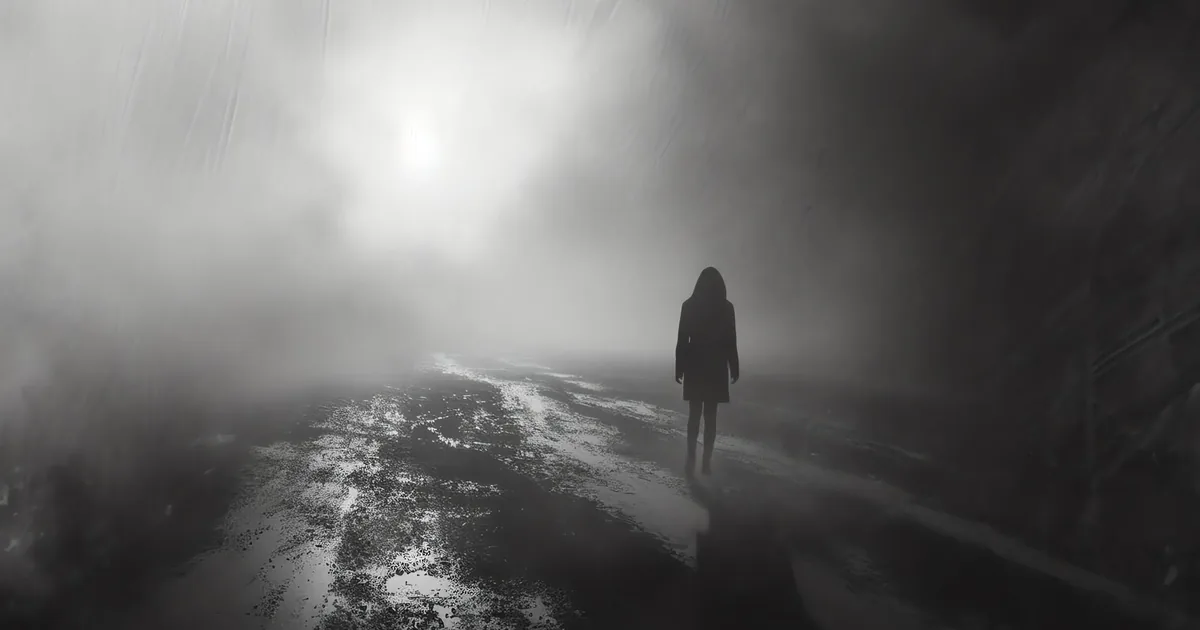
Return to Life with Peace in Your Heart
A cemetery frightens only when we come there without inner support and leave without closure. If you were there with respect, said goodbye calmly and at home brought back warmth, light and normal rhythm, no shadow will linger nearby for long. Remember: the silence of the graveyard is not a threat, but a reminder of the value of living days, of connection with the lineage and of how important it is to take care of each other while we are near.
Esotericism in this sense is not a way to frighten yourself even more and not a magic button for all troubles, but a tool of self-knowledge and conscious life. It teaches to notice one's state, to respect the boundaries of the visible and invisible, to live through grief rather than run away from it. When you tidy up the hallway, light a candle with a kind intention, say warm words to loved ones — this is already practice, quiet and strong.
If the theme of lineage, memory and subtle sensitivity resonates with you, take a look at the selection of other practices in the EXETERIC blog — there we calmly examine cleansing the home, working with dreams and recovery after difficult periods. And for those who want to understand why experiences have intensified right now, the astrology section and a look at the rhythms of your zodiac sign will be useful. The approach of EXETERIC practitioners is always one: without fear, with respect for traditions and reliance on common sense.
Do not be afraid of the incomprehensible — examine it calmly. Start small: sleep, light, cleanliness, kind conversation and a clear intention to live your life. And may your home be a place to which only love returns.
Frequently Asked Questions
Can pregnant women and small children go to a cemetery?
Tradition advises pregnant women and small children to refrain from visiting a cemetery if possible, and there is practical sense in this. For a pregnant woman, this is first of all fatigue, strong emotions, a long journey and contact with other people's grief, and for a child — an unfamiliar atmosphere, crying adults and images that later appear in dreams at night. If the visit is necessary, come in daylight for a short time, dress warmly, do not approach open graves and do not stay for the memorial meal. After returning home, change your clothes, wash your hands and face, air out your clothes and stay in a calm environment. A mother's calmness and a clear ritual of return are more important than any prohibitions.
What should not be brought home from a cemetery?
You should not bring home from a cemetery soil, stones, artificial flowers, ribbons, coins, found jewellery and any objects left on graves. Even if an object looks beautiful or valuable, it is connected with a place of mourning and someone else's farewell ritual, so at home it will create an anxious background. Separately wash the clothes you wore at the graveyard, wash your shoes, throw wilted flowers into an outdoor bin, and give away sweets and memorial food on the way, not store them in the kitchen. If you have already accidentally brought something, calmly take it back or dispose of it outside the home, then do wet cleaning with salt. This is not punishment, but simple hygiene of boundaries between the world of memory and living space.
How to behave at a graveyard so as not to get frightened?
Come in daylight, having slept and eaten, with a clear intention to visit and commemorate, not to test your courage. Keep to the main paths, speak quietly, do not make noise, do not take photos in provocative poses and do not conduct any summonings and divinations. Do not take anything from other people's graves and do not leave your personal belongings, scarves and jewellery there. Leave before dark with words of gratitude and farewell, and at home immediately wash your face, change your clothes and air out the hallway. Calm respectful behaviour removes almost all causes for anxiety and strange sensations.
When after a visit should you seek help?
A one-time fright, poor sleep for one or two nights and sadness after a funeral are a normal reaction to grief, which passes on its own with rest and support from loved ones. You should be alert if anxious dreams with the same plot, heaviness at home, quarrels and fear of the dark last longer than two to three weeks and intensify, despite cleaning, sleep routine and calm conversations. Pay especially close attention to the condition of children, the elderly and people with depression if they complain about a constant presence, voices or the call of the deceased. In this case, first talk to a psychologist and a doctor, and then, if you wish, contact an experienced practitioner to analyze the situation. A comprehensive approach restores a sense of control faster than searching only for mystical causes.