Luck talismans: a safe start for beginners
Luck talismans surround us everywhere: a coin in a wallet, a red thread on the wrist, a horseshoe pendant, a holed stone found on the beach. Some people wear them out of habit, others — consciously, as an anchor of intention. Let's break down luck talismans meaning and practice without fear-based mysticism: how to understand what works specifically for you, what types exist, and what to do to make an object a helper rather than a crutch.

Let's agree on the framework right away. In the category of magic, a talisman is not a magic button, but an object that carries attention. You put an intention into it, and it returns focus, calm, and energy for action to you. Psychology calls this the anchor effect, esotericism calls it charging an object. Both work when there is a luck talismans step-by-step plan, rather than a chaotic buying-up of souvenirs.
Luck Talismans: History and Origin in Simple Words
If we look at luck talismans history and origin, it is one of humanity's most ancient practices. As early as 30,000 years ago, people wore fangs, shells, and carved figurines — not for beauty, but as a sign of connection with the forces of nature. In Egypt, the scarab symbolized the rebirth of the sun, in Rome the bulla protected a child, in medieval Europe — the horseshoe above the door and the four-leaf clover.
Luck talismans history shows an important shift: at first the object was considered a dwelling of a spirit, then — a sign of a covenant with higher powers, and today — more often a psychological trigger of confidence. Luck talismans modern view combines both approaches: a symbol works because behind it stand tradition and your personal attention.
Luck talismans interesting facts that beginners love: the hag stone — a stone with a hole — in Europe was hung in the barn against nightmares; in Japan, omamori from temples are still bought before exams; and the habit of students placing a five-kopeck coin under the heel is a direct heir of money magic. A living example: a girl takes her grandmother's ring before a job interview. It is not the ring that makes her smarter, but even breathing and a sense of support change posture, voice, and answers.
Practical step: choose one object with a personal story, not five random ones from a shop. A look to the root: luck talismans causes of power are not in rarity, but in connection with yourself. The clearer the history of the object, the calmer the mind.
Luck Talismans Types: What Exists and How to Recognize Yours
To understand luck talismans types, let's divide them by nature, not by price tag. There are natural ones — stones, wood, herbs; man-made ones — pendants, coins, sigils; living by connection — gifts, inherited things, finds. Standing apart are luck talismans protection and amulets: the former attract the favorable, the latter ward off the unwanted. In practice, one object often does both.
| Symbol / image | Traditional meaning | Manifestation in life | What to do |
|---|---|---|---|
| Horseshoe, clover, acorn | Luck, growth, fertility | Give courage to begin | Wear to important meetings, keep on the desk |
| Evil eye, red thread | Protection from the evil eye | Reduce anxiety in crowds | Tie with intention, renew when worn out |
| Coin, money frog, key | Money flow, opportunities | Remind of a financial goal | Keep in wallet, combine with budgeting |
| Lunnitsa, knot, runes | Cycles, connection, path | Help keep the rhythm of practices | Cleanse and activate on the new moon |
Luck talismans how to recognize yours? There are three luck talismans signs of resonance: warmth and calm when touched, the desire to return to the object, a slight clearing of thoughts. Luck talismans how to understand that it is not yours: irritation, the desire to take it off, heaviness, constant checking "does it work". The intuition of the body is more honest than expectations.
If you study the astrology section and know your zodiac sign, you can select a metal and stone by the ruling planet, but do not make it a dogma. A look to the root: the symbol must resonate with you, not only with a table of correspondences. Luck talismans symbolism and meaning are revealed through personal experience: keep notes for 2 weeks on when you took the object and what changed in your state.
Luck Talismans in Folk Beliefs and Traditions
Luck talismans in folk beliefs live in proverbs and everyday rituals: knocking on wood, not whistling indoors, placing a broom bristles-up. Behind the naivety lies wise regulation of attention and anxiety. Luck talismans rituals and traditions have always included three acts: cleansing, naming the goal, and gratitude.
Luck talismans in Slavic mythology are lunnitsa pendants, kolovrats, embroidered protective patterns, nauz knots on the wrist, a horseshoe and a broom by the threshold. Luck talismans in Christianity and Orthodoxy are perceived differently: the church does not approve of magical objects, but a baptismal cross, an amulet-pouch, consecrated "Save and Protect" rings for believers serve as a link to faith and protection. We respect both positions: if you are a churchgoer, choose forms that do not conflict with your faith.
Luck talismans case analysis: first example — a freelancer puts a note with the month's sum in a phone case. This is not money magic, but focus. Second example — a mother ties a thread on her child before kindergarten, speaking kind words. What works is contact and the mother's calm. Practical step: restore a family ritual — ask your elders what was worn in your family line. Often a living thread of tradition is found that is stronger than any marketplace.
For those who see repeating signs and prophetic images, the EXETERIC dream book will help: sometimes a future talisman first comes in a dream. Write down the symbol and check whether you are drawn to it in waking life.
Luck Talismans Esotericist's Opinion: How It Works Safely
Luck talismans esotericist's opinion is this: an object amplifies what is already there. If inside there is panic and burnout, no amulet will replace sleep and boundaries. Therefore luck talismans prevention is more important than emergency magic: cleanse the object, do not wear someone else's without asking, do not pick up found jewelry with a heavy history at crossroads.
| Common myth | Why it is not so | How it really is |
|---|---|---|
| The more expensive and stronger the stone, the more luck | Price does not equal resonance, overload causes anxiety | One understandable object is stronger than ten random ones |
| Someone else's talisman will bring someone else's luck | The object stores someone else's field and attachments | Accept only after cleansing and with the giver's consent |
| If you took it off — luck is gone forever | This is dependency thinking, not practice | A break is normal, the connection is restored by intention |
Luck talismans how to cope with the disappointment of "it didn't work"? Examine three layers: whether the goal was yours, whether the actions were taken, whether the timeframe was realistic. Often the object honestly highlights that the person was waiting for a miracle instead of calling a client. Luck talismans practitioner's advice here is simple: formulate the intention as an action — "I speak calmly and clearly at the meeting", not "I am lucky always and in everything".
If calculations of path and numbers go alongside, take a look at the Matrix of Fate calculator — understanding your arcana helps you select a symbol for your current task, rather than wearing everything at once. A look to the root: safe magic is where you remain the author of your decisions.
Luck Talismans What to Do: Cleansing, Activation, Wearing
The question of luck talismans what to do arises most often after a purchase. Give the object a neutral start. Luck talismans step-by-step plan for a beginner takes 15 minutes and does not require rare ingredients.
Luck talismans examples of cleansing: running water for metal and glass, mugwort or palo santo smoke for fabric and wood, salt nearby (not inside) for stones overnight, the sound of a bell for everything. Then activation: take the object in your palms, even out your breathing, name a helper-name and one specific task for 30 days. Finish with gratitude. This is luck talismans rituals and traditions in an urban format.
Wearing rules: one main object for one task; sleep without metal if your sleep is light; once a week wipe it and ask yourself whether the goal is still relevant. Luck talismans prevention includes pauses: if fixation appears and fear of going out without the amulet — do a 3-day detox, relying on the body, breathing, and an action plan. Find more ideas for regular rituals in other practices in the EXETERIC blog — there we break down candles, sigils, and working with intention.
Your Own Talisman from a Find: A Sea Glass Pendant
Let's examine a special case loved by beginners: you found a smooth piece of glass on the shore and want to make it into a personal good-luck amulet. From the point of view of tradition, finds by the water are considered clean — the sea has already washed away the history. Rinse the glass in running water, keep it in the sun until noon, in the evening hold it in your palm and make an agreement: "you are for calm confidence in negotiations". Carry it in your pocket or as a pendant for 21 days, noting in your journal your state before and after.
If the glass cracked or was lost — do not panic. In folk explanations this is a sign of a completed cycle, in psychology — a reason to renew the anchor. Give thanks, let go, and choose the next object more consciously, taking into account past experience and your current goal.
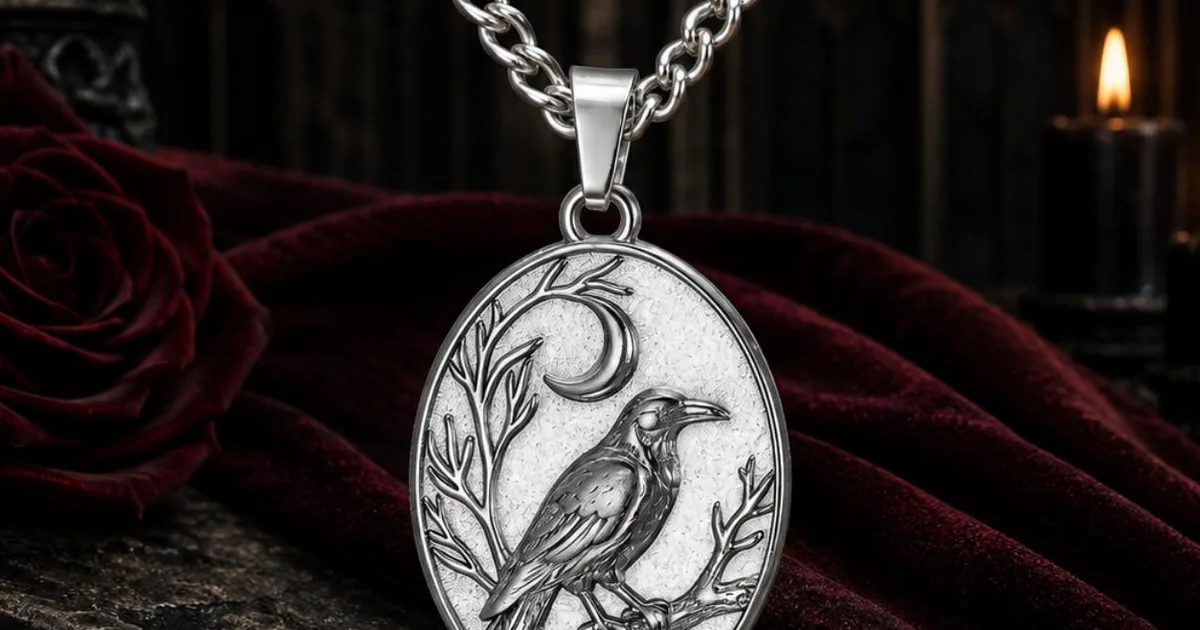
Luck Loves the Calm: Your First Step with a Talisman
If you have read this far, you already have the main thing — a conscious view. A luck talisman should not frighten, obligate, or demand blind faith. It is a quiet helper that reminds you of your intention in the bustle of the day: to make the call, to speak confidently, not to turn off the path. Let it be simple, understandable, and yours by story, not someone else's by a seller's promises.
Treat esotericism as a tool of self-knowledge, not as a panacea. The object does not decide for you, but helps you hear yourself better, hold focus, and act more calmly. This is exactly how EXETERIC practices work: without fear, without dependence, with respect for yourself and for tradition. If anxiety appears or a desire to collect ten amulets for all occasions — this is a signal to slow down, get some sleep, and simplify the practice to one object and one goal.
Try a gentle start for the coming month: choose one talisman, cleanse it, give it one task, and observe your state. Look into the astrology section to check with your zodiac sign and the rhythm of the period, and read other practices in the EXETERIC blog to deepen your understanding of symbols and rituals. Do not be afraid of the unclear — sort it out calmly, try consciously, and remain the author of your decisions. Luck more often comes to those who act clearly and take care of themselves.
Frequently Asked Questions
Can I wear someone else's talisman or a gift from a loved one?
Yes, you can accept a talisman as a gift from a loved one, but only consciously and with their consent. Any object stores a history of touches and emotions, so a gift should first be neutralized: rinse with water, fumigate with smoke, keep next to salt, or ring a bell over it. After cleansing, hold it in your palms and listen to your body: warmth, calm, and the desire to keep the thing are a good sign. If you feel heaviness, irritation, or anxiety, give thanks and set the object aside, do not wear it by force.
What to do if the talisman is lost or broken?
The loss or breakage of a talisman is not a punishment or a sign of trouble, but most often the completion of one cycle of practice. In folk tradition it is believed that the object has taken on excess tension or its task is fulfilled, and psychology sees in this a reason to renew the anchor of attention. Thank the object mentally, let go of the situation without fear and self-blame, and take a pause for a few days. Then calmly choose a new talisman for your current goal, taking into account past experience. Connection with luck does not disappear with the thing; it remains in your state and actions.
How many talismans can be worn at the same time?
For a safe start, the rule of one object — one task works best. One understandable talisman gives clear focus, calm, and an easily trackable result within 21-30 days. When there are many objects, attention scatters, anxiety and dependence on checking whether each of them works appear. If you want to wear several pieces of jewelry, let only one be the main one, and let the rest remain simply beautiful things without a task. Once a week, review the goal and remove what is no longer relevant.
Do I need to charge a luck talisman every day?
A talisman does not need daily complex charging; primary activation and careful attention are enough. During activation, take the object in your palms, even out your breathing, name one specific task for a month, and finish with a short gratitude. Then simply wear it, touch it sometimes and recall the intention, keep the object clean. Do repeated cleansing and renewal of the goal once a month, on the new moon or when you feel the connection has weakened. If it is scary to leave the house without the talisman, take a three-day pause and rely on sleep, the body, and an action plan.