Injuries in Human Design: How to Determine and Work Through Them
What Are Human Design Injuries and Why They Matter
In Human Design, we often talk about types, strategies, and authorities, but there is a deeper layer — emotional injuries that shape our behavioral patterns and prevent us from living in alignment with our own nature. These injuries are not part of the classical system, but understanding them helps explain why, even when following our strategy, we feel inner conflict.
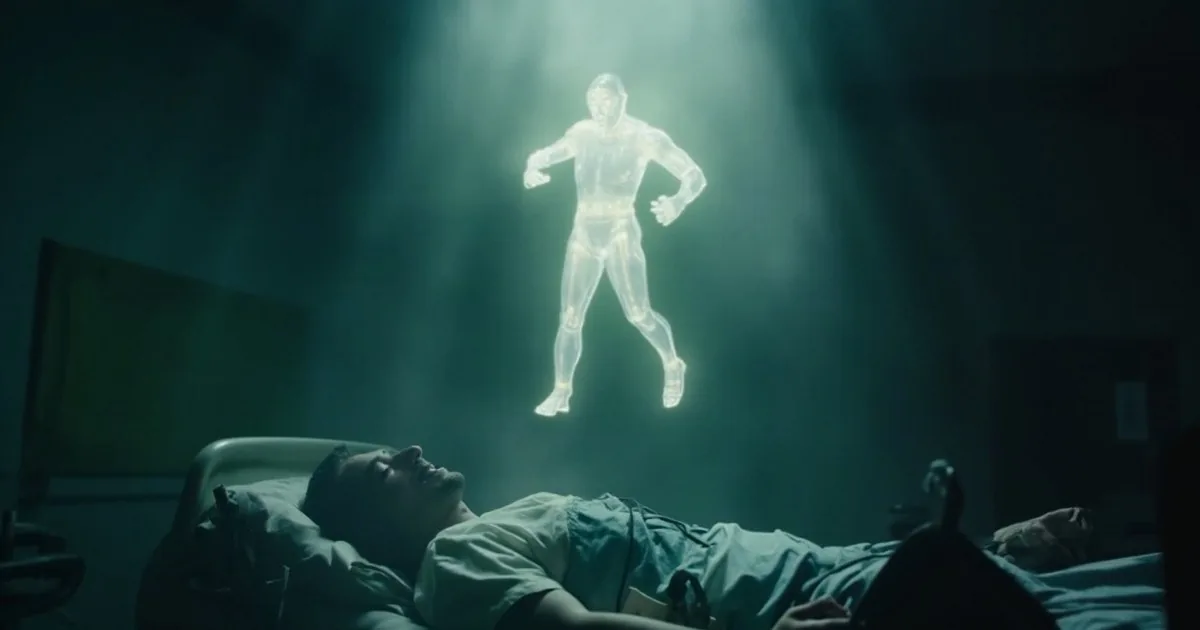
Imagine your BodyGraph is a map of your energy. Your type and strategy show how to move through life correctly, but injuries are those "potholes" on the road that we keep falling into. They arise from childhood experiences, social pressure, and unprocessed emotions. And until we become aware of them, they will distort our perception and decisions.
In this article, we will explore how to determine Human Design injuries, how they relate to centers and profiles, and most importantly — how to work through them without fanaticism and with respect for yourself.
Where Injuries Come From: Psychology and Energy
From a Human Design perspective, injuries are blockages in the energy centers. They arise when, in childhood, we do not get what we need, or we get something that wounds us. For example, an open Emotional Center can absorb other people's emotions, and if a child was constantly shamed for expressing feelings, they learn to suppress them.
From a psychological standpoint, it works like this: the brain records a painful experience and creates defense mechanisms. These mechanisms become our "false self," which tries to avoid pain but at the same time distances us from our true self. In Human Design, this manifests as a distortion of strategy: instead of waiting for an invitation, we push ourselves on others; instead of responding, we initiate first.
It is important to understand: an injury is not a life sentence, but a point of growth. When we become aware of it, we can begin the work of healing. And the first step is diagnosis.
Human Design Injuries: How to Determine Them by BodyGraph
So how do you determine Human Design injuries? Although the system does not provide direct instructions, there are several key indicators that help identify problem areas.
Defined and Open Centers
Open centers are places where we are vulnerable. They absorb the energy of other people and can become a source of injuries if we have not learned to handle them. For example:
- Open Root Center — fear of not making it in time, rushing, anxiety.
- Open Sacral Center — difficulty completing tasks, burnout.
- Open Emotional Center — mood swings, dependence on others' emotions.
If a center is defined, the injury may be related to its misuse. For example, a defined Sacral Center that is not listened to leads to chronic fatigue.
Profile and Lines
The profile also points to potential injuries. Line 1 — the Investigator, may be injured if their knowledge is devalued. Line 2 — the Hermit, injury from intrusion into personal space. Line 3 — the Experimenter, injury from judgment of mistakes. Line 4 — the Friend, injury from betrayal. Line 5 — the Heretic, injury from unmet expectations. Line 6 — the Role Model, injury from disappointment in oneself.
The Shadow Side of Gates
Every gate has a shadow side. For example, Gate 57 (intuition) in shadow gives paranoia, Gate 10 (self-love) — self-deprecation. By studying your gates, you can find shadow manifestations that point to an injury.
For accurate diagnosis, it is useful to create a table:
| Center | Open/Defined | Injury | Manifestation |
|---|---|---|---|
| Emotional | Open | Suppression of emotions | Anxiety, indecisiveness |
| Sacral | Defined | Loss of life force | Burnout, chronic fatigue |
| Root | Open | Fear of the future | Rushing, panic |
The Deep Connection: Injuries and Gates
Each injury is connected to specific gates that activate certain energies. For example, Gate 44 (the past) can carry the injury of rejection, Gate 19 (need) — the injury of dependency, Gate 55 (spirituality) — the injury of loss.
Let us consider an example: a person with Gate 44 in a defined center may constantly return to past grievances, which prevents them from living in the present. This manifests as jealousy, suspicion, distrust. In shadow form, this injury makes them control others.
To work through an injury, you need to shift the energy of the gate to its light side. For Gate 44, this is acceptance of the past, the ability to forgive and let go. For Gate 19 — the ability to ask for and accept help without losing autonomy.
Here is a correspondence table:
| Gate | Shadow (Injury) | Light (Healing) | Practice |
|---|---|---|---|
| 44 | Rejection, jealousy | Acceptance, trust | Working with the past, forgiveness |
| 19 | Codependency, fear of loneliness | Autonomy, mutual support | Learning to say "no," asking for help |
| 55 | Loss, spiritual emptiness | Abundance, connection with the higher | Meditations, gratitude practices |
How to Work Through Injuries: Practical Steps
Working through injuries is not a quick process, but it is real. The main thing is not to try to "fix" yourself, but to accept and transform.
Step 1. Awareness
Start with observation. Track your reactions in stressful situations. Ask yourself: "Why do I react so strongly? What exactly triggers me?" Keep a journal. When you see a pattern, you are no longer it — you are the one who sees it.
Step 2. Acceptance
Stop fighting the injury. Say to yourself: "Yes, I have this wound, and that is normal." Acceptance reduces tension and opens space for healing.
Step 3. Body Work
Injuries live in the body. Practice body-oriented methods: yoga, dance, breathing exercises. This helps release stagnant energy.
Step 4. Energy Practices
Use chakra meditations, visualizations, and intention work. For example, with the injury of rejection, you can visualize golden light filling the area of the heart.
Step 5. Professional Support
Do not hesitate to reach out to a psychologist or a Human Design coach. Sometimes an outside perspective is clearer.
Remember that working through injuries is not about becoming "perfect," but about becoming whole.
Injuries and Relationships: How They Affect Interaction
Our injuries directly affect how we build relationships. For example, a person with an abandonment injury will cling to their partner, creating dependency. A person with a betrayal injury will avoid intimacy.
In Human Design, this is visible through the interaction of centers. Suppose one partner has an open Emotional Center and the other has a defined one. The open one will absorb the emotions of the defined one, and if the latter is experiencing stress, the open one may feel it as their own. This creates confusion and conflict.
To harmonize relationships, it is important to:
- Understand your own injury and your partner's injury.
- Discuss feelings openly, without blame.
- Respect each other's boundaries.
- Practice joint meditations or rituals.
Remember that relationships are a mirror. If something in your partner triggers you, it is most likely your own unprocessed injury.
Myths About Injuries in Human Design
There is much misunderstanding around injuries in Human Design. Let us dispel some myths.
| Myth | Why It Is Not True | How It Actually Is |
|---|---|---|
| Injuries are only visible in open centers | Injuries can be in any center, even defined ones | Defined centers can be a source of injury if the energy is used incorrectly |
| If you follow your strategy, injuries will disappear on their own | Strategy helps you live in flow but does not work through deep wounds | Conscious work with injuries is necessary |
| Injuries are forever | Injuries can be healed | Many practices prove that with work, they weaken |
It is important not to fall into fatalism. Human Design is not a life sentence, but a tool for growth.
Injuries and Purpose: How Healing Changes Life
When we work through our injuries, we free energy that was blocked. This energy returns to our life, allowing us to unlock our potential. For example, a person with the injury of rejection can become a great leader because they know what it is like to be an outsider and can guide others.
Healing changes not only the inner state but also external circumstances. Relationships, career, and health improve. But most importantly, a sense of deep satisfaction and meaning appears.
The practice of determining Human Design injuries is not an end in itself, but a path to yourself. When you know your wounds, you can turn them into your strength.
Profile 3/5: A Special Case of Injuries
People with Profile 3/5 often face injuries related to experimentation and expectations. Line 3 is the Experimenter, who learns through mistakes. If they are judged for their mistakes, they receive the injury of "I am bad." Line 5 is the Heretic, who must bring practical benefit. If the impossible is expected of them, they receive the injury of "I cannot cope."
For this profile, it is important to:
- Allow yourself to make mistakes without self-flagellation.
- Not take on others' expectations.
- Practice self-acceptance.
When a person with Profile 3/5 works through these injuries, they become incredibly wise and practical, capable of leading others through change.
You can use the "dialogue with the injury" technique: imagine your injury as a small child who needs love. Talk to them, comfort them. This is a simple but effective practice.
The Path to Wholeness: From Injury to Strength
When we begin to understand our Human Design, we often look for quick answers and clear instructions. But the real work is not a race toward an ideal BodyGraph, but a slow, gentle acquaintance with ourselves. The injuries we have discussed are not a life sentence or a reason for fear. They are rather a map of your inner landscape, where there are both shady ravines and sunny clearings. The task is not to fill in the ravines or repaint the sky, but to learn to walk this land consciously, without tripping on flat ground.
Esotericism, and Human Design in particular, is a tool for self-knowledge, not a panacea for all ills. It does not promise instant enlightenment or a perfect life without problems. It offers something else: to see where you get stuck, why you react the way you do, and how to gently, without violence against yourself, free your energy. It is like tuning a musical instrument: you do not change its nature, you simply restore its pure sound. The same with injuries — you do not erase your experience, you learn to extract wisdom and strength from it.
Instead of fearing your "dark" sides, try to approach them with curiosity. Ask yourself: "What does this pain want to tell me? Where is it pointing?" Often behind an injury lies an unprocessed need — for acceptance, for safety, for love. When you acknowledge this need, it stops controlling you from the shadows. You can start with the simple practices we discussed: observing reactions, breathing exercises, body work. And if you feel you need support, remember: you are not alone. At EXETERIC media, we constantly explore such topics, and you can always turn to EXETERIC practices to deepen your understanding.
Do not be afraid of the unknown. Explore calmly, step by step. Try to apply the knowledge in practice — consciously and with respect for yourself. Look into your BodyGraph, observe your centers and gates, and perhaps you will discover unexpected facets of yourself. And if you want to broaden your horizons, check out the astrology section on EXETERIC — perhaps your zodiac sign will reveal something important. And remember: the path to wholeness is not a sprint but a marathon, and every step you take already matters.
If this article resonated with you, I invite you to continue the exploration. Read other practices on the EXETERIC blog to deepen your knowledge and find new tools for self-discovery. And may your path be filled with light, not fear.
Frequently Asked Questions
How do I know if I have an injury in Human Design?
Pay attention to recurring reactions that seem excessive or illogical to you. For example, if you react sharply to criticism even though you understand it is constructive, or if you find it hard to trust people without visible reasons — this may be an echo of an injury. In Human Design, it is worth studying your open centers and the shadow sides of your gates. Open centers are places of vulnerability where you absorb others' energy, which often leads to distorted reactions. It is also useful to analyze your profile: each line has its own potential injuries. For example, Line 3 may suffer from judgment of mistakes, and Line 5 from unmet expectations. Start keeping a self-observation journal, noting moments of strong emotion, and gradually you will see patterns.
Can an injury be related to a defined center, not just an open one?
Yes, an injury can also be related to a defined center. If a center is defined, it means its energy is stable, but it can be blocked or used incorrectly. For example, a defined Sacral Center is a powerful source of life force, but if a person constantly ignores their sacral responses and lives in "I must" mode, they may face burnout and chronic fatigue. This is not an injury in the classical sense, but it is a blockage that prevents living in flow. Similarly, a defined Emotional Center can suffer from suppressed feelings if a person is afraid to show emotions due to past experience. Therefore, it is important to look not only at open centers but also at how you handle the energy of defined centers. If you feel your energy "gets stuck" or is depleted, that is a signal for work.
What practices help work through injuries in Human Design?
Practices that connect awareness, body, and energy are effective. Start with observation: track your reactions and write them down in a journal — this will help you see patterns. Then practice acceptance: say to yourself "yes, I have this wound, and that is normal" — this reduces inner tension. Body work is very important: yoga, dance, breathing exercises help release stagnant energy that "gets stuck" in muscles and organs. Chakra meditations or visualizations, such as imagining golden light in the area of the heart for the injury of rejection, also give good results. Do not forget about the dialogue with the injury: imagine it as a small child who needs love, and mentally talk to them. If you feel you cannot cope on your own, reach out to a psychologist or a Human Design coach — sometimes an outside perspective helps you see what you do not notice.
How long does it take to work through an injury in Human Design?
There is no definitive answer because it is an individual process. Some injuries may require months of conscious work, others — years, especially if they are deep and long-standing. It is important to understand that this is not a linear path: you will have ups and downs, moments of clarity and returns to old patterns. Do not set rigid deadlines — this increases tension and hinders healing. Instead, focus on the regularity of practices and on how you feel. Notice small changes: you have become calmer in response to triggers, you let go of grievances more easily, you trust yourself more. If you feel progress, you are moving in the right direction. And remember that working through an injury is not a final point, but an ongoing process of growth and self-discovery. Be patient and kind to yourself.