Chakras: what they are and how they work
Chakras: What They Are and How They Work — Basic Concepts
The word "chakras" is everywhere today: on social media, in yoga classes, in conversations about well-being, and even in business trainings. But what are they really? Chakras are not just a trendy term, but an ancient system for describing the energy centers of a human being, originating from the Indian tradition. According to this teaching, there are special zones in our body where energy (prana, chi, life force) condenses and distributes. Imagine the body as a complex network of roads, and chakras as major transport hubs that determine how freely the flow moves. If there is a traffic jam somewhere, the entire route suffers.
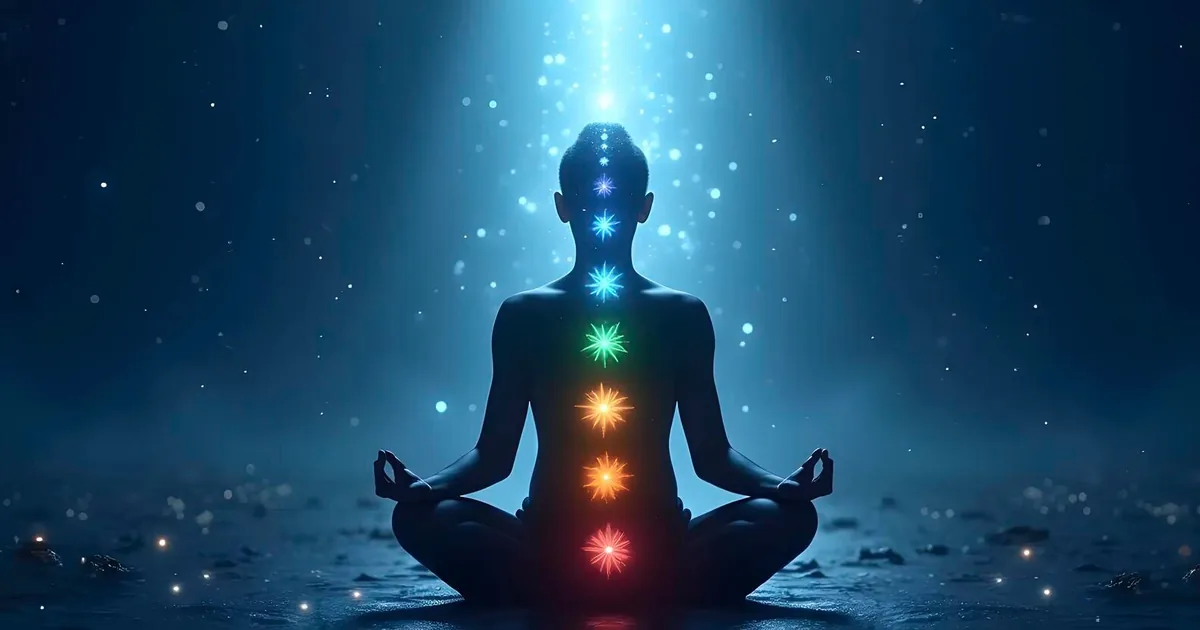
The classical system identifies 7 chakras located along the spine — from the tailbone to the crown of the head. Each one is connected to specific organs, emotions, and aspects of life. For example, the root chakra is responsible for the sense of security and basic instincts, while the crown chakra is responsible for connection to higher consciousness. Understanding where chakras are and what chakras are responsible for helps you consciously approach your state: noticing when energy becomes blocked and restoring balance.
It is important to set the record straight right away: chakras are not physical organs that can be seen on an MRI. They are a subtle energy structure that we perceive through sensations, emotions, and behavioral patterns. However, many practices — from meditation to psychotherapy — confirm that working with chakras yields real results: improving well-being, helping cope with stress, and understanding yourself better. In this article, we will break down what human chakras are, their chakra meaning, location, colors, and methods of harmonization. Without esoteric fog, but with respect for the tradition.
Where Chakras Are and What They Look Like
If you have ever seen images of chakras, you have surely noticed: they are colored circles or lotuses located along the central line of the body. Chakras have a strictly defined location: from the base of the spine to the crown of the head. Each chakra is connected to a specific nerve plexus and endocrine gland, which allows parallels to be drawn with physiology. For example, the throat chakra corresponds to the thyroid gland, and the solar plexus to the pancreas. This is no coincidence: the ancients knew about the connection between energy centers and the body.
Each of the 7 chakras has its own color, which corresponds to its vibration. Traditionally, chakra colors follow the rainbow spectrum: red, orange, yellow, green, light blue, blue, violet. These colors are used in meditations, visualizations, and even in interior design — to create the right mood. But chakra colors are not just aesthetics. Each color carries a specific frequency that affects our state. For example, red activates, while violet calms.
Knowing where chakras are helps in practice. For example, if you feel constant tension in your neck, it may be worth paying attention to the throat chakra — it is responsible for self-expression. Or if you are plagued by digestive issues, perhaps the problem lies in the solar plexus chakra, which is connected to personal power and self-esteem. This does not mean you should run to the doctor solely because of chakras, but sometimes an energetic imbalance manifests physically.
| Chakra | Location | Color | Aspect of Life |
|---|---|---|---|
| Muladhara | Tailbone | Red | Survival, security |
| Svadhisthana | Below the navel | Orange | Creativity, sexuality |
| Manipura | Solar plexus | Yellow | Self-esteem, willpower |
| Anahata | Center of the chest | Green | Love, compassion |
| Vishuddha | Throat | Light blue | Self-expression, communication |
| Ajna | Between the eyebrows | Blue | Intuition, clairvoyance |
| Sahasrara | Crown of the head | Violet | Spirituality, connection to the higher |
What Chakras Are Responsible For: Detailed Breakdown
Each chakra is not just a point, but an entire sphere of influence. Understanding what chakras are responsible for allows you to diagnose your weak spots and work with them. Let us examine each one in more detail.
Root Chakra (Muladhara)
Muladhara is located at the base of the spine and is connected to the survival instinct. It is responsible for the sense of security, stability, and material well-being. When this chakra is in balance, you feel grounded, confident in the future. If it is blocked, anxiety, fears, and problems with money or health arise. Practices for harmonization: grounding, physical activity, contact with nature.
Sacral Chakra (Svadhisthana)
Svadhisthana is located slightly below the navel and is responsible for creativity, sexuality, and pleasure. It is the center of emotions and relationships. When it is open, you easily express feelings, enjoy life, and have healthy relationships. Imbalance manifests as apathy, creative crisis, and problems in the intimate sphere. Creative activities, dancing, and working with emotions help.
Solar Plexus Chakra (Manipura)
Manipura is the center of personal power, will, and self-esteem. It is located in the solar plexus area. When it is active, you are confident, able to set boundaries, and achieve goals. If the chakra is imbalanced, problems with self-respect, aggression, or, conversely, an inability to say "no" arise. You can develop it through goal-setting, physical exercise, and confidence practices.
Heart Chakra (Anahata)
Anahata is located in the center of the chest and is responsible for love, compassion, and empathy. It is the bridge between the lower and upper chakras. When it is open, you are capable of unconditional love, forgiveness, and accepting yourself and others. Blockage manifests as distrust, resentment, and an inability to build close relationships. Practices: breathwork, opening the heart through meditations, gratitude.
Throat Chakra (Vishuddha)
Vishuddha is located in the throat area and is connected to self-expression, communication, and truth. It helps you say what you think and be heard. If the chakra is blocked, you may experience difficulty expressing thoughts, fear of public speaking, or a feeling of a "lump in the throat." Development through singing, writing, and honest conversations.
Third Eye Chakra (Ajna)
Ajna is located between the eyebrows and is responsible for intuition, clairvoyance, and imagination. It is the center of inner knowledge. When it is open, you sense people well, see the essence of things, and trust your intuition. Imbalance manifests as excessive rationality, ignoring the inner voice, or, conversely, living in illusions. It can be developed through meditations, visualizations, and dream work.
Crown Chakra (Sahasrara)
Sahasrara is the crown, the connection to higher consciousness and spirituality. It is located at the top of the head. When it is open, you feel unity with the world, the meaning of life, and transcendent experiences. Blockage manifests as a sense of disconnection and existential crisis. Practices: meditation, prayer, contemplation.
How to Open Chakras: Techniques and Precautions
The question "how to open chakras" is one of the most popular. But it is important to understand: opening chakras is not a one-time event, but an ongoing process of harmonization. Do not chase the "full opening" of all chakras — this can lead to energetic overload. It is better to work gradually, starting with the lower chakras and moving upward.
There are many techniques: chakra meditations, breathing exercises, yoga, working with crystals, aromatherapy. One simple method is visualizing the chakra color during meditation. Sit comfortably, close your eyes, breathe evenly. Imagine a red sphere glowing in the tailbone area. Observe it, feel its warmth. Then move to the next chakra. This exercise helps establish a connection with energy.
But there are also precautions. Do not engage in opening chakras without preparation, especially if you are emotionally unstable. Energy can get out of control, causing anxiety or physical discomfort. It is better to start with simple grounding practices and only then move to more complex ones. It is also important to remember that chakras are not a panacea. If you have psychological trauma, it may be worth working with a psychotherapist, not just with energy.
| Myth | Why This Is Not True | How It Really Is |
|---|---|---|
| Chakras can be opened once and for all | Energy constantly changes, and chakras react to our state | It is a continuous process of balancing |
| The more open the chakras, the better | Excessive activity can lead to overload | Harmony matters, not maximum opening |
| Chakras are pure esotericism with no relation to reality | Many practices confirm their influence on psychology | It is a model for working with energy and consciousness |
Chakras and Psychology: The Connection to a Person's State
Modern psychologists and psychotherapists are increasingly turning to the concept of chakras as a metaphor for describing inner processes. For example, the root chakra is associated with basic trust in the world, which forms in early childhood. If a person has trauma related to safety, it may manifest as a blockage in Muladhara. Working through these themes through psychotherapy or somatic practices helps restore balance.
The sacral chakra is connected to creativity and sexuality, which is also an important topic in psychology. Suppressing these aspects can lead to depression and apathy. Working with this chakra through creative practices or body-oriented therapy can be very effective.
The solar plexus chakra is directly connected to self-esteem and personal boundaries. People with Manipura imbalance often suffer from insecurity or, conversely, authoritarianism. Coaching and assertiveness training can help strengthen this chakra.
The heart chakra is the ability to love and accept. Psychologists speak of the importance of attachment and empathy. If a person experiences difficulties in relationships, it may be worth working with Anahata.
The throat chakra is self-expression. Many people are afraid to speak the truth, to express their thoughts. This may be connected to suppression in childhood. Voice work, art therapy, and communication training help open Vishuddha.
The third eye chakra is intuition. In psychology, this corresponds to the development of intuitive thinking, the ability to trust one's inner voice. Meditations and mindfulness practices develop Ajna.
The crown chakra is the connection to something greater than ourselves. In psychology, this can be connected to the search for the meaning of life and spiritual experience. Existential psychotherapy addresses these questions.
Thus, chakras are not just an esoteric concept, but a convenient model for understanding oneself. By using it, you can better recognize your strengths and weaknesses and choose suitable practices for growth.
Practice: Chakra Meditation for Beginners
If you are a beginner and want to start working with chakras, here is a simple meditation that will help you feel your energy centers. Find a quiet place where no one will disturb you. Sit comfortably, straighten your back, close your eyes. Take several deep breaths in and out, relax.
Start with the root chakra. Focus on the tailbone area. Imagine a red glowing sphere there. Observe it, feel its warmth. Then mentally say: "I am safe. I am calm." Stay in this state for a few minutes.
Then move to the sacral chakra. Imagine an orange sphere in the lower abdomen. Feel its energy. Repeat: "I create. I enjoy life." Feel the energy filling you.
Continue with the solar plexus chakra. A yellow sphere in the solar plexus area. Say: "I am confident. I am strong." Feel your inner strength growing.
The heart chakra — a green sphere in the center of the chest. Say: "I love and accept." Feel warmth in your chest, the opening of the heart.
The throat chakra — a light blue sphere in the throat area. Say: "I freely express my thoughts." Feel lightness in your throat.
The third eye chakra — a blue sphere between the eyebrows. Repeat: "I see clearly." Feel your perception sharpening.
The crown chakra — a violet sphere at the top of the head. Say: "I am connected to the higher." Feel the connection to something greater.
Stay in this state for a few minutes, imagining all chakras glowing brightly and harmoniously. Then slowly open your eyes. Practice this meditation regularly, and you will notice how your well-being improves.
Remember that working with chakras is not a magic pill, but a tool for self-discovery. Combine it with other practices and, possibly, with the help of a specialist if you feel deep blockages. Good luck on your path!
The Path to Yourself: Chakras as a Tool for Conscious Living
We have come a long way — from basic concepts to practical techniques. Perhaps right now you feel a slight dizziness from the abundance of information, or maybe, on the contrary, clarity and inspiration. This is normal. Chakras are not a strict science or dogma, but rather a map that helps you navigate the subtle matters of your own self. It does not tell you how to live, but it highlights the areas where energy stagnates, where we tighten up, where we lose connection with ourselves.
The main takeaway from this article is this: esotericism is not an escape from reality, but a way to get closer to it. Working with chakras is working with attention. When you begin to notice that your throat tightens in a conversation with your boss, or that a cold sensation arises in the solar plexus area at the thought of the future — you are already taking the first step toward change. You are learning to listen to your body, your emotions, your reactions. And that is invaluable.
Do not be afraid of the unknown. Chakras are not magic that requires special rituals. They are a natural part of your being, like breathing or a heartbeat. You can start with something simple: with the meditation we described, or with observing your sensations throughout the day. Gradually, you will begin to feel how energy moves, where it becomes blocked, and what helps release it.
If you want to go deeper into the topic, check out other articles about magic and self-discovery on EXETERIC. There you will find materials on meditation, energy practices, symbols, and much more. And if you are curious about how your personal traits connect to astrology, check your zodiac sign — perhaps you will discover new facets of yourself. And, of course, do not forget about EXETERIC practices that will help you on this path.
Remember: you do not have to become a guru or achieve enlightenment. It is enough to simply be more attentive to yourself. Allow yourself to explore, try, make mistakes, and try again. Chakras are not a race, but a dance. And you are the main dancer in it.
Start small: tonight, give five minutes to silence, close your eyes, and simply feel your body. Where is the tension? Where is the warmth? Where is the emptiness? This is the beginning of working with chakras. And then — more. We believe you will succeed.
Frequently Asked Questions
Can chakras be felt physically?
Yes, many people feel chakras as warmth, tingling, pressure, or vibration in the corresponding areas of the body. For example, during meditation on the heart chakra, a feeling of fullness in the chest may arise, and when working with the root chakra — heaviness in the legs. These sensations are subjective and depend on sensitivity and practice. Do not worry if you do not feel anything at first — this comes with experience. The main thing is not to force things and to listen to your body.
How do I know if a chakra is blocked?
Signs of a blocked chakra can manifest on physical, emotional, and behavioral levels. For example, if the root chakra is blocked, you may experience anxiety, insecurity, problems with money, or frequent lower back pain. The sacral chakra — creative crisis, apathy, difficulties in relationships. Pay attention to recurring negative thoughts, chronic tension in the body, and dissatisfaction in certain areas of life. This may be a signal of imbalance. However, do not diagnose yourself on your own — it is better to consult a specialist.
How long does it take to open chakras?
Opening chakras is not a one-time event, but an ongoing process of harmonization. Each person takes a different amount of time depending on their initial state, regularity of practice, and depth of work. Some feel changes after just a few weeks of meditation, while others need months or years. It is important not to chase speed, but to focus on regularity and mindfulness. Remember that chakras do not "open" forever — they can become blocked again under the influence of stress or life circumstances, so it is important to maintain balance.
Can I work with chakras on my own, or do I need a teacher?
At the initial stage, you can practice on your own using proven techniques such as meditations, breathing exercises, and visualizations. However, if you feel deep blockages or emotional trauma, it is better to turn to an experienced mentor or therapist who can help you safely work through these aspects. Self-work requires caution: it is important not to overload yourself and to listen to your sensations. If strong negative emotions or physical discomfort arise, it is worth pausing and, possibly, seeking support.