Goetia Demons: The 72 Spirits of Solomon — Who Is Who
If you have heard for the first time that Goetia demons are not horned villains from horror movies, but a complex system of 72 spirits with names, ranks, and sigils, welcome to the club. The question what is Goetia demons is one of the most frequent in our inbox: people confuse the medieval grimoire, games, and anime, and then become afraid to sleep with the lights off. Let's sort it out calmly, like adults: what are Goetia demons — they are part of the Western esoteric tradition, described in the first part of the “Lesser Key of Solomon” — the demons of Ars Goetia. We will talk about Goetia demons history, Goetia demons meaning and Goetia demons interesting facts, and at the same time we will sort out where tradition ends and pop culture begins, such as Goetia demons Genshin and Goetia demons Romance Club.
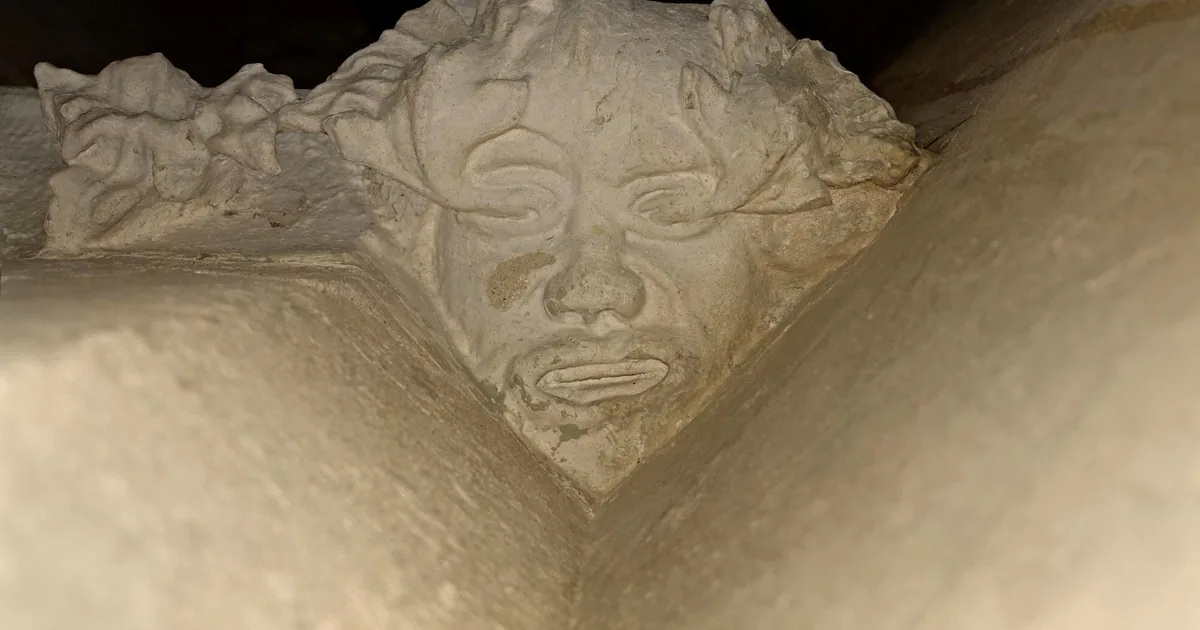
Goetia Demons: What They Are and Where the 72 Spirits Came From
To understand Goetia demons how to understand correctly, you need to start with context. Goetia demons history goes back to late antique and medieval magic: the “Testament of Solomon” (1st-3rd centuries), Johann Weyer's “Pseudomonarchia Daemonum” of 1577, and finally “Ars Goetia” as part of the “Lemegeton Clavicula Salomonis” of the 17th century. It is the Goetia demons book in its modern form that is the 1904 translation by MacGregor Mathers and Aleister Crowley, supplemented by editions from Joseph Peterson and Stephen Skinner based on manuscripts from the British Museum.
From the esoteric point of view, the 72 demons of Goetia are not “absolute evil,” but intermediary spirits, each with its own function: astronomy, languages, finding treasures, reconciliation, crafts. From the psychological point of view, they are archetypes of the subconscious, a catalogue of human passions and talents. King Solomon in the legend did not “sell his soul,” but on the contrary, bound the spirits with a brass vessel and a seal so that they would serve and not harm. Hence the Goetia demons esotericists' opinion: you can work with the system only with respect, boundaries, and protection, and not out of curiosity at night with a printout from the internet.
A living example: a person reads about Goetia demons Helluva Boss in a meme where Baal, Agares, and Vassago are presented as office managers of Hell, and decides that it is a joke. Then he sees the same Goetia demon names in Genshin Impact — Barbatos, Morax, Baal — and is surprised. The connection is direct: game developers take Goetia demons names from the grimoire because it is a ready-made bestiary with characters. The practical step here is simple: separate three layers — 1) the historical grimoire, 2) modern occult practice, 3) pop culture. A look to the root: when you understand the layer, both fear and naive enthusiasm disappear. This is mindfulness instead of superstition.
Ars Goetia and the Structure of the Hierarchy
The list of demons of Ars Goetia is strictly hierarchical: kings, dukes, princes, marquises, earls, knights, and one president. Each has a number of legions, an appearance, an element, a planet, and a sigil. It is Goetia demon sigils — the spirits' seal-“signatures” — that were drawn on parchment, metal, or in a circle. Without a sigil, an evocation in the tradition was considered “a call without a number.”
| Widespread Myth | Why It Is Not True | How It Really Is |
|---|---|---|
| The 72 spirits are imps whose goal is to torment | The texts describe them as teachers of sciences and crafts | A spirit in Goetia is a function: from astronomy to rhetoric, working through the operator's intention |
| Goetia is Satanism | The ritual is built on the names of God, angels, and a circle of protection | It is 17th-century Christian ceremonial magic, not worship |
| It is enough to draw a sigil — and the spirit will come | In the grimoire, fasting, prayer, the circle, the triangle, and timing are important | Without preparation, anxiety and self-suggestion come more often than a spirit |
Goetia Demons List: Who Is Who by Ranks and Functions
The complete Goetia demons list takes up dozens of pages, so let's examine the logic rather than simply listing Goetia demons names in a row. It is impossible to memorize all 72 demons of Goetia at once, and there is no need to: practitioners usually study groups by kinds. Conventionally, Goetia demons types are divided into ruling kings, teaching dukes, warrior marquises, and guiding earls. For example, Baal (1st, king) teaches invisibility and wisdom, Agares (2nd, duke) returns runaways and teaches languages, Vassago (3rd, prince) reveals the past and the future, Samigina (4th, marquis) gives knowledge about souls, Marbas (5th, president) heals diseases and reveals the mechanics of things.
Next come such well-known figures as Valefor, Amon, Barbatos — patron of forests and understanding the language of animals, Paimon — one of the most respected kings, Buer — teacher of philosophy and herbs, Gusion, Sitri, Beleth, Leraje, Eligos, Zepar, Botis, Bathin, Sallos, Purson, Marchosias, Focalor, Vepar, Sabnock, Shax, Vine, Bifrons, Uvall, Haagenti, Crocell, Furcas, Balam, Alloces, Caim, Murmur, Orobas, Gremory, Ose, Amy, Orias, Vapula, Zagan, Volac, Andras, Haures, Andrealphus, Kimaris, Amdusias, Belial, Decarabia, Seere, Dantalion, Andromalius. It is these Goetia demons names that are most often searched for, because they flash by in films, manga, and games.
How to work with the list mindfully? Explanation of the meaning: each spirit is a symbol of a particular energy. Example: a student before an exam meditates on the image of Buer as a symbol of systemic thinking, rather than “evoking” him with candles in a dorm room. Practical step: start a notebook, write down 5-7 spirits whose functions resonate with your task, study their sigils, planet, and legend, compare with the astrology section — many spirits have planetary correspondences of Mars, Mercury, Venus. A look to the root: the list is a map, not a menu of wishes. Read the descriptions in different translations of the “Lesser Key,” compare with Weyer, and you will see how interpretations have changed.
| Symbol / Image | Traditional Meaning | Manifestation in Life | What to Do |
|---|---|---|---|
| Paimon on a camel with a crown | Power of mind, dignity, voice | Fear of public speaking, desire for recognition | Work on confidence, practice speech, keep a journal of intentions |
| Barbatos with a bow in the forest | Understanding the signs of nature and reconciliation | Conflicts, misunderstandings with loved ones | Practice active listening, walks to clear the mind |
| Buer with a wheel-star | Philosophy, medicine, logic | Chaos in studies, information overload | Structure knowledge, sleep routine, consult a doctor when ill |
| Gremory as a beautiful lady | Search for the hidden, love and attachment | Fixation on relationships | Work through attachment with a psychologist, not a ritual for return |
Goetia Demon Sigils and Goetia Demons Meaning of Symbols
A separate large topic is Goetia demon sigils. These are not “scary scribbles,” but concentrated seals, something like a spirit's QR code: a circle, lines, letters referring to planetary squares. Goetia demons meaning of each sigil is revealed only in connection with the name, rank, and Seal of Solomon. In the tradition, the sigil was drawn on clean parchment with consecrated ink, placed in the triangle of manifestation outside the protective circle, while the operator remained inside the circle with the names of God.
Why does this work from the point of view of the psyche? A symbol focuses attention and intention, reducing inner noise. An example from life: a person anxiously scrolls the feed at night, sees Paimon's sigil at a tattoo parlor, and decides to get it inked “for strength.” A week later he complains about Goetia demons nighttime manifestations — knocking, dreams, anxiety. In fact, this is a classic: the brain, charged with the symbol, begins to fill in signs. Practical step: do not apply sigils to the body or objects without understanding the tradition, do not keep printouts under your pillow for the sake of experiment. If you are interested in symbolism, study it as art and history, check with other practices in the EXETERIC blog about symbols and protection. A look to the root: respect for a symbol is respect for the culture from which it came.
Goetia Demons Connection with Dreams and Daytime Manifestations
People often ask about Goetia demons connection with dreams, Goetia demons signs, Goetia demons how to recognize and how Goetia demons daytime manifestations differ from nighttime ones. In the tradition, spirits most often manifest through visions in crystal, dreams, and synchronicities, rather than through cinematic special effects. At night, hearing and imagination are heightened: rustles, sleep paralysis, vivid dreams with crowned figures — this is how the brain processes daytime information overload on the topic. By day — intrusive thoughts, “chance” encounters with a spirit's name, repeating numbers. All this is a reason not for panic, but for hygiene of perception: normalize sleep, remove triggers, keep a journal. If you dream of a grimoire figure, look into the EXETERIC dream book and analyze the symbols of the dream, not just the spirit's name. This helps separate an archetypal dream from anxiety.
Goetia Demons How to Protect Yourself: Rite, Prayer, and Home Protection
The most sober section is Goetia demons how to protect yourself, Goetia demons home protection, Goetia demons prayer, Goetia demons rite and Goetia demons cleansing ritual. In the classics, protection is not aggression, but a boundary: a circle, purity of thoughts, fasting, prayer, fumigation with frankincense, salt, and order in the house. Modern practitioners add psychological hygiene: sleep, light, airing rooms, a digital diet.
What to do when encountering an incomprehensible phenomenon? The question Goetia demons what to do upon encounter sounds frightening, but the algorithm is calm: 1) do not engage in dialogue and do not promise anything; 2) turn on the light, wash your face, ground yourself — feet on the floor, breathing 4-4-6; 3) read the prayer that is close to your faith — Psalm 90, the “Our Father,” or a protective formula of your tradition; 4) in the morning tidy the house, throw away broken things, fumigate with wormwood or frankincense with the window open. This is exactly how the Goetia demons cleansing ritual works in its everyday form — without theatricality. Goetia demons how to banish peacefully? Through firm but polite intention: “This is my home, I did not invite you, leave in peace, I am closing the door.” No insults or threats — they only fuel adrenaline.
Example: a girl after watching a video about Goetia demons rite began to hear footsteps in the kitchen. A check showed: a new refrigerator, stress, and lack of sleep. Simple steps helped — a sleep routine, cleaning, talking to neighbors, prayer before sleep, and giving up nighttime reading of grimoires. A look to the root: 90% of “signs” are resolved by everyday life and care for the nervous system. If the phenomena are persistent, frightening, and affect health, contact a doctor, a psychologist, and a priest of your confession, not random “exorcists” from classified ads.
| Situation | Reactive Approach | Mindful Practice | Result |
|---|---|---|---|
| Anxiety after reading about spirits | Watching even more videos at night | Pause, light, tea, prayer, sleep | The nervous system calms down, dreams become lighter |
| Found a sigil under the door | Panic, retaliatory “hex” | Remove with gloves, wash the floor with salt, check the camera | A clean house and a clear head |
| Obsessive interest in evocations | Trying a ritual from a forum | Study history, go to a psychologist, discuss motives | Understanding your true desires |
Goetia Demons Tips for Beginners: How to Study Safely and with Respect
The final practical block is Goetia demons tips for beginners. First: do not start with the practice of evocation. Start with reading: “Pseudomonarchia Daemonum,” translations of the “Lemegeton,” Skinner's research, articles by historians of magic. Second: keep a journal of observations of dreams, mood, and synchronicities — this is the best lens to distinguish a real shift from suggestion. Third: strengthen the foundation — body, sleep, boundaries, finances. In legends, spirits come to the collected Solomon with a seal, not to an exhausted person at 3 a.m.
A living example of a mindful path: a young designer was inspired by the aesthetics of the seals and created a series of posters based on sigils, having studied their history and noting that it is art, not amulets. There were no disturbing dreams, but instead a commission from a publishing house appeared. This is a mature use of the archetype: inspiration without appropriating power. If you are drawn to ceremonial magic seriously, look for a living mentor from a proven school, learn Latin, the basics of astrology and the Matrix of Fate calculator as an additional language of self-knowledge, not a replacement for the grimoire. And remember a simple rule: any ritual promising instant wealth through a spirit is a marker of charlatanism. True tradition requires months of preparation, not a donation for “seal activation.”
72 Spirits as a Mirror: What to Take from Goetia into Ordinary Life
If after everything you have read you are left with the feeling that Goetia demons are not so much about fear as about the structure of the human being, you have grasped the main thing. Medieval magicians described 72 spirits, but in essence they compiled a map of desires, fears, and talents: someone needs Paimon's voice, someone needs Buer's clarity, someone needs Barbatos's reconciling wisdom. Such a view removes both panic and naive excitement. You no longer divide the world into “forbidden” and “magic button,” but begin to see symbols, motives, and consequences of your decisions. This is exactly where esotericism becomes a tool of self-knowledge, not an escape from reality.
Treat the topic the way thoughtful EXETERIC practitioners do: with respect for the sources and with care for yourself. Do not rush to draw sigils, evoke someone at night, or get a tattoo “for strength.” Start with something simple — bring order to your home and your head, normalize sleep, keep a journal of dreams and synchronicities, study the history of grimoires. Look into the astrology section and see the description of your zodiac sign — often the planetary correspondences of spirits suggest where you now have an imbalance between action and rest, word and deed. And if you want depth, read other practitioners in the EXETERIC blog and articles on magic and self-knowledge, where symbols are examined calmly, without intimidation.
And most importantly — do not be afraid of the incomprehensible, understand it. Goetia teaches the most Solomonic quality: the ability to hold a boundary and negotiate, rather than submit or suppress. Let your “brass vessel” be discipline, knowledge, and good intention, and your “seal” be respect for yourself and others. If the topic resonated with you, continue your study together with the EXETERIC guide to esotericism: read, compare translations, observe yourself, and choose only those practices that make your life clearer, warmer, and more honest.
Frequently Asked Questions
Are Goetia Demons Dangerous for an Ordinary Person?
Descriptions themselves of the 72 spirits from the medieval grimoire are not dangerous; frivolity, fear, and self-suggestion are dangerous. Tradition directly requires preparation: a circle of protection, fasting, prayer, knowledge of names and timing, not a spontaneous ritual from a video on the internet. Most frightening “manifestations” after reading are anxiety, lack of sleep, and an overactive imagination, not a visit from a spirit. The safe approach is to study Goetia as history and symbolism, not to try to evoke spirits at home, and to strengthen basic hygiene: sleep, order, boundaries. If the fear is strong and interferes with life, you should contact a psychologist and a priest of your faith.
Can You Evoke Goetia Spirits at Home on Your Own?
Classical texts do not envisage home experiments “in one evening”: the operator prepared for weeks, knew Latin, astrology, prayers, and rules of protection. An attempt to repeat a rite from a forum more often leads not to contact with a spirit, but to anxiety, vivid dreams, conflicts, and a feeling of loss of control. Esotericists warn: you must not make promises, offer an exchange, or work in a tired or altered state of consciousness. If the interest is serious, start with studying the history of grimoires, keeping a journal, and finding a proven mentor. Any offers to “activate a seal for money” are a sign of fraud.
Why Are Goetia Demon Names in Genshin Impact and Anime?
Authors of games, manga, and series love Goetia because it is a ready-made catalogue of 72 characters with names, titles, appearances, and personalities. That is where Barbatos, Morax, Baal, Paimon in Genshin Impact came from, and Andras, Dantalion, Sitri, and others in anime and comics. This is artistic borrowing, not an accurate transmission of tradition: characters are simplified for the sake of plot. Confusing a game image with a grimoire spirit is like judging history by a fantasy film. Treat such references as a reason to study the original source, not as a guide to magic.
Who Is the Strongest Goetia Demon?
There is no single “strongest” in the grimoire, because a spirit's strength depends on its rank and function, not on abstract power. Kings Baal, Paimon, Belial, and Asmodeus command large legions and are considered the most powerful, but a duke may be stronger in his own sphere, for example in sciences or reconciliation. Tradition emphasizes: a spirit is strong where it coincides with the operator's request and the timing of the work. Therefore practitioners choose not the “coolest” one, but the one whose specialization answers the task. Far more important is the composure and purity of intention of the person himself than the spirit's title.