Demons in different cultures: how the peoples of the world see them
Demons in Different Cultures: Why Should We Study Them at All
The word "demon" for most people either provokes a nervous laugh or a desire to cross themselves. But if we set aside Hollywood clichés, it turns out that demons in different cultures are not just scare stories, but a complex language that humanity has used for centuries to describe the dark sides of existence: diseases, fears, destructive impulses, unexplained phenomena. Studying them means understanding how different peoples answered the fundamental questions: where does evil come from? How to coexist with it? Where is the line between a human and a monster?
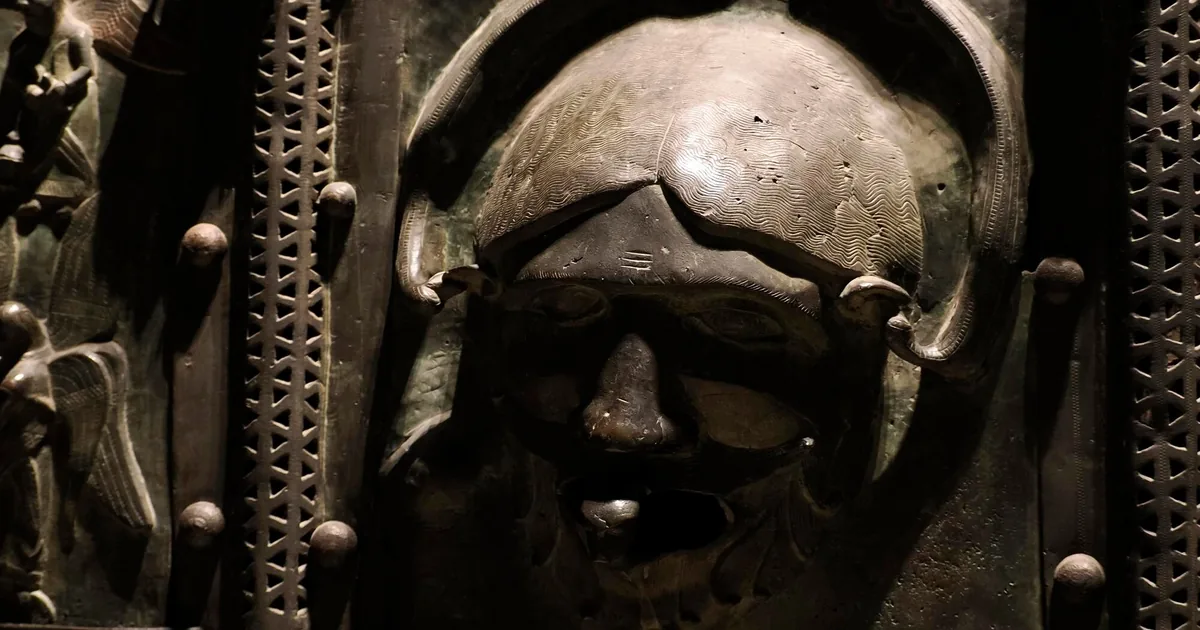
In this article, we will travel across continents and eras, compare demons in different cultures and religions, look at their names and images, and most importantly, figure out why these archetypes still live in cinema, literature, and our dreams. This is not an encyclopedia of horrors, but an attempt to see deep psychological and spiritual meanings behind the images of demons. If you are used to seeking tools for self-knowledge in esotericism, not a reason for panic, you are in the right place. For those who want to dig deeper into other topics, we have materials in other practices on the EXETERIC blog.
Demons in the Cultures of Antiquity: Mesopotamia, Egypt, Greece
The first written evidence of demons we find in Mesopotamia. The Sumerians and Akkadians populated their world with malicious utukku and asakku — they were considered the cause of diseases and nightmares. Interestingly, utukku were not fallen angels: they were more like pest spirits, chaotic forces that needed to be countered with rituals and amulets. In Ancient Egypt, demons were not always unambiguously evil. For example, Apophis — the serpent, enemy of Ra — embodied the forces of chaos that the sun god fought every night. But Bes and Beset, on the contrary, protected homes and children, although they looked quite creepy. The Greeks gave us the word "daimon" — originally it meant not an evil spirit, but a divine force or an inner voice. Socrates spoke of his daimonion as an inner advisor. Only later, with the advent of Christianity, daimons turned into demons.
This diversity shows that demons in different cultures of the world performed different functions. In some places they were purely hostile, in others — ambivalent, and sometimes even useful. This is an important lesson for modern esotericism: one should not blindly copy medieval ideas about demons without understanding their origins.
Demons in Different Cultures and Mythologies of the East
Asian traditions offer a completely different perspective. In Hinduism, demons are asuras, who are not so much evil as they are opposed to the devas (gods). They can be powerful ascetics who receive gifts from Shiva or Brahma. In Buddhism, the demon Mara is a tempter who tried to lead Buddha off the path of enlightenment. He embodies not external evil, but internal obstacles: passions, doubts, attachments. In China, demons (gui) are most often the spirits of the dead who have not found peace. They are appeased with offerings, not expelled with fire and sword. Japanese oni are a whole army of beings: from fierce horned demons to charming kitsune. They can be dangerous, but often act as punishment for greed or arrogance.
Here are the key differences in approaches to demons in the East and West:
| Aspect | Western Tradition (Judeo-Christian) | Eastern Tradition (Hinduism, Buddhism, Shinto) |
|---|---|---|
| Nature of demons | Fallen angels who rebelled against God | Beings from samsara, nature spirits, or lost souls |
| Purpose of existence | To tempt, harm, and take souls | To test, punish, and maintain balance |
| Human attitude | Fight, expulsion, protection | Appeasement, negotiation, reverence |
| Possibility of "negotiation" | Usually no (except in Goetia) | Often yes, through rituals and offerings |
These are demons in different cultures of the East and West — and the difference between them is colossal. If in the West a demon is an enemy to be defeated, in the East it is more a part of the ecosystem that must be reckoned with.
Slavic Demons: From Chorts to Kikimoras
Slavic demonology is a separate world, closely intertwined with nature and daily life. There is no clear hierarchy here, as in the "Malleus Maleficarum," but there are many characters: chorts, besy, kikimory, leshiye, vodyanoye, domovye. Many of them are not so much evil as mischievous or capricious. A leshy may lead you into the thicket, but if you respect him, he will guide you out. A domovoy suffocates at night, but he also protects the house from unclean forces. A kikimora causes minor harm, but she can be appeased. After the Christianization of Rus', pagan spirits were demonized, but in folk memory they remained as beings with a dual nature.
Here is a comparison of some Slavic and Asian demons by their image and functions:
| Demon (Slavic) | Asian Analogue | Common Function | Human Attitude |
|---|---|---|---|
| Kikimora | Japanese oni (in the house) | Household mischief, nightmares | Appeasement, amulets |
| Leshy | Chinese gui (forest) | Confusing travelers, protecting the forest | Respect, negotiation |
| Vodyanoy | Japanese kappa | Danger near water, demands sacrifices | Caution, offerings |
This demons in different cultures comparison shows that many peoples independently arrived at similar images. This is not accidental: demons are a way of talking about collective fears and how to cope with them.
Demons in Different Cultures and Religions: Judaism, Christianity, Islam
In Abrahamic religions, demons are primarily fallen angels or djinn who rebelled against God. In Judaism, demons (shedim) are mentioned already in the Tanakh, but their role is not as great as in Christianity. Christianity developed a whole demonology: from Lucifer to minor demons who tempt monks in the desert. In Islam, djinn are a separate kind of creation, made from fire. They can be both good and evil, both believers and unbelievers. Iblis (an analogue of Satan) is a fallen djinn who refused to bow to Adam.
It is important to understand: demons in different cultures and religions often perform the role of an explanatory model. Why do people get sick? Demons. Why do disasters happen? Demons. Why do we commit evil? Demons tempt. With the development of science, these explanations faded into the past, but the archetypes remained in the collective unconscious.
Demons in Different Cultures: Names and Titles
The names of demons are a separate topic. In different traditions, they sound different, but often reflect their essence. Here is a small demons in different cultures of the world list with their names and a brief description:
- Asmodeus — a Jewish demon of wrath and lust, later became a character in Western demonology.
- Pazuzu — a Mesopotamian demon who causes diseases, but also protects against other demons.
- Mara — a Buddhist tempter, the embodiment of passions.
- Ama-no-Jaku — a Japanese oni, a demon-smith, sometimes acting as a protector.
- Chernobog — a Slavic god of evil, sometimes considered a demonic figure.
This list can be continued indefinitely. Each culture created its own pantheon of demonic beings, and demons in different cultures and their names are often associated with natural phenomena or social roles.
Demons in Different Cultures and Art: From Frescoes to Cinema
The images of demons have always inspired artists. Medieval frescoes and miniatures depicted them as monsters with horns, hooves, and tails. In the Renaissance, demons became more aesthetic: recall Bosch's "The Garden of Earthly Delights." In the 19th century, demons migrated to literature — Goethe, Byron, Lermontov. And in the 20th century — to cinema. "The Exorcist," "The Omen," "The Witch" — these films exploit the same archetypes, but with new technologies.
Interestingly, demons in different cultures and films often lose their cultural specificity and become universal monsters. But if you look closely, in Japanese horror, demons are closer to Shinto spirits, and in Scandinavian ones — to jötnar. This cultural influence on the image cannot be ignored.
Demons in Different Cultures and Modernity: Psychology and Esotericism
Today, demons are not only a religious concept but also a psychological archetype. Jungians see in them the Shadow — repressed parts of the personality. Esotericists work with them as energies that can be realized and transformed. For example, in Goetia, demons are not just evil spirits, but forces that can be used to achieve goals if approached with wisdom and protection.
Here is how the mythological and modern approach to demons can be compared:
| Common Myth | Why This Is Not So | How It Really Is |
|---|---|---|
| Demons are only evil | In many cultures they are ambivalent | They can be both protectors and tempters |
| You cannot negotiate with demons | In Goetia and Eastern practices, this is possible | Interaction requires knowledge and caution |
| Demons exist only in religion | They live in psychology and art | They are archetypes useful for self-knowledge |
This approach allows demons in different cultures influence to be seen not as a threat, but as an invitation to dialogue with one's own shadow. If you are interested in how this works in other systems, check out the analysis of the Arcana — there are also their own "demons," only in the form of karmic knots.
Demons in Different Cultures of Asia and Slavs: Unexpected Parallels
Comparing Slavic and Asian demons, one finds much in common. In both, demons are often associated with nature: leshiye, vodyanoye, kikimory — among the Slavs; tengu, kappa, kitsune — in Japan. In both, there are shapeshifting demons. In both, demons can be appeased. The difference is that in Asia these beings are more systematized and integrated into religious practices (Buddhism, Shinto), while among the Slavs they remained at the level of folklore.
If you want to understand more deeply how to work with such energies through dreams, we recommend checking out the EXETERIC dream dictionary — there are interpretations of symbols related to demonic images.
How to Work with Demonic Images Consciously: Practical Steps
Studying demons in different cultures is not just an intellectual exercise. It can become a practice of self-knowledge. Here are a few steps that will help approach the topic without fear and with benefit:
- Choose one demon from any tradition that somehow resonates with you. Explore its history, functions, and symbolism.
- Ask yourself: what part of me does this demon reflect? Perhaps it is my anger, laziness, fear? Write down the answers in a journal.
- Use symbolism for transformation. For example, if you are attracted to the image of Mara as a tempter, think about what temptations hinder you on your path. Create a ritual (safe and conscious) to symbolically release them.
- Don't forget about protection. If you work with demon energies in meditation or visualization, set protection: imagine white light, read a prayer or mantra if that resonates with you.
- Keep an observation journal. Track how your state changes after such practices.
This approach turns demonology from a frightening discipline into a tool for growth. And if you are interested in how this relates to astrology, check out the materials in the astrology section — there are also their own "demons" there, for example, retrograde Mercury, which many fear more than Lucifer.
Demons in Different Cultures of the East: India, China, Japan
In the East, demons are not always enemies. In Hinduism, asuras are often depicted as mighty warriors who can achieve enlightenment. In China, gui are spirits of the dead who must be properly guided. In Japan, they are a whole class of beings, from malicious to comical. For example, oni with horns and tiger skins can be temple guardians. In Buddhism, the demon Mara is not so much evil as tempting: he sends Buddha visions of beautiful women and terrible monsters to lead him astray. This is a metaphor for internal obstacles.
This diversity shows that demons in different cultures of the East are not just evil spirits, but complex symbols reflecting philosophical and ethical ideas. Working with them requires respect for tradition and understanding of context.
Demons in the Cultures of Different Countries: From Africa to America
In African traditions, demons are often associated with ancestral spirits and natural forces. For example, in Yoruba there is Eshu — a mediator between people and gods, who can both help and harm. In Voodoo, demons are loa, spirits with whom one can interact through rituals. In indigenous American cultures, there are tricksters like Coyote, who, although not demons in the conventional sense, perform similar functions: breaking rules, testing people.
This overview of demons in the culture of different countries shows that demonic figures are universal, but their perception depends on the cultural context. In some places they are feared, in others respected, and in others considered part of everyday life.
Demons in Different Cultures: Types and Classifications
Attempts to classify demons have been made more than once. In Western demonology, there are hierarchies by rank (kings, dukes, marquises). In Eastern systems, classification is often based on origin: nature spirits, spirits of the dead, fallen gods. Several main demons in different cultures types can be distinguished:
- Nature spirits — leshiye, vodyanoye, kappa, tengu.
- Spirits of the dead — gui, pretas, some Slavic navki.
- Fallen gods or angels — Lucifer, Iblis, asuras.
- Personifications of vices — Asmodeus (lust), Mammon (greed).
This classification helps navigate the diversity, but one should not forget that each culture has its own nuances.
Demons in Different Cultures of the World: Image and Its Evolution
The image of a demon changed along with humanity. In ancient times, they were beast-like monsters, then anthropomorphic tempters, and later psychological metaphors. Today, the demons in different cultures of the world image is often used in mass culture: from comics to video games. But behind this gloss hide ancient archetypes that continue to influence our subconscious.
If you want to understand how these archetypes work in your life, try analyzing your dreams. Demons often come to us in dreams as symbols of repressed fears. Dream interpretation can provide a key to understanding.
Demons in Different Cultures: Description and Symbolism
Each demon has its own description, which says a lot about the culture that gave birth to it. For example, the demons in different cultures description often includes zoomorphic features: horns, hooves, wings, tails. This is not accidental: this is how people expressed their connection with the animal nature and fear of it. At the same time, demons can be beautiful, like angels — this emphasizes their ability to deceive.
The symbolism of demons is rich: they can embody chaos, disease, death, but also wisdom, strength, freedom. It all depends on the context.
Demons in Different Cultures: Influence on Contemporary Art and Media
Contemporary art actively exploits the images of demons. In music — from classical to metal — demons symbolize rebellion, freedom, darkness. In literature — from Goethe to Pelevin — they become philosophical characters. In cinema — from horror to anime — demons are both monsters and allies. Demons in different cultures and art is a topic that will never lose relevance because it touches on eternal questions.
If you want to explore this topic deeper, pay attention to how demons are represented in different cultures. This will help you not only broaden your horizons but also better understand yourself.
Practice: How to Use Knowledge of Demons for Self-Knowledge
Knowledge of demons in different cultures is not just intellectual baggage. It is a tool for self-knowledge. Here is a specific practice that can be performed:
- Choose a demon that evokes strong emotions in you (fear, disgust, curiosity).
- Study its history and symbolism in the culture where it originated.
- Write a letter to this demon. Tell it what you think of it, what you fear, what it could symbolize in your life.
- Burn the letter (safely) or tear it up, imagining that you are releasing the fears associated with it.
- Record what changed in your state.
This practice helps integrate the shadow aspects of the psyche and reduce anxiety levels. Remember: demons are not real monsters, but images created by humanity to describe complex phenomena. By working with them consciously, you gain greater integrity.
What to Do with All This Knowledge: A Path Without Fear
We have traveled a long path — from Sumerian utukku to Japanese oni, from Slavic kikimory to Islamic djinn. And if after all this you are left with the feeling that the world of demons is chaos in which it is impossible to figure things out, allow me to offer a different perspective. All these images are not literal monsters lurking in the dark, but mirrors. In them, humanity for centuries reflected what it could not name otherwise: fear of death, anger, envy, loneliness, unexplained diseases, and natural disasters. Demons are the language people used to speak about their shadow before psychology invented other words.
That is why studying demons in different cultures is not a path to superstition, but a path to understanding oneself. When you read about Mara tempting Buddha, you are actually reading about your own doubts and attachments. When you explore the Slavic domovoy, you touch on the theme of the boundaries of home and personal space. When you compare the Western fight against demons and Eastern appeasement, you learn to see two ways of dealing with problems: confrontation and dialogue. Both have the right to exist — the question is only which one you choose in your life.
Esotericism in this sense is not a panacea or a magic pill. It is a tool. Like a hammer: you can build a house with it, or you can hurt your finger. It all depends on the mood and preparation with which you take on the task. If you approach the topic of demons with the curiosity of a researcher, not the panic of a victim, you will discover that behind the scary names lie deep philosophical and psychological layers. If, however, you are looking for quick solutions, guarantees, and "scary rituals" — you will most likely be disappointed or, worse, harm yourself. Consciousness is the main protective amulet that truly works.
If you want to move forward, start small. Choose one tradition that resonates with you and study it at a leisurely pace. You don't need to dive into Goetia or try to summon spirits right away — start with reading, reflection, and keeping a journal. Gradually, you will notice that the images of demons stop frightening and begin to speak to you in the language of symbols. This is the real work with the shadow — not expulsion, but integration. And if you need support on this path, in the materials of EXETERIC practices you will find a calm, thoughtful approach without scare tactics and promises of instant miracles.
Do not fear the unknown. Fear of demons is most often fear of one's own depth, of those parts of ourselves that we do not want to acknowledge. But it is precisely there, in these dark corners, that our most powerful resources are often hidden: the ability for transformation, clarity, and wholeness. A demon you have become conscious of ceases to be a demon and becomes an ally. This is an ancient truth known to shamans, Jungian analysts, and Eastern practitioners alike.
If you are interested in how these archetypes work in other systems, check out other practices on the EXETERIC blog — there are materials on magic, self-knowledge, and working with energies. And if you want to understand what specific dark and light forces influence you through your birth date, look in the astrology section — perhaps your own "demon" will turn out to be not so scary when you see it in the context of a star chart.
Try one practice from this article — the one with the letter to the demon, or simply keeping an observation journal. Do it calmly, without expectations, with respect for the tradition and for yourself. And remember: the goal is not to defeat the darkness, but to stop fearing it. When you stop being afraid, you will see that darkness is simply another side of light. Demons are part of human history, and by understanding them, you become a slightly more whole person. And that, perhaps, is the truest magic.
Frequently Asked Questions
Why do demons look different in different cultures?
The appearance of demons directly depends on what people feared in a specific region and era. In hot countries, demons are often associated with the desert, drought, and snakes, while in the north — with cold, forests, and wolves. Furthermore, religion influences the image: where ideas about fallen angels are strong, demons look like distorted celestial beings, while in shamanic cultures they are closer to animals or nature spirits. Even the skin color and number of eyes of a demon can indicate specific natural or social threats. Therefore, comparing demons from different cultures should be done not by appearance, but by the functions they perform.
Is it possible to communicate with demons without harming one's psyche?
Yes, it is possible, but only with a conscious approach and in the absence of fear. If you perceive a demon as an archetype, as a symbol of one's own shadow qualities, then the interaction reduces to psychological work: journaling, dream analysis, meditation on the image. However, if you believe in a literal evil spirit and try to summon it without preparation, the risk of anxiety and unpleasant states increases. Esoteric traditions always emphasize the importance of protection: inner peace, purity of intention, absence of greed. It is better to start with studying theory and working with images in the imagination, rather than with real rituals. And most importantly — do not replace solving real-life problems with demons.
Is it true that in Christianity all demons are evil?
In official Christian doctrine, demons are indeed considered evil spirits who rebelled against God, and their sole purpose is to destroy souls. However, in folk tradition and apocrypha, the attitude towards them is more complex: sometimes demons act as instruments of divine punishment or even as testers sent to test the righteous. In medieval legends, there are plots where a demon helps a saint or punishes a sinner justly. Furthermore, in Christianity there is the concept of "temptation," which may come not from a demon, but from human nature itself. So the strict formula "demon equals evil" is more of a theological ideal than a complete description of living beliefs.
Which demon is considered the oldest in history?
The oldest demonic beings recorded in writing are considered to be the Sumerian-Akkadian utukku and asakku, mentions of which appear in cuneiform texts around 2000 BCE. They did not have names in the modern sense, but denoted a class of malicious spirits causing diseases and nightmares. A little later, in Egyptian texts, Apophis appears — a giant serpent, enemy of the sun god Ra, embodying chaos. In the Hindu Vedas, created around the same time, asuras are mentioned as opponents of the gods. Thus, the earliest demons are associated not with the fall of angels, but with natural forces and fear of chaos. It was from these archaic images that the more familiar demons of the Abrahamic religions later evolved.