Demons in Orthodoxy: Doctrine, Protection and Prayers
The question, are there demons in Orthodoxy, sounds almost rhetorical for church tradition: yes, there are. But what is meant by this in church, and what popular culture depicts, are two different universes. Demons in Orthodoxy are not horned caricatures with pitchforks, but fallen angels who fell away from God through pride, retaining mind, will and hierarchy, but having lost love and light. Let's look at it calmly: who are demons in Orthodoxy, where this teaching came from, how to interpret it consciously, and what to do if you are afraid — without panic and superstition.

Demons in Orthodoxy: what is it and where the teaching came from
To understand demons in Orthodoxy meaning, you need to start with the basics. Orthodox demonology is based on Scripture and the Holy Fathers: the Book of Job, the Gospels, the epistles of the Apostle Paul, the works of Anthony the Great, John Cassian, Ignatius Brianchaninov. The main thesis is simple: evil has no essence of its own, it is a distortion of good. A demon is not an equal rival to God, but a created being that has chosen opposition.
Demons in Orthodoxy history begins not in the Middle Ages, but in the first centuries of Christianity. The desert dwellers of Egypt described the warfare of thoughts almost like psychologists: obsessive thoughts about lust, anger, despondency, vainglory — the eight main passions. Interestingly, demons in Christianity in general and in Orthodoxy in particular act not by force, but by suggestion. They need your consent — irritation, judgment, fear.
A living example: a person fasts, prays, and then snaps at loved ones over a trifle and thinks "the devil made me do it". From the point of view of the Fathers, that is so, but the mechanism is prosaic: fatigue + pride + an inner dialogue that is fueled from outside. The practical step here is a pause and calling things by their names: "I am tired and angry right now, this is a thought, not me". This is sobriety — a basic concept that links asceticism and modern mindfulness.
A look to the root: demons in Orthodoxy how to understand without mystical pathos? Perceive the teaching as a map of inner vulnerabilities. Where it is thin — resentment, envy, thirst for control — that is where it "catches". This does not cancel spiritual reality, but returns your subjectivity to you: you are not a victim, but an observer and master of your intention.
Who are demons: types and hierarchy in the Orthodox tradition
The question who are demons in Orthodoxy often implies names and ranks. Unlike Western goetia with seals and catalogs, Orthodox demonology is sparing with details. Satan, demons, spirits of wickedness in high places, the prince of this world are mentioned. John of Damascus writes about different orders of fallen spirits by analogy with the angelic ones, but emphasizes: there are no exact lists, and chasing after them is not useful.
Conventionally, demons in Orthodoxy types are described not by names, but by the passions they inflame: spirits of lust, anger, love of money, despondency, pride. This is very practical. There is no need to guess "who came", it is enough to track which energy has intensified. Has your mind become cloudy after scrolling through other people's successes? This is about envy and despondency. Were you overwhelmed by irritation in a traffic jam? About anger.
Demons in Orthodoxy interesting facts: in the lives of saints, demons often look pitiful — they whine, complain that prayer and humility burn them, they fear the cross and Communion. Anthony the Great said that they are strong only for those who fear them. The second fact: according to the teaching of the Fathers, demons do not know the future and do not read thoughts directly, they are observant and draw conclusions from your reactions, facial expressions, habits. Third — they cannot coerce a person's will without his consent.
| Widespread myth | Why it is not so | How it really is |
|---|---|---|
| A demon is omnipotent and can possess anyone | In Orthodoxy, possession is a rare exception, not the norm | The usual influence is through thoughts, emotions and habits, the will remains free |
| You need to know the demon's name to protect yourself | Orthodoxy forbids entering into dialogue and eliciting names | General prayer, repentance and sobriety are enough, names are not needed |
| Demons are visible to everyone as shadows with horns | Sensual visions are a rarity and a reason for caution, not pride | More often manifestations are an obsessive inner background, not cinematic special effects |
If you are interested in a broader picture of entities outside the church canon, take a look at other practices in the EXETERIC blog, where we examine spirits and subtle phenomena without fear. This helps to separate Orthodox teaching from folklore and esoteric layers.
Demons in Orthodoxy signs: how to recognize influence
Let's examine demons in Orthodoxy signs and demons in Orthodoxy how to recognize on an everyday level. The Holy Fathers distinguish three markers: the suddenness and foreignness of the thought, obsessiveness and attraction to isolation, as well as the fruit — after consent it becomes worse: shame, heaviness, devastation. A bright thought, even a convicting one, leads to peace and a desire to correct oneself.
Demons in Orthodoxy daytime manifestations are most often fuss, irritability, judgment, endless inner argument, the desire to argue in comments, impulsive purchases, overeating from anxiety. Demons in Orthodoxy nighttime manifestations — anxious falling asleep, obsessive images, sleep paralysis, which the church interprets both spiritually and naturally, sharp awakenings in anxiety around 3-4 o'clock.
A separate topic is demons in Orthodoxy connection with dreams. Orthodoxy in general is distrustful of dreams: "neither accept nor reject". A vivid nightmare does not mean possession, more often it is subconscious overload. If you want to work more deeply with images, see the EXETERIC dream book and materials on dream interpretation — there is a lot about the psychology of symbols, which complements well the sober approach of the Fathers.
Practice in 3 steps: 1. Notice the trigger — what happened 10 minutes before the thought. 2. Name it: "this is a thought of anger, I do not choose it". 3. Replace with action: a short prayer, water, a walk, a call to a loved one. A look to the root: demons in Orthodoxy what to do upon encounter with a frightening thought? Do not argue with it. Argument feeds it with energy. Calm disagreement and switching attention deprive it of the vibration on which it holds.
Demons in Orthodoxy how to protect yourself: prayer, rite and home
The main request is demons in Orthodoxy how to protect yourself and demons in Orthodoxy prayer. The church answer is hierarchical: first life — repentance, Communion, forgiveness of offenses, order in the house and head, and only then special means. The most famous protection is the Jesus Prayer, Psalm 90 "He that dwelleth", the prayer to the Honorable Cross "Let God arise", the prayer to the Guardian Angel.
Demons in Orthodoxy rite in the strict sense is performed only by a priest: a moleben, blessing of the dwelling, confession, unction, and in severe cases — the rite of exorcism (otchitka). An independent demons in Orthodoxy cleansing ritual is not exorcism by one's own power, but a peaceful order of life: cleaning, airing, holy water, incense with blessing, a cross above the door, honest relations with household members. Demons in Orthodoxy home protection begins with peace in the house: where people shout and accumulate resentments, it is hard even with a lampada.
Demons in Orthodoxy tips for beginners are simple: do not watch horrors at night if you are impressionable; do not divine about "attachment" by TikTok tests; do not enter into mental dialogue with voices; keep a sleep schedule; limit alcohol — it sharply reduces sobriety. And necessarily — bodiliness: sleep, food, movement. A tired nervous system confuses exhaustion with mysticism.
| Situation | Reactive approach | Conscious practice | Result |
|---|---|---|---|
| Scary at night, hearing sounds | Googling horror stories until 4 a.m., panicking | Short prayer, light, water, slow breathing, in the morning — confession and cleaning | Anxiety drops, sleep is restored |
| Obsessive evil thought about a loved one | Developing dialogue and looking for evidence | Naming it as a thought, not agreeing, doing a good deed for this person | Connection with yourself returns, resentment melts |
| Heaviness at home after quarrels | Looking for hex and blaming neighbors | Air out, clean up, make peace, invite a priest for blessing | Space brightens without war with the world |
Demons in Orthodoxy opinion of esotericists and psychology
What is demons in Orthodoxy opinion of esotericists? Many modern practitioners see in demons clots of low-frequency energy, egregorial formations or repressed parts of the psyche — the shadow. This does not contradict the Fathers as much as it seems: both there and here it is about the fact that the entity feeds on your attention, fear and consent. The difference is in language: where the church says "passion", a psychologist will say "pattern", an esotericist — "a breach in the aura".
A useful bridge is working with symbol and intuition. For example, if you are drawn to check the astrology section during Mercury retrograde periods and blame everything on the planets, ask yourself honestly: does this explanation give me strength or remove responsibility? Mature esotericism, like Orthodoxy, returns responsibility: a transit or a thought is only a background, the decision is yours.
Practice of discernment: keep a 7-day journal of thoughts. Record the time, place, preceding event and fruit after an hour. You will quickly see your vulnerable hours and triggers. This is demons in Orthodoxy how to understand in practice — to see the mechanics, not to chase mysticism. A look to the root: protection is not armor, but connection with yourself and God, mindfulness instead of automatism.
Demons in Orthodoxy how to expel peacefully: what to do upon encounter
The final practical block is demons in Orthodoxy how to expel peacefully and demons in Orthodoxy what is it at the level of actions. The Orthodox principle: not to fight, but to displace with light. Not to shout at darkness, but to light a lamp. Therefore peaceful expulsion is the strengthening of good, not battle.
Algorithm if you are scared right now: stop, cross yourself, say aloud "Lord Jesus Christ, have mercy on me" 10-12 times in a slow rhythm, drink water, turn on the light, read Psalm 90. In the morning — tidy up one zone of the house, call the one against whom you hold a grudge, go to church for confession. If states repeat, you dream the same type of oppressive dreams, you lose control — be sure to go to a priest and to a doctor: a spiritual father and a psychotherapist are not competitors.
For those who study themselves through different systems, the matrix of fate calculator and analysis of arcana as a map of ancestral scenarios is useful: often the "demonic" turns out to be unlived family anger or shame that is passed on. Work with intention, forgiveness and boundaries gently completes the cycle, and the nighttime background becomes quieter.
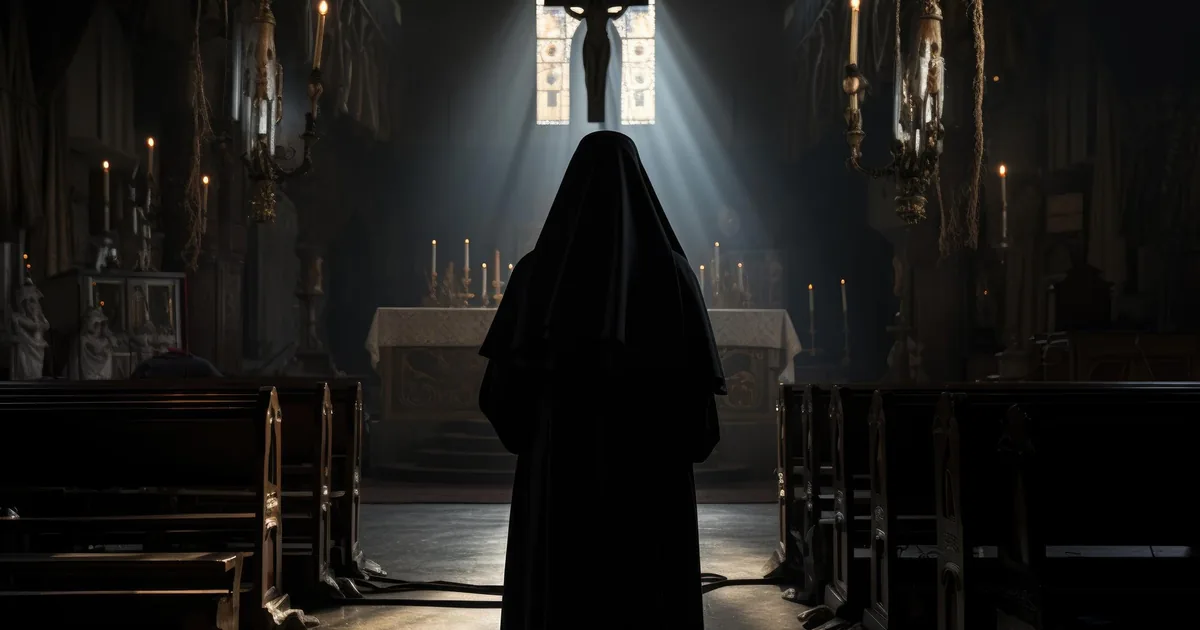
Not to fear, but to understand: quiet light is stronger than the noise of darkness
If you take one main thought from the Orthodox teaching about demons, it will be very comforting: a person is not a toy in someone else's hands. Yes, invisible warfare exists, thoughts come, mood fluctuates, the house sometimes seems heavy. But the will remains yours, which means the last word is always yours — for your prayer, attention, kindness and ability to stop in time.
Esotericism in its mature form says the same thing, only in a different language: everything incomprehensible becomes less frightening when you begin to study yourself. A journal of thoughts, honest analysis of resentments, order in the house, sleep and rest, warm connection with loved ones — this is not magic, but ordinary hygiene of the soul. This is exactly how both the advice of the Holy Fathers and many EXETERIC practices work — through returning to yourself, to the body, to the present moment, to light.
There is no need to look in every nightmare for a sign of possession and in every quarrel — for a hex. It is much more fruitful to ask: where am I tired, where have I not forgiven for a long time, where have I lost peace? Answer yourself honestly, take a small step — clean one shelf, make peace with one person, read Psalm 90 in the evening, take a walk without a phone. Light displaces darkness quietly, without special effects.
And if the topic resonates, continue to explore calmly together with the EXETERIC guide to esotericism: look into the astrology section to better understand your vulnerable periods and rhythms, and read other practices in the EXETERIC blog, where we carefully combine psychology, tradition and self-knowledge. Let the incomprehensible become for you not a reason for fear, but an invitation to a conscious, warm and bright life.
Frequently asked questions
Can a demon possess an ordinary person?
According to Orthodox teaching, real possession is a rare exception, not an everyday norm. An ordinary person encounters not indwelling, but influence through thoughts, emotions and habits: obsessive thoughts, irritability, despondency, attraction to quarrels. A demon cannot forcibly seize the will without a person's consent, it needs you to accept the suggested thought yourself and begin to act on it. Therefore the church urges not to panic and not to diagnose yourself via the Internet, but to keep sobriety, confess, receive Communion and order your life. If a person loses control of himself, hears voices or behaves destructively, it is important to turn simultaneously to a priest and to a doctor, because spiritual help and medicine complement each other.
What to do if you are scared at night and imagine bad things?
First and most important — do not fuel fear, but gently return support to yourself. Turn on the light, cross yourself, slowly read aloud the Jesus Prayer or Psalm 90 "He that dwelleth", drink water, breathe deeply and calmly. The Orthodox tradition advises not to enter into mental dialogue with frightening images and not to try to unravel them at night, but to switch attention to prayer and simple bodily actions. In the morning it is useful to air out and tidy the room, limit horrors and scrolling before sleep, establish a routine and talk to a loved one about anxiety. If night fears, sleep paralysis or oppressive dreams repeat regularly, it is worth going to confession, asking for a blessing from a priest and, if necessary, consulting a psychologist or doctor.
Can you expel demons on your own?
Orthodoxy clearly distinguishes personal prayer and the rite of exorcism, which only a priest has the right to perform with a blessing. On his own, a person does not read adjuratory prayers and does not "drive out" someone by force, but displaces evil with light: repentance, forgiveness of offenses, prayer, fasting according to strength, order in the house and good deeds. The peaceful "independent rite" is considered to be the Jesus Prayer, the prayer to the Honorable Cross, Psalm 90, sprinkling with holy water, a cross above the door and inviting a priest to bless the dwelling. Attempts to play the exorcist, shout at darkness, seek the names of demons or conduct dialogue with them are considered dangerous and only increase fear and dependence. The right path is humility and consistency: small daily practice instead of one dramatic ritual.
How do Orthodox demons differ from spirits and entities in esotericism?
In Orthodoxy, demons are specific persons, fallen angels who fell away from God through pride and act through the suggestion of passions, not faceless energy. In modern esotericism, similar phenomena are often described as clots of negativity, low-frequency entities, egregors or the repressed shadow of the psyche. What both views have in common is that these phenomena feed on a person's attention, fear, resentment and consent, and weaken from mindfulness, light and love. The difference is in the path of healing: the church offers repentance, prayer, the Sacraments and the guidance of a spiritual father, while esotericism adds work with the body, breathing, dream symbols and ancestral scenarios. A mature approach does not oppose them, but uses them as a map: church teaching gives spiritual support, while psychology and gentle practices help to see your triggers and return responsibility for your life.