Spiritual development: where to begin your path and how not to stray from it
Spiritual Development: What It Is and Why You Need It
Spiritual development is not just a trendy phrase from Instagram blogs. It is a deep process that touches all areas of life: from relationships to career. Many people think that spiritual development means mandatory three-hour daily meditations, renouncing material things, or retreating to a monastery. In reality, everything is much simpler and at the same time more complex. It is a path to yourself, to understanding your true desires, to harmony with the world. It is not about escaping reality, but about the ability to live in it consciously.

Why is the topic of spiritual development so popular today? Because we are tired of the endless race for external attributes of success. We get what we want, but we do not feel satisfaction. An inner emptiness arises that cannot be filled with a new purchase or a promotion. Spiritual development of a person is a way to fill life with meaning, to find support within yourself rather than outside.
But where to begin? How not to drown in a sea of information, esoteric teachings, and dubious gurus? In this article, we will examine a practical approach to spiritual development based on common sense and respect for traditions. You will learn what types of spiritual development exist, how it relates to raising children and relationships, and how to stay on track when things get difficult.
Spiritual Development and Upbringing of Children: How Not to Harm
Many parents think about the spiritual development of a child. And that is wonderful! But it is important not to go overboard here. A child is not a vessel to be filled with our ideas about spirituality, but a torch to be lit. Spiritual development of a child's personality is not about imposing religious dogmas or esoteric practices. It is about creating an environment in which a child can develop empathy, critical thinking, a sense of responsibility, and a connection with nature.
What does this look like in practice? Instead of forcing a child to meditate, show them how you yourself cope with stress. Instead of moralizing about karma, discuss with them the consequences of their actions. Spiritual development and upbringing of children is first and foremost a personal example. Children pick up on behavior, not words. If you talk about kindness but are rude to a waiter, the child will absorb your behavioral model, not your words.
It is also important to respect the child's freedom of choice. Spiritual development of the family should not turn into dictatorship. Offer the child different ways of self-discovery: through creativity, sports, connecting with nature, reading. Let them choose what resonates with them. And remember: spiritual development is not a sprint but a marathon. Do not expect instant results, but be consistent in your actions.
Spiritual Development of a Person: Where to Start with First Steps
So, you have decided that spiritual development is what you need. Where to begin? First of all, stop looking for a magic pill. Spiritual development is not a course for 999 rubles or an initiation by a "great master." It is daily work on yourself. But do not be afraid: this does not mean you need to become an ascetic. It is enough to start small.
The first step is mindfulness. Start paying attention to your thoughts, emotions, and reactions. Ask yourself questions: "Why do I react this way?", "What am I feeling right now?" This simple exercise, if done regularly, can change your life. The second step is self-study. What are your strengths? What are your weaknesses? What do you want to change in yourself? For this, you can keep a journal, take psychological tests, turn to astrology or Human Design — in the Human Design guide you will find a detailed description of types and strategies that will help you understand your nature.
The third step is practice. Choose what resonates with you: meditation, yoga, prayer, keeping a gratitude journal, walks in nature. You do not have to do everything at once. Start with one thing, but do it regularly. Spiritual development of a person is not a set of scattered actions but a system. Therefore, it is important that practice becomes part of your daily routine.
The fourth step is connecting with like-minded people. Find people who share your values. This could be a themed club, an online community, or simply a friend with whom you can discuss important topics. Sharing experiences helps you stay on track and see new facets.
Types of Spiritual Development: From Meditation to Service
Spiritual development is multifaceted, and its types can be very diverse. Some find themselves in meditation, others in creativity, and others in helping people. Let us look at the main types of spiritual development so that you can choose what resonates with you.
| Type | Essence | Who It Suits |
|---|---|---|
| Meditation | The practice of mindfulness, concentration, and observing the mind | Those who want to calm the mind, develop concentration and inner silence |
| Yoga | Physical and breathing practices aimed at harmonizing body and spirit | Those who want to develop flexibility, strength, and energetic balance |
| Creativity | Expressing yourself through art: painting, music, writing, dance | Those who seek a channel for self-expression and want to develop intuition |
| Service | Helping others: volunteering, caring for loved ones, charity | Those who want to develop empathy and a sense of connection with the world |
| Study of Teachings | Reading philosophical and esoteric texts, attending lectures and seminars | Those who want to broaden their horizons and understand the laws of the universe |
As you can see, types of spiritual development are diverse. It is important not to fixate on just one, but to try different things and listen to yourself. What resonates? What brings joy and a sense of fulfillment? Perhaps several types will suit you at once, and that is normal. The main thing is that the practice brings joy, not burden.
Remember that spiritual development is not a competition. There is no need to strive to become the "most spiritual" or "enlightened." This is a path that is unique to each person. Do not compare yourself to others; compare yourself to who you were yesterday.
Spiritual Development in Relationships: How to Grow Together
Spiritual development in relationships is a separate topic that concerns many. How to grow together rather than apart? How to maintain closeness when both partners are changing? It is important to understand here that spiritual development does not always happen synchronously. One may become interested in meditation, the other in running. And that is normal. The main thing is to respect each other's choices and find common ground.
Spiritual development in relationships begins with honest dialogue. Discuss your values, goals, and fears. What is important to you? What do you want to change in yourself and in the relationship? Such conversations help strengthen trust and understand how compatible you are on a spiritual level. It is also useful to practice joint rituals: for example, evening walks, shared meditations, or simply dinner without phones. This creates a sense of unity and togetherness.
But be careful: do not try to "level up" your partner. Spiritual development is a personal path, and everyone has the right to their own pace. Your task is to support and inspire, not to control. If you feel that your partner does not share your aspirations, that is no reason for disappointment. Perhaps they just need time or a different path. After all, spiritual development of a person is not only about relationships but also about the ability to be happy alone with yourself.
How to Stay on Track: Practical Tips
Starting spiritual development is easy, but staying on track is harder. Life makes its own adjustments: work, family, daily routine. How to maintain motivation and not lose interest? Here are a few practical tips to help you stay the course.
First, define your goal. Why do you need spiritual development? What do you want to achieve in the end? It could be inner peace, better relationships, understanding your purpose. Write down your goal and reread it when you feel you are straying from the path. Second, create a supportive environment. Remove distractions from your field of vision: unnecessary gadgets, toxic people, information noise. Surround yourself with books, music, and people who inspire you.
Third, be flexible. If your chosen practice no longer brings joy, do not be afraid to change it. Spiritual development is not dogma but a living process. Try new things, experiment, seek your own path. Fourth, do not forget about the body. Spirituality is inextricably linked to physical condition. Regular exercise, healthy eating, adequate sleep — this is the foundation on which your energy and capacity for mindfulness are built.
And finally, remember that spiritual development is not a linear process. There will be ups and downs, periods of enthusiasm and apathy. This is normal. Do not blame yourself for "setbacks." Simply return to practice as soon as you feel the strength. Every step on this path matters, even if it seems small.
Spiritual Development and Dreams: Hints from the Subconscious
Dreams are an amazing tool that can help in spiritual development. Our subconscious speaks to us in the language of symbols, and if you learn to understand it, you can gain valuable hints about your inner state and direction of development. Spiritual development and dreams are closely connected: dreams can reflect our fears, desires, and unresolved conflicts.
To use dreams for spiritual growth, start keeping a dream journal. Upon waking, immediately write down everything you remember: images, feelings, plot. Over time, you will notice recurring symbols and themes. For dream interpretation, you can turn to the EXETERIC dream book, which contains meanings of many symbols. But remember: a dream book is just a hint, and the main expert on your dreams is you. Listen to your intuition when analyzing your dreams.
Also practice lucid dreaming. This is a state when you realize you are dreaming and can influence the dream's plot. Lucid dreaming opens up enormous possibilities for self-discovery and working with the subconscious. You can start with simple techniques: for example, throughout the day ask yourself "Am I dreaming?" and test reality. Over time, this habit will carry over into dreams, and you will be able to "wake up" inside a dream.
Dreams are not just chaotic images but an important channel of communication with the deep layers of the psyche. Use them as a compass on the path of spiritual development.
Spiritual Development and Astrology: Your Personal Guide
Astrology is an ancient system of knowledge that can become your personal guide in spiritual development. A natal chart, calculated by date, time, and place of birth, shows your strengths and weaknesses, karmic tasks, and potential. By understanding your chart, you can more consciously choose directions for growth.
For example, if you have a strong Leo sign, creative self-expression may be close to you. If Pisces is prominent, you are inclined toward mysticism and meditation. Astrology helps you see which energies predominate in you and how to harmonize them. In the astrology section, you can learn more about your zodiac sign and its influence on character and destiny.
But do not take astrology fatalistically. It is not a verdict but a tool. The stars incline but do not compel. You can always change your life by working on yourself. Astrology only shows what you came into this world with, and how to use that knowledge is up to you.
Astrology can also help in spiritual development in relationships: by comparing two natal charts, you will see which aspects of your relationship require attention, where conflicts may arise, and how to smooth them over. This is valuable information for building harmonious relationships.
Spiritual Development and the Matrix of Destiny: Decoding the Arcana
Another tool for self-discovery is the Matrix of Destiny, based on the 22 Arcana of Tarot. This is a system that allows you to calculate your karmic tasks, talents, and lessons based on your date of birth. Spiritual development of a child's personality and of an adult can be significantly facilitated by understanding your arcana.
Using the Matrix of Destiny calculator, you can get your portrait: what energies are given to you from birth, what tasks lie before you, which areas of life require special attention. For example, if you have the "Strength" arcanum, your task is to learn to manage your passions and emotions. If "The Hermit" — it is important for you to develop independence and the ability to be alone with yourself.
The Matrix of Destiny is not just fortune-telling but a deep system that helps you understand what spiritual lessons you must go through in this life. It can become the basis for choosing practices and directions of development. But remember that this is only a scheme, and life is always richer than any calculations. Use the matrix as a guide, but do not let it limit you.
Spiritual Development and Energy: Working with Chakras
The human energy system is another important aspect of spiritual development. According to esoteric teachings, our body has seven main chakras — energy centers, each responsible for certain areas of life. When chakras are balanced, we feel healthy, happy, and full of strength. If a chakra becomes blocked, problems arise in the corresponding area.
Spiritual development includes working with chakras. You can start with simple meditations on each chakra, visualizing its color and imagining energy flowing freely through it. Physical exercises such as yoga, which stimulate energy centers, are also beneficial. For example, the "tree" pose helps strengthen the root chakra, and the "camel" pose — the heart chakra.
It is important to remember that working with chakras is not just a technique but a holistic approach. It includes a healthy lifestyle, positive thinking, and harmonious relationships. If you only visualize chakras while leading a destructive lifestyle, you are unlikely to achieve balance. Spiritual development of a person is comprehensive work on all aspects of life.
It is also worth paying attention to energetic protection. In the modern world, we constantly encounter negative influences: stress, toxic people, information noise. Learning to protect your energy is an important skill on the path of spiritual development. This could be a simple practice of visualizing a protective cocoon or using natural amulets.
Spiritual Development and Magic: A Conscious Approach
Magic is often associated with something mysterious and dangerous, but in reality, it is simply working with energies and intentions. Spiritual development and magic can go hand in hand if approached consciously. Magic is not a way to manipulate the world but a tool for self-discovery and improving your life.
You can start with simple rituals: for example, a morning intention practice where you formulate your goals for the day and visualize their achievement. Or an evening gratitude practice — when you mentally review all the good things that happened during the day and send gratitude to the Universe. These simple practices help you tune into a positive mindset and attract the right events into your life.
If you want to go deeper into magic, study symbols and their meanings. For example, candles, herbs, crystals — each object has its own energy and can be used in rituals. But remember: magic is not a toy. Do not try to harm anyone or force anyone to do anything. This contradicts the laws of karma and can have negative consequences.
Spiritual development and magic are about responsibility. You are responsible for your intentions and actions. Therefore, practice only what brings benefit to you and those around you. And always remember common sense: magic does not replace real actions. If you want to change your life, you need not only to visualize but also to take concrete steps.
Spiritual Development and Karma: How to Work Off Debts
The concept of karma is one of the key concepts in spiritual development. Karma is the law of cause and effect: everything we do returns to us. Spiritual development includes understanding your karma and working on its purification. Many people ask: "What karmic tasks do I have?" The answer can be found in numerology, astrology, or the Matrix of Destiny.
For example, if you have the "Justice" arcanum in your Matrix of Destiny, this indicates that your karmic task is to learn to be fair and honest. If "Wheel of Fortune" — you need to accept change and learn to go with the flow of life. Working off karma is not punishment but an opportunity for growth. Every difficulty you face is a lesson that must be passed.
How to work off karmic debts? First, become aware of them. Study your natal chart or Matrix of Destiny to understand what tasks lie before you. Second, work on yourself: develop the qualities you lack, correct mistakes, forgive yourself and others. Third, practice karma yoga — selfless service. By helping others, you purify your karma.
But do not go to extremes. Karma is not fate. You can always change your life by changing your thoughts and actions. Spiritual development is precisely the process of consciously changing your karma.
Spiritual Development and Practices: Meditation, Affirmations, Rituals
There are many practices that help in spiritual development. Meditation is one of the most well-known. It helps calm the mind, develop concentration and mindfulness. You can start with simple breathing exercises: sit comfortably, close your eyes, and focus on your breath. When thoughts begin to distract you, simply return your attention to the breath. Practice for 5-10 minutes a day, gradually increasing the time.
Affirmations are positive statements that you repeat to change your beliefs. For example: "I am worthy of love and respect," "I am calm and confident." Affirmations work if repeated regularly and with faith. But do not use them as a way to avoid real action. Affirmations are a tool for tuning the mind, not a substitute for effort.
Rituals are symbolic actions that help reinforce intention. For example, a new moon ritual where you write your wishes on paper and burn it. Or a space cleansing ritual using a candle and incense. Rituals create structure and help you tune into the right wavelength. The main thing is to perform them consciously, imbuing them with meaning.
Choose practices that resonate with you, and do not be afraid to experiment. Spiritual development is a creative process. Find your unique path that brings you joy and harmony.
Spiritual Development and Self-Discovery: Working with the Shadow
Spiritual development is impossible without self-discovery. One of the important aspects of self-discovery is working with the shadow — those qualities that we do not acknowledge in ourselves and project onto others. This could be aggression, envy, fear, greed. Until we become aware of our shadow, it controls us from the subconscious.
How to work with the shadow? Start by observing your reactions. When you experience strong emotions, ask yourself: "What is resonating in me? Which of my traits has manifested?" For example, if someone's laziness irritates you, perhaps you do not allow yourself to rest. Acknowledging your "shadow" qualities is the first step toward integrating them.
It is also useful to keep a journal where you write down your fears and doubts. Analyze where they came from. Perhaps they are connected to childhood traumas or social conditioning. Understanding the causes helps free yourself from their influence.
Working with the shadow is a difficult but necessary stage of spiritual development. By accepting your dark sides, you become a whole person. You stop spending energy on suppression and can direct it toward creation.
Spiritual Development and Intuition: How to Hear Your Inner Voice
Intuition is the voice of your soul, which always knows what is best for you. Spiritual development helps strengthen intuition and learn to trust it. Many people ignore inner hints because they are used to relying on logic. But intuition is not the opposite of logic — it is a complement to it.
How to develop intuition? First, learn to listen to your body. It often sends signals: for example, a feeling of heaviness in the stomach when making a wrong decision, or lightness in the chest when making the right one. Pay attention to these sensations. Second, practice "mental silence" — meditation during which you simply observe thoughts without engaging with them. This helps you hear the subtler voice of intuition.
Third, ask questions and wait for an answer. You can ask a question before sleep and in the morning recall a dream or the first feeling that comes to mind. Or use a pendulum, Tarot cards — in the articles on magic and self-discovery, you will find techniques for working with these tools. The main thing is to trust what you receive and verify it in practice.
Intuition is a skill that can be trained. The more often you use it, the stronger it becomes. Spiritual development is precisely about learning to hear yourself and follow your path, even if it is not always logically clear.
Spiritual Development and Creativity: As a Source of Inspiration
Creativity is a powerful tool for spiritual development. When we create, we connect with something greater than ourselves. This could be painting, music, writing, dance, cooking — any activity that brings joy and allows you to express yourself. Creativity helps release inner blocks, unlock potential, and feel the flow.
Spiritual development through creativity is not necessarily about creating masterpieces. It is about the process, not the result. It is important to enjoy the act itself, let go of control, and allow energy to flow through you. Many great ideas come precisely in moments of creativity when the mind is relaxed.
How to incorporate creativity into your spiritual practice? Set aside time for a creative activity you enjoy. Do not set goals; simply enjoy the process. You can keep an art journal where you draw or write down your thoughts and feelings. Or engage in spontaneous dancing to music without thinking about how you look.
Creativity also helps develop intuition because it requires trusting spontaneous impulses. Allow yourself to be free in expression, and you will notice how your life becomes brighter and more meaningful.
Spiritual Development and Solitude: How to Use Time Alone with Yourself
In the modern world, we are rarely alone with ourselves. Constant notifications, noise, communication — all of this distracts from inner dialogue. Spiritual development requires time for solitude when you can hear yourself. Loneliness is not a punishment but an opportunity for deep work on yourself.
How to use time alone with yourself productively? Start simple: set aside 15-30 minutes a day when you are alone, without a phone or other distractions. This could be morning meditation, an evening walk, or simply sitting quietly with a cup of tea. During this time, you can reflect, keep a journal, read spiritual literature, or simply observe your thoughts.
Solitude helps you better understand your needs and desires. You stop depending on the opinions of others and learn to rely on yourself. This is an important stage of spiritual development. But do not confuse solitude with isolation. It is important to maintain connection with the world and people while having space for yourself.
If you feel fear of solitude, this may be a signal that you are not used to being alone with yourself. Gradually increase the time of solitude, and you will notice how it becomes pleasant and beneficial.
Spiritual Development and Nature: Restoring Connection
Nature is a source of energy and wisdom. Spiritual development is impossible without a connection to nature. We are part of nature, and when we are cut off from it, we lose inner balance. The modern lifestyle often distances us from natural rhythms, leading to stress and disharmony.
The practice of "forest bathing" (shinrin-yoku) is a Japanese tradition that involves slow walks through the forest with full immersion in the atmosphere. It helps lower cortisol levels, improve mood, and strengthen immunity. Spiritual development includes the ability to notice the beauty of nature and feel its energy.
You can practice simple exercises in nature: for example, stand barefoot on the ground and imagine the earth's energy entering your body. Or observe clouds, a river, trees, reflecting on the cyclical nature of life. Nature teaches us acceptance and patience.
It is also useful to care for nature: plant trees, pick up litter, help animals. This not only improves the world but also purifies your karma. Spiritual development and care for nature are inseparable because we are part of a single whole.
Spiritual Development and Humility: Accepting What Is
Spiritual development is often associated with humility — the ability to accept what we cannot change. This is not passivity but wisdom. Humility helps you let go of control and trust a higher order. Many people suffer because they try to control everything, but life always makes its own adjustments.
How to develop humility? Start with the practice of gratitude. Every day, find time to give thanks for what you have: health, loved ones, opportunities. This helps you see that even in difficult times there is something good. It is also useful to acknowledge your limitations and mistakes. This does not make you weak but rather shows strength of spirit.
Humility is also connected to accepting other people. We cannot change others, but we can change our attitude toward them. When you stop judging and begin to understand, you become more compassionate. This is an important step in spiritual development.
But humility does not mean giving up your goals and dreams. It means the ability to pursue them without attachment to the result. Do everything you can, but do not suffer if something does not go according to plan. Spiritual development is a path on which you learn to be in the flow of life.
Spiritual Development and Humor: The Lightness of Being
Many people think that spiritual development is a serious and gloomy pursuit. But in reality, humor is an important aspect of spirituality. The ability to laugh at yourself and at situations helps you not take life too tragically. Humor reduces stress, improves mood, and promotes a lighter attitude toward problems.
Spiritual development does not mean you must become an ascetic who never smiles. On the contrary, true spirituality is joy and inner freedom. Laughter is a manifestation of life energy that helps us cope with difficulties.
How to incorporate humor into your spiritual practice? Do not take yourself too seriously. Laugh at your mistakes, at the absurdity of certain situations. Watch comedies, spend time with cheerful people, find the funny in everyday life. This does not contradict spiritual development — it complements it.
Remember that spiritual development is not an escape from reality but the ability to live in it fully. Humor helps us remain flexible and adapt to change. So do not forget to smile on your path.
A Path Without Fear: How Not to Lose Yourself in Esotericism
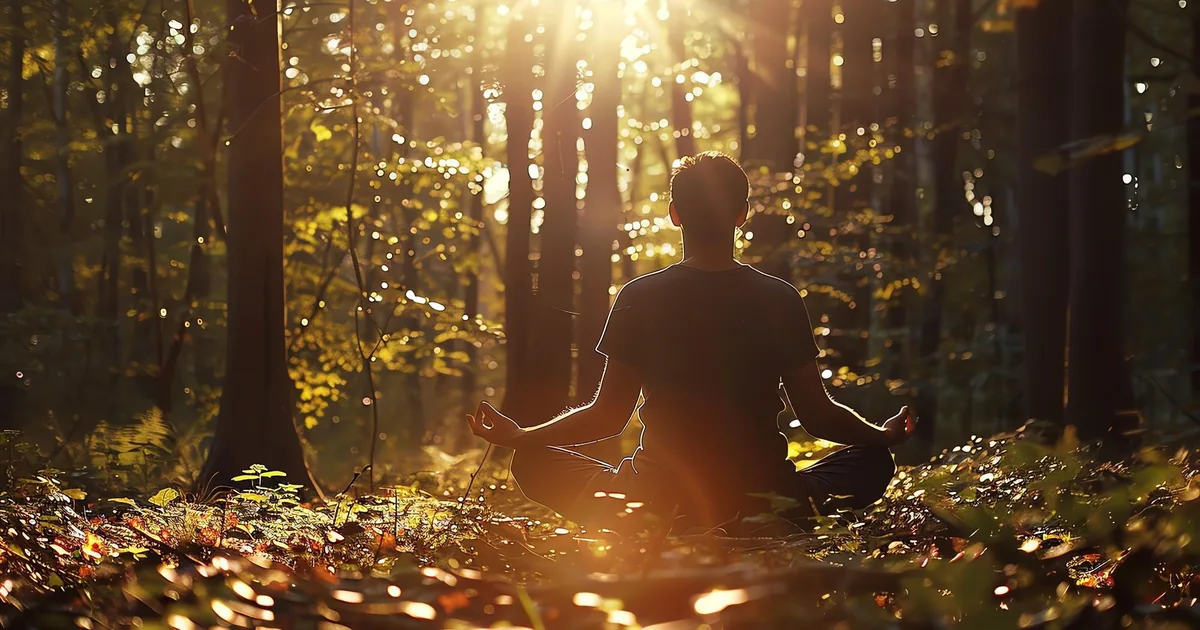
When we take our first steps in spiritual development, we are often filled with enthusiasm. We want to try everything at once: meditation, astrology, the Matrix of Destiny, working with chakras. But it is important to remember: esotericism is not a race or a competition. It is a tool that helps us better understand ourselves, our true desires, and our place in the world. There is no need to fear that you are doing something "wrong" or that it is "not working out." The spiritual path is not an exam but an exploration. An exploration of your soul, your capabilities, and your connection to something greater.
On this journey, it is useful to rely on trusted sources and practices. Our media project EXETERIC was created precisely to help you navigate the world of esotericism without fear and prejudice. Here you will find not only theoretical knowledge but also practical tools that can be applied in everyday life. We strive to explain complex things in simple language so that everyone can find their path without getting lost in the thickets of mysticism.
If you want to go deeper into a topic, check out the other articles on our blog. There you will find materials on magic, self-discovery, dreams, numerology, and much more. And if you are interested in how the stars influence your character and destiny, be sure to explore the astrology section. Perhaps that is exactly where you will find answers to questions that have been troubling you for a long time.
Remember: spiritual development is not an escape from reality but a way to live in it more consciously. There is no need to fear the unknown — it is better to calmly figure it out, try the practice with respect and attention to yourself. Do not compare your path to others', do not chase "enlightenment" — simply go at your own pace, listening to your heart. And then you will surely find what you are looking for and will not lose your way.
Frequently Asked Questions
How do I know if I am ready for spiritual development?
Readiness for spiritual development is not some special moment but rather an inner feeling. If you feel that material goals have stopped bringing satisfaction, if questions about the meaning of life visit you more and more often, if you notice that you want more than just earning money — these are sure signs. There is no need to wait for a special sign or the perfect time. You can start small: with simple mindfulness practices, reading books, observing your thoughts. The main thing is a sincere desire to understand yourself and a willingness to devote time to it. Spiritual development does not require special preparation or special conditions — it is available to everyone who is open to new experiences.
Can spiritual development be combined with ordinary life and work?
Of course, it can! Spiritual development does not mean you need to retreat to a monastery or give up worldly goods. On the contrary, true spirituality manifests in everyday life: in how you interact with people, how you cope with stress, how you make decisions. You can practice meditation in the mornings, keep a gratitude journal, do yoga, or simply spend more time in nature — all of this easily fits into a regular schedule. What matters is not the quantity of practices but their quality and regularity. Even 10 minutes of mindfulness a day can change your perception. The main thing is not to perceive spiritual development as a separate part of life but to integrate it into every moment.
What should I do if I am disappointed in spiritual practices?
Disappointment is a normal stage on any path, and spiritual development is no exception. If you feel that practices have stopped bringing joy or are not giving the expected results, do not blame yourself. Perhaps the chosen method simply does not suit you, or you have outgrown it. This does not mean that the spiritual path is not for you. Try taking a pause, resting, and then exploring other directions: for example, creativity, service, bodywork, or studying new teachings. Remember that spiritual development is not a linear process, and periods of decline are a natural part of it. Listen to yourself: perhaps you need to change your approach or simply give yourself time. The main thing is not to stop searching, but also not to force yourself to do what does not resonate.
How to distinguish a true spiritual teaching from a sect or fraud?
This is a very important question. First of all, trust your intuition and common sense. A true teaching always calls for freedom, critical thinking, and personal responsibility. It does not demand blind obedience, does not promise instant miracles, and does not manipulate through fear. If you are pressured into donations, isolated from loved ones, or required to obey unquestioningly — these are alarming signs. It is also worth researching information about the mentor or organization: look for reviews, check their reputation. True spiritual practices are always transparent and open to questions. Do not be afraid to ask them and demand explanations. Remember: spiritual development is a path to greater awareness and freedom, not to dependence on someone or something.