Exorcism: The History of the Ritual from Antiquity to the Present Day
What is exorcism: the meaning and essence of the ritual
The word "exorcism" comes from the Greek exorkismos — "incantation, expulsion by oath." In a broad sense, exorcism is a complex of ritual actions aimed at expelling an undesirable spiritual entity from a person, place, or object. But if we set aside the Hollywood fog, it becomes clear: exorcism is an ancient practice that existed long before Christianity and is found in virtually all cultures of the world. In the esoteric tradition of EXETERIC, we view exorcism not as a "battle with monsters," but as work with energy, intention, and boundaries — one's own and others'.
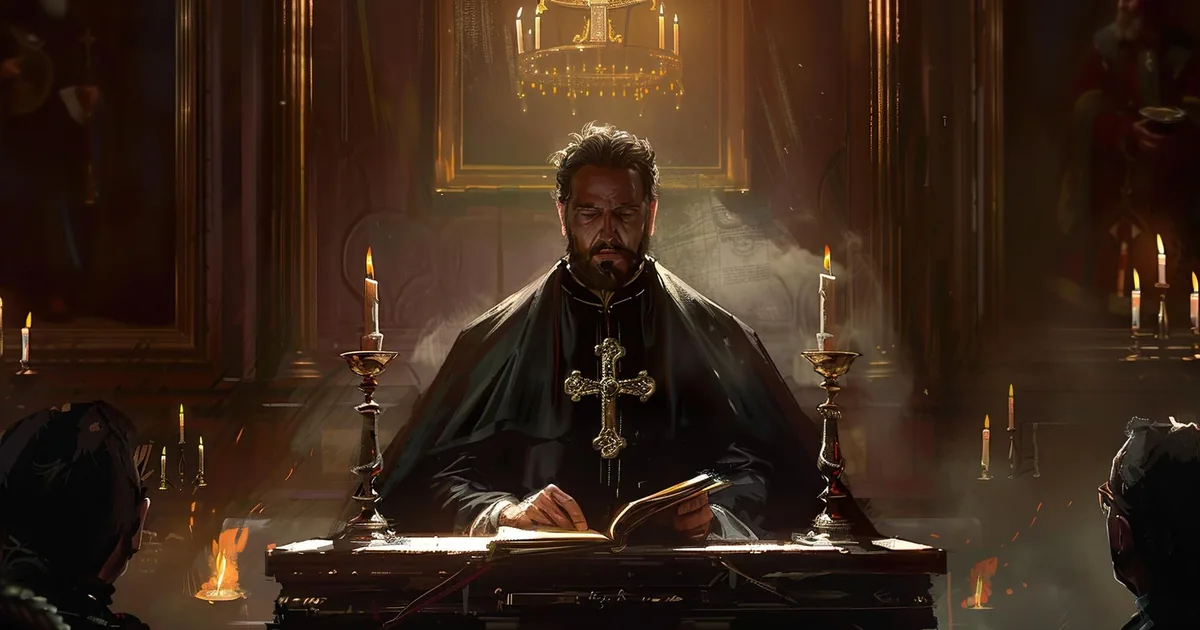
What is exorcism from the perspective of a modern esotericist? It is, first and foremost, the restoration of disrupted energetic integrity. When we speak of "possession," it is often not about a horned creature from a horror film, but about a state where a person loses connection with themselves, and their behavior and emotions cease to belong to them. In such cases, the exorcism ritual is a way to regain control, cleanse the space, and strengthen protection. The meaning of exorcism across different traditions boils down to one thing: separating what is foreign from what is one's own, and restoring clarity.
It is important to understand: exorcism is not a panacea and not a show. It is serious spiritual work that requires preparation, knowledge, and responsibility. In our EXETERIC blog, we have repeatedly raised the topic of protection and working with energy, and exorcism holds a special place here — as a historical phenomenon and as a practical tool.
The history of exorcism: from antiquity to the Middle Ages
The first mentions of spirit expulsion are found in Sumerian and Babylonian texts dating to the 3rd millennium BCE. The ashipu priests used incantations and amulets to expel demons of disease. In Ancient Egypt, there were special rituals directed against evil forces, and in Greece and Rome, "catharsis" — purification through ritual — was practiced. But the real flourishing of exorcism as a systematic practice begins with the spread of Christianity.
In the New Testament, Jesus expels demons — this is one of the central themes. Later, the apostles receive the power to "cast out unclean spirits." By the 3rd century, the rite of exorcism appears, and in the early Middle Ages, the position of exorcist is formed — a person officially authorized by the church to perform the ritual. It is then that exorcism becomes surrounded by strict rules: prayers, fasting, the use of holy water, the cross, and relics. During this same period, the first "manuals" appear — prototypes of modern rituals, where signs of possession and words of expulsion are described.
The Middle Ages were a time when exorcism was often mixed with witch hunts. Many mental disorders and epilepsy were mistakenly attributed to demons, and the ritual turned into a cruel ordeal. However, even then there were priests who doubted the demonic nature of such states. For example, in the 16th century, the physician Johann Weyer criticized the mass execution of the "possessed," arguing that the cause was illness, not demons.
Exorcism in cinema and mass culture: where is the truth and where is fiction
Modern interest in the topic is largely fueled by cinema. The film "The Exorcist" (1973) set the canon: spinning head, green vomit, Latin curses. Since then, movies about exorcism have become a separate genre. "The Exorcism of Emily Rose," "The Last Exorcism," "The Rite," "The Exorcism of Molly Hartley" — these titles are familiar even to those far from esotericism. In 2024, new horror films about exorcism were released, such as "Exorcism 2024" and "Exorcism: Chronicles of the Beginning," which continue to exploit the fear of the unknown.
But how well does cinema correspond to reality? Let's compare.
| Common myth (from movies) | Why this is not so | How it really is |
|---|---|---|
| The possessed person always convulses and speaks in another's voice | This is a theatrical effect to heighten the drama | Most often, signs of possession are a sharp change in personality, apathy or aggression, loss of appetite, fear of sacred objects |
| Exorcism is an instantaneous expulsion with screams and blood | In reality, the ritual can last months and require preparation | It is a gradual process: prayers, fasting, conversations, work with a psychologist (in modern approaches) |
| Demons can possess anyone | In the tradition, it is believed that "open doors" are required for this | Engaging in occultism, severe addictions, unresolved traumas — these are risk factors |
Cinema is art, not an instruction manual. If you want to watch exorcism as entertainment — please do, but do not confuse artistic fiction with real practice. By the way, the song "Exorcism" by the band "Dreams of the Salamander" is a vivid example of how the theme inspires musicians but has no relation to the ritual. And if you are looking to download exorcism in the form of prayer texts, it is better to turn to verified sources rather than random files on the internet.
Signs and types of exorcism: how to understand that it's not just a bad day
In esoteric circles, it is customary to distinguish several types of exorcism. First, religious — the canonical ritual in Christianity, Islam, and Judaism. Second, shamanic — expelling spirits through shamanic journeys, drums, and herbs. Third, energetic — working with a person's field, cleansing the aura and chakras. And finally, psychological — when a priest or practitioner helps a person realize that their state is a projection of an inner conflict, not the indwelling of a demon.
How to understand that a person truly needs exorcism, and not a psychiatrist? In the tradition, several signs are distinguished. But it is important: these signs are not a diagnosis. If you observe similar things in yourself or loved ones — first rule out medical causes.
- A sharp change in voice and mannerisms that the person cannot control.
- Aversion to sacred objects, prayers, the cross — and at a physical level.
- The appearance of knowledge about things the person could not have known.
For beginners, it is important to understand: exorcism is not a game. If you feel you have encountered something similar, do not attempt to perform the ritual yourself. It is better to turn to an experienced practitioner or priest. In our dream interpretation, we often see how the subconscious signals internal conflicts through nightmares. Exorcism dreams are a separate topic: sometimes in a dream we "exorcise" our own demons, and this symbolizes liberation.
The exorcism ritual: how it works in practice
The classic exorcism ritual in the Christian tradition includes reading prayers, sprinkling holy water, placing the cross and hands, and a dialogue with the entity. The priest acts in the name of God, and his task is not to "defeat" the demon, but to help the person return to themselves. In the esoteric approach, the emphasis is on cleansing the space, working with intention, and restoring energetic boundaries.
Here is an approximate structure of a modern energetic exorcism used by practitioners:
- Diagnosis: identifying the source of influence (internal conflict, external influence, a place of power).
- Preparation: fasting, prayer or meditation, cleansing the space (candles, herbs, salt).
- Expulsion: reading an exorcism prayer or using sound (drum, mantra) to break the connection.
- Protection: creating a barrier — amulets, talismans, mental shields.
- Integration: working with a psychologist or spiritual guide to avoid returning to the previous state.
Important: the exorcism ritual should not cause harm to the person. If a practitioner uses violence, intimidation, or demands money for "saving the soul" — this is charlatanism. True exorcism is an act of mercy and help.
Exorcism in the modern world: 2024 and our days
In 2024, the topic of exorcism remains popular. The Vatican conducts courses for exorcists, and on the internet, one can find many videos of "real rituals." However, it is important to separate spectacle from practice. Modern exorcism is increasingly viewed as a comprehensive approach: a priest works in tandem with a psychiatrist, and energetic practices with a psychotherapist.
If you want to watch a horror movie about exorcism — that is one thing. But if you are looking for answers to the questions "what is exorcism" and "how to understand exorcism," it is better to start by studying history and traditions. In our astrology section, we talk about how planets influence destiny, but exorcism is about free will and choice. No entity can take possession of a person if they have not opened the door themselves.
Today, more and more people are interested in exorcism for beginners — as part of a spiritual path. But remember: this is not an attraction. Before attempting to exorcise demons, work on exorcising your own fears and illusions. Exorcism is, first and foremost, work on oneself.
The exorcism prayer: words that restore power
In the Christian tradition, the most famous exorcism prayer is the "Athanasian Creed" or the "Prayer of Saint Michael." In esotericism, universal formulas are often used: "I exorcise everything that is not me, in the name of my Higher Self." The words of exorcism have power not in themselves, but through intention and faith.
Here is an example of a simple prayer that can be used for space cleansing:
"Light and truth, cleanse this space. All that is foreign, depart in peace. Here is a place only for love and peace. So be it."
Repeat it three times, holding a candle or crystal. Afterwards, ventilate the room and take a shower. This is not a full exorcism ritual, but a good practice for relieving tension.
If you are looking for an exorcism text to download, make sure the source is reliable. Many texts on the internet are distorted or contain errors. It is better to turn to official religious canons or verified esoteric schools.
Exorcism and dreams: how the subconscious hints at the path
Dreams in which we exorcise demons or see possessed people are a common plot. In our EXETERIC dream dictionary, we interpret such images as symbols of inner struggle. Exorcism dreams are a reflection of the process of liberation from old beliefs, fears, or toxic connections. If you dream that you are performing an exorcism ritual, perhaps in waking life you are struggling with an addiction or pressure.
Dreams Salamander Exorcism is not just a song, but a metaphor: the salamander symbolizes fire, transformation. Seeing a salamander in a dream is a sign that you are undergoing purification. And if you dream that you are reading an exorcism prayer — it is a signal that you are ready to let go of the past.
Working with dreams is a gentle way to understand what is bothering you. Write down your dreams, analyze the symbols. Sometimes it is enough to realize the message of the subconscious for the need for a real exorcism to disappear.

What to do if the topic of exorcism resonates within
We have come a long way — from Sumerian incantations to modern movie plots and real practices. And now it is important to say the main thing: the topic of exorcism is frightening only to the extent that we allow fear to control our perception. Esotericism is not a collection of scary stories or a competition in bravery. It is a tool for self-knowledge, a way to see one's shadows, name them, and gently let them go. If after reading the article you are left with a feeling of anxiety or a desire to immediately "exorcise" something — stop. Take a breath. Perhaps what seems like an external demon is actually an unprocessed emotion, an old belief, or fatigue that requires not a ritual, but care.
The approach of EXETERIC practitioners is built on respect for free will and common sense. We do not promise instant miracles and do not scare with "curses." Instead, we offer to calmly explore oneself, study traditions, and choose those tools that truly help one live more consciously. If you want to understand more deeply how energetic practices, protection, and cleansing work, check out the EXETERIC guide to esotericism — it contains materials that do not frighten, but explain. And for those who like to start with the simple, we advise looking at the astrology section: sometimes it is enough to look at your zodiac sign to see what lessons and strengths you already have.
Do not fear the unknown. Fear of the darkness often disappears when we turn on the light of knowledge. Try a simple practice: every evening, write down three things that worried you during the day, and three things you are grateful for. This is not exorcism in the classical sense, but it is honest work with one's inner space. If, however, you feel you need more serious support, seek a living guide, psychologist, or priest — someone you trust. And remember: no one can take possession of your soul without your consent. Your freedom is the greatest talisman.
Want to continue the exploration without the mystical fog? Read other practitioners on the EXETERIC blog — we write about magic, dreams, astrology, and self-knowledge in a way that is understandable and useful. And if you are ready for a gentle step towards yourself, start with one conscious practice today. Not with exorcising demons, but with exorcising your own illusions and fears. This is true exorcism — returning to yourself. May your path be peaceful, and your curiosity stronger than your fear.
Frequently Asked Questions
Is exorcism dangerous for an ordinary person?
The interest in the topic of exorcism itself is not dangerous if you maintain critical thinking and do not attempt to perform complex rituals yourself. Danger arises when a person without preparation begins to practice expelling entities using unverified texts or imitating movies. In esoteric circles, it is believed that an inexperienced practitioner can harm themselves or others if they act out of fear or a desire for power. Therefore, experts recommend starting with simple cleansing and protection practices, and entrusting serious rituals to experienced guides. If you feel anxiety or obsession, first consult a psychologist or doctor to rule out medical causes.
Can exorcism harm the psyche?
Yes, if the ritual is performed in violation of ethics, with violence, intimidation, or without considering the person's mental state. History knows cases when exorcism led to trauma because priests or practitioners mistook mental disorders for possession. The modern approach involves cooperation with psychiatrists and psychotherapists: only after ruling out medical diagnoses can spiritual causes be considered. If the ritual is performed carefully, with respect for the person and their boundaries, it can bring relief. But amateurism or pressure from the "exorcists" can worsen the condition.
How to distinguish possession from a mental disorder?
A precise diagnosis can only be made by a specialist — a psychiatrist or clinical psychologist. In the esoteric tradition, signs of possession include a sharp change in personality, aversion to sacred objects, knowledge of hidden information, but these same symptoms occur in schizophrenia, epilepsy, dissociative disorder. Therefore, a competent practitioner always recommends a medical examination first. If doctors find no organic causes, and the condition persists, then the spiritual nature can be considered. It is important not to confuse religious ecstasy or cultural features with pathology. Common sense and an interdisciplinary approach are the best way to avoid mistakes.
Does exorcism exist in other religions besides Christianity?
Yes, practices of expelling evil spirits exist in virtually all cultures of the world. In Islam, there is ruqyah — reading the Quran and prayers for healing from jinn. In Judaism, there are rituals using psalms and amulets, as well as Kabbalistic practices. In Buddhism and Hinduism, purification rituals are performed with mantras, incense, and offerings. Shamanic traditions of Siberia, Africa, and the Americas use shamanic journeys, drums, and herbs to expel spirits of disease. What is common in all traditions is the belief that a disrupted harmony can be restored through ritual, prayer, and community support. The differences concern names, symbols, and methods, but the essence remains similar.