Exorcism in Orthodoxy: Guide to the Dark Side
Exorcism in Orthodoxy is both frightening and fascinating at the same time: shouting in church, a stern priest with a cross, a crowd, whispers about demons. Let's calmly sort out what exorcism in Orthodoxy really is, where the practice came from, and why there are so many myths around it. We will talk about exorcism in Orthodoxy meaning and symbolism, history, real signs of trouble and conscious ways of protection — without panic and charlatanism.
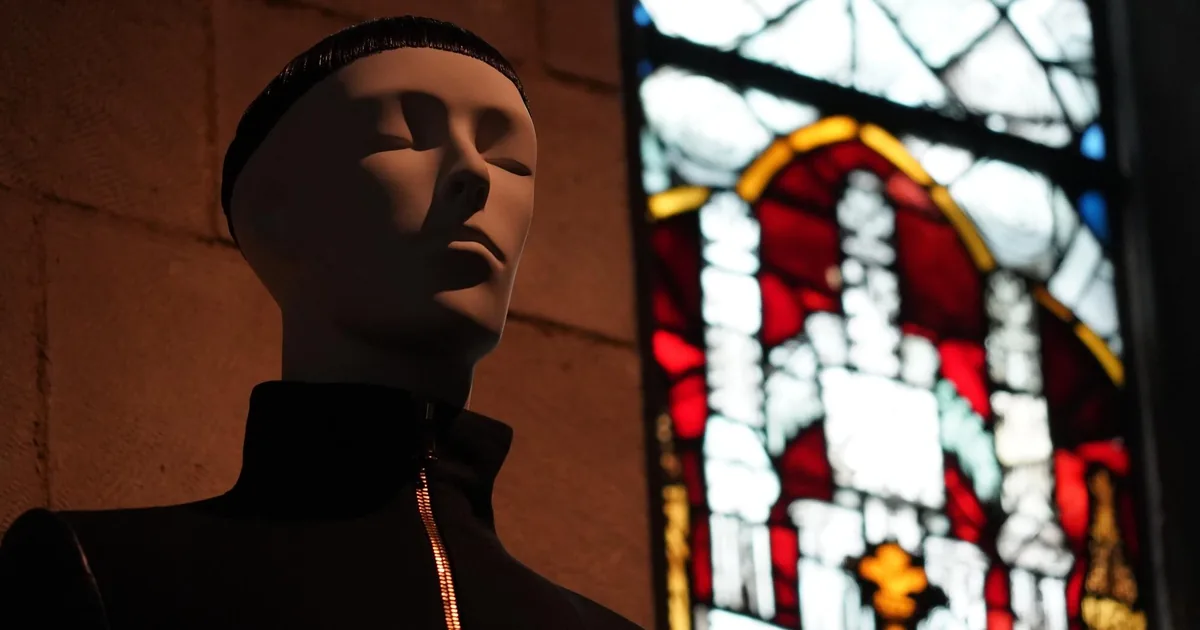
Exorcism in Orthodoxy: Meaning and How to Understand the Essence
Put simply, exorcism in Orthodoxy is the rite of expelling evil spirits, which in church tradition is more often called a rite of rebuke. The official name is the rite of expulsion of unclean spirits, the exorcism prayers of St. Basil the Great, John Chrysostom, Cyprian. The priest reads special prayers, blesses the person with the cross, sprinkles holy water, invokes the name of Christ. The point is not a show, but restoring the person's connection with God.
To understand exorcism in Orthodoxy how to understand its logic, it is important to see two planes. Theological: evil is not an equal rival of God, but a distortion, emptiness, a parasite on free will. Psychological and energetic: a person in crisis loses boundaries, will, awareness, and everything pours into this crack — from other people's suggestion to destructive entities. That is why exorcism in Orthodoxy symbolism and meaning has a double one: the cross as the vertical of the spirit, prayer as vibrations of order, water as cleansing of the subconscious.
A living example: a woman after a divorce does not sleep, hears a hum in the apartment, snaps at her children, then blames herself. A neighbor says — it's hex, you need to go to a rite of rebuke. From the church's point of view — possible spiritual damage through the sin of despondency and anger. From the esoteric point of view — a breach of the aura against a background of exhaustion. The practical step here is one: first sleep, food, a doctor and a psychologist, confession and a conversation with a priest, and not a trip to the first random "elder" from the internet. A conscious look to the root: exorcism in Orthodoxy in Christianity and Orthodoxy has never replaced repentance and change of life, it only helps a person regain the intention to live purely.
Exorcism in Orthodoxy History and Origin: From the Gospel to the Rite of Rebuke
Exorcism in Orthodoxy history begins not in the Middle Ages, but in the Gospel. Christ casts out demons with a word, the apostles continue the practice, in the early Church there were even special ministers — exorcists. The exorcism prayers became part of the catechumenate rite before baptism: every person being baptized renounces Satan. This is a mild form of expulsion — a preventive one.
Further, exorcism in Orthodoxy history and origin becomes overgrown with Byzantine heritage. The Book of Needs of Peter Mogila of the 17th century records expanded rites, in Rus' its own ascetics appear — the Kiev-Pechersk saints, John of Kronstadt, and in the 20th century — Archimandrite Herman from the Trinity-Sergius Lavra, whose rites of rebuke gathered busloads of pilgrims. In parallel, the folk layer lives on: exorcism in Orthodoxy in Slavic mythology intertwines with belief in hysterical shouting, demonic possession, evil eye, midnight spirits. Klikushas in villages shouted during the service, and the community read this as a sign of possession.
Exorcism in Orthodoxy interesting facts that are rarely talked about: in Catholicism there is the official Rituale Romanum and appointed exorcists of dioceses, while in Orthodoxy there is no single institute of exorcists — a rite of rebuke can be performed only by an experienced priest with the blessing of the bishop; the church does not approve mass rites of rebuke; many dioceses directly warn about mental risks. Another fact: in the Trebnik the prayers are directed not at dialogue with the demon, but at invocation of God — the priest is forbidden to entertain himself with interrogations like "what is your name, how many of you are there". And if you are interested in digging deeper into symbols of faith and archetypes, take a look at other practices in the EXETERIC blog, where we examine Christian mysticism alongside psychology.
Exorcism in Orthodoxy Signs and Causes: How to Recognize the Problem
The most frequent query is exorcism in Orthodoxy signs and exorcism in Orthodoxy how to recognize trouble without confusing it with illness. The Church names classic markers: aversion to holy things, blasphemous thoughts and voices, uncontrollable aggression in church, convulsions during prayer, a feeling of someone else's will inside, a sharp change of personality after occult practices or severe trauma. But note: the same exorcism in Orthodoxy causes the church also sees on the spiritual plane — pride, hatred, fornication, turning to magic, oaths, curses of the family line.
How an esotericist and a psychologist would say it differently, but similarly. A sharp decline in energy, obsessive dark thoughts, dreams with suffocation and chases, breakdowns and conflicts in a circle, craving for self-destruction — these are signals of a breach. It is important to separate the clinical: epilepsy, schizophrenia, bipolar affective disorder, PTSD, consequences of substances give a "demonic" picture. Therefore exorcism in Orthodoxy analysis of situations always begins with the question: has the person seen a doctor? A true priest will first send you to a psychiatrist, while a charlatan will immediately name a price for "removing 7 demons".
| Common Myth | Why It Is Not True | How It Really Is |
|---|---|---|
| A demon is visible at once, a person barks and levitates | Movies exaggerate, most cases are quiet | Apathy, hatred of prayer, obsessions, self-destruction |
| A rite of rebuke is needed for everyone with problems | 90% of cases are psychology, fatigue, suggestion | Confession, therapy, routine are needed, not exorcism |
| You can accidentally pick up a demon in church | Fear is contagious, possession is not | Suggestibility and mass hysteria at rites of rebuke are dangerous |
| The louder the priest shouts, the stronger the effect | Shouting puts pressure on the psyche, not on the spirit | Strength is in sobriety, love and the authority of priesthood, not in loudness |
A practical step if you are worried about a loved one: keep a diary for 2 weeks — sleep, food, medications, conflicts, reaction to prayer at home and in church. With this diary go both to a doctor and to a priest. This is the sober way of how to understand whether church help is needed or first treatment and rest. And if you dream heavy dreams with entities, check the EXETERIC dream book — often the subconscious shows through images what is repressed during the day.
Exorcism in Orthodoxy Types, Rites and Traditions of Conducting
Exorcism in Orthodoxy types has unofficial, but distinguishable ones. The first is baptismal exorcisms, preventive, for everyone. The second is a priest's private prayer over a sufferer upon request, quietly, without an audience. The third is a conciliar rite of rebuke, when many people gather, and it is precisely this one that is the most controversial. The fourth is monastic guidance and rebuking through confession, fasting, the Psalter, communion. The Church recognizes as the norm the first two and the fourth, while it criticizes mass shows.
Exorcism in Orthodoxy rites and traditions are strictly regulated: it is performed in church during the day, by a priest in a stole, with a cross and the Gospel, with witnesses, without a fixed fee, without intimidation, without "diagnosing spoilage by egg". Occult admixtures are forbidden: beating, binding, forced starvation, shouting out the names of "witches" who allegedly sent it. If you see a price list "expulsion of a family-line demon — 15000", get up and leave. This is not Orthodoxy.
An example from life: a man brought his mother to a famous rite of rebuke 600 km away. In the crowd it is stuffy, everyone is shouting, his mother became ill, he decided — the demon is coming out. In fact — a panic attack and blood pressure. A reasonable exorcism in Orthodoxy analysis of situations showed: his mother needs a cardiologist, sleep and a calm parish priest near home, not tours to elders. The conscious practice here is to choose quiet help, not spectacular help. And remember about exorcism in Orthodoxy in folk beliefs: whispers that "after the rite of rebuke the demon will jump onto the neighbor" are folklore, not dogma. According to the faith of the church, a demon does not jump like a flea, and a person receives protection through life in faith.
Exorcism in Orthodoxy What to Do and How to Cope: A Step-by-Step Plan
The question exorcism in Orthodoxy what to do arises when you are afraid for yourself or a loved one. We answer step by step, how to combine faith, psychology and energetics. Exorcism in Orthodoxy step-by-step plan for a layman looks like this, and this is also the answer to the query exorcism in Orthodoxy how to cope without harm.
Step 1. Stabilize the body: 7-8 hours of sleep, remove alcohol and stimulants, go to a therapist, neurologist, psychiatrist. Step 2. Remove occult rubbish: boards, spirit summoning, "cleansings" by dubious magicians who could frighten and instill a program. Step 3. Return to the basis of faith: confession, communion, morning and evening rule, Psalm 90, Jesus Prayer. Step 4. Talk to a parish priest, not a YouTube exorcist. Only he decides whether a rite of rebuke is needed and from whom to take a blessing. Step 5. In parallel, work with energy: cleaning the house, salt and water as symbols of purification, airing, light, order in affairs. These are the working exorcism in Orthodoxy practitioner advice, proven over centuries.
| Situation | Reactive Approach | Conscious Practice | Result |
|---|---|---|---|
| Panic attacks in church | Decide that it is a demon, travel to rites of rebuke | Doctor + breathing + quiet confession, Psalm 50 | Anxiety decreases, faith is strengthened |
| Child screams, bad sleep | Look for spoilage, frighten with demons | Routine, psychologist, mother's prayer, blessing of the room | Sleep evens out without trauma |
| After spiritism fears and voices | Go to a magician for removal | Repentance, breaking with the practice, priest, grounding | Will and clarity return |
| Addiction, aggression | Wait for a miracle from one rite of rebuke | Rehabilitation + community + communion + work | Stable healing |
Exorcism in Orthodoxy examples of healings almost always include a change of life, not just prayer. A person abandons hatred, repays debts, makes peace with his father — and darkness recedes, because it has nothing to hold on to. If you want to understand your character and vulnerabilities deeper, look at the astrology section — knowledge of your zodiac sign and tense periods helps to go into prevention in time, and not bring it to a breakdown.
Exorcism in Orthodoxy Protection and Amulets, Prevention and the Esotericist's Opinion
Exorcism in Orthodoxy protection and amulets is a topic where the church and folk tradition diverge. The Church recognizes only spiritual means: cross, prayer, fasting, humility, good deeds, holy water, myrrh, incense in the house during prayer. But pins, red threads against the evil eye, "charged" amulets, mirrors against demons — this is already magic, which Orthodoxy does not bless. Exorcism in Orthodoxy prevention is not to hang yourself with amulets, but to live in such a way as not to invite darkness: not to wish evil, not to take revenge, not to climb into destructive egregors.
From the energy point of view, add simple hygiene: clean the house after quarrels and guests — cleaning, candles with the intention of peace, airing; keep boundaries — say no, do not watch disturbing news and horrors about possession for hours; strengthen the body — sauna, walks, sports raise vibrations better than any amulet. Symbolism also works: an icon in the front corner as a focus of light, bell ringing as sound cleansing of space, incense as a change of smell-anchor from anxiety to peace.
And finally exorcism in Orthodoxy esotericist's opinion, honestly and without flirting with darkness. We see a rite of rebuke as a powerful ritual of collective intention, where the egregor of Christianity helps a person gather will. It works when the person himself wants to change, and stalls when he waits for the priest to "pull" responsibility out of him. Therefore the best amulet is awareness: to notice where I myself open the door with envy, hatred, pride, and close it with repentance and action. Keep a prayer book, a doctor's phone number and common sense nearby — this trinity protects more reliably than any rarities from the fair.
Darkness Recedes Where the Light of Awareness Returns
If after everything you have read it has become calmer inside — this is the main result. Exorcism in Orthodoxy is scary only from afar, in stories and videos with shouting. Up close it is a sober, strict and very human practice: to return to a person will, sleep, prayer, the ability to love and take responsibility for one's life. There is no need to look for a demon in yourself with every anxiety and insomnia. Most often behind frightening symptoms stand fatigue, grief, guilt, overload and loss of support — and all this is treated with ordinary earthly steps: rest, treatment, conversation, confession, order in the house.
Treat esotericism as a flashlight, not as a sentence. It helps to notice where you have opened yourself to fear, other people's influence, resentment or pride, and gently close this door. In the approach of EXETERIC practices there is no place for panic: we are for a union of faith, psychology and common sense. Prayer gathers the spirit, a doctor heals the body, awareness changes habits — and then no darkness finds anything to cling to.
Do not be afraid of the incomprehensible — sort it out calmly. Start small: confession and a quiet conversation with your priest, normal sleep, cleaning the house, the Jesus Prayer in the morning and Psalm 90 in the evening. And to go deeper without extremes, read other practices in the EXETERIC blog and look into the astrology section to better understand your character and vulnerable periods. And if you are worried for yourself or a loved one — do not delay help, ask for it consciously and with respect for yourself. Light returns to where it is awaited and let in.
Frequently Asked Questions
Can I come to a rite of rebuke just for prevention?
There is no need for a healthy person to specially go to a rite of rebuke, the church does not recommend this. Prevention in Orthodoxy is considered to be baptism, regular confession and communion, prayer, fasting and living according to conscience. Mass conciliar rites of rebuke with a crowd and emotions can rather frighten and instill unnecessary fears than help. If you are troubled by obsessive thoughts, bad sleep or apathy, start with a doctor, routine and a conversation with a parish priest. The real need for special prayers is determined only by an experienced priest with a blessing, and not by the person himself based on videos from the internet.
What to do if a loved one shouts in church and demands a rite of rebuke?
Stay calm and do not argue about demons right in church, this only intensifies hysteria. Calmly take the person out into the air, give water, help breathe evenly and do not film what is happening on your phone. At home for two weeks keep a diary: sleep, medications, alcohol, stresses, behavior during prayer. Show the notes to a therapist, neurologist or psychiatrist and separately talk to a parish priest. Do not take the person hundreds of kilometers away to famous elders and do not pay for the removal of spoilage, quiet help nearby is always safer than a spectacular show.
Can I read the exorcism prayers myself at home?
Lay people are not blessed to read the exorcism prayers from the Trebnik on their own at home, this is the priest's business. For home protection the church offers something else: the morning and evening rule, Psalms 50 and 90, the Jesus Prayer, the cross, holy water and participation in the sacraments. Independent reading of strong rites can increase anxiety, suggestibility and fear, especially in impressionable people. It is much more useful to put life in order: remove occult practices, establish sleep, make peace with loved ones, go to confession. If fear does not go away, contact a priest, he will suggest the right prayer measure specifically for you.
Is a rite of rebuke dangerous for children and impressionable people?
Yes, the presence of children and very impressionable people at loud mass rites of rebuke can harm the psyche. Shouts, convulsions of other people, stuffiness and stories about demons easily cause night fears, stuttering, panic attacks and obsessions. For children, routine, a calm environment, parents' prayer, a priest's blessing and, if necessary, a psychologist's help are usually enough. Adults with anxiety and trauma are also better off choosing quiet confession and private conversation, rather than a conciliar rite of rebuke. If after attending such a service it has become worse, take a pause, restore sleep and discuss the condition with a doctor and a calm priest.