Hierarchy of Demons: A Guide to the Ranks and Structure of Hell
Why Do We Need to Know About the Hierarchy of Demons?
When we hear the word "demon," our imagination conjures up horned monsters from horror films or frightening images from medieval engravings. But in the esoteric tradition, demons are not so much evil beings as they are archetypal forces that live within each of us. They embody our shadows, fears, unprocessed emotions, and instincts. Studying the hierarchy of demons is not a call to dangerous rituals, but a way to better understand ourselves and the world around us.
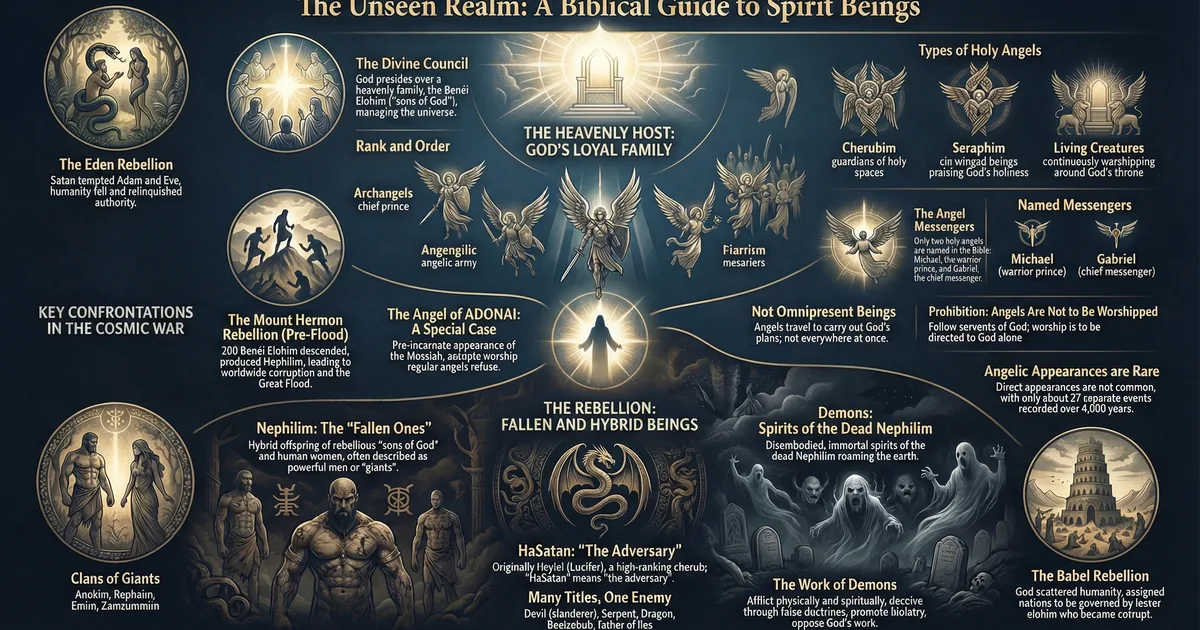
Imagine that your psyche is a vast kingdom ruled by different energies. Some help us create and love, while others destroy and plunge us into chaos. Demons are the "dark ministers" of this kingdom. By knowing their structure, we can recognize which force is currently active within us and consciously manage it.
In this article, we will explore how the hierarchy of demons is structured in classical grimoires and esoteric teachings, what ranks exist, and how to apply this knowledge in everyday life. This is not a terrifying secret, but a fascinating journey into the depths of your own soul.
Where Did the Classification of Demons Come From?
The first attempts to systematize demons appeared in ancient Mesopotamian and Egyptian texts, but the true flourishing of "demonology" came in the Middle Ages. Monks and mystics such as Johann Weyer and Cornelius Agrippa compiled vast catalogs of spirits, drawing on Kabbalah, Greek myths, and Christian apocrypha. The most famous book — "The Hammer of Witches" — although a grim manual for the Inquisition, contained detailed descriptions of demons.
Later, in the 19th century, occultists such as Eliphas Levi and Aleister Crowley reinterpreted this knowledge. They saw demons not as evil spirits, but as archetypal energies that could be used for spiritual growth. In their interpretation, the hierarchy of demons became akin to a map of the human psyche. This is the approach that resonates with us at EXETERIC: we do not fear dark forces, but learn to work with them consciously.
Ranks of Demons: The Structure of the Dark Court
In classical grimoires, such as the "Lemegeton" (or the "Lesser Key of Solomon"), demons are divided into ranks, similar to the angelic hierarchy. This structure reflects not only mythology but also psychological aspects: each rank governs a specific sphere of life and emotions. In total, anywhere from three to ten ranks are distinguished, but we will examine the most common ones.
High Demons: Kings and Emperors
At the top of the hierarchy stand powerful entities known as kings, emperors, or princes. They rule over entire spheres of existence: war, death, knowledge, wealth. The "Lemegeton" mentions names such as Asmodeus, Beelzebub, and Baal. In the esoteric sense, these demons symbolize global forces that manifest in our lives as major events, fateful choices, and karmic knots.
For example, Asmodeus is traditionally considered the demon of lust and debauchery. But if we look deeper, he embodies passion in the broadest sense — not only sexual passion, but also passion for life, creativity, and achieving goals. When Asmodeus appears in your life (in dreams, signs, or inner feelings), it may mean that you are suppressing your desires or, on the contrary, allowing them to control you.
| Demon | Traditional Sphere | Archetypal Meaning | Manifestation in Life | What to Do |
|---|---|---|---|---|
| Asmodeus | Lust, debauchery | Passion, desire, life force | Suppressed desires, creative stagnation, or conversely, addiction to pleasure | Become aware of your true desires, channel passion into a creative direction |
| Beelzebub | Pride, gluttony | Ambition, power, control | Desire to dominate, fear of losing control, overeating as compensation | Practice humility, let go of control, establish healthy eating habits |
| Baal | War, destruction | Aggression, conflict, transformation | Frequent quarrels, inner anger, destructive habits | Channel aggression into sports or creativity, learn constructive dialogue |
Middle Ranks: Dukes and Counts
The middle level of the hierarchy is occupied by dukes, counts, and presidents. They govern more specific aspects: love, knowledge, deception, revenge. These demons are closer to humans; they manifest in everyday situations, in our thoughts and feelings. For example, the demon Agreas, according to grimoires, can teach languages and bestow eloquence. Psychologically, this means we can develop our communication skills if we turn to this energy.
Another example is the demon Marbas, who governs mechanics and engineering. If you constantly encounter technical breakdowns or, conversely, are interested in mechanisms, perhaps Marbas is pointing to the need to develop logical thinking and technical skills.
Lower Demons: Warriors and Servants
The lower ranks consist of legions, warriors, and servants. They carry out the orders of higher-ranking demons and symbolize automatic reactions, habits, and petty fears. In our lives, they manifest as obsessive thoughts, anxieties, and minor irritants. For example, the demon Beleth, considered a military commander, may indicate an inner conflict and the need to protect your boundaries.
Working with lower demons is working with our "inner cockroaches." By becoming aware of them, we can transform them into useful qualities: anxiety into caution, aggression into determination, laziness into the ability to rest.
How to Use This Knowledge in Practice
Studying the hierarchy of demons is not merely collecting grim names. It is a tool for self-knowledge. Here are a few practical steps to help you apply this knowledge in life.
- Keep an observation journal. Write down which emotions and situations repeat in your life. If you often get angry, perhaps the demon of destruction is active within you. If envy torments you — this is a sign of the demon of pride.
- Meditate on the image. Choose a demon that resonates with you and visualize it in meditation. Ask what it wants to tell you. Do not be afraid; it is simply a symbol of your inner power.
- Use rituals of conscious intention. For example, if you want to get rid of laziness, light a black candle (a symbol of transformation) and imagine the energy of the demon of laziness dissolving in the flame.
- Pay attention to dreams. Demons often appear in dreams. Write down your dreams and look for images that may be symbols of archetypes.
Myths and Reality: What a Beginner Needs to Know
There are many myths surrounding demons that hinder a sober perspective. Let us dispel the most common ones.
| Myth | Why This Is Not True | How It Really Is |
|---|---|---|
| Demons are evil spirits that want to harm people | This is an oversimplification from religious propaganda. In esotericism, demons are neutral energies that can be both destructive and creative. | They are part of ourselves. Everything depends on how we interact with them. |
| The hierarchy of demons is a fabrication with no relation to reality | The structure may be symbolic, but it describes real psychological processes. | It is a map of the inner world that helps us systematize our states. |
| Working with demons is dangerous and can lead to possession | Danger arises only with an incorrect approach and fear. Conscious work with symbols is safe. | It is like shadow work in psychology: if you become aware of your dark sides, they stop controlling you. |
Practice: How to Find Your Helper Demon
Now let us move on to a specific technique that will help you establish contact with one of these forces. This is not a summoning of a spirit, but a deep meditative practice aimed at self-knowledge.
Step 1. Identify Your Need
Sit in silence and ask yourself: "What is hindering me right now?" It could be fear, laziness, anger, or insecurity. Formulate it clearly. For example: "I am afraid of public speaking."
Step 2. Find the Corresponding Demon
Study the lists of demons and their spheres. For the fear of public speaking, a demon governing communication, such as Agreas, would be suitable. For the fear of change — a demon of destruction, such as Baal.
Step 3. Create a Ritual
Light a candle (preferably green or blue — the colors of communication and calm). Write the demon's name and your intention on a piece of paper. Say aloud: "I call upon the energy of [demon's name] to become aware of the source of my fear and transform it into strength." Then sit in meditation, imagining how the energy of this demon enters you and fills you with confidence.
Step 4. Observe the Changes
Over the course of a week, notice how your reactions change. You may feel a surge of courage or see hints in your dreams. Write everything down.
This practice helps not only to cope with a specific problem but also to understand your nature more deeply. Remember that demons are not enemies but our hidden allies. By consciously working with them, we become whole and strong.
The Path to Wholeness: Embracing Your Shadows
Knowledge of the hierarchy of demons is not a grim fascination but a key to understanding your own soul. When we stop fearing dark forces and begin to see them as archetypal energies, we open the door to deep self-knowledge. Demons, like angels, are parts of ourselves, and it is up to us whether they become our enemies or allies.
In esotericism, there is no room for fear — there is room for respect and awareness. The practices we offer help not only to understand yourself but also to establish harmony with the world. If you wish to go further, check out other articles on magic and self-knowledge — there you will find even more techniques and ideas. And if you are curious about how the stars influence your life, check your zodiac sign in our astrology section.
Remember that esotericism is not a magic pill but a tool. It gives us a map, but we must walk the path ourselves. Do not fear the unknown — approach it calmly and with respect. Try the practices consciously, listen to yourself, and you will see how inner demons turn into faithful helpers. This is the true magic — the ability to accept yourself completely.
Start small: choose one practice from this article and perform it over the course of a week. Write down your observations, and you will be surprised at how much your perception changes. We at EXETERIC practices are always here to support you on this path. Explore, ask questions, grow — and may the light of your awareness dispel any shadows.
Frequently Asked Questions
Who is the most powerful demon in the hierarchy?
In classical grimoires such as the "Lemegeton," the highest demons are considered to be kings and emperors, for example, Asmodeus, Beelzebub, and Baal. They govern global spheres — war, passion, power. In the esoteric sense, they symbolize powerful archetypal forces that can manifest as major life events or intense emotions. However, one should not think that one demon is "stronger" than another — each is important in its own domain. The choice of the "most powerful" depends on your situation and which energy you need to work with. It is better to focus on what resonates with your current tasks.
Can demons be summoned, and is it safe?
Summoning demons in the classical sense is a complex and risky ritual that is not recommended for beginners. In esotericism, especially in modern practices, we do not strive for literal summoning but work with archetypal energies through meditation and visualization. This approach is safe and effective because it does not come into conflict with external forces but addresses the depths of your psyche. Conscious work with demonic symbols helps transform negative states without resorting to dangerous actions. If you want to explore this topic, it is better to start with meditative practices and study the theory rather than attempting rituals from old books.
How do demons differ from spirits and devils?
In esotericism, demons are archetypal energies embodying specific aspects of the human psyche, such as passion, aggression, and pride. They are not evil beings in the literal sense, but rather neutral forces that can be both destructive and creative. Spirits are a more general concept encompassing various entities, from nature spirits to the deceased. Devils (besy) is a term from religious tradition, often denoting evil spirits hostile to humans. In modern esotericism, we prefer to avoid negative labels and view these phenomena as manifestations of the inner world that can be understood and used for growth.
How can I tell which demon is influencing me?
To understand which archetype is active within you, pay attention to recurring emotions and situations. For example, if you often experience anger and get into conflicts, this may be the energy of Baal, the demon of destruction. If envy or the desire for power torments you, this could be Beelzebub. Keep an observation journal: write down what triggers you, which thoughts and feelings prevail. Meditating on the images of demons can also provide clues — try to imagine which character appears in your mind's eye. Remember, these are merely symbols that help you become aware of your inner processes. The more you understand your shadows, the easier they are to work with.