Hierarchy of Demons: Who Is Who in the Dark World
What is the hierarchy of demons and why is it needed
When we hear the phrase "hierarchy of demons," the imagination conjures up gloomy medieval engravings, blazing underworlds, and sinister lords commanding legions of spirits. But behind this image lies something more than just folklore or horror story plots. The hierarchy of demons is not only a systematization of otherworldly entities but also a reflection of our own fears, desires, and shadow sides of the personality. Understanding this structure helps not only to make sense of esoteric traditions but also to better understand ourselves.
In different cultures and teachings, demons are described differently, but almost always a certain organization is attributed to them. From biblical fallen angels to the demons of Goetia, a clear hierarchy can be traced everywhere, where each spirit occupies its place, has a name, rank, and sphere of influence. This structure is not accidental: it reflects ancient ideas about the world order, where even evil is subject to laws and order.
For a modern person interested in esotericism, the hierarchy of demons can become a key to understanding many symbols and archetypes. Instead of fearing or worshipping these forces, we can study them as part of our collective unconscious. In this article, we will examine how the infernal hierarchy is structured in various traditions, who belongs to the highest circles of demons, and why knowledge about this can be useful in everyday life.
The hierarchy of demons in Christianity: from Lucifer to minor devils
Christian demonology is one of the most developed systems describing the hierarchy of demons. According to it, demons are fallen angels who rebelled against God together with Lucifer. After their downfall, they retained their angelic nature but began to serve evil. In Christianity, the hierarchy of demons of hell is often built by analogy with the heavenly hierarchy, but with the opposite sign.
At the top of this pyramid stands Lucifer himself, also known as Satan or the Morning Star. He is the main adversary of God, the embodiment of pride and rebellion. Under his command are the highest demons — the princes of darkness, each responsible for a specific sin or sphere of temptation. For example, Beelzebub is associated with gluttony and overeating, Asmodeus with lust, Leviathan with envy, and Mammon with greed.
Next come demons of middle rank — they command legions of lower spirits, which in turn tempt people in everyday life. This hierarchy of demons in Christianity is not just a list of names but also a moral teaching: it shows how sin can enslave the soul if one does not resist temptations.
Interestingly, in Orthodoxy the hierarchy of demons is somewhat different. Here more attention is paid to devils — spirits that torment people and push them into sin. Ascetic literature describes various kinds of devils: lustful, wrathful, despondent, and so on. The hierarchy of demons in Orthodoxy is less formalized but emphasizes that each devil specializes in its own passion.
For the modern reader, it is important to understand that the hierarchy of demons in Christianity is not only an ancient text but also an allegory of inner struggle. Each of us faces our own "demons" — bad habits, negative emotions, destructive thoughts. By studying this hierarchy, we can better recognize our weaknesses and work on them.
The infernal hierarchy of demons in Goetia: the 72 spirits of Solomon
One of the most famous systems of the hierarchy of demons is Goetia — a section of medieval magic attributed to King Solomon. The book "The Lesser Key of Solomon" (Lemegeton) describes 72 demons that can be summoned and subjugated through special rituals. Each of these spirits has its own rank, name, seal, and area of influence.
The hierarchy of demons of Goetia includes kings, dukes, marquises, counts, presidents, and knights. For example, Baal is a king ruling in the east, Asmodeus is a king known for his cruelty, Paimon is a king who can bestow knowledge and art. Dukes, such as Agreas or Vassago, can teach languages and reveal hidden treasures. Marquises, for example, Amon, help in love affairs, while counts, such as Zepar, govern relationships.
For practitioners of Goetia, it is important not only to know the names and ranks but also to be able to properly interact with these spirits. It is believed that each demon has its own character, and one must find a common language with it. However, modern esotericists warn: working with the demons of Goetia requires serious preparation and caution. These are not toys but powerful archetypal forces that can get out of control.
Nevertheless, studying the hierarchy of demons of Goetia can be useful even for those who do not plan to summon spirits. These images are part of our culture; they appear in literature, cinema, and art. By understanding their symbolism, we can more deeply perceive the works in which they appear.
The highest hierarchy of demons: who rules in hell
In many demonological treatises, the highest hierarchy of demons is distinguished — those who stand at the throne of Satan and command entire legions. These demons possess the greatest power and influence, and their names are known even to those far from esotericism.
One of the most famous highest demons is Lucifer — the fallen angel who grew proud and rebelled against God. His name means "light-bearer," and before his fall he was one of the most beautiful angels. In the hierarchy of demons, Lucifer occupies the supreme position, although in some sources his role differs from that of Satan. Satan is more of an accuser, an adversary, while Lucifer is a symbol of pride and free will.
Other highest demons include Beelzebub, who is sometimes called the "lord of the flies" and is considered second after Lucifer. Asmodeus is the demon of lust and destruction, Mammon is the demon of wealth and greed, Leviathan is the demon of envy and chaos. In some systems, Belial, Belfegor, and Astaroth are also numbered among the highest demons.
Each of these demons has its own history, symbols, and ways of interacting with people. For example, Astaroth is often depicted as an angel with a book; he can bestow knowledge of the past and future. Belial is the demon of lies and debauchery; he tempts people into vile deeds.
Understanding the highest hierarchy of demons helps to see how human vices were personified in different cultures. By studying these characters, we can reflect on our own shadow sides and how they influence our lives.
The hierarchy of demons in Supernatural and pop culture
Modern pop culture actively uses images of demons and their hierarchy, reinterpreting ancient teachings. TV series, films, books, and games offer their own versions of the infernal structure, which often become more famous than the original sources.
For example, in the TV series "Supernatural," the hierarchy of demons of hell is presented in considerable detail. Here there is a King of Hell (Crowley), Princes of Hell, Knights of Hell, and ordinary demons. Each rank has its own abilities and limitations. This hierarchy of demons in Supernatural has become so popular that many fans perceive it as canon.
The animated series "Hazbin Hotel" and its spin-off "Helluva Boss" offer a more satirical view of the hierarchy of demons. Here hell is divided into rings, each ruled by a demonic prince. The main characters are demons trying to rehabilitate sinners, which adds humor and humanity to the images of otherworldly beings.
In the anime "That Time I Got Reincarnated as a Slime," the hierarchy of demons is presented within a fantasy world where demons are powerful beings with their own political structure. This shows that the theme of the hierarchy of demons is universal and continues to inspire authors.
Even in the tabletop role-playing game Dungeons & Dragons (D&D), there is a detailed hierarchy of demons, where they are divided into tanar'ri and other races, with archdemons at the head. Warhammer 40,000 also has its own demonology, where demons serve the Chaos Gods.
Why is this theme so popular? Perhaps because the hierarchy of demons reflects our ideas about power, order, and chaos. By studying these fictional worlds, we can safely explore the dark aspects of the human psyche.
The hierarchy of demons in books: from medieval grimoires to modern bestsellers
The theme of the hierarchy of demons is not limited to religious texts alone. There are many books devoted to demonology that systematize knowledge about spirits. One of the most famous is the aforementioned "The Lesser Key of Solomon," but there are others.
Johann Weyer, a German physician and demonologist of the 16th century, wrote the book "De Praestigiis Daemonum," in which he presented his own hierarchy of demons. Weyer was one of the first to criticize the witch hunts and attempt to rationally explain the phenomenon of possession. His work contains a detailed description of demons, their names, and ranks.
Modern literature also includes books about the hierarchy of demons. For example, "Demonology" by Simon Magon or "The Infernal Hierarchy" by Aleister Crowley. These works offer not only a list of demons but also a philosophical understanding of their nature.
For those who want to study the topic more deeply, it is recommended to start with classical texts and then move on to modern interpretations. It is important to remember that the hierarchy of demons is not just a list of names but a complex symbolic system that can be used for self-knowledge.
The hierarchy of demons in D&D and Warhammer: game mechanics and archetypes
In tabletop and computer games, the hierarchy of demons often becomes game mechanics. In Dungeons & Dragons, demons are creatures of Chaos that dwell in the Abyss. They have their own hierarchy, headed by demon princes such as Demogorgon, Orcus, or Graz'zt. Each prince rules his own layer of the Abyss, and there is constant war between them.
Warhammer 40,000 offers its own version of demons that serve the four Chaos Gods: Khorne, Tzeentch, Nurgle, and Slaanesh. The hierarchy of demons here is built on the principle of serving one's god, and each demon has a rank from minor demon to greater demon.
Game systems allow players to interact with demons, summon them, or fight them. This provides an opportunity to practically study the hierarchy of demons, understand their strengths and weaknesses. For many people, games become their first introduction to demonology, and that is not bad, as they stimulate interest in more serious sources.
How to use knowledge about the hierarchy of demons in everyday life
It would seem, what does the hierarchy of demons have to do with our ordinary life? In fact, it has the most direct relation. Demons are archetypes embodying our inner conflicts. By studying them, we can better understand our motives and fears.
For example, if you notice excessive greed in yourself, you can turn to the image of Mammon and think about what deep needs lie behind it. Perhaps it is not just a desire for money but a striving for security or recognition. Once you realize this, you can find healthier ways to satisfy these needs.
Also, knowledge about the hierarchy of demons can help in working with dreams. If you dream of demons, do not be afraid — this may be a signal of an inner conflict. Try to write down the dream and analyze which demon appeared to you and what it symbolizes. Perhaps this is a hint about which area of life to pay attention to.
For those who practice meditation, the technique of "meeting the shadow" can be suggested. Imagine that you descend into the dark basement of your subconscious and meet a demon there. Ask it what it wants to tell you. Often such practices help to uncover suppressed emotions and free yourself from them.
It is important to approach this without fear and with respect. Demons are not enemies but parts of ourselves. By acknowledging their existence, we become more whole.
The hierarchy of demons in the Bible and Orthodoxy: spiritual warfare
The Bible does not contain a detailed description of the hierarchy of demons, but some names are mentioned, such as Beelzebub and Leviathan. The New Testament says that demons are subject to Satan and act in the world to turn people away from God. In the Epistle to the Ephesians, the Apostle Paul mentions "the rulers of the darkness of this world, spiritual wickedness in high places," which indicates a certain structure.
In the Orthodox tradition, the hierarchy of demons is considered in the context of spiritual warfare. Holy fathers, such as John Climacus and Ignatius Brianchaninov, described various kinds of devils and their machinations. They emphasized that demons are not omnipotent and can act only within the limits permitted by God.
For an Orthodox Christian, it is important not to enter into dialogue with demons but to resist them through prayer, fasting, and a virtuous life. The hierarchy of demons in Orthodoxy serves to realize the seriousness of spiritual warfare, but not for idle curiosity.
If you are interested in this topic from a religious point of view, it is better to turn to a spiritual mentor who will help you correctly understand the teaching of the Church.
The hierarchy of demons in esotericism: from archetypes to self-knowledge
In modern esotericism, the hierarchy of demons is often viewed as a system of archetypes that can be used for personal growth. Carl Jung called such images the shadow side of the personality. Working with them allows one to integrate suppressed qualities and become more harmonious.
For example, if you are afraid of conflicts, your shadow may contain an aggressive archetype similar to a demon of war. Instead of suppressing aggression, you can learn to use it constructively — to protect your boundaries or achieve goals.
In this context, the hierarchy of demons becomes a map of the inner world. Each demon is a certain energy that can be transformed. Visualization practices, meditation, and energy work help to establish contact with these aspects.
However, it is important to remember that this is not a call to worship demons. It is about psychological work with symbols, not real interaction with entities. If you feel fear or discomfort, it is better to consult a specialist.
To begin with, you can study the list of demons and their attributes, and then reflect on which of them are closer to you. This can become a starting point for self-analysis.
The hierarchy of demons in "That Time I Got Reincarnated as a Slime" and other anime
Anime and manga often use the hierarchy of demons as a plot foundation. In "That Time I Got Reincarnated as a Slime," demons are powerful beings that can be summoned and bound by contract. They have their own hierarchy: from demon lords to lesser demons. The main character Rimuru gains a demon named Diablo under his command, who becomes his loyal servant.
In this anime, the hierarchy of demons is shown as a political system where demons have their own ambitions and intrigues. This adds depth to the world and allows exploring themes of power and free will.
Other anime, such as "Helluva Boss" or "High School DxD," also offer their own versions of the hierarchy of demons. They can be comedic or serious, but they always reflect an interest in this topic.
Why does anime so often turn to demons? Perhaps because Japanese culture has its own ideas about spirits and monsters that echo Western demonology. This creates fertile ground for creativity.
The hierarchy of demons in "Hazbin Hotel" and "Helluva Boss": satire on infernal bureaucracy
The series "Hazbin Hotel" and "Helluva Boss" offer a unique view of the hierarchy of demons. In "Hazbin Hotel," the princess of hell Charlie decides to open a hotel for the rehabilitation of sinners to reduce hell's overpopulation. In this world, hell is divided into rings, each ruled by a demonic prince. The hierarchy of demons here is presented as a bureaucratic system with kings, princes, and other titles.
In "Helluva Boss," we see the company I. M. P., which carries out assassination orders on Earth. Its employees are demons of various ranks, from the boss Blitzo to his subordinates. The series mocks corporate culture by transplanting it into hell.
These shows demonstrate that the hierarchy of demons can be not only frightening but also amusing. They allow us to laugh at our fears and see demons not as monsters but as characters with flaws and problems.
For viewers interested in esotericism, these series can become an easy introduction to the topic, after which one can move on to more serious sources.
How to create your own hierarchy of demons: a practical guide
If you want to study the hierarchy of demons more deeply, you can try to create your own system. This will help structure knowledge and identify personal correspondences.
Step 1. Study existing systems. Read about Christian demonology, Goetia, and modern interpretations. Choose the aspects that resonate with you most.
Step 2. Identify your "demons." Think about which negative qualities or habits you want to work through. Name them, perhaps after known demons, or invent your own names.
Step 3. Create a hierarchy. Arrange your demons according to the degree of their influence on your life. Who is the strongest? Who interferes most often?
Step 4. Develop a work strategy. For each demon, devise how you will deal with it. This could be meditation, affirmations, or behavior change.
Step 5. Keep a journal. Record your observations, successes, and failures. This will help track progress.
Such a practice has nothing to do with actually summoning demons but is a powerful tool for self-knowledge. It allows you to look at your problems from the outside and find ways to solve them.
The hierarchy of demons and psychology: what scientists say
Modern psychology does not view demons as real entities but acknowledges that images of demons can be projections of inner conflicts. Carl Jung believed that archetypes, including demonic ones, are part of the collective unconscious and manifest in dreams, fantasies, and culture.
Research shows that people who believe in demons may experience feelings of guilt, fear, or helplessness. Working with these images in therapy can help uncover deep-seated problems and reduce anxiety.
For example, the "empty chair" technique, where a person talks to an imagined demon, can be effective for recognizing suppressed emotions.
Thus, the hierarchy of demons can be useful not only in esotericism but also in psychological practice. The main thing is to approach this consciously and not allow fears to control you.
The hierarchy of demons in "Supernatural": how the series influenced perception
The TV series "Supernatural" has made a huge contribution to the popularization of demonology. The hierarchy of demons in Supernatural has become one of the most recognizable: the King of Hell, princes, knights, ordinary demons. Each rank has its own abilities and weaknesses, which makes the world of the series logical and engaging.
The character Crowley — the King of Hell who makes deals with people — was especially memorable. His image combines cunning, charm, and cynicism. The series also shows that demons can be not only evil but also have their own motives.
For many viewers, "Supernatural" became their first introduction to the hierarchy of demons. After watching, they begin to take an interest in original sources, such as grimoires or biblical texts. This is a good example of how pop culture stimulates interest in esotericism.
If you want to learn more about demons but are not ready to read complex treatises, you can start with TV series and films, and then delve deeper into theory.
The hierarchy of demons in games: how game mechanics reflect real beliefs
In games, the hierarchy of demons is often simplified for gameplay convenience, but it retains key features. For example, in D&D, demons are divided into tanar'ri and other races, each with its own leaders. Players can fight demons, summon them, or form alliances with them.
In Warhammer 40,000, demons serve the Chaos Gods, and their power depends on the number of sacrifices and the spread of chaos. The hierarchy of demons here is closely tied to the concept of Chaos, reflecting the philosophy of that universe.
Games allow players to experiment with different roles — from demon hunters to demons themselves. This helps better understand the motivations of these beings and their place in the world.
In addition, games often include elements of demonology, such as summoning demons, creating circles, and using seals. This can be interesting for those who want to study the ritual side of the matter in a safe environment.
Final section: the hierarchy of demons in the modern world — from fear to understanding
In the modern world, despite the development of science and technology, interest in demonology does not fade. On the contrary, it acquires new forms — from cinema and games to psychological practices. The hierarchy of demons has ceased to be only a religious or occult concept; it has become a cultural phenomenon.
It is important to remember that demons are symbols, and their meaning depends on the context. In some traditions, they are real evil spirits; in others, archetypes of the human psyche. The choice of how to relate to them remains yours.
If you want to explore this topic more deeply, start by studying primary sources, but do not forget about critical thinking. Ask yourself why this topic attracts you, what you are looking for in it. Perhaps the answers will help you better understand yourself.
And remember: even in the dark world there is a place for light, and knowledge is a power that helps you not to get lost.
The hierarchy of demons as a mirror of the soul: the path to mindfulness
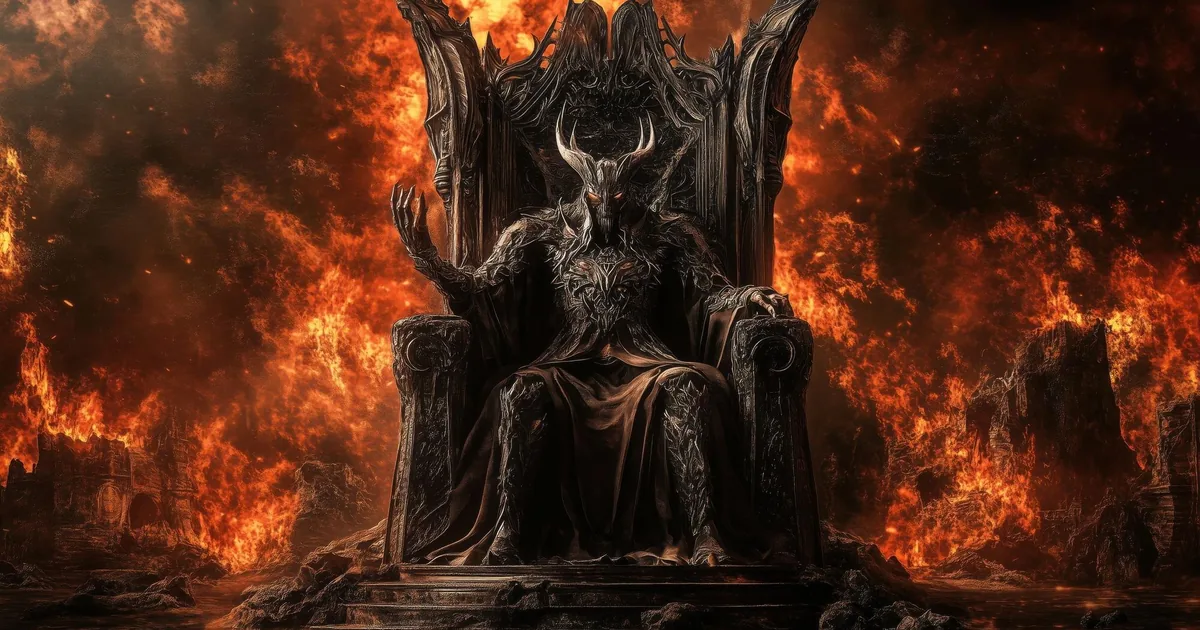
By studying the hierarchy of demons, we often seek answers to questions about the nature of evil, the boundaries of what is permitted, and what lies beyond the familiar. But perhaps the most important conclusion to be drawn from this journey through dark worlds is the realization that all these images, from Lucifer to minor devils, are reflections of our own inner processes. They are not so much external entities as archetypal energies living within each of us.
When we stop fearing these images and begin to study them with respect and curiosity, they lose their frightening power and become keys to self-knowledge. Instead of suppressing our "dark" sides, we can acknowledge their existence, understand their nature, and learn to use their energy constructively. This is a path not to obsession but to wholeness.
Esotericism in this context is not an escape from reality but a tool for deeper understanding of oneself and the world. Practices like those offered by EXETERIC help approach this knowledge consciously, without fear and prejudice. They teach us to see living processes behind symbols and universal laws of being behind myths.
If you feel that the topic of the hierarchy of demons has touched something in your soul, do not stop at what has been achieved. Continue to explore, ask questions, and seek your own answers. Perhaps it will be useful for you to turn to other practices on the EXETERIC blog, where you will find materials on magic, symbolism, and self-knowledge. And if you want to look into your natal chart and find out which archetypes are especially strong in your character, check out the astrology section — perhaps you will discover new facets of your personality.
Remember: knowledge is power, but only when it is used with wisdom and love. Do not fear the dark — study it, and it will cease to be dark. May your path to mindfulness be bright, even if it runs through shadows.
Frequently asked questions
Why are demons depicted with horns and hooves?
The image of a demon with horns and hooves is the result of centuries of mixing pagan deities, such as the Greek Pan or the Celtic Cernunnos, with Christian ideas about evil. Horns symbolized animal nature, wildness, and a connection to natural forces that the church sought to demonize. Hooves, especially cloven ones, were associated with the devil because of the biblical image of the scapegoat and satyrs. Over time, these features became fixed in iconography, becoming a universal visual code for denoting a demonic essence. In different cultures, the appearance of demons can vary greatly, but horns and hooves remain the most recognizable stereotype in the Western tradition.
Can one summon a demon and make a deal with it?
In esoteric teachings such as Goetia, rituals for summoning demons and making pacts with them are described. However, practitioners warn that this is an extremely dangerous endeavor requiring serious preparation, knowledge, and protection. Demons are powerful archetypal forces that can deceive or get out of control if handled without due respect. Most modern esotericists recommend avoiding real attempts at contact, considering them psychologically and spiritually risky. Instead, they suggest working with demonic images as symbols in meditation or psychotherapy, which allows one to safely explore the dark sides of the personality. If you still decide to study rituals, do so only in a theoretical key, without trying to apply them in practice.
How is Lucifer different from Satan?
In Christian demonology, Lucifer and Satan are often identified, but in some traditions they are distinguished. Lucifer, whose name means "light-bearer," is considered the fallen angel who rebelled against God out of pride and the desire for equality. He symbolizes free will, knowledge, and rebellion against authorities. Satan, in Judaism and Christianity, acts as an accuser or adversary who tests people's faith and seeks to turn them away from God. In this sense, Satan is more of a functional role, while Lucifer is a personality. Some esoteric teachings see in Lucifer a bearer of the light of knowledge who helps humanity develop, while Satan embodies pure malice and destruction. However, in mass culture these images often merge into a single character.
Which demons are considered the strongest in the hierarchy?
In most demonological systems, the highest demons are those who stand at the throne of Satan or Lucifer. These usually include Beelzebub, who is sometimes called second after Lucifer, Asmodeus — the demon of lust and destruction, Mammon — the demon of wealth and greed, Leviathan — the demon of envy and chaos, as well as Belial, Astaroth, and others. In Goetia, the most powerful are considered to be the kings of hell, such as Baal, Asmodeus, and Paimon, who command legions of spirits. In the Christian tradition, the power of demons is limited by God, and they cannot act without His permission. In modern interpretations, such as the TV series "Supernatural," the strongest are the King of Hell and the Princes of Hell. It is important to understand that the power of a demon often depends on the context and tradition in which it is considered.