Necromancy: The Art of Communicating with the Dead — Rituals and Dangers
What is necromancy: the art of communicating with the dead
Necromancy the art of communicating with the dead rituals is one of the oldest practices that has accompanied humanity from the first burial rites to modern esoteric circles. The word comes from the Greek nekros (dead) and manteia (prophecy, divination), and originally it did not mean "resurrection of corpses," as shown in movies, but rather the art of communicating with the souls of the deceased — a way to obtain knowledge, comfort, or guidance from one who has already crossed the threshold.
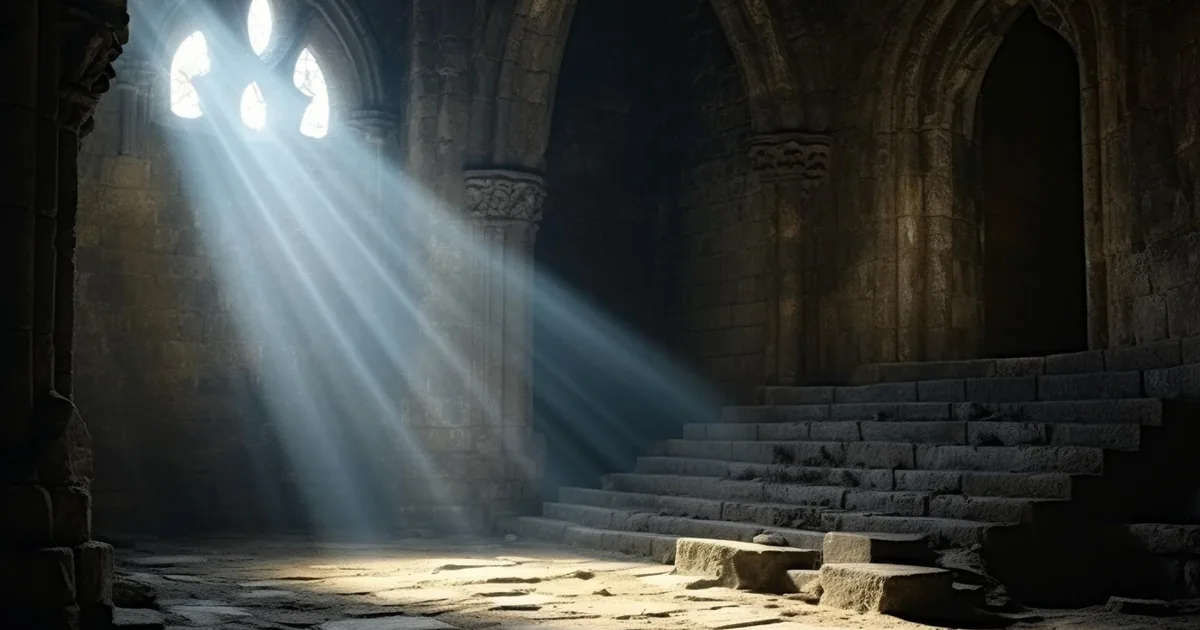
In different traditions, necromancy looks different. In Ancient Egypt, these were "Books of the Dead" and appeals to the souls of ancestors. In ancient Greece — oracles, where priests induced a trance in themselves to hear voices from the underworld. In medieval Europe — gothic rituals with invocations and seals. But the essence is the same: necromancy how to communicate with the dead is always an attempt to establish a connection with what has remained beyond the edge of life.
From the point of view of esotericism and psychology, the principle at work here is familiar to anyone engaged in arcana analysis: we do not simply "summon" the dead — we turn to that which within ourselves holds the memory of them. A lost person, unspoken words, an unresolved conflict — all of this creates an energetic connection that in turn "summons" the necromantic practice.
It is important to understand: necromancy art and rituals is not magic from fantasy, but a complex system in which intention, symbol, and ritual work as tools. If you approach it without fear and without charlatanism, you can figure out how it is structured, why people turn to it, and what it may lead to.
Historical legacy: from Ancient Egypt to the Goetia
Necromancy art and legacy is a huge layer of culture that cannot be reduced to a single ritual. Let us walk through the key points to understand where modern practices came from.
Ancient Egypt is considered the cradle of systematic necromancy. The "Book of the Dead" is not just a text to be read after death, but a detailed instruction: how the soul should pass through trials, how to appeal to the ancestors, how to obtain protection. Priests performed the ritual of the "opening of the mouth" — a symbolic return of the ability to speak, so that the dead could answer.
Ancient Greece added an element of trance to the practice. Necromancy summoning the spirit of the deceased ritual in the Greek tradition included a descent into an underground sanctuary (katabasis), where a priest or initiate entered an altered state of consciousness to hear voices from the world of the dead. These sanctuaries existed in Taenarus, Ephesus, and Aegium — and archaeologists still find their remains to this day.
Medieval Europe turned necromancy into a dark art of communication, surrounding it with prohibitions and demonic interpretations. The "Book of Abramelin," the "Lemegeton," and other texts of gothic magic described complex necromancy summoning the dead rituals, where not only knowledge of Latin and symbols was required, but also precise adherence to the lunar calendar, the choice of a location, and the preparation of sacred objects.
Each of these traditions left its mark on modern esotericism. By understanding history, we gain access to necromancy art and magic as a system of knowledge, rather than a set of superstitions. If you want to delve deeper into symbolism and practices, it is useful to look into other practices on the EXETERIC blog — there you will find materials on magic, rituals, and self-knowledge.
How a necromantic ritual is structured: structure and principles
Necromancy rituals of communicating with the dead are not chaotic actions, but a clearly built sequence. If you analyze any classical tradition — from Egyptian to gothic — you will see a common architecture in which every element has meaning.
Here is the basic structure that we see in most historical sources:
- Preparation of the space. The ritual is conducted in a secluded place — often in a crypt, by a grave, or in a specially enclosed circle. The space is cleansed to separate "here" from "there."
- Preparation of the tools. Candles, incense, a mirror, symbols, and seals — each object carries a specific function: reflection, focus, connection.
- Formulation of intention. Necromancy summoning the dead rituals require a clear question or goal: why are we reaching out, what do we want to find out.
- The ritual itself. Reciting incantations, entering a trance, addressing the spirit — this is the core of the practice where contact occurs.
- Closing. A mandatory stage: gratitude, release, dismantling of the circle. Without closing, necromancy rituals and consequences may manifest unpredictably.
Necromancy how to communicate with the dead through ritual is essentially work with vibrations and symbols. We create a spatial "frame" in which energy can flow in the desired direction. This fundamentally distinguishes a conscious practice from superstition: superstition fears, while practice understands.
An important nuance: necromancy rituals at home is a separate story. Home rituals are possible, but they require more careful preparation of the space, because home is a place where other people live, and the energetic "frame" must be especially clear. We recommend starting not with summoning, but with simple reading and meditative addressing — without attempting to "summon" anything specific.
Necromancy communicating with the dead is dangerous: real risks and myths
Necromancy communicating with the dead is dangerous — this is one of the most frequent questions we are asked. And the answer is ambiguous: there is danger, but it is not that "demons will come and take you." The real risks are quite different, and understanding them is the first step toward awareness.
Let us immediately separate myths from reality:
| Common myth | Why this is not so | How it really is |
|---|---|---|
| "After necromancy, a curse will fall upon you" | Curses are superstition, not a law of nature | The real risk is energetic depletion and emotional burnout from working with heavy themes |
| "The dead can come and stay with you" | This is a metaphor of fear, not a fact | An unclosed emotional connection may remain, which hinders living on |
| "Necromancy is evil by definition" | Evil and good are evaluative categories, not properties of the practice | The practice is neutral; the danger lies in intention and level of preparation |
| "Only the chosen can practice necromancy" | Elitism is a sign of charlatanism | Knowledge, discipline, and awareness are needed, not a "special gift" |
Necromancy rituals and consequences are not about curses, but about what happens to you after the practice. If you worked with unclosed losses, necromancy communicating with the dead connection can intensify grief, anxiety, and even depressive states. Psychologists note that people experiencing loss often feel worse rather than better after attempting to "connect" with the deceased — because the contact does not give them what they expected.
From the point of view of esotericism, necromancy communicating with the dead and karma are connected through the principle of responsibility for intention. If you reach out with greed, manipulation, or mere curiosity — the energetic response will be correspondingly so. If with respect and understanding — the practice may bring comfort and clarity.
Another practical aspect: necromancy communicating with the dead is dangerous from the point of view of the psyche. Working in an altered state of consciousness (trance, deep meditation) without preparation can cause disorientation, insomnia, and obsessive thoughts. We always recommend: if you are not sure of your stability — do not begin. It is better to first study the guide to Human Design and understand your nature, and only then decide which practices suit you.
Necromancy practices of communicating with the deceased: what actually works
Necromancy practices of communicating with the deceased are not only gothic rituals with seals and incantations. In different traditions, there are gentler and more accessible forms that can be considered an introduction to the subject.
Appeal to the ancestors. The oldest and safest form of necromancy. In Slavic, Japanese, and Chinese traditions there is a custom — to light a candle, address the deceased by name, and ask for a sign or advice. This is not a summoning of a spirit, but a respectful address that does not violate boundaries.
Meditative contact. Necromancy communicating with the souls of the deceased through meditation is work with the image of the deceased in silence. You are not trying to "summon" them — you are addressing memory, to what has remained in your subconscious. The practice helps close unclosed conversations and find inner peace.
Work with dreams. Necromancy art of communicating with the shadow often manifests through dreams. If the deceased appears in a dream — this is not a cause for panic, but a signal from the subconscious. In dream interpretation we analyze how to read such images and what to do with them.
Comparison of approaches to the practice:
| Practice | Level of preparation | Risk | Suitable for |
|---|---|---|---|
| Appeal to the ancestors (candle, prayer) | Beginner | Minimal | Everyone experiencing loss |
| Meditative contact with the image | Beginner-intermediate | Low | Those who want to close unclosed conversations |
| Trance and addressing the spirit | Intermediate-advanced | Medium | Practitioners with experience in working with energy |
| Full necromantic ritual with summoning | Advanced | High | Only prepared practitioners with clear intention |
Necromancy art of summoning the dead in a gentle form is essentially work with memory and symbol. You are not breaking the boundaries between worlds — you are respecting them, but allowing yourself to hear what is already inside. This is conscious esotericism: a tool for self-knowledge, not a panacea and not a cause for fear.
Practical step: if you want to try a gentle form, start with something simple — light a candle in silence, say the name of the deceased, say what you did not have time to say, and ask for a sign. Do not expect an immediate answer — the sign may come through a dream, a coincidence, or an inner feeling. Give yourself time: from one day to a week.
Necromancy connection with the dead ritual: how not to make a mistake
Necromancy connection with the dead ritual is the place where theory meets practice, and where mistakes are most often made. Even if you have read dozens of books and studied history, without understanding the principles of the ritual you may get something other than what you expected.
Here are the three main mistakes we see most often:
The first: reaching out from despair. When a person is experiencing a heavy loss and tries to "connect" with the deceased out of despair — this is not necromancy, but an attempt to bypass grief. A ritual performed in a state of despair does not bring clarity: it intensifies the emotional surge and can lead to prolonged grieving. Conscious practice begins with acceptance: "I know that the person has gone, and I am reaching out not because I cannot let go, but because I want to understand."
The second: absence of closing. Necromancy rituals at home are especially vulnerable to this mistake. At home it is easy to "open" and forget to "close" — to extinguish the candles, put away the symbols, complete the ritual. Without closing, the space remains "open," and the energy continues to flow. Practical step: after any ritual — even the simplest — be sure to express gratitude and extinguish the candle. This is not superstition, but discipline.
The third: expecting a specific answer. Necromancy how to communicate with the dead is not a phone call. You will not receive a spoken answer. The answer comes through symbols, dreams, intuition, and inner feelings. If you are waiting for the "dead" to tell you something directly — you will be disappointed. The practice works differently: it opens a channel through which signs arrive.
To avoid mistakes, it is useful to keep a practice journal. Write down: what you did, what your intention was, what you felt afterward, what signs you noticed during the week. In a month you will have your own material by which you can assess whether the practice works for you.
Necromancy art and rituals requires respect for boundaries — and this is not a metaphor, but a practical rule. The boundary between "here" and "there" exists, and the ritual is a way to carefully cross it, not to break it. If after the practice you feel fatigue, irritation, or anxiety — this is a signal: you crossed the boundary too abruptly. Rest, return to simple practices, and only then decide whether you need a deeper contact.
Necromancy rituals of communicating with the deceased: what to do after the ritual
Necromancy rituals of communicating with the deceased do not end at the moment the candle is extinguished — the most important part begins afterward. What happens in the first hours and days after the ritual determines whether the practice will be beneficial or destructive.
The first 24 hours. Do not plan anything important. Give yourself time to rest, drink some warm tea, be in silence. Energetic work, even gentle, takes a toll on your resources. If you feel mild fatigue — that is normal. If you feel anxiety or "heaviness" — that is also normal, but requires attention.
The first 7 days. Pay attention to signs. Necromancy communicating with the dead connection manifests not at the moment of the ritual, but afterward — through recurring images, dreams, coincidences. Write everything down in a journal. If during the week you did not notice a single sign — that is also information: perhaps your intention was too vague, or you were addressing not the one you thought you were.
After a month. Assess the result. Necromancy rituals and consequences manifest not immediately, but cumulatively. If after a month you feel more clarity, calm, and understanding — the practice has worked. If you feel anxiety, obsessive thoughts, or worsening sleep — it is time to stop and possibly consult a specialist.
An important nuance: necromancy communicating with the dead and karma are connected not through "punishment," but through the principle of responsibility. Every action has consequences — and this is not mystical intimidation, but simple logic: if you reached out with greed — you will receive a greedy result; if with respect — you will receive respect. Karma here is not a judge, but a mirror.
Practical step: after any ritual — even the simplest — write down three things: what you wanted to find out, what you felt immediately afterward, and what you noticed during the week. This is a minimal protocol that helps separate real experience from expectations and fears.
Necromancy as a path to oneself: why knowledge removes fear
When we talk about necromancy, the first reaction of most people is fear. And this is normal: we fear what we do not understand. But the deeper you delve into the subject — into the history, the structure of the rituals, the real risks — the more the fear recedes, and in its place comes calm understanding. This is precisely the main result of any conscious esoteric practice: not contact with the otherworldly, but contact with oneself.
Necromancy the art of communicating with the dead rituals is essentially a mirror. It shows what we hold inside: unclosed losses, unspoken words, unresolved conflicts. When you approach this subject with curiosity and respect, rather than despair or superstition, the practice ceases to be a "dark art" and becomes a tool for self-knowledge. You are not breaking the boundaries between worlds — you are learning to respect them, and in that respect inner clarity is born.
In the EXETERIC practice we always proceed from one principle: esotericism is not a panacea and not a cause for fear, but a way to ask yourself the right questions. Necromancy, astrology, arcana analysis, dream work — all these directions lead to one point: understanding your own nature. If you want to systematically explore esoteric tools, take a look at other practices on the EXETERIC blog — there you will find materials on magic, rituals, and self-knowledge that will help you move consciously rather than blindly.
It is worth mentioning astrology separately: sometimes, in order to understand your inclination toward certain practices and your emotional stability, it is enough to look into the astrology section and study your zodiac sign. This is not magic — it is a language in which you can describe your nature, your strengths, and your areas of vulnerability. Understanding yourself through astrology often becomes the first step toward deciding which esoteric practices truly suit you and which do not.
So if necromancy has caught your interest — do not be afraid of what you do not understand. Figure it out calmly: read, study the history, try a gentle practice — an appeal to the ancestors with a candle, meditative contact, a journal of signs. Treat the ritual with respect and clear intention, close the space after every contact, and do not rush to conclusions. True esotericism is not about "summoning the dead," but about finally hearing yourself. And it is from this — from awareness, respect for boundaries, and the willingness to ask yourself honest questions — that any path begins, including the path through the EXETERIC practices.
Frequently asked questions
Can you practice necromancy at home?
Yes, necromancy at home is possible, but it requires more careful preparation of the space than a ritual in a secluded place. Home is a place where other people live, so the energetic "frame" must be especially clear: choose a secluded corner, cleanse the space, and plan in advance how you will close the ritual. It is better to start with gentle forms — light a candle, address the deceased by name, and ask for a sign, without attempting to summon anything specific. After the ritual, be sure to extinguish the candle, express gratitude, and put away the symbols — this is discipline, not superstition. If after the practice you feel anxiety or heaviness — this is a signal that you need to rest and return to simple practices.
What to do if you feel unwell after a necromancy ritual?
If after the ritual you feel anxiety, fatigue, insomnia, or obsessive thoughts — this is a normal reaction of the psyche to energetic work, but it requires attention. In the first 24 hours, do not plan anything important: give yourself time to rest, drink some warm tea, be in silence. In the first 7 days, pay attention to signs and write them down in a journal — this will help separate real experience from fears. If after a month the symptoms do not pass or intensify — this is a reason to stop and consult a specialist: a psychologist or a practitioner who can help close the unclosed connection. Remember: necromancy is a tool for self-knowledge, and if the tool does not work — it can be set aside, rather than continued out of stubbornness.
How does necromancy differ from spiritism?
Necromancy and spiritism are different practices, although both are connected with addressing the deceased. Necromancy is an ancient system of rituals with a clear structure: preparation of the space, preparation of the tools, formulation of intention, the ritual itself, and mandatory closing. Spiritism, which appeared in the 19th century, is a more "democratic" form: séances, summonings through a medium, working with a planchette or a glass, without a strict ritual structure. Necromancy requires knowledge, discipline, and preparation, whereas spiritism is often practiced without preparation — and that is precisely why it is considered more risky from the point of view of the psyche. If you are choosing between them, start with the gentle forms of necromancy: an appeal to the ancestors and meditative contact.
What objects are needed for a necromantic ritual?
For a basic necromantic ritual, four categories of objects are needed: candles, incense, a mirror, and symbols or seals. Candles create light and focus of attention, incense cleanses the space, the mirror serves as a "window" for reflection, and symbols and seals are tools that set the direction of energy. In different traditions the set differs: in the Egyptian — the "Book of the Dead" and sacrificial objects, in the gothic — seals from the "Lemegeton" and Latin incantations. But the main rule is the same: every object must have a clear function, and not be there "for beauty." If you are a beginning practitioner, start with a minimal set — one candle and silence — and add tools as you understand why they are needed.