House Ghost: Myths, Facts and Scientific Explanations
Ghost: What We Know About Spirits and Phantoms
A ghost is one of the most mysterious and frightening topics in esotericism. We fear them since childhood, yet they never cease to attract our attention. What is a ghost really? Is it the soul of a deceased person stuck between worlds, or just a play of our imagination? In this article, we will examine what ancient traditions, modern researchers, and psychologists say about ghosts. We will separate the wheat from the chaff so that you can look at this topic consciously, without fear or superstition.
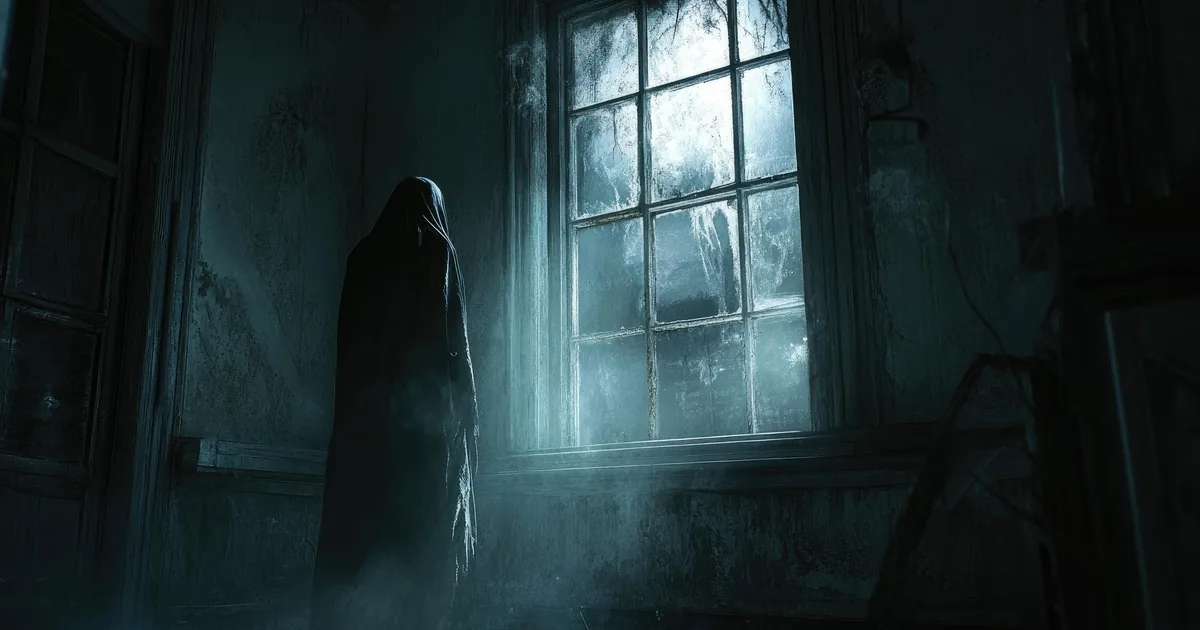
A ghost is not just a scary story from horror films. In esotericism, it is believed that a ghost is an energetic imprint of a person who could not fully leave the physical plane. But is that so? Let us find out.
What Is a Ghost: Historical Context and Cultural Roots
Beliefs in ghosts have existed since ancient times. Every culture has its own stories about the spirits of the dead. In Ancient Egypt, they believed that the soul embarks on a journey after death, and if it does not find peace, it may return to the world of the living. In Ancient Greece, ghosts were called "shadows," and they often appeared in myths as harbingers of misfortune. In medieval Europe, ghosts were considered the souls of sinners atoning for their sins on earth.
From the perspective of esotericism, a ghost is not always an evil entity. Often it is simply energy left behind after strong emotions or tragic events. For example, a house ghost may be connected to a place where a murder or suicide occurred. But it is important to understand: a ghost is not necessarily something frightening. It is more of a signal that there is an unfinished story in that place.
In different cultures, ghosts are described differently: somewhere they are translucent figures, somewhere shadows, somewhere sounds and smells. But one thing is common: a ghost is a manifestation of something that has not found peace. And our task is not to fear, but to understand.
Scientific Explanations: Why We See Ghosts
Science does not stand still, and the phenomenon of ghosts is also being explained. Scientists propose several theories as to why people see ghosts. One of them is infrasound. Infrasound is sound waves with a frequency below 20 Hz, which we do not hear but can feel. It can cause feelings of anxiety, pressure, and sometimes visual hallucinations. Infrasound can arise from wind, building vibrations, even from household appliances. So perhaps a ghost at night is simply your brain's reaction to infrasound.
Another theory is electromagnetic fields. Studies have shown that in places where people often see ghosts, the level of electromagnetic radiation is above normal. This can affect the temporal lobe of the brain, which is responsible for perceiving reality, causing a sensation of someone being nearby.
There are also psychological explanations. Our brain tends to construct images from fragments of information. In the dark, we might mistake a coat for a person, or a shadow for a figure. This is called pareidolia. So when you ask yourself, "Is it a real ghost or not?" first check whether your vision is playing tricks on you.
But esotericists do not deny scientific explanations. They believe that science describes only the mechanism, not the cause. Perhaps infrasound and electromagnetic fields are simply tools through which the energy of a ghost manifests.
House Ghost: How to Recognize the Presence of a Spirit
Many people encounter strange occurrences in their homes. It could be a house ghost. How do you know if a spirit dwells in your home? Here are a few signs:
- Unexplained sounds: footsteps, knocks, whispers, especially at night.
- Objects move on their own or disappear.
- A feeling that someone is watching you.
- Cold zones in certain places.
- Electronics behave strangely: lights flicker, batteries drain quickly.
If you notice such phenomena, do not rush to panic. Perhaps it is just a draft or old wiring. But if the phenomena repeat and intensify, it is worth considering the energy of the house.
In esotericism, it is believed that a house ghost is not necessarily an evil spirit. It could be the spirit of a previous owner who does not want to leave, or simply an energetic trace. It is important not to make contact without preparation, but first to cleanse the space.
How to see a ghost? Some people claim to have seen phantoms with their own eyes. But most often this happens in moments when we are in an altered state of consciousness: before sleep, after waking, during meditation. In such moments, our intuition sharpens, and we can perceive subtle energies.
If you want to check whether there is a ghost in your home, you can perform a simple ritual: light a candle and walk through all the rooms, observing the flame. If the candle begins to crackle or goes out in a certain place, this may indicate an energetic anomaly. But remember: do not do this alone or without preparation.
Myths About Ghosts: What Is True and What Is Fiction
There are many myths about ghosts. Let us examine the most common ones.
| Myth | Why It Is Not So | How It Really Is |
|---|---|---|
| Ghosts are the souls of deceased people | Not all ghosts are connected to the deceased. It could simply be an energetic trace or a thought-form. | A ghost can be a clump of energy created by strong emotions, or even a projection of our subconscious. |
| Ghosts are always evil | Fear distorts our perception. Many spirits are neutral or even friendly. | A ghost is simply energy that has no intention to harm. Evil is the result of our fear. |
| Ghosts appear only at night | Night simply creates a more suitable atmosphere for perceiving subtle energies. | A ghost can appear at any time, but during the day we pay less attention to signs. |
A scary ghost is most often the result of our imagination. When we are afraid, we project our fears onto the world around us. Therefore, if you encounter a ghost, try to remain calm and look at it with curiosity rather than horror.
The Psychology of Ghosts: Why We See What Is Not There
Psychologists claim that ghosts are a projection of our subconscious. We may see the ghost of a person we have lost because we cannot let them go. This is our brain's way of coping with grief. Ghosts can also be associated with feelings of guilt or fear of the unknown.
In esotericism, this is explained as follows: we are all connected to the subtle world, and our subconscious can pick up signals from there. But we interpret them through our own filters. Therefore, if you see a ghost, ask yourself: "What does this say about me? What emotions am I experiencing?" Perhaps it is not an external entity, but your inner state.
A ghost exists in our perception, but that does not mean it does not exist. Esotericism says there are different levels of reality, and ghosts may be inhabitants of one of them. But to interact with them consciously, you need to develop your sensitivity and intuition.
If you want to understand your dreams that may be connected to ghosts, check the EXETERIC dream book — there you will find interpretations of symbols and images.
How to See a Ghost: Practical Techniques
Many people wonder: how to see a ghost? Some want this out of curiosity, others to verify the existence of life after death. But it is important to remember: contact with the otherworldly realm requires preparation and respect.
Here are a few techniques that will help you tune into the perception of subtle energies:
- Meditation. Regular meditation develops your sensitivity. Start with simple practices: sit comfortably, close your eyes, and focus on your breath. After a few weeks, you will notice that you have become better at sensing the energy of a space.
- Candle gazing. Light a candle and look at the flame without distraction. This helps calm the mind and open inner vision.
- Keeping a dream journal. Write down your dreams, especially those in which images of the deceased or strange creatures appear. This will help you understand what signals your subconscious is sending.
But remember: do not insist on contact if you are not ready. A ghost may not be what it seems. It is better to study the theory first, and then practice.
If you want to delve deeper into the topic of spirits and the otherworldly, pay attention to articles on magic and self-discovery — there is much useful material there.
Ghost of a Person: What It Means When You See the Spirit of Someone You Know
A special case is when you see the ghost of a person you knew in life. This could be a relative, a friend, or just an acquaintance. What does this mean? In esotericism, it is believed that such a visit is a sign. Perhaps the soul wants to convey a message to you or warn you about something.
But do not rush to interpret this as a mystical revelation. First, recall what your relationship with this person was like. Perhaps you did not finish a conversation or feel guilt. The ghost of a person may be a projection of your emotions.
If you want to understand what such a phenomenon means, turn to your intuition. Ask yourself: "What do I feel when I think about this person?" The answer may be the key to the mystery.
It is also useful to turn to astrology: perhaps the position of the planets in your horoscope indicates heightened sensitivity to the otherworldly. You can learn more about your zodiac sign in the astrology section.
Ghost at Night: Why Spirits Become Active in the Dark
Night is the time when we are most receptive to subtle energies. This is because in the dark, our brain stops receiving visual stimuli, and other senses sharpen. We begin to hear sounds we ignore during the day and feel changes in temperature.
A ghost at night may seem more real because we are in a half-asleep state where the line between reality and imagination blurs. This is when our subconscious is active, and we can see images that are usually hidden.
If you are afraid of ghosts at night, try creating a calm atmosphere in the bedroom: remove unnecessary objects, light an aroma lamp with lavender, play soft music. This will help you relax and not attract negative energies.
It is also useful to perform a small cleansing ritual before bed: air out the room, sprinkle holy water, or simply imagine golden light filling the space. This will create a protective barrier.
Ghost Exists: Evidence and Personal Experience
The question "does a ghost exist?" troubles many. Science gives no definitive answer, but esotericism asserts that yes, it does. There are many testimonies from people who have encountered ghosts. Some can be explained, others cannot.
For example, in one study conducted in the UK, 30% of respondents stated that they had seen a ghost at least once in their lives. Many of them do not believe in the supernatural, but their experience was so real that they cannot deny it.
Personally, I (as the author) have also encountered inexplicable phenomena. Once in an old house, I felt someone's presence, although I was alone. It was not frightening, but rather curious. I realized that a ghost is not necessarily something evil, but simply energy seeking an outlet.
If you want to develop your sensitivity to subtle worlds, pay attention to the Human Design guide — perhaps your personality type is predisposed to perceiving such phenomena.
How to Get Rid of a Ghost: Cleansing the Space
If you have encountered a house ghost and want to get rid of it, it is important to act consciously. Do not try to expel the spirit with aggressive methods — this can only intensify the negativity. Instead, perform a cleansing of the space.
Here is a simple ritual you can do yourself:
- Air out the room, open windows and doors.
- Light a candle and walk with it through all corners of the room, reciting a prayer or simply stating your intention to cleanse the space.
- Use sound: a bell, singing bowls, or simply claps — sound disperses stagnant energy.
- After the ritual, sprinkle the corners with holy water or a salt solution.
It is important to do this with love and respect, not fear. Remember that a ghost is also energy, and it can be neutral. Your task is not to destroy, but to harmonize.
If you feel you cannot cope on your own, seek out a specialist in energy practices. But choose verified masters to avoid falling into the hands of charlatans.
Ghost as a Mirror: What It Reflects in You
When we talk about ghosts, we often seek answers externally: is there life after death, do spirits exist, can we interact with them? But perhaps the most important question is — what do these phenomena say about ourselves? Esotericism, unlike simple superstition, invites us to look at a ghost as a symbol, as a reflection of our inner state. The fear of phantoms is often the fear of the unknown, of what we cannot control. But if we are willing to look at this fear calmly, we may discover that behind it lie our own unfinished stories, unspoken words, or un-released emotions.
In this sense, a ghost is not so much an external entity as an invitation to dialogue with oneself. The next time you feel someone's presence in an empty room or notice strange sounds, try not to be frightened, but to ask: "What am I feeling right now? What am I thinking about? What in my life remains unfinished?" Perhaps the answer will surprise you. This does not mean ghosts do not exist — they may be real energies, but our perception always passes through our inner filter. And it is precisely this filter that we can tune.
The EXETERIC media is created to help you on this journey. We do not promise instant answers or magical solutions, but we offer tools for conscious exploration. In our articles on magic and self-discovery, you will find practices that will help you develop sensitivity and understand how your energy works. And if you want to look deeper into your nature, check out the astrology section — perhaps your planetary alignment explains why you feel subtle worlds more acutely.
Remember: esotericism is not an escape from reality, but a way to become more whole. The ghost you fear may turn out to be just a shadow you cast yourself. But to understand this, you need to stop running and start observing. Try approaching the topic with respect and curiosity, without fear and prejudice. Start small: spend an evening by candlelight, listen to your sensations, write down your dreams. Perhaps you will discover a whole world that has always been nearby, but you never noticed it.
And if you feel the desire to go deeper, turn to EXETERIC practices — we have gathered the best techniques and knowledge for you so that you can explore this topic safely and consciously. Do not fear the unknown — examine it calmly, and it will cease to be frightening. Your life will become richer, and fears will give way to understanding.
Frequently Asked Questions
Can a ghost harm a person?
In most cases, ghosts do not pose a direct physical threat. Esotericists believe that spirits are simply energy that has no intention to harm. However, fear and panic can cause psychological discomfort, which we ourselves project onto the situation. If you feel strong fear, this speaks more about your inner state than about an evil spirit. To protect yourself, it is important to remain calm and respectful. You can cleanse the space with candles or sound, but the main thing is not to make contact out of curiosity or fear. Remember: your own energy is your best protection.
Why do ghosts appear specifically at night?
Night is the time when our conscious mind is less active, while the subconscious, on the contrary, sharpens. In the dark, the brain receives fewer visual stimuli, so other senses — hearing, smell, intuition — become more sensitive. Additionally, at night we are often in a half-asleep state where the line between reality and imagination blurs. This makes us more receptive to subtle energies. However, ghosts can appear during the day as well, we just rarely pay attention to them. If you want to reduce nighttime anxiety, create a calm atmosphere in the bedroom: air out the room, light an aroma lamp, play soft music.
How to distinguish a real ghost from a hallucination?
This is a complex question, because even hallucinations can seem real. However, there are several signs that help distinguish one from the other. A real ghost is often accompanied by physical sensations: a sharp chill, goosebumps, a feeling of pressure. Hallucinations usually do not cause such reactions. Additionally, a ghost can interact with the environment — move objects, make sounds, affect electronics. If the phenomenon repeats in the same place and is not related to your condition (for example, you are not taking medication and do not suffer from sleep deprivation), this may be a sign of a real phenomenon. In any case, it is important to maintain critical thinking and not jump to conclusions.
What to do if a ghost has settled in the house?
If you encounter inexplicable phenomena in your home, do not panic. First, make sure it is not household causes: drafts, old wiring, rodents. If the phenomena continue, try cleansing the space. Open the windows, light a candle and walk with it through all rooms, stating your intention to cleanse the home. Use sound — a bell or singing bowls — to disperse stagnant energy. After the ritual, sprinkle the corners with holy water or a salt solution. It is important to do this with love and respect, not fear. If you feel you cannot cope, seek out a specialist in energy practices, but choose verified masters.