Why we believe in ghosts: stories, culture, and the mystery of the afterlife
The Phenomenon of Ghosts: Why Humanity Believes in Spirits
Belief in ghosts is one of the oldest and most enduring traditions of humanity. Archaeologists find traces of burial rites that are over 100,000 years old, and all of them indicate that people have always believed in the existence of a soul that survives the death of the body. But why does this belief not disappear even in the age of science and technology? The answer lies at the intersection of psychology, culture, and esotericism.
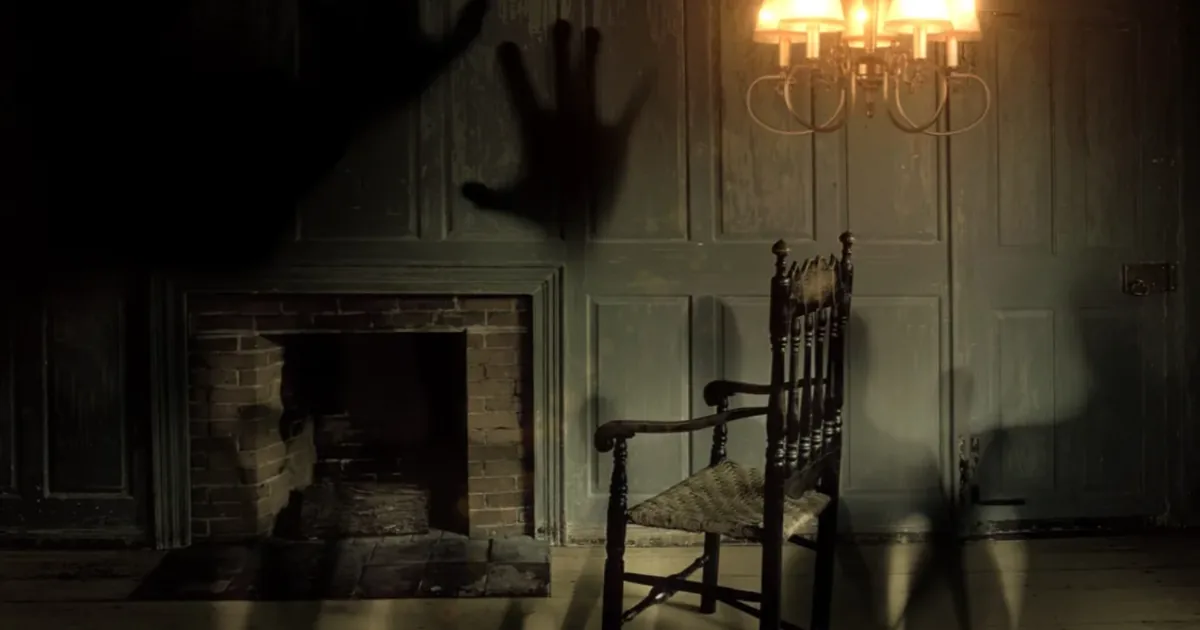
From an esoteric point of view, ghosts are energetic traces of the deceased who, for one reason or another, were unable to completely leave our world. This could be a strong emotional attachment to a place or people, unfinished business, sudden death, or a failure to understand their new state. Such entities remain on the astral plane, sometimes manifesting in the physical world as shadows, sounds, or even figures.
Psychologists explain belief in ghosts differently: our brains are wired to seek patterns and explanations for unusual phenomena. When we hear floorboards creaking in an old house, our imagination may fill in the image of a ghost. Furthermore, belief in life after death helps us cope with the fear of death and the loss of loved ones.
But most importantly — stories about ghosts have accompanied humanity since ancient times. Every culture has created its own legends about spirits: from Japanese yūrei to European ghosts in castles. These stories were passed down from generation to generation, accumulating details, and became part of the collective unconscious. Therefore, the phenomenon of ghosts is not merely superstition, but a deep cultural and psychological reality that deserves careful and respectful study.
In this article, we will examine how belief in ghosts manifests across different cultures, what types of ghosts exist from an esoteric perspective, and how to distinguish real contact with a spirit from a play of imagination. We will also discuss how ancient legends about spirits influence modern ghost stories and what they can tell us about our own souls.
Ghosts in Culture: From Ancient Legends to Modern Tales
Stories about ghosts exist in every culture. In Ancient Egypt, people believed that the soul (Ka) could return to the world of the living, and food and gifts were left for it. In Ancient Greece, ghosts were called "eidolons" and were thought to appear to take revenge or finish unfinished business. In medieval Europe, ghosts were part of the Christian worldview: it was believed that souls in purgatory could appear to the living to ask for prayers.
In Japan, there is an ancient tradition of "yūrei" — ghosts who cannot find peace due to strong emotions, especially vengeance or sorrow. They are depicted with long black hair and in white burial garments. In China, there is the Qingming festival, when ancestors are honored and it is believed that their souls return to the world of the living.
In Rus', people believed in rusalki (water spirits), domovoi (house spirits), and ghosts of the deceased. It was believed that the souls of ancestors protected the home, but if they were not honored, they could cause unrest. These beliefs reflected the deep connection between the living and the dead, which was part of everyday life.
Today, ghost stories are no less popular. They have migrated into cinema, literature, and the internet. An entire "horror" genre has emerged, based on legends about spirits. But interestingly, modern stories often repeat ancient motifs: a ghost seeking revenge, a ghost seeking peace, a ghost guarding treasure. This suggests that the archetypes underlying belief in ghosts have remained unchanged for millennia.
Why do we love telling ghost stories so much? Esotericists believe that these stories help us come into contact with the mystery of death without experiencing it directly. They allow us to safely explore the fear of the unknown and reflect on what awaits us after death. Therefore, every culture creates its own legends about spirits, which reflect its values and ideas about the afterlife.
| Symbol / Image | Traditional Meaning | Manifestation in Life | What to Do |
|---|---|---|---|
| Ghost in white | A soul that has not found peace | Sensation of someone's presence, cold, rustling sounds | Perform a farewell ritual, mentally let go |
| Shadow | An energetic trace without form | Peripheral vision, feeling that someone is watching you | Strengthen energetic protection, use candle smoke |
| Voices, footsteps | Signals from a spirit trying to attract attention | Sounds without a source, especially at night | Ask a question mentally, observe the reaction |
Legends About Spirits: How They Are Born and Passed Down
Every legend about spirits has a real foundation. Most often, it is some tragic event that occurred in a particular place. People who learn about it begin to associate unexplained phenomena with that place. Over time, the story accumulates details, and a "ghost" appears.
For example, in Great Britain there are many castles where, according to legend, ghosts dwell. One of the most famous is the Tower of London, where Anne Boleyn was executed. It is said that her ghost still wanders the corridors with her severed head. Historians confirm that Anne was executed in 1536, but no one can explain why so many people have seen her ghost. Perhaps it is a mass hallucination triggered by knowledge of history, or a real phenomenon.
From an esoteric perspective, legends about spirits are a way of preserving the energy of a place. When many people believe in a ghost, their emotions and attention create an egregore — an energetic entity that is fueled by belief. Therefore, ghosts can become "stronger" in places where much is said about them.
It is important to understand that ghost stories are not always fiction. Many people encounter unexplained phenomena that cannot be dismissed as imagination. In such cases, it is worth turning to esoteric practices to understand the nature of the phenomenon and, if necessary, establish contact or protect oneself.
Why We Believe in Ghosts: Psychology and Esotericism
Belief in ghosts is not merely superstition. It has deep psychological roots. First, belief in life after death helps us come to terms with the loss of loved ones. When we think that the soul of the deceased continues to exist, it becomes easier to endure grief.
Second, our brains are wired to seek explanations for unusual phenomena. If we hear a strange sound, we may interpret it as a ghost, especially if we are in a place with a "haunted reputation." This is called apophenia — the tendency to see patterns in random data.
But from an esoteric perspective, belief in ghosts is not simply a perceptual error. Our world is not limited to the physical. There is an astral plane where subtle entities dwell, including the souls of the deceased. Sometimes they can interact with us, especially if we are emotionally open or in a place with high energy.
To distinguish real contact from a play of imagination, you need to pay attention to details. For example, if you see a ghost, try mentally asking it a question. If it reacts — this may be real contact. It is also important to consider your own state: if you are tired, stressed, or under the influence of alcohol, the likelihood of hallucinations increases.
Ghost Stories: Real Cases and Their Explanations
Ghost stories often provoke skepticism, but there are cases that are difficult to explain from a scientific point of view. One of the most famous is the Enfield case (England, 1977), when poltergeist phenomena occurred in one house: objects flew, voices were heard, children bounced on their beds. Witnesses included police officers, journalists, and even paranormal researchers.
Another case is the ghost of the Borley nun (England). For several decades, many people saw the ghost of a nun on the road near the church. She was so realistic that some mistook her for a living person. Later it turned out that in the 19th century there was a convent school at that location, and one of the nuns had committed suicide.
From an esoteric perspective, such cases are examples of "recordings" on the energetic level. Strong emotions, especially tragic ones, can leave a trace in space. This trace can manifest as recurring visions seen by people with sensitivity.
However, not all ghost stories are reliable. Many of them are urban legends spread through the internet and media. For example, the story of the "Ghost on the Stairs" or the "Girl in White" exists in dozens of variations around the world. This does not mean they are false; it is simply difficult to verify them.
How to Distinguish a Real Ghost from a Play of Imagination
Many people who encounter the unexplained ask themselves: is this a ghost, or is my imagination running wild? To figure it out, you need to pay attention to several factors.
First, real ghosts usually appear in specific places and at the same time. If you see a figure in the same corner of the room every evening, this may be a sign of a real phenomenon. Second, ghosts often cause physical sensations: cold, goosebumps, a feeling of pressure.
Third, if you see a ghost, try talking to it. Real spirits may react to your thoughts or words. If you ask a question and receive an answer (a sign, a sound, a change in temperature), this indicates real contact.
But do not forget that our perception can be distorted. If you are tired, anxious, or in a state of stress, the brain can create illusions. Therefore, before drawing conclusions, check your own state.
Practice of Working with Ghosts: How to Establish Contact
If you want to establish contact with a spirit, it is important to do so safely and respectfully. First, determine the purpose of the contact: do you want to obtain information, help the spirit move on, or simply confirm its existence?
Meditation can be used for contact. Sit in a quiet place, close your eyes, and imagine that you are opening a communication channel with the subtle plane. Ask the spirit to manifest if it is ready. Be patient: sometimes contact does not happen immediately.
You can also use a pendulum or dowsing rods. Ask simple questions that can be answered "yes" or "no," and observe the movements of the tool. But remember that you yourself can influence the pendulum's movement, so the results may be subjective.
If you feel fear or discomfort, stop the practice. Establish mental protection: imagine that you are surrounded by golden light that does not let negative energies through. And never try to summon evil spirits — this is dangerous.
Ghosts in Different Cultures: How Traditions Shape Belief
Every culture has its own ideas about ghosts, reflecting its religious and philosophical views. For example, in Hinduism, it is believed that the soul is reborn after death, so ghosts are souls that could not transition to the next life due to unresolved karmic tasks.
In Buddhism, ghosts are beings in the "realm of hungry ghosts" who suffer from insatiable desires. They may appear in the human world if something binds them.
In Christianity, ghosts are often perceived as souls in need of prayers to reach heaven. In Orthodoxy, there are even special prayers for the departed that help souls find peace.
In Western culture, influenced by cinema, an image of the ghost as an evil entity that must be exorcised has developed. However, this does not always correspond to traditional views. Many cultures believe that ghosts are simply souls that have lost their way and need help.
Understanding cultural differences is important for correctly interpreting ghost stories. If you encounter a spirit, try to understand which tradition it might belong to, and use the appropriate practices.
Protection from Unwanted Contacts and Energetic Hygiene
Not all contacts with ghosts are safe. Sometimes spirits can be aggressive or simply cause disturbance. In such cases, it is important to have protective practices.
One simple technique is creating an energy shield. Imagine that a glowing sphere forms around you, reflecting any negative influences. Repeat this exercise every day, especially before sleep.
Cleansing the space also helps. Use incense smoke (sandalwood, wormwood) or candle fumigation. Walk through all corners of the room, reciting a prayer or mantra. This will help displace unwanted energies.
If the spirit continues to bother you, try mentally talking to it and understanding what it wants. Perhaps it needs help, and you can assist it in moving on. If the spirit is hostile, it is better to consult a specialist in energetic cleansing.
Remember that your personal energetic hygiene is important: regularly cleanse your energy centers (chakras) through meditation, take salt baths, spend time in nature. This will strengthen your aura and make you less vulnerable to negative entities.
Belief in ghosts is not a reason for fear, but an opportunity to understand the structure of the world and your own nature more deeply. Approach this question consciously, with respect for traditions and common sense.
The Path to Understanding: Ghosts as a Mirror of the Soul
When we talk about ghosts, we are really talking about ourselves — about our memory, fears, and hopes. Belief in spirits is not merely a relic of the past, but a living dialogue with the unknown that helps us realize that death is not an end, but a transition. Esotericism invites us not to fear this dialogue, but to conduct it consciously, with respect for the subtle worlds and for our own soul.
The practices of EXETERIC are not magic in the mundane sense, but tools for tuning your perception. They help you see real energetic processes behind symbols and legends, and teach you to distinguish true signs from a play of imagination. Each practice is a step toward harmony: you learn to listen not only to the external world but also to your inner voice, which often knows the answers to the most complex questions.
If you feel that the topic of ghosts resonates in your soul, do not stop at this article. Explore the practices of EXETERIC, where you will find meditations and rituals for working with subtle energies. And if you are interested in other aspects of self-discovery, other practices in the EXETERIC blog will reveal topics of dreams, karma, and energetic cleansing. Perhaps right now your subconscious is seeking answers that you can find in these materials.
Astrology can also become a key to understanding your connection with the world of spirits. Check the astrology section — the position of the planets at the moment of your birth may explain why you are sensitive to the supernatural, and provide hints on how to use this gift without harming yourself.
Remember: fear is merely the flip side of ignorance. When you begin to study, fear recedes, giving way to curiosity and respect. Do not fear the unknown — try to understand it calmly, without haste, with an open heart. Practice consciously, and then the world of ghosts will open to you not as a frightening mystery, but as another facet of the great life that continues beyond the visible.
May your steps on this path be light, and your knowledge deep. You are not alone: there are always those nearby who are ready to support your striving for truth.
Frequently Asked Questions
Is there scientific evidence for the existence of ghosts?
Science has not yet given a definitive answer to this question. Many phenomena that people attribute to ghosts are explained by psychological effects, such as suggestion or hallucinations, as well as physical factors — for example, infrasound or electromagnetic fields. However, there are cases that do not lend themselves to simple explanation, such as the Enfield poltergeist or the decades-long sightings in Borley. These phenomena continue to be studied, but so far they lack rigorous scientific confirmation. Nevertheless, the absence of evidence does not mean the phenomenon does not exist — it simply means we have not yet found a way to measure it. Esotericism offers its own view based on energetic concepts, but every person has the right to choose what to believe.
Can ghosts harm a person?
In most traditions, ghosts are not considered malevolent beings — they are simply souls that, for one reason or another, could not leave our world. They may be disoriented, frightened, or attached to a place, but they rarely show aggression. However, just as in the world of the living, entities with negative energy can be encountered among spirits. If you feel a threat or discomfort, it is important to establish protection: mentally create a light shield, use incense smoke, or consult a specialist in energetic cleansing. Overall, with a conscious and respectful approach, contact with ghosts is safe and can even help them find peace, while giving you valuable experience.
Why do some people see ghosts while others do not?
The ability to see ghosts depends on many factors: level of sensitivity, emotional state, location, and even cultural background. People who believe in the existence of spirits or grew up in a culture where this is considered normal are more likely to notice unusual phenomena. Energetic openness is also important: those who practice meditation or esoteric techniques may develop the ability to perceive subtle worlds. Psychologists explain this through differences in cognitive processes — some brains are more inclined to interpret random signals as meaningful images. But perhaps it is not only about perception: some places or situations truly possess high energy that is not accessible to everyone. In any case, the absence of visions does not mean ghosts do not exist — it simply means you are not yet tuned to that frequency.
What should I do if I encounter a ghost?
The first and most important thing is to remain calm. Panic amplifies fear and can attract unwanted energy. Try to assess the situation: attempt to mentally ask the spirit a question and observe the reaction — if there is one, you may be dealing with real contact. If you feel discomfort, use protective practices: imagine yourself in a golden cocoon of light, mentally state your intention for safety. Do not try to aggressively banish the spirit — instead, try to understand what it wants, and mentally offer it help or ask it to leave. If the phenomenon repeats or causes intense fear, consult an experienced esotericist or perform a space cleansing with incense and prayers. The main thing is to treat the spirit with respect, as an equal, and then the contact will be safe.