Ghosts of Deceased People: Why They Return and What They Want
Ghosts of Deceased People: Who They Are and Why It's Not Always Scary
When we hear the phrase "ghosts of deceased people," our imagination immediately conjures up cold corridors, a flickering candlelight, and translucent silhouettes. But if you set aside Hollywood clichés, you'll find that the topic is much deeper and... more human. Ghosts of deceased people are not just bedtime horror stories. They are a way for culture to speak about memory, unfinished stories, guilt, love, and the fear of being forgotten. In the esoteric tradition, a ghost is not necessarily an evil entity. More often, it is an energetic trace, an emotional imprint that, for some reason, has not dissolved after the death of the physical body.
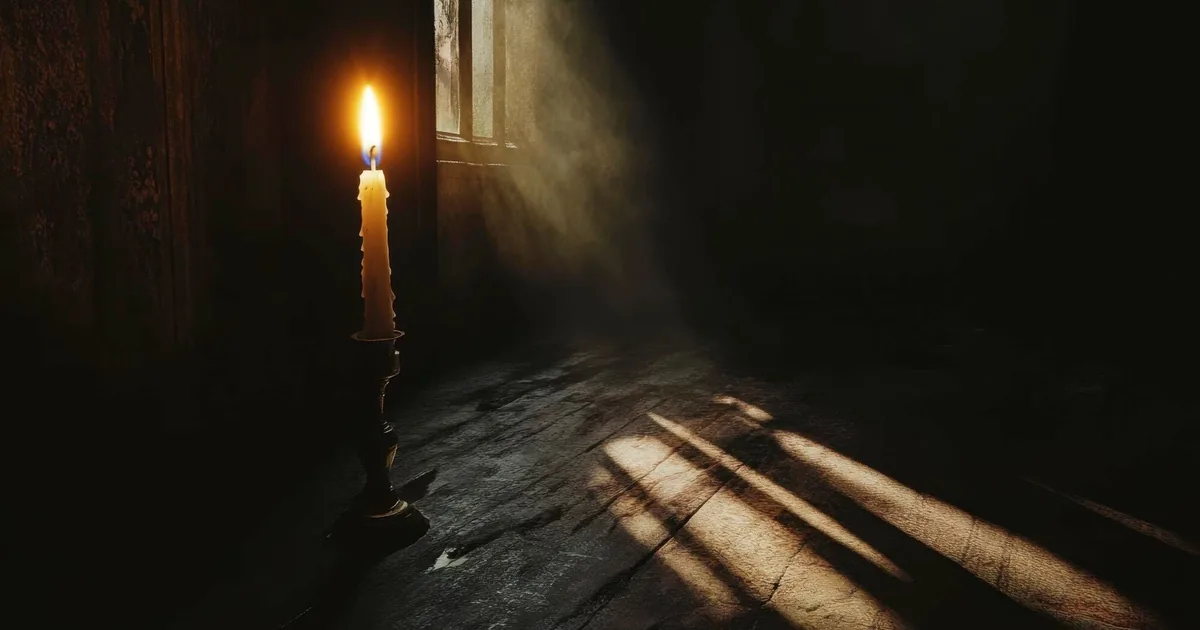
Why do some souls depart peacefully, while others remain? Why do ghosts of deceased relatives come to some family members and not to others? And most importantly, what should you do if you encounter such a phenomenon? Let's figure it out without mystical pathos and without denial. We will rely on traditions, psychology, and practical experience — as is customary in other practices on the EXETERIC blog.
Let's agree right away: we are not claiming that every rustle in an apartment is a visit from the subtle world. But dismissing everything as a draft or an overactive imagination is to impoverish reality. Ghosts of deceased people exist in the cultural and psychological field, and this fact can already be worked with consciously.
Why Ghosts of Deceased People Come: Three Main Reasons
In esotericism and ethnography, it is customary to identify several motives why the souls of deceased people and ghosts do not leave our world. This is not a dogma, but rather a map for convenient navigation.
The first reason is incompleteness. A person left suddenly, didn't have time to say something important, didn't say goodbye, didn't finish a task. Their energy remains "suspended" between worlds. This is not a punishment or a curse — it's more like inertia. Imagine you were running and suddenly stopped: your body continues to move forward for some time. It's the same here.
The second reason is strong attachment. Ghosts of deceased relatives often return to those they loved the most. Not because they want to scare, but because the bond was too strong. Especially if the deceased felt responsible for their loved one.
The third reason is unresolved conflict or guilt. If there were quarrels, grievances, injustice during life, the energy of these emotions can hold the soul. A ghost of a deceased person in the house in this case is not revenge, but an attempt to reach out, to explain, to receive forgiveness.
Psychology is also not standing aside. The psychology of ghosts of deceased people explains them through the mechanisms of grief: our brain refuses to accept the loss and creates images to complete the gestalt. And this does not make the experience less real for the person.
What Ghosts of Deceased People Look Like: From Mist to Full Copy
The question "what does a ghost of a deceased person look like" is one of the most common. And the answer depends on which tradition we are dealing with. In some cultures, ghosts are bodiless shadows, in others — almost material doubles.
Modern research and eyewitness accounts allow us to identify several types of manifestations. We have compiled them into a table for clarity.
| Type of Manifestation | What It Looks Like | What the Person Feels | Frequency of Encounters |
|---|---|---|---|
| Misty Silhouette | A semi-transparent spot, haze, outline of a figure | A slight chill, anxiety, but no horror | Most common |
| Full Copy | A recognizable image of the deceased, in familiar clothing | Shock, recognition, sometimes joy | Rarer |
| Shadow | A dark outline without details | Fear, a sense of presence | Average frequency |
| Smell or Sound | The scent of perfume, footsteps, a voice | Nostalgia, goosebumps, recognition | Frequent |
Important: how to understand a ghost of a deceased person? If the image causes not panic, but rather warmth or sadness — it is likely not a hostile entity. Hostile manifestations are usually accompanied by a pressing cold and a sense of danger. But even in this case, you shouldn't rush to get holy water. First — awareness.
By the way, photos of ghosts of deceased people are a separate topic. Many look for confirmation in photographs. And indeed, sometimes blurry spots, faces, or figures appear in photos. But before shouting about a miracle, check: is it a glare, a reflection, a film defect? Ghosts of deceased people in photos are more often a play of light and shadow than a real visit. Although... sometimes the coincidences are too strange to ignore.
Ghosts of Deceased People in a Dream and in Reality: What's the Difference
Dreams are a separate channel of communication. If a ghost of a deceased person in a dream comes regularly, it can be an important signal. In the EXETERIC dream dictionary, we have analyzed such symbols more than once: deceased relatives in a dream often come during periods of change, crisis, or important decisions.
What is the difference between a dream and reality? In a dream, you can communicate, receive advice, feel touches. This is not always a "real" ghost — sometimes it's the work of the subconscious. But if the dream repeats, if it contains details you couldn't have known — it's worth paying closer attention.
Ghosts of deceased people in real life are a different matter. Here it's important not to confuse the phenomenon with imagination. Signs of a real visit:
- Sudden cold in a specific place in the apartment.
- A smell associated with the deceased (perfume, tobacco, flowers).
- A sense of presence when you are definitely alone.
- Objects that move or turn on by themselves.
If this happens once — you're probably just tired. If it's systematic — there's reason to think. Ghosts of deceased people in the house may be connected to the place, not to you. Sometimes a soul is attached to the apartment where important years were spent.
Ghost of a Deceased Person in an Apartment: Signs and What to Do
A ghost of a deceased person in an apartment is not necessarily a horror movie. Often it's a quiet, almost imperceptible presence. But there are signs that cannot be ignored. We have compiled them into a "myth vs. reality" table to separate superstition from practice.
| Common Myth | Why It's Not So | What's Actually Happening |
|---|---|---|
| A ghost is always hostile | Most manifestations are neutral or friendly | Hostility is rare; more often it's a plea for help |
| If a ghost appears — expect trouble | Fear enhances perception but is not the cause of events | The ghost may be a consequence of stress or loss |
| It's enough to sprinkle holy water | A ritual without understanding is just a formality | It's more important to understand the cause and resolve the situation |
| Ghosts of deceased people who do not leave are a curse | A curse is a myth; most often it's stagnant energy | Working with the space and memory helps to release the place |
What to do if you feel a presence? First, don't panic. Second, try to understand what this spirit wants. What do ghosts of deceased people say? Sometimes they try to convey a message, sometimes they are just seeking peace. You can mentally address them: "I hear you. What do you want to say?" If the answer comes in the form of a dream or a sign — that's already a dialogue.
Third, if the presence interferes with your life, it's worth cleansing the space. But not as a ritual from a horror movie, but as a conscious action: air it out, clear out the clutter, light a candle with the intention of freeing the place from old energy. Sometimes it helps to simply talk to the deceased out loud — to say goodbye, to let go, to forgive.
Why Ghosts of Deceased People Come Specifically to You
Meeting with the ghost of a deceased person is not a coincidence. In esotericism, it is believed that we attract what resonates with us. If you often think about the deceased, feel guilt or unspoken love — you are creating a channel of communication. This is neither good nor bad. It's just energy.
A ghost of a deceased relative comes more often to those who are open, sensitive, and who are themselves on the threshold of change. Sometimes this happens in a dream, sometimes in a liminal state (between sleep and wakefulness). If you want to understand why ghosts of the deceased come, start with yourself: what connects you to this person? What remains unsaid?
Psychologists add: such visits can be a projection of our own psyche. We don't want to let go, and the brain creates an image. This does not mean that ghosts don't exist. It means that the boundary between the inner and outer is thinner than it seems.
In the matrix of fate calculator, you can see which ancestral scenarios influence your life. Sometimes ghosts of deceased people are echoes of karmic knots that require resolution. If you feel that history is repeating itself, perhaps it's time to analyze it at the level of the arcana.
Souls of Deceased People and Ghosts: What's the Difference
Many confuse these concepts. A soul is an immortal entity that, after death, embarks on its own journey. A ghost is more of a residual phenomenon, an energetic imprint that can exist separately from the soul. Souls of deceased people and ghosts are not the same thing.
A soul can come to us in dreams or meditations as a bright image, bringing peace. A ghost, on the other hand, is more often tied to a place or an emotion. It can be intrusive, repetitive. If you feel that contact with the deceased brings warmth and clarity — it's likely a soul. If it brings cold and anxiety — it's a ghost.
Ghosts of deceased people who do not leave often need help. They need closure. We can help: forgive, ask for forgiveness, let go. This is not magic; it is psychology and spiritual hygiene.
In the Human Design guide, we talk about how each type experiences loss differently. For example, reflectors feel others' states more strongly, so ghosts may "stick" to them more. If you are a reflector, be especially attentive to your energy field.
How to Consciously Interact with Ghosts of Deceased People
We've come to the practice. If you have encountered the ghost of a deceased person, here is a step-by-step algorithm that will help you not lose yourself and not cause harm.
Step 1. Acknowledge the reality of the experience. It doesn't matter what skeptics say. If you feel it — it's already part of your reality. Denial will only increase anxiety.
Step 2. Check for physical causes. A draft, noisy pipes, play of light — all of this can simulate a presence. Make sure it's not that.
Step 3. Ask a question. Mentally or out loud, ask: "Who are you? What do you need?" The first answer that comes is often the most correct.
Step 4. Complete the relationship. If it's a relative, talk to them. Say what you didn't have time to say. Ask for forgiveness or forgive yourself. This frees both parties.
Step 5. Cleanse the space. Remove old things, air it out, light a candle. You can use salt or herbs — but with intention, not just for the sake of it.
Step 6. Seek support. If you can't do it alone, find a practitioner you trust. But don't give away your power — you are the main one in this story.
And remember: ghosts of deceased people are not always scary. Sometimes it's an opportunity to complete what was left unfinished and finally let go.
Ghost of a Deceased Person in the House: What It Might Be a Sign Of
If you notice that a ghost of a deceased person appears in your house, it could be a sign of several things. First, the house might be built on a site where another structure once stood or where tragic events occurred. Second, you yourself might have brought this energy from outside — for example, after visiting a cemetery or interacting with someone who is grieving deeply.
Third, it could be a signal that you haven't let the deceased go. Your longing keeps them close. In this case, work on yourself: accept the loss, allow yourself to grieve, but don't get stuck.
A ghost of a deceased person in the house as a sign is not always bad. Sometimes this is how care manifests. For example, a deceased grandmother might be "watching over" her grandchildren. But if the presence interferes, it needs to be gently released.
In the astrology section, you can see which planetary transits influence your sensitivity. For example, retrograde Mercury or Neptune in aspects can enhance perception of the subtle planes. This doesn't mean you are obligated to see ghosts, but it explains why this happens more often during certain periods.
If you want to delve deeper into the topic, read articles on magic and self-discovery — there we analyze similar cases and provide practical tools.
And one last thing: if a ghost of a deceased person in a dream comes again and again, try to write down the dream and analyze the symbols. Perhaps it's not a visit, but your subconscious asking for attention to a certain topic. In any case, you are not alone — and that's what matters.

How to Live Next to the Invisible: Calm Instead of Fear
We have come a long way: from cultural images to practical steps. And the main conclusion we want to leave you with is simple — ghosts of deceased people do not require panic or blind faith from us. They require attention. Attention to yourself, to your story, to the unfinished feelings we carry for years. Esotericism, in this sense, is not a magic pill or a way to escape reality. It is a tool for self-discovery that helps see connections where there was only fog before. The approach of EXETERIC practitioners is built precisely on this: not to scare, not to promise miracles, but to provide support for a conscious life.
If after this article you feel a little calmer, then we have done our job. If questions remain — that's also good, because questions move us forward. Don't be afraid of the unknown. Be afraid only of indifference to your own life. When you encounter something strange — a rustle, a dream, a sense of presence — try not to brush it off or fall into horror, but gently ask yourself: "What does this say about me? What am I unwilling to let go?" This approach turns fear into exploration, and exploration into growth.
Want to dig deeper? Check out the astrology section — perhaps your zodiac sign or current transits explain why you have become more sensitive to the subtle planes right now. And if you want more practical analyses and real stories, read articles on magic and self-discovery — there we carefully analyze similar cases and provide tools that can be applied without fear and without fanaticism.
And one last thing. Whatever you feel — you are not alone. Thousands of people go through similar experiences, and many find in them not a curse, but an invitation to a dialogue with themselves. Try one simple practice: in the evening, by candlelight, mentally thank everyone who has been in your life, and let go of those who have left. Without drama, without movie rituals — just with respect. This is true esotericism: not an escape from reality, but an honest meeting with it. If you want a systematic approach — start with the EXETERIC guide to esotericism, where the basics are collected that do not scare, but explain. And remember: ghosts of deceased people are not the end of the story. It's a continuation that you can write calmly and in your own way.
Frequently Asked Questions
Can ghosts of deceased people cause harm?
In most traditions and practical observations, ghosts of deceased people do not pose a physical threat. They cannot push, hit, or harm the body — their impact is limited to the emotional field: cold, anxiety, a sense of presence. The danger arises not from the ghost itself, but from our reaction: panic, insomnia, obsessive thoughts exhaust more than any spirit. If you feel a pressing fear, it's likely not about the ghost, but about your own state. Hostile entities are extremely rare and are usually not connected with deceased relatives, but with other phenomena. Therefore, the first step is not a fight, but calming down and a sober assessment of what is happening.
Why does the ghost come only to me, and others don't see it?
This is one of the most common situations: one family member feels the presence, while others just shrug. The reason lies in different sensitivity. Someone is naturally more receptive to the subtle planes — especially if they have strong empathy, an open psyche, or are going through a period of life changes. The emotional bond also plays a role: if the deceased was particularly close to you, the channel of communication remains active. Sometimes it's connected to a sense of guilt or unspoken words that you carry within you. Other household members may simply not resonate with this energy. This doesn't mean you are "chosen" or "sick" — it's just that your receptivity is currently higher.
What to do if the ghost of a deceased relative scares you?
First — acknowledge that you are scared, and don't blame yourself for it. Fear is a normal reaction to the unknown. Then check for physical causes: a draft, noisy pipes, play of light. If the feeling persists after that, try to mentally address the ghost with respect: "I hear you, but I'm scared. Tell me what you need, calmly." Often after such a dialogue, the intensity decreases. If the fear doesn't go away, perform a gentle cleansing of the space: air it out, remove old things, light a candle with the intention of freeing the place. And be sure to talk to someone you trust — verbalizing reduces anxiety. If you can't do it alone, turn to a practitioner, but don't give away your power.
How to understand that the ghost has left and won't return?
Signs that the ghost has let go of the situation usually manifest gradually. First, the sense of presence disappears: you stop feeling cold in a specific place, smells and sounds associated with the deceased fade away. Dreams become calm or stop altogether. You may notice that it's easier to breathe in the house, and thoughts about the person no longer cause heaviness. Sometimes a feeling of completion comes — as if you've said goodbye. If the manifestations return, it might mean there's still some unresolved emotion. In that case, it's worth working on yourself again: forgive, ask for forgiveness, or simply allow yourself to grieve. But in most cases, after a conscious farewell, the ghost leaves quietly and forever.