Tarot Spread: 5 Simple Layouts for Love, Money, and Choosing a Path
What is a tarot spread and why it works
A tarot spread is not a prediction of fate, but a way to hear your own subconscious. The cards do not answer for us — they simply illuminate the facets of a situation that we often ignore. When you pull a card, you activate an inner dialogue: your brain begins to search for connections between the symbol and reality. This is similar to projective techniques in psychology — we see in the card what we are ready to see.
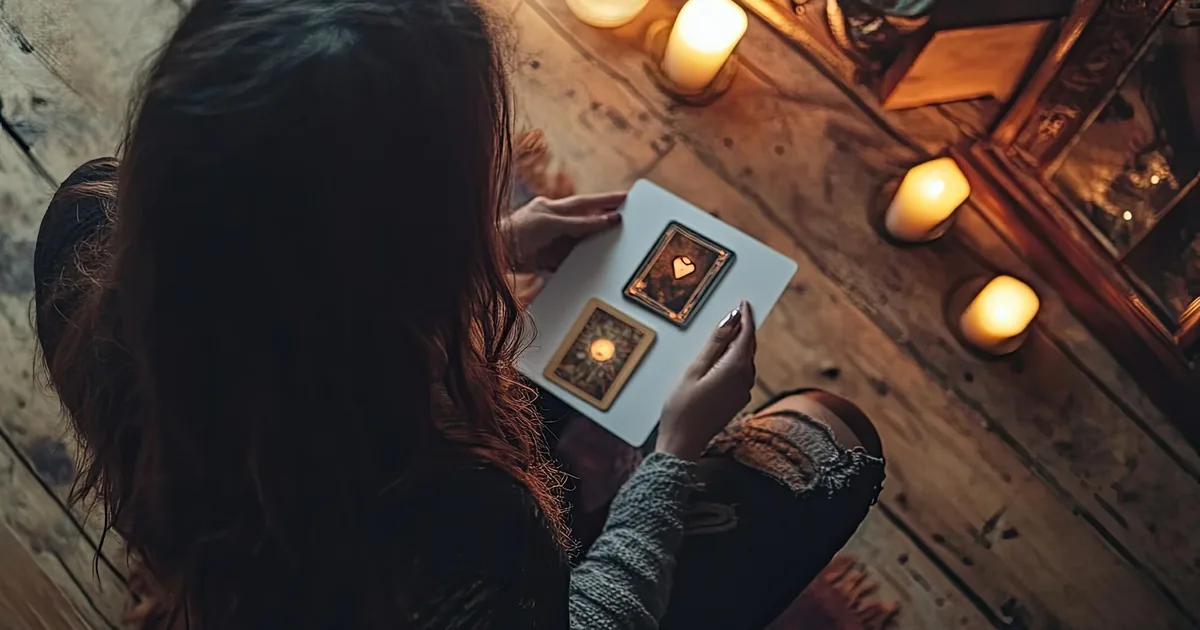
Many beginners fear that tarot will "cast a curse" or "attract trouble." In reality, cards are just paper with pictures. All the power lies in your intention and interpretation. If you approach a spread with respect and common sense, it becomes a powerful tool for self-discovery. It is no wonder that in the esoteric tradition they say: "Tarot is a mirror of the soul."
It is important to understand: a tarot spread does not remove responsibility for your life. It only helps you see possible scenarios for how events might unfold, your strengths and weaknesses. For example, if the Three of Swords appears in a relationship spread, it does not mean a breakup awaits you. Perhaps it is a signal that you yourself are holding on to old grievances and it is time to let them go.
A conscious approach to tarot includes three principles:
- Cards are a tool, not a verdict.
- Interpretation is always subjective and depends on context.
- The main goal is not to know the future, but to understand yourself.
In this article, we will break down five simple layouts that are suitable even for beginners. They will help clarify situations in love, money, and choosing a path. Each layout is not just a set of positions, but a whole story that you tell yourself.
How to prepare for a spread: mindset and questions
Before pulling cards, it is important to formulate your question correctly and get into the right mindset. A tarot spread for today or for the future requires a calm state of mind. If you are agitated or angry, the cards will show a distorted picture — you simply will not be able to read them objectively.
Here are a few practical steps for preparation:
- Choose a time and place. It is best to practice in silence, when no one distracts you. You can light a candle or play calm music — this helps you enter the right state.
- Formulate your question clearly. Instead of "What awaits me in love?" ask "What actions of mine will help strengthen my relationship?" This way you get specific advice rather than a vague prediction.
- Shuffle the cards. Do this slowly, thinking about your question. You can pull cards with your left hand — it is believed to be connected to the subconscious.
- Trust your intuition. If a card catches your attention before you even pull it, perhaps it is a sign.
Remember: a tarot spread for relationships requires special delicacy. Do not ask questions about another person's feelings without their consent — that is a violation of boundaries. Instead, ask: "What can I do to make our relationship more harmonious?"
It is also important to cleanse the space after a spread. Some practitioners recommend tapping the deck or placing it in a bag with salt overnight. This is not mandatory, but it helps symbolically complete the session.
Layout №1: "Three Cards" — a quick answer to a question
This is the simplest and most popular layout, and it is where you should start. It suits any question, from "What should I do in this situation?" to "What are the prospects of this project?" A tarot spread for a question is a classic that requires no complex positions.
Pull three cards and lay them out from left to right:
- The first card — the past, the origins of the situation.
- The second card — the present, current circumstances.
- The third card — the likely future if you change nothing.
For example, you ask about changing jobs. The first card is the Five of Pentacles (past financial difficulties), the second is the Chariot (you are at a crossroads now, but you have the strength to move forward), the third is the Star (if you take the risk, success awaits you). The interpretation is obvious: past financial problems led to a desire for change, you are ready to make a leap now, and the future promises good fortune.
This layout is great because it can be used daily. For example, pull three cards in the morning for the day: what is important to do, what to avoid, and what the overall atmosphere will be. Such a tarot spread for today helps you get into a productive frame of mind.
However, do not overuse frequent questions on the same topic. If you ask every day "What awaits me with this person?", you will not get new information — only confusion. It is better to take a break of several weeks.
Layout №2: "Celtic Cross" — an in-depth analysis of a situation
The Celtic Cross is one of the most famous and detailed layouts in tarot. It provides an extensive answer to complex questions: "Why is this happening?", "What should I do?", "What are the hidden influences?" This is a tarot spread for the future, but with an emphasis on causes and effects.
The layout includes 10 positions, each revealing a specific aspect:
- The situation at the present moment.
- The obstacle or challenge.
- Subconscious motives.
- The past that influences the present.
- Conscious goals.
- The near future.
- Your position and attitude.
- The influence of others.
- Hopes and fears.
- The outcome.
The Celtic Cross requires practice and knowledge of card meanings. Beginners may find it difficult to interpret all positions at once. Therefore, we recommend mastering simple layouts first, then moving on to this one.
Example: you want to understand a conflict with your partner. The first card is the Ten of Swords (crisis), the second is the Knight of Wands (impulsiveness), the third is the Moon (fears and illusions). It becomes clear that the situation escalated due to misunderstanding and emotional swings. The seventh position is the Hermit (you tend to withdraw into yourself), the eighth is the Two of Cups (but your partner is still open to dialogue). The final card is the Sun (if you show patience, the conflict will resolve).
The Celtic Cross is often used to analyze career matters. It shows what hidden factors affect your work and helps you find a strategy for action.
Layout №3: "Relationships" — a spread for love and compatibility
A tarot spread for relationships is a separate category of layouts that helps understand the dynamics of a couple. They suit both those already in a relationship and those seeking a partner. It is important to remember: the cards will not show whether your partner is "the one," but they will point out problem areas and potential.
One simple layout is "Two Paths":
- Card 1 — you in this relationship.
- Card 2 — your partner.
- Card 3 — what binds you together.
- Card 4 — what destroys.
- Card 5 — what will strengthen the union.
For example, you pulled: the Empress (you are caring and generous), the Emperor (your partner is authoritative and reliable), the Three of Cups (friendship and fun bind you), the Five of Pentacles (financial instability destroys), the Ten of Cups (family and shared goals will strengthen). Interpretation: you are a harmonious couple, but financial problems can undermine the relationship. The solution is to focus on building a shared future.
Another popular layout is "New Partner": it describes what you seek in a person, what qualities you attract, and what you need to change in yourself to meet a worthy companion.
It is important not to ask tarot questions like "Does he love me?" — that is shifting responsibility. Instead, ask: "What beliefs of mine prevent me from building a healthy relationship?" This approach will bring more benefit.
Layout №4: "Money Flow" — a spread for finances
A tarot spread for money helps you understand your financial situation, find sources of income, or understand why you cannot save. This is not a magical way to get rich, but a tool for analyzing your attitude toward money.
The "Financial Compass" layout includes 5 positions:
- Current material situation.
- Your attitude toward money (subconscious beliefs).
- Blocks and obstacles on the path to prosperity.
- Opportunities you do not notice.
- Advice: what to change to improve the situation.
Suppose the first card is the Four of Pentacles (you cling to money, fear losing it), the second is the Hierophant (the habit of following traditions, e.g., working an unloved job "like everyone else"), the third is the Tower (fear of sudden change), the fourth is the Ace of Wands (a new venture, a startup), the fifth is the Chariot (you need to make a decision and move forward).
Such a spread shows that your fear of change prevents you from seeing new opportunities. The advice is to work on your beliefs and allow yourself to take a risk.
You can also use the "Money Flow" layout for the month: it will show which areas will bring income and where you should save. This is an excellent alternative to a boring budget — you engage your intuition.
Remember: tarot will not replace financial planning. Use the cards as an additional tool for reflection, not as a reason to abandon responsibility.
Layout №5: "Choosing a Path" — when you stand at a crossroads
A tarot spread for choosing a path is a layout that helps you make a decision when several options lie before you. It suits questions about changing jobs, relocating, starting a relationship, or any other important step.
The "Fork in the Road" layout:
- Card 1 — your current situation.
- Card 2 — option A (what awaits you if you choose it).
- Card 3 — option B (what awaits you if you choose it).
- Card 4 — advice: how to make the choice.
For example, you are deliberating whether to stay at your old job or go freelance. Card 1 — the Six of Pentacles (you give more than you receive). Card 2 (stay) — the Four of Cups (stagnation, boredom). Card 3 (leave) — the Three of Wands (expanding horizons, new opportunities). Card 4 — Strength (trust your inner strength and courage).
The interpretation is obvious: by staying, you risk getting stuck in a swamp, while leaving promises growth. The advice is to muster your courage.
This layout is good because it does not give a ready-made answer but shows possible consequences. You make the decision yourself, relying on your intuition and logic.
You can also use a "Yes/No" layout, but it is less informative. It is better to ask open-ended questions to get a detailed answer.
Breaking down common beginner mistakes
Many novice tarot readers make the same mistakes. We have gathered the most frequent ones so you can avoid them.
| Mistake | Why it gets in the way | How to fix it |
|---|---|---|
| Asking the cards about others without their consent | Violates ethics and gives distorted information | Formulate the question about yourself: "What can I do to improve the relationship?" |
| Interpreting cards literally | Cards are symbols, not direct instructions | Consider the context and neighboring cards |
| Shifting responsibility onto the cards | You lose control over your life | Treat tarot as advice, not a verdict |
| Doing spreads on the same question too often | Confusion and contradictory answers | Take a break of at least a week |
It is also important not to ignore reversed cards. Some schools believe a reversed card strengthens or weakens the meaning, while others say it points to an inner conflict. Choose your system and stick to it.
And one more piece of advice: do not try to memorize all card meanings. Instead, look at the image and trust your first association. Over time, you will develop your own language of symbols.
How to use tarot for daily practices
A tarot spread for today is an excellent way to develop intuition and start the day mindfully. You do not need complex layouts — one card is enough. In the morning, pull a card and think about how its energy might manifest throughout the day.
For example, if the Ace of Cups comes up, expect an emotional uplift or an opportunity to start new relationships. If the Five of Pentacles comes up, be prepared for financial difficulties, but remember that this is temporary.
You can keep a tarot journal, recording your spreads and interpretations. After a month, you will be able to see patterns and better understand your behavioral patterns.
It is also useful to do a spread for the week or month. A tarot spread for August or a tarot spread for September will help you plan important matters and avoid surprises. For example, if the Emperor appears in a monthly spread, this is a time for strengthening discipline and structure.
Do not forget that tarot is not only about the future but also about working with the past. You can do spreads on past situations to understand their lessons.
Spreads for the future: prospects and limitations
A tarot spread for the future is perhaps the most sought-after request. People want to know what awaits them in love, career, and finances. But it is important to understand: the future is not predetermined. The cards show only one of several probable scenarios, which can change depending on your actions.
For example, if the Ten of Swords appears in a yearly spread, it does not mean collapse awaits you. It is a warning: if you continue to act the same way, you may face serious difficulties. But you have a choice — to change your behavior and avoid the negative scenario.
Therefore, when doing a spread for the future, always ask: "What can I do to improve the situation?" This turns passive waiting into active creation.
Also, do not do spreads for too distant a future, such as a tarot spread for 2026. The cards show the nearest months better. For long-term forecasts, use astrology or numerology, but remember that all of this is only guidance.
If you want to know what awaits you in the near future, use simple layouts, such as "Three Cards" or "Card of the Day." They will give you clarity and help you tune into the right wavelength.
Ethics and responsibility in tarot practice
Tarot is not a toy but a serious tool that requires an ethical approach. First of all, do not use cards to manipulate other people. Do not do spreads on how to cast a love spell on someone or make them do something — this violates free will.
Also, do not frighten people with predictions. If you see a negative card, do not say: "Death awaits you." Instead, say: "You need to be more careful with your health." Remember that your task is to help, not to scare.
If you read for others, always get consent and explain that the information is advisory in nature. Do not take money for "removing curses" or "love spells" — that is charlatanism.
And one more important point: do not let tarot run your life. If you cannot make a decision without cards — that is already a dependency. Use tarot as an advisor, but the final decision is always yours.
Remember that the real magic is in your head. The cards only help you hear your inner voice.
Modern trends: new layouts and author methodologies
The world of tarot does not stand still. New decks, author layouts, and adaptations of classic schemes to modern realities are emerging. For example, spreads on careers in IT, relocating to another country, or long-distance relationships.
Online you can find many fresh tarot spreads, including new tarot spreads dzen. Authors share their developments, and that is great, because each practitioner brings something of their own. For example, Tatiana, known for her spreads, offers unique layouts for working through ancestral patterns — these are the new tarot spreads by Tatiana.
However, be careful: not all author methodologies are equally useful. Before using a new layout, check its logic and alignment with the basic principles of tarot. If a scheme seems too convoluted, perhaps it is not for you.
Also popular are layouts based on astrological correspondences, such as the 12 houses of the horoscope. They allow you to examine a situation comprehensively, taking into account all areas of life.
Do not be afraid to experiment and create your own schemes. The main thing is that they are meaningful and answer your question.
Practical tips for memorizing card meanings
One of the main difficulties for beginners is memorizing the meanings of 78 cards. But this does not have to be done mechanically. Here are several ways to make the process easier.
First, study cards by suits. Wands — fire, action, passion; Cups — water, emotions, relationships; Swords — air, thoughts, conflicts; Pentacles — earth, money, matter. Understand the element — and it will be easier to interpret any card.
Second, pay attention to numerical values. Ace — beginning, Two — choice, Three — cooperation, Four — stability, Five — conflict, Six — harmony, Seven — evaluation, Eight — movement, Nine — completion, Ten — outcome. This works for all suits.
Third, study the Major Arcana as a hero's journey. From the Fool to the World — this is a story of spiritual development. Each card is a stage on that path.
Use associations: for example, the Empress — mother, abundance, nature; the Emperor — father, authority, structure. The more personal associations you have, the easier it is to remember.
Do not forget about reversed meanings. Usually they point to an inner aspect or a blockage. For example, reversed Strength is self-doubt, suppressed emotions.
Practice daily, and within a few months you will feel the cards intuitively.
Spread for a question: how to formulate a request correctly
A tarot spread for a question is the foundation of any practice. The quality of the answer depends on how you formulate the question. A bad question gives a vague answer; a good one gives a precise and useful answer.
Here are several rules for formulation:
- Avoid questions that can be answered with "yes" or "no." Instead of "Will I get this job?" ask "What actions of mine will help me get this job?"
- Do not ask questions about other people without their consent. Instead, ask about your role in the situation.
- Formulate the question positively. Instead of "Why do I have no money?" ask "What should I do to improve my financial situation?"
- Be specific. Instead of "What awaits me?" clarify: "What awaits me in the next three months in my career?"
Examples of good questions:
- "What beliefs of mine prevent me from building a healthy relationship?"
- "What can I do to increase my income?"
- "What steps will lead me to my goal?"
Bad questions:
- "Does he love me?"
- "When will I get married?"
- "Should I move?" (instead, ask about the pros and cons)
If you are a beginner, practice formulating questions on paper before a spread. This will help you understand more clearly what you want to know.
Spread for the year: how to plan the future with tarot
A tarot spread for the year is a powerful planning tool. It helps identify the main trends, challenges, and opportunities for the coming 12 months. Such a spread is usually done on a birthday or at the new moon.
The "12 Houses" layout is one of the most popular. You lay out one card for each month of the year. Each card describes the key event or energy of the month. For example, the card for January — the Ace of Wands (new beginnings), for February — the Five of Cups (disappointment), and so on.
Interpretation: if the Tower falls in March, expect unexpected changes, possibly in your career. If the Sun falls in July, this is a time of success and joy.
Such a spread helps you prepare in advance for difficult periods and make the most of favorable ones.
Another option is the "4 Seasons" spread: one card for winter, spring, summer, and autumn. It is less detailed but gives an overall picture.
Do not forget that a yearly spread is not a verdict. You can change the course of events if you act consciously.
If you want a more detailed forecast, you can do a spread for each month separately, but that will take time. It is better to focus on key areas: love, money, health.
The "Pentacle" layout: for material stability
The pentacle tarot spread is a specialized layout for analyzing the financial sphere. It helps you understand how you handle money, what blocks hinder your prosperity, and how to achieve stability.
The "Pentacle" layout includes 5 positions arranged in the shape of a star:
- Your current financial state.
- Your income and sources.
- Your expenses and energy leaks.
- Hidden opportunities for growth.
- Advice: how to improve your material situation.
For example, the first card is the Three of Pentacles (you work well but do not see results), the second is the Ten of Pentacles (income exists, but you do not feel satisfied), the third is the Five of Pentacles (you spend too much on unnecessary things), the fourth is the Ace of Wands (a new project could bring profit), the fifth is Temperance (you need to find a balance between saving and spending).
This spread helps you see that money is not just numbers but also energy. If you treat it with respect, it comes more easily.
You can also use the "Pentacle" layout to analyze a business or investments. It will show weak points and prospects.
Remember that tarot will not replace a financial advisor, but it can provide valuable insights.
The "Witch" layout: for those who want to understand themselves more deeply
The witch tarot spread is an author layout that helps explore the dark sides of the personality, fears, and hidden desires. The name references the archetype of the witch — a woman possessing wisdom and power.
The layout includes 7 positions:
- Your shadow (what you hide from yourself).
- Your strength (your talents and resources).
- Your fears.
- Your desires.
- What hinders you.
- What helps you.
- Outcome: how to integrate the shadow.
This layout suits deep psychological work. It helps you accept yourself fully, without judgment.
For example, in the shadow position the Devil appears — you fear your dark sides, but they give you energy. In the strength position — the Star (you have hope and inspiration). In the fear position — the Moon (you fear the unknown). In the desires position — the Empress (you want creative fulfillment).
Interpretation: you need to stop fearing your "witchy" nature and use it for creation.
This layout is best done in a calm environment, possibly under the guidance of an experienced tarot reader.
If you feel stuck in life, the "Witch" layout will help you find a way out.
Final section: how to integrate tarot into everyday life
Tarot is not only for special occasions. It can be used every day for self-reflection and decision-making. Here are several ideas for building the practice into your routine.
In the morning, pull a card of the day and write its meaning in a journal. In the evening, note how the card's energy manifested. This develops observation and intuition.
Use tarot for meditation: choose a card and contemplate its image, asking questions: "What do I feel?", "What thoughts come to mind?"
Create your own spread ritual: light a candle, lay the cards on a special cloth, speak your intention. This helps you tune into the work.
Do not forget about cleansing the deck: once a month, you can go through the cards, holding them in your hands and imagining old energy leaving.
And most importantly — do not take tarot too seriously. It is a game that helps you get to know yourself better. Enjoy the process, and the cards will reveal their secrets to you.

Tarot as a path to yourself: open a dialogue with your own intuition
We have come a long way — from the first timid questions to the cards to complex layouts that help you sort out love, money, and life's crossroads. We hope you have felt that tarot is not a magic ball predicting the inevitable, but a remarkable tool for talking to yourself. Each card is not a verdict but an invitation to look deep into your soul, to hear the quiet voice of intuition that we often drown out with hustle and the opinions of others.
In a world with too much noise and ready-made answers, tarot invites us to stop and ask our own questions. It does not tell us what will happen — it helps us understand what we feel, what we truly want, and what beliefs of ours are holding us back. This is not an escape from reality, but rather a way to become its conscious creator. After all, when we understand our fears and desires, we can make choices that truly suit us, rather than drifting with the current.
On the pages of EXETERIC media, we often talk about how esotericism is not about predictions and miracles, but about deep self-knowledge and harmony with oneself and the world. EXETERIC practices are not just a set of techniques, but a philosophy of conscious living, where every tool — whether tarot, astrology, or meditation — helps us become better and happier. If you want to continue exploring, check out the EXETERIC guide to esotericism — there you will find many materials to help deepen your practice and self-understanding.
Remember that tarot is not a panacea or a reason for fear. It is a mirror in which we see our best and worst sides, our dreams and fears. Do not fear the incomprehensible — examine it calmly, with respect and an open heart. Try the practice consciously: ask the right questions, listen to your intuition, and do not shift responsibility onto the cards. Then tarot will become your faithful companion on the path to a more meaningful and joyful life.
If you want to go deeper into the topic, read other practices on the EXETERIC blog — there you will find articles about various layouts, card meanings, and ways to work with them. And perhaps you will be interested in checking out the astrology section to see what the stars say about your zodiac sign — maybe that will add another stroke to your self-discovery. Explore, ask questions, trust yourself — and may the cards become your wise advisors on this fascinating journey.
Frequently asked questions
Can I read tarot for myself?
Yes, reading tarot for yourself is not only possible but also very useful. It helps you better understand your thoughts, feelings, and motives. However, it is important to maintain objectivity and not let emotions distort the interpretation. If you feel too involved in the situation, try taking a break or consulting another practitioner. Simple layouts, such as "Three Cards" or "Card of the Day," are best suited for self-analysis. The main thing is to ask the right questions and be honest with yourself.
What to do if a scary card comes up, such as the Tower or Death?
Do not panic if cards like the Tower or Death appear in a spread. There are no "bad" cards in tarot — only symbols that point to certain energies or processes. The Tower often means sudden changes that may be destructive but ultimately make room for something new. Death symbolizes the end of one stage and the beginning of another. Instead of panicking, think about which aspects of your life need transformation. Treat these cards as an invitation to change, not as a prediction of disaster.
How often can I do spreads on the same question?
It is not recommended to do spreads on the same question too often, especially if you have not taken any action after the first spread. Repeated spreads can give contradictory or confusing answers, because you begin to doubt and seek confirmation rather than real information. It is better to wait at least a few weeks or a month before repeating the question. During that time, the situation may change, and you will be able to get a fresher perspective. Remember that tarot is a tool for reflection, not for endless rechecking.
Do I need a special gift to learn how to read tarot?
No, you do not need a special gift or supernatural abilities to learn how to read tarot. Tarot is a system of symbols that anyone willing to learn and practice can master. What matters far more is developing intuition, observation, and the ability to connect card meanings to real situations. Start by studying the basic meanings of the cards, then move on to simple layouts and gradually deepen your knowledge. Regular practice and keeping a journal will help you better understand the cards and trust your feelings. The main thing is to approach this with respect and genuine interest.