Satanism: Myths and Reality
Satanism: What It Really Is
When we hear the word "satanism," the imagination conjures up dark rituals, sacrifices, and a cult of evil. But reality, as is often the case, is far more prosaic and interesting. Satanism is not a single doctrine but a whole spectrum of philosophical and religious movements united by the symbol of Satan. To understand it, one must set aside horror stories and look at the facts.
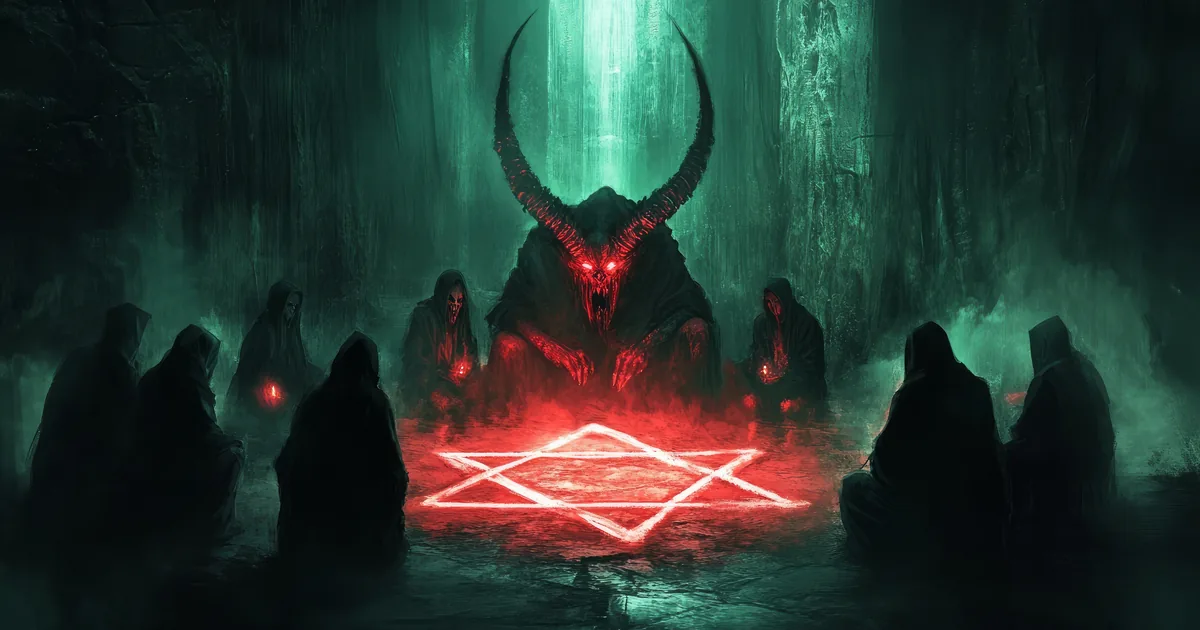
Satanism is, first and foremost, a worldview that places individualism, free will, and earthly pleasures at the forefront. Contrary to popular belief, most Satanists do not worship evil but rather use the image of Satan as a metaphor for rebellion against dogma and authority. In this article, we will examine the main types of satanism, its symbols, commandments, and rules, as well as explore how satanism is represented in Russia.
Types of Satanism: From Philosophy to Religion
Satanism is heterogeneous, and its types differ drastically. Conventionally, two main directions can be distinguished: atheistic (or LaVeyan) satanism and theistic satanism. The former, founded by Anton LaVey in the 1960s, is a secular philosophy that does not presuppose belief in a literal Satan. Here, Satan is a symbol of human nature, pride, and freedom. The latter — theistic satanism — is already a religious worship of Satan as a real spiritual being. Between these poles, there are many intermediate forms, including occult groups that mix elements of different traditions.
It is important to understand that the types of satanism are not limited to two categories. There is, for example, satanism based on ancient Gnostic cults, where Satan is seen as a liberator from the tyranny of the material world. There are also modern movements that integrate satanic imagery into psychological practices of self-discovery. In any case, satanism is not simply "devil worship" but a complex phenomenon that requires thoughtful study.
| Direction | Belief | Attitude toward Satan | Goal |
|---|---|---|---|
| Atheistic (LaVeyan) | Philosophy, atheism | Symbol of freedom and individualism | Self-realization, enjoyment of life |
| Theistic | Religion, belief in a spirit | Real being, object of worship | Spiritual connection, gaining power |
| Occult | Mix of traditions | Archetype, entity | Magical practice, knowledge |
Symbol of Satanism and Sign of Satanism: What They Mean
The symbol of satanism that most often comes to mind is the inverted pentagram. However, this sign of satanism has a long history that began long before the emergence of satanic cults. In ancient times, the pentagram symbolized harmony and protection, and the inverted version was used in various esoteric traditions. In satanism, it came to denote opposition to traditional spirituality, an emphasis on the material world and human nature.
Other symbols of satanism include Baphomet — an anthropomorphic being with a goat's head that embodies the unity of opposites. The number 666 is also frequently used, which in Christianity is considered the number of the beast, while in satanism it is a symbol of human strength and independence. It is important to understand that symbols are merely tools, and their meaning depends on context and intention. For some, they are just aesthetics; for others, they are sacred signs.
The symbol of satanism should not be taken literally as a call to evil. In esotericism, symbols are keys to certain energies and states of consciousness. Using such signs can be a way of tuning into specific vibrations, but nothing more. A conscious practitioner always remembers that power is within, not in pictures.
Commandments of Satanism and Rules of Satanism: A Moral Code
Contrary to expectations, the commandments of satanism do not call for amorality. On the contrary, they formulate clear principles that help a person live in harmony with themselves. In LaVeyan satanism, there are nine commandments, which include ideas such as "Satan represents indulgence, instead of abstinence," "Satan represents responsibility to the responsible," and "Satan has been the best friend the church has ever had, as He has kept it in business all these years." These commandments emphasize the importance of personal responsibility, common sense, and respect for the freedom of others.
The rules of satanism, if reduced to a common denominator, boil down to the principle "do unto others as they do unto you" — but with the caveat: do not allow others to impose their will on you. This is not egoism but healthy individualism. A Satanist is not obliged to be useful to anyone unless they themselves want to be. However, they must not harm those who do not harm them. Such ethics may seem cold, but it is honest and practical.
In theistic satanism, the rules may differ, including ritual prescriptions and moral norms based on venerating Satan as a teacher. But overall, satanism is a path of self-discovery where a person defines their own boundaries and follows them without looking back at others' dogmas.
Satanism in Russia: History and Modernity
Satanism in Russia has its own specifics. During the Soviet era, any esotericism was banned, and satanism existed underground, often blending with youthful rebellion. After perestroika, there was a surge of interest in occult movements, and satanism became part of the new religious freedom. However, myths about Satanists as maniacs and murderers still live in the public consciousness, fueled by the yellow press and cinema.
In reality, satanism in Russia is represented mainly by small groups engaged in philosophical discussions, aesthetics, and sometimes magical practices. Most of them do not commit unlawful acts and pose no threat. Nevertheless, due to misunderstanding and fear, Satanists often become targets of persecution by religious fanatics and law enforcement agencies. It is important to distinguish real Satanists from those who use satanic symbolism for shock value or to cover up crimes.
A conscious attitude toward satanism in Russia implies that we do not judge people by their symbols but look at their actions. If a person practices satanism as a philosophy, that is their personal business, as long as they do not break the law.
Myths About Satanism: What They Say and What Is True
Satanism is surrounded by a huge number of myths that hinder a sober view. Let us examine the most common ones.
| Myth | Why It Is Not True | How It Really Is |
|---|---|---|
| Satanists worship the devil and make sacrifices | Most Satanists are atheists or philosophers for whom Satan is a symbol, not a being. Sacrifices are a fabrication. | Satanism is a path of individualism and freedom, not violence. |
| Satanism is a sect that recruits teenagers | Satanism has no centralized organization and does not engage in missionary work. | Satanists are independent people who come to this worldview consciously. |
| Satanism is always evil and destruction | Satanism can be ethical and constructive if a person uses it for self-discovery. | Satanism is a tool that can be both useful and harmful, depending on intention. |
Myths about satanism arise from ignorance and fear of the unknown. To understand, one must study primary sources rather than rely on stereotypes. If you want to delve deeper into esoteric practices, check out the articles on magic and self-discovery.
Theistic Satanism: A Spiritual Path or Danger
Theistic satanism is a separate topic that raises the most questions. Unlike LaVeyan satanism, here Satan is perceived as a real spiritual being with whom one can interact. Practices of theistic satanism include rituals, meditations, and work with energies. The goal of such satanism is not the worship of evil but the attainment of power, wisdom, and freedom through connection with this archetype.
Is theistic satanism dangerous? Like any spiritual practice, it can be dangerous if a person is unprepared or has an unstable psyche. But overall, it is no more dangerous than other esoteric teachings. It is important to approach it consciously, with respect for tradition and without fanaticism. If you feel interested in this topic, study it gradually, without diving headfirst into the deep end.
Theistic satanism is often confused with black magic and goetia, but these are different things. Goetia is the practice of summoning demons, which can be part of satanism but is not mandatory. In theistic satanism, the emphasis is on personal communion with Satan rather than on manipulating spirits.
How to Distinguish Satanism from Other Esoteric Teachings
Sometimes satanism is confused with other movements, such as Luciferianism or even certain branches of magic. Luciferianism, for example, is often viewed as a more "light" version of satanism, where Lucifer is the bearer of light and knowledge. But satanism is a broader concept that includes Luciferianism and other forms. To avoid confusion, it is important to understand that satanism is not just a set of symbols but a specific worldview.
If you want to figure out your own spiritual bearings, it is useful to study different systems. For example, astrology can help you understand your innate tendencies, and human design — how to make decisions. But satanism is a path chosen consciously, and it is not for everyone.
Practical Steps for Conscious Study of Satanism
If you decide to study satanism, do it gradually and critically. Start by reading Anton LaVey's books to understand the philosophical foundation. Then study the history of symbols and rituals. It is important to remember that satanism is not a dogma but a living tradition that can adapt to your personal experience.
Try keeping a journal to track your thoughts and feelings. Ask yourself questions: what does freedom mean to you? How do you relate to responsibility? Satanism can become a tool for answering these questions, but it will not give ready-made solutions.
And, of course, do not forget common sense. If a practice causes you fear or discomfort, set it aside. Satanism is a path of strength, not weakness. And remember, you can always turn to other esoteric teachings, such as dream interpretation, to broaden your understanding of the world.

The Path to Yourself: Esotericism as a Tool for Conscious Living
When we explore topics like satanism, it is important to remember: esotericism is not a collection of scary stories or a ready-made truth, but a tool for self-discovery and conscious living. We can use it to better understand ourselves, our values, and our place in the world. Satanism, like any other teaching, is just one of many roads, and everyone chooses their own.
Do not be afraid of the unknown. Fear is born from ignorance, and ignorance from a reluctance to understand. If you feel an interest in esotericism, approach it calmly and consciously. Study different traditions, ask questions, seek your own path. The practices of EXETERIC — meditations, energy work, astrology, and much more — can help you with this. Our EXETERIC guide to esotericism is designed so you can navigate this diversity without fear or prejudice.
Look into your zodiac sign — perhaps astrology will reveal new facets of your personality. Or read other articles about magic and self-discovery on the EXETERIC blog to broaden your horizons. Remember: esotericism is not a panacea but a tool. It will not give ready-made answers, but it can help you ask the right questions.
Try practicing consciously and with respect — for yourself, for traditions, for other people. Do not let stereotypes control you. Explore, doubt, seek your own. And may your path be bright, even if it begins in the shadows.
Frequently Asked Questions
Is satanism necessarily devil worship?
No, this is a common misconception. Most Satanists are atheists or philosophers for whom Satan is a symbol of freedom, individualism, and rebellion against dogma. They do not believe in a literal devil and do not worship him. Theistic Satanists, who truly believe in Satan as a spiritual being, are a minority. In any case, satanism is not a cult of evil but a worldview that prioritizes personal responsibility and free will.
Is it true that Satanists make sacrifices?
No, this is a myth that has nothing to do with reality. Satanism has no practice of sacrifices, neither animal nor human. Such accusations are part of propaganda aimed at discrediting satanism. Satanists, as a rule, are law-abiding citizens who do not commit unlawful acts. Their rituals, if any, are symbolic in nature and aimed at self-discovery, not at causing harm. Any stories about sacrifices are fabrications with no relation to real satanism.
How does satanism differ from Luciferianism?
Satanism and Luciferianism are different, though related, movements. Satanism is a broader concept that includes various directions, from atheistic to theistic. Luciferianism is a separate tradition that venerates Lucifer as the bearer of light and knowledge. Unlike satanism, Luciferianism often has a more positive and philosophical character, emphasizing enlightenment and spiritual development. While satanism may use the image of Satan as a symbol of rebellion, Luciferianism sees in Lucifer a teacher and guide. These are different paths, although they do intersect.
Can satanism be useful for self-discovery?
Yes, for some people satanism can become a tool for self-discovery. It offers a philosophy that encourages individualism, critical thinking, and personal responsibility. Satanists often ask themselves questions about freedom, morality, and the meaning of life, which can lead to deep insights. However, satanism is not the only path, and it is not suitable for everyone. It is important to approach it consciously, study primary sources, and not forget common sense. If satanism helps you become better and more conscious, it can be useful, but if it causes fear or discomfort, it is better to choose another path.