Spiritism: how does a spiritism session go and why spiritism is dangerous
Spiritism: What It Is and Why It's Back in Fashion
Spiritism is the practice of communication with the spirits of the dead, and it is experiencing a true renaissance in the age of social media and shows like "Stranger Things." But unlike the pop-culture image, where spiritism looks like a fun adventure with a ouija board, the real practice requires a serious approach. We at EXETERIC believe that the otherworldly should be treated with respect and without fear, but also without frivolity.
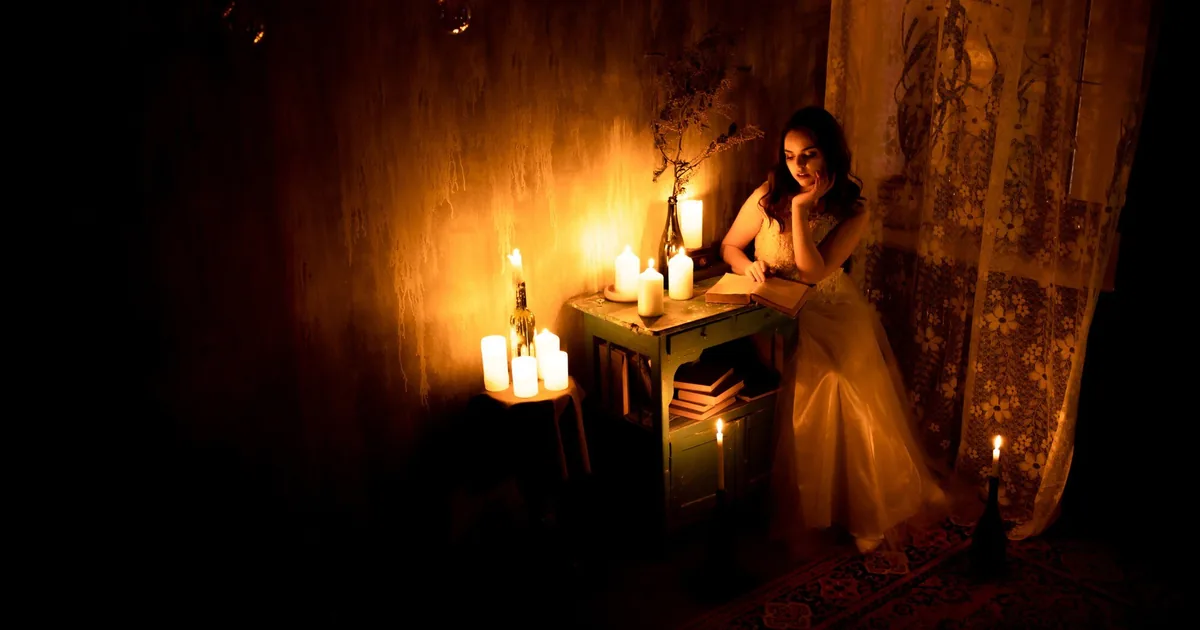
Spiritism as a systematic teaching took shape in the 19th century thanks to Allan Kardec, who collected and structured messages received by mediums. However, the roots of this practice go back to ancient shamanic traditions and mysteries. In essence, spiritism is an attempt to establish contact with those who have already crossed over, in order to gain knowledge, consolation, or answers to questions that cannot be resolved in the material world.
Why, then, in this age of technology, are people turning back to spiritism? Perhaps because virtual reality does not provide a sense of genuine connection, and the soul craves something greater. Or because we are tired of rationality and want to touch the mystery. But it is important to understand: spiritism is not a game or entertainment. It is work with subtle energies that can bring both deep insights and serious problems if approached without preparation.
In this article, we will examine how a spiritism session goes, what risks it carries, and how to protect yourself if you do decide to make contact. We will not scare you, but we will not promise easy miracles either. Our task is to give you clarity and tools for a conscious choice.
How to Prepare for a Spiritism Session: Safety Rules
Before summoning a spirit, it is important to understand: spiritism is not a picnic with friends. It is an energetic practice that requires respect and caution. If you have decided to hold a spiritism session, start with preparation — both physical and mental.
First, define your goal. Why do you need communication with the spirits of the dead? If you just want to tickle your nerves or have fun — it is better to stop. Spirits sense intention, and frivolity can attract the wrong entities. If you are seeking answers to important questions or want to say goodbye to a departed loved one, formulate your request clearly and respectfully.
Second, choose a place and time. It is best to hold the session in a dark, quiet room where no one will disturb you. The ideal time is night, when vibrations are subtler, but not during a full moon if you are a beginner: during a full moon the energy is too powerful, and control can be lost. Make sure there are no mirrors in the room — they can become portals for unwanted entities.
Third, create a protective circle. This can be a circle of salt, candles, or simply a visualization of white light around you and the participants. Protection is not a nod to superstition but an energetic shield that helps cut off low-vibrational entities. Remember: you are inviting spirits, but you are not obligated to let everyone in.
Finally, set rules for the participants. There should be no people under the influence of alcohol or drugs at the session, nor those who are skeptical or aggressive. Everyone should be calm and focused. It is better if there are no more than three or four participants — this makes it easier to control the energy.
If you are using a ouija board, make sure it is new and has not been used for other purposes. Some practitioners advise burning the board after the session to break the connection, but this is a debatable point. The main thing is not to leave the board in open access, so as not to accidentally activate it.
Step-by-Step Scenario: How Does a Spiritism Session Go
So, you have prepared. Now let's break down how a spiritism session goes step by step. This is the classic scheme used by both experienced mediums and beginners, but remember: without proper preparation, it is better not to experiment.
Step 1. Opening the circle. All participants sit around a table or a ouija board, hold hands, and close their eyes for a few minutes to calm the mind and synchronize breathing. You can say a short prayer or affirmation, for example: "We are open to communication with higher forces, but we accept only those who wish us well." This sets the intention and filters entities.
Step 2. The invocation. One of the participants (usually the most experienced) speaks the invitation aloud. It is important to speak clearly and respectfully, naming a specific spirit if you know its name, or simply addressing "spirits of light." Avoid phrases like "come whoever" — that is like opening a door to a stranger in a dark alley.
Step 3. Establishing contact. If you are using a ouija board, participants place their fingers on the planchette and wait. The movement of the planchette can be light or sharp — it depends on the energy. If you are working without a board, you can use a pendulum or simply observe signs: knocks, changes in temperature, flickering candles.
Step 4. Dialogue. Once contact is established, ask questions. Start with simple ones: "Are you here?", "What is your name?" Do not ask questions whose answers you are not ready to hear. Remember that spirits can lie or mislead, especially if you are dealing with low-vibrational entities. Trust your intuition, but verify the information.
Step 5. Closing. When the session is over, be sure to thank the spirit and say goodbye. This is important for closing the channel. Then speak the closing words: "We close this circle. Everything that was said stays here. We return to reality." Extinguish the candles, put away the board, and air out the room.
If you feel that the contact is not complete or that one of the participants is experiencing discomfort, do not drag it out — close the session immediately. It is better to miss out on answers than to get problems.
Why Spiritism Is Dangerous: Risks and Consequences
Why is spiritism dangerous? This question worries many, and for good reason. The practice of communication with the spirits of the dead can have serious consequences if approached without proper preparation. We do not want to scare you, but we want you to be informed.
Energetic vulnerability. During a session, you open a channel between worlds, and this makes you vulnerable to negative entities. Low-vibrational spirits can "latch onto" you, causing fatigue, apathy, nightmares, or even obsession. This is especially dangerous for people with weakened energy or emotional instability.
Psychological risks. Communication with the dead can reopen old traumas, cause feelings of guilt or fear. If you are not ready for the emotional load, the session can worsen depression or anxiety. Moreover, some spirits can manipulate you by playing on your feelings.
Addiction. Some people become addicted to spiritism, constantly seeking answers from spirits instead of solving problems in real life. This leads away from mindfulness and self-knowledge, turning the practice into an escape from reality.
Legal and social consequences. In some countries, spiritism is prohibited or restricted, and holding sessions can lead to legal problems. Additionally, if you involve other people, you are responsible for their safety.
To minimize risks, follow the safety rules we discussed above, and do not hold sessions alone, especially if you are a beginner. It is better to turn to an experienced medium who can control the process and protect the participants.
The Ouija Board: How It Works and Why It Is Dangerous
The ouija board is perhaps the most famous tool for spiritism. It consists of a board with letters, numbers, and the words "yes" and "no," as well as a planchette that slides across the surface. Despite its commercial availability, the ouija board is not a toy but a serious tool that requires caution.
The working principle of the ouija board is based on the ideomotor effect: your fingers unconsciously move the planchette, and this movement is interpreted as the spirit's answer. Skeptics claim it is just the subconscious, but practitioners believe that spirits can use this channel for communication. In any case, the ouija board activates an energetic flow, and if you do not know how to control it, the consequences can be unpredictable.
Why is the ouija board dangerous? First, it attracts the attention of entities that may be unfriendly. Second, it creates the illusion of easy contact, which provokes careless questions. Third, if you do not close the session properly, the connection can remain open, and the spirit can "attach" itself to you or to the place.
If you do decide to use a ouija board, follow the rules: do not use it alone, do not ask questions about death or the future, do not let the planchette move chaotically — stop the session if you feel fear or pressure. After the session, be sure to close the circle and hide the board.
Some practitioners recommend not buying boards from mass market stores but making them yourself, putting your own energy into them. But that is already an advanced level that requires knowledge.
How to Summon a Spirit at Home: Reality and Consequences
Many people search the internet for "how to summon a spirit at home," hoping for an easy way to communicate with the otherworldly. But the reality is that home conditions are the most dangerous place for such experiments. Why? Because at home you are in your own energetic comfort zone, and the intrusion of a foreign entity can disrupt your peace and safety.
If you do decide to go through with it, remember: summoning a spirit at home requires the same preparation as in a special location. Choose a room where you rarely spend time, remove unnecessary objects, create a protective circle. Do not hold the session in the bedroom — it is a place for sleep and recovery, and its energy is not suitable for contacts.
It is also important to understand that the spirits that come to home summons are often not who you expected. These can be entities from the lower layers of the astral plane that feed on your energy. They can imitate the voices of the dead to gain your trust. Therefore, be extremely cautious and do not believe everything you hear.
If you feel that something has changed in the house after the session — strange sounds, shadows, a feeling of presence — perform a space cleansing. Light a candle, walk through all corners with salt or holy water, visualize light filling the room. If the symptoms do not go away, consult a specialist in energetic cleansing.
Instead of taking risks, it is better to study other practices that are not related to summoning spirits, such as meditation or energy work. They will help you develop intuition and a connection with yourself without dangerous contacts. We talk about this in other practices on the EXETERIC blog.
Spiritism and Psychology: What Science Says
Spiritism is often explained by psychological phenomena such as the ideomotor effect, dissociation, or suggestion. Skeptics claim that all "spirits" are projections of our subconscious. But practitioners insist on the reality of contact. Who is right? Perhaps the truth lies somewhere in between.
From a psychological perspective, spiritism can be a way to cope with grief or find meaning. Communication with the spirits of the dead provides the illusion of connection with the departed, which helps to survive loss. However, if this practice becomes a substitute for real life, it can worsen depression.
On the other hand, esotericism views spiritism as interaction with the subtle planes of existence. Spirits are not "hallucinations" but entities that exist in other dimensions. Science cannot yet confirm this, but it cannot refute it either.
It is important to understand that spiritism is not a substitute for psychotherapy. If you are going through a severe loss or emotional crisis, it is better to consult a specialist. Spiritism can be a supplement, but not the primary tool.
By the way, if you are interested in how dreams are connected to the otherworldly, check out the EXETERIC dream book — you will find a lot of interesting things about symbols and signs there.
Alternatives to Spiritism: How to Communicate with the Subtle World Safely
If you want to explore the otherworldly but are not ready for the risks of spiritism, there are safer alternatives. They are no less deep but do not require opening energetic channels and do not expose you to danger.
Meditation and visualization. You can establish contact with spirits through a meditative state when your mind is calm and your vibrations are high. This is safer because you control the process and can stop at any moment.
Working with symbols and signs. Study the symbols that come to you in everyday life — this can be a way of communicating with the subtle world. For example, repeating numbers, animals, or dreams. We write about this in the astrology section, where we explain how signs manifest in life.
Energetic practices. Develop your energy through chakras, aura, breathing exercises. This will help you become more sensitive to subtle vibrations without the risk of intrusion.
If you want to understand your nature and purpose, try the human design guide — it is a system that helps you live in harmony with yourself without resorting to contacts with spirits.
Remember: true self-knowledge does not require summoning spirits. It requires the courage to look inside yourself. And spiritism is just one of the tools that can be useful but is not necessary.
Spiritism at Home: A Specific Case with a Ouija Board
Let's consider a concrete example: a young woman decided to hold a spiritism session at home with a friend, using a ouija board. They wanted to summon the spirit of her grandmother to say goodbye. But instead, they encountered an aggressive entity that began moving the planchette chaotically and responding with rudeness. Frightened, they interrupted the session but did not close the circle properly.
A few days later, strange things began happening in the house: objects disappeared, footsteps were heard, and the woman started seeing shadows. She turned to a specialist in energetic cleansing, who explained that the entity had attached itself to her because of fear and an unclosed channel.
This case illustrates how important it is to follow safety rules and not treat spiritism lightly. If you do decide to hold a session, be sure to close the circle and perform a cleansing afterward. And remember: if you feel fear, it is better to stop.
If you want to learn more about how to protect yourself from negative energies, pay attention to the articles on magic and self-knowledge — there is a lot of useful information there.
Spiritism as a Path to Yourself: A Conscious Approach
We have come a long way: we figured out how a session goes, why spiritism is dangerous, and why the ouija board is not a toy. But the main thing we want to convey is that esotericism, including spiritism, is not a way to escape reality but a tool for a deeper understanding of yourself and the world around you. When we approach practices with respect and mindfulness, they can open doors to inner wisdom, help us cope with grief, or find answers to important questions. But if we use them out of curiosity or fear, we risk losing connection with ourselves and attracting unwanted energies.
At EXETERIC, we believe that true magic lies in self-knowledge. Therefore, instead of fearing the unknown, we invite you to explore it calmly and thoughtfully. Start small: study your zodiac sign in the astrology section — it will help you better understand your strengths and challenges. Or dive into other practices on the EXETERIC blog, where we cover topics from meditation to energy techniques. The main thing is to approach any practice with an open heart and a clear mind, and then it will bring benefit, not harm.
If you feel that spiritism is what you need, remember the safety rules: do not hold sessions alone, create a protective circle, ask questions with respect, and always close the channel. But also remember that there are many other ways to establish a connection with the subtle world — through meditation, dreams, symbols. And all of them can be no less deep but safer.
We invite you not to fear mysteries but to study them with respect. Esotericism is not a panacea, but it can become your faithful companion on the path to yourself. Check out the EXETERIC practices — there you will find support and knowledge that will help you live consciously and harmoniously. And remember: true power lies in your intention and the purity of your thoughts. Be gentle with yourself and the world, and then any doors will open before you.
Frequently Asked Questions
Can you hold a spiritism session alone?
Holding a spiritism session alone is highly discouraged, especially for beginners. When you are alone, you fully open your energetic channel, and if something goes wrong, there is no one to help you. Moreover, it is harder to control the process and protect yourself from unwanted entities alone. Experienced mediums sometimes work alone, but they have deep knowledge and strong energetic protection. For most people, it is safer to hold a session in a group of two or three people, where everyone can support each other and monitor the state of the others. If you do decide on a solo session, be sure to create a protective circle and plan an emergency exit strategy.
What to do if strange things happen in the house after a spiritism session?
If you notice strange phenomena after a session — for example, objects disappearing, footsteps being heard, shadows appearing, or a feeling of presence — this may mean that the channel was not fully closed or that an entity has attached itself to you. First, perform a space cleansing: light a candle, walk through all corners with salt or holy water, visualize white light filling the room. You can use aromatic sticks such as sage or frankincense. If the symptoms do not go away within a few days, consult a specialist in energetic cleansing. It is also important to analyze whether you completed the session correctly: did you thank the spirits, close the circle, put away the board. In the future, strictly follow all safety rules to avoid such situations.
Why can spirits lie during a spiritism session?
Spirits, like people, can be different: not all of them are benevolent and truthful. Some entities, especially low-vibrational ones, can lie or mislead to get your energy or simply for fun. They can imitate the voices of the dead to gain your trust, or give false predictions. Therefore, during a session, it is important to maintain critical thinking and not take everything said on faith. Ask clarifying questions, verify information, trust your intuition. If you feel that the answers cause fear or anxiety, it is better to end the session. Remember that true spirits who wish you well usually speak calmly and respectfully, and their words carry light and understanding.
How to know that an evil spirit is present at a spiritism session?
Signs of the presence of an evil spirit can vary: sharp temperature changes, an unpleasant smell, a feeling of fear or pressure, aggressive movements of the planchette, rude or threatening messages. Participants may experience headaches, nausea, or sudden fatigue. If you notice any of these, stop the session immediately. Close the circle, thank (if possible) and say goodbye, even if the contact was negative. Then perform a cleansing of yourself and the space. It is important not to panic but to act decisively. If you feel that you cannot handle it on your own, seek help from an experienced practitioner. In the future, try to protect yourself in advance and invite only spirits of light to minimize the risk of encountering dark entities.