Centers in human design: how to determine your defined and open centers
What are centers in Human Design and why you should know them
Centers in Human Design are nine energy hubs in the bodygraph that reflect how we perceive and process different types of energy. They are similar to chakras in the Indian tradition, but with a clearer and more practical system. Each center is connected to specific aspects of life: from thinking and emotions to intuition and sexuality. Understanding your centers is not just an intellectual exercise, but a tool for conscious living. When you know which centers are defined (colored) and which are open (white), you begin to see where your habitual reactions, fears, and strengths come from. It's like getting a map of your inner landscape: you stop wandering in the dark and can choose your route consciously.
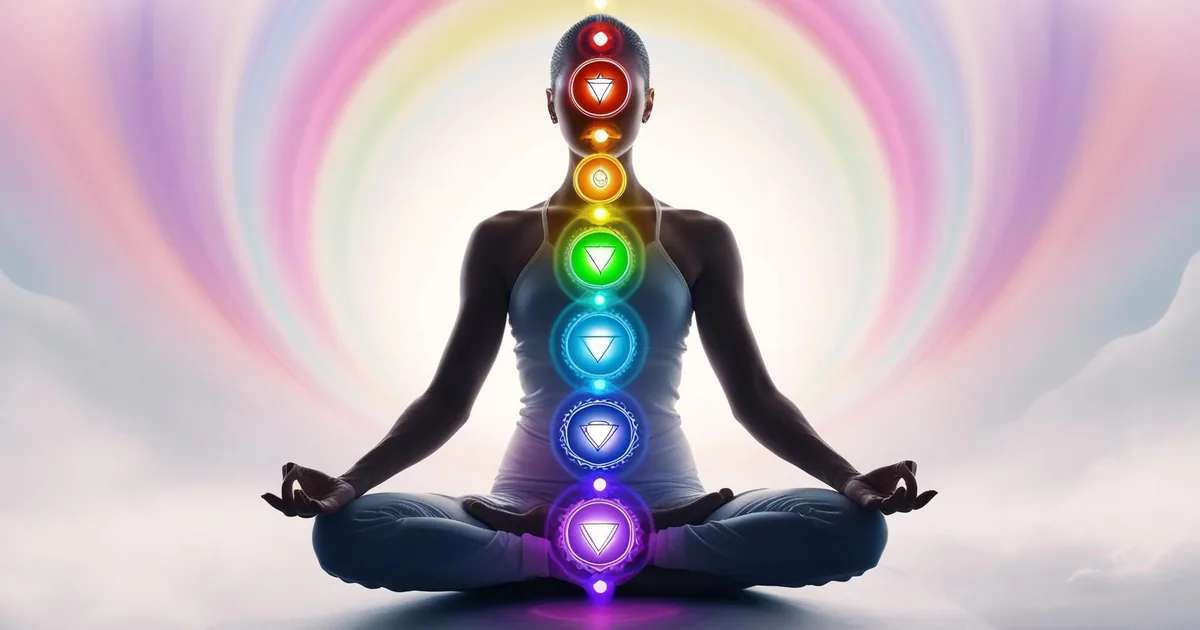
Many beginners ask: what centers are in human design and how to remember them? In fact, there are nine of them, and each has its own name and function. But before diving into details, it's important to understand the main principle: defined centers are your innate, stable energy that you can rely on. Open centers are places where you are vulnerable and susceptible to the influence of others, but also where you can gain wisdom if you learn to work with them. It's not "bad" or "good" — it's simply a feature of your energetic structure.
In this article, we will break down how to determine your defined and open centers, what they mean, and how to use this knowledge in everyday life. We will rely on the classical Human Design system, but explain it in simple language, without excessive esoteric baggage. If you are just beginning to explore this system, I also recommend checking out the Human Design guide on our website — there you will find basic concepts and principles.
What are the centers called in Human Design and what are they responsible for
So, what are the centers called in human design? Here are the nine centers, each with its own name and sphere of influence:
- Head Center — inspiration, questions, mental pressure.
- Ajna (Mind Center) — information processing, conceptualization.
- Throat Center — communication, action, manifestation.
- G Center (Self Center) — love, direction, identity.
- Heart Center (Ego) — willpower, self-worth, material aspects.
- Spleen Center — intuition, health, survival.
- Sacral Center — life force, sexuality, energy for work.
- Emotional Center (Solar Plexus) — emotions, feelings, mood.
- Root Center — stress, adrenaline, pressure.
Each center can be defined (colored) or open (white). A defined center means you have stable access to that energy, you can manage it, and it works predictably. An open center is a place where you amplify other people's energy, and it can influence you unpredictably. For example, if you have an open emotional center, you can easily "pick up" the emotions of those around you and mistake them for your own. This can be a gift of empathy, but without awareness — a source of chaos.
For clarity, here is a table of correspondences between centers and their manifestations in life:
| Center | Traditional meaning | Manifestation in life | What to do |
|---|---|---|---|
| Head | Inspiration, mental pressure | You constantly generate ideas, but may suffer from "noise" in your head | Don't try to think everything through — write it down and choose what matters most |
| Ajna | Thinking, analysis | You love to organize everything neatly, but may get stuck in analysis | Use logic, but also trust your intuition |
| Throat | Communication, action | You express thoughts easily, but may speak without thinking | Before speaking, pause and check what you actually want to say |
| G Center | Love, direction | You feel your purpose, but may get lost in relationships | Look for guidance within yourself, not in external expectations |
| Heart | Willpower, self-worth | You are ambitious, but may be too demanding of yourself | Learn to accept your limitations |
| Spleen | Intuition, health | You sense danger, but may ignore your body's signals | Trust your first impulses |
| Sacral | Life force, sex | You have lots of energy, but may burn out | Follow your response, not force |
| Emotional | Emotions, feelings | You experience everything deeply, but may be unstable | Don't make decisions at the peak of emotion — wait for the wave to subside |
| Root | Stress, pressure | You can act under pressure, but may be in constant tension | Find healthy ways to release stress |
This table is just a brief summary. A full centers in human design explained requires taking into account many nuances: gates, channels, profiles. But starting with centers is the right move — they are the foundation.
How to determine your defined and open centers: step-by-step guide
To find out which centers are defined and which are open, you need to generate your bodygraph. You can do this for free on many websites, for example, on the official Jovian Archive resource or on Russian-language portals. You will need your date, time, and place of birth. If you don't know your exact birth time, this can be a problem, but you can use noon or consult an astrologer for rectification.
Once you get your bodygraph, you will see nine geometric shapes (triangles, squares, etc.) that may be colored (usually red, black, or green) or remain white. Colored ones are defined centers, white ones are open.
Here is a simple guide for beginners:
- Find all nine centers in your bodygraph. They are usually labeled, but if not, check the legend.
- Determine which centers are colored. These are your defined centers.
- The remaining white ones are open.
- Write down their names and count. Most people have about 4-6 defined centers, but it can be fewer or more.
If you don't want to dive into complex calculations right away, you can start with simple self-observation. For example, think about how you make decisions. If it's easy for you to decide when you feel an inner response (energy in your gut), you probably have a defined sacral center. If you often doubt and seek advice from others, you may have an open G center or Ajna.
But remember: self-diagnosis can be subjective. It's better to generate your bodygraph once and check against it. Any online calculator will work for this, for example, the bodygraph analysis on our website.
Defined centers in Human Design: your strengths and zone of stability
Defined centers in human design are your foundation. They work constantly, regardless of external conditions. If you have a defined head center, you will always generate ideas, even when tired. If you have a defined sacral center, you have a stable supply of life energy and can work for a long time without a break if the work is to your liking.
But defined centers also have a downside: you can become so accustomed to your energy that you stop noticing how it affects others. For example, a person with a defined emotional center can be very emotional, and this may overwhelm those around them. Or a person with a defined throat center talks nonstop, not letting others get a word in.
It's important to learn to use your defined centers consciously, not on autopilot. Here are a few tips:
- Observe in which situations your energy helps and where it gets in the way.
- Learn to respect other people's energy, especially if those centers are open in others.
- Don't try to "fix" your defined centers — they are given to you to fulfill your purpose.
For example, if you have a defined spleen center (intuition), you can trust your gut feelings. But if you are around people who don't believe in intuition, you may start doubting yourself. Remember: your intuition is your gift, and you have the right to it.
Open centers in Human Design: zone of vulnerability and source of wisdom
Open centers are places where you don't have your own stable energy. Instead, you amplify and absorb the energy of other people. This can be both a blessing and a curse. On one hand, you can be very flexible and adaptable. On the other, you risk losing yourself in the crowd.
For example, if you have an open emotional center, you can feel the mood of a room the moment you walk in. If everyone around is angry, you start feeling angry too, even though there's no reason. This can be exhausting and confusing. But if you learn to be aware of this dynamic, you can use it as a tool for empathy and understanding others.
Open centers are also a source of wisdom. When you realize that your emotions, thoughts, or stress are not always yours, you can observe them from a distance. This gives you a deep understanding of human nature. Many spiritual teachers have many open centers — that's exactly why they understand others so well.
Here are a few strategies for working with open centers:
- Observe yourself: when you feel a strong emotion or thought, ask yourself: "Is this mine or someone else's?"
- Spend time alone to understand how you feel without the influence of others.
- Don't make important decisions when you are surrounded by people with strong energy — first retreat and check your feelings.
For example, if you have an open root center, you may experience stress in the presence of tense people. But if you know this, you can consciously leave the room to catch your breath. This is not weakness, but wisdom.
Centers in Human Design explained: how to read your bodygraph
When you look at your bodygraph, you see not only centers, but also gates (numbers) and channels (lines connecting centers). Centers in human design explained is a whole science, but you can start simple: look at which centers are defined and which gates are activated in them. Each gate has its own meaning, and they add nuances to the energy of the center.
For example, if you have a defined sacral center with gates 34 (power) and 27 (caring), you will express your energy through caring for others. If you have gates 34 and 20 (vision), you will use your power to bring projects to life.
But don't dive into gates right away if you're a beginner. First, master the centers. Here is a table to help you remember what each center means in the context of definition and openness:
| Center | Defined | Open |
|---|---|---|
| Head | Stable inspiration, you always know what to think about | Susceptible to others' thoughts, may suffer from "noise" |
| Ajna | Logical thinking, confidence in your ideas | You doubt, get easily confused, but can see different perspectives |
| Throat | You express thoughts clearly and take action | You may say things you don't mean, or stay silent when you should speak |
| G Center | Strong sense of direction and love | You search for yourself, may get lost in relationships, but can find true love |
| Heart | Strong will, self-confidence | You may feel insecure, but learn to value yourself through others |
| Spleen | Reliable intuition, good health | You may ignore your body's signals, but can develop empathy |
| Sacral | Stable energy, capacity for work | You may feel tired, but can draw energy from your environment |
| Emotional | Deep emotions, but stable | Emotional instability, but empathy |
| Root | Resilience to stress, ability to act under pressure | Prone to stress, but can learn to relax |
This table is a simplification, but it helps capture the essence. For a more accurate interpretation, consult a professional analyst or study Human Design literature.
Centers in Human Design for beginners: common mistakes and how to avoid them
Many beginners, upon learning about their open centers, start to panic or, on the contrary, consider them "weak spots." This is one of the most common mistakes. Open centers are not a verdict, but an opportunity for growth. Another mistake is trying to "close" open centers or "fix" them. This is impossible and unnecessary. Instead, you need to learn to live with them.
Beginners also often confuse defined and open centers with "good" and "bad." In reality, there are no better or worse combinations. Each configuration offers its own gifts and challenges. For example, a person with a completely open bodygraph (all centers white) is a rare type who can be incredibly wise and flexible, but needs a lot of time to recover.
Here are a few tips for beginners:
- Don't compare your bodygraph to others'. It is unique.
- Don't try to memorize all the meanings at once. Start with 2-3 centers that manifest most vividly in your life.
- Observe yourself for several weeks before drawing conclusions.
For example, if you discovered that you have an open emotional center, start tracking when you feel emotions that aren't yours. In such moments, try asking yourself: "What do I feel when I'm alone?" This will help you separate your own from others'.
Centers in Human Design at home: how to apply this knowledge in everyday life
Knowledge of your centers can be applied not only in meditation, but also in ordinary life — at home, at work, in relationships. Centers in human design at home is about how you arrange your space and interact with loved ones. For example, if you have an open root center, it's important for you to have a place where you can relax and release stress. Create a quiet corner in your home with no TV or gadgets.
If you have an open emotional center, it may be hard for you to be in noisy gatherings. Plan your time so you have the opportunity to be alone. If you have a defined sacral center, you can charge others with your energy, but don't forget to replenish it.
Here are a few practical ideas:
- Determine which centers are open in you, and create conditions to minimize their negative impact. For example, if you have an open head center, don't keep lots of books or work materials in your bedroom.
- Use your defined centers to create a comfortable atmosphere. If you have a defined G center, you can be the "guide" for your family.
- Discuss bodygraphs with your partner or children. This will help you understand each other better.
For example, if your child has an open spleen center, they may be very sensitive to noise and stress. Try to create a calm environment for them, especially before bedtime.
Centers in Human Design in home conditions: simple practices for harmonization
You can work with your centers without leaving home. Centers in human design in home conditions are daily practices that help balance your energy. Here are a few simple exercises:
- Meditation on centers. Sit comfortably, close your eyes, and imagine each center as a colored sphere. Observe which ones are bright (defined) and which are dim (open). Sit with this feeling for a few minutes.
- Observation journal. Write down during the day when you feel strong emotions, thoughts, or fatigue. In the evening, analyze which centers might have been involved.
- Energetic hygiene. If you feel like you've "picked up" someone else's energy, take a shower, imagining the water washing away everything extra. You can also light a candle or use essential oils.
These practices will help you become more aware of your energy and manage it. But remember, Human Design is not a panacea. It's a tool for self-discovery, not for shifting responsibility onto "centers." You are the creator of your own life.
Centers in Human Design after 40: what changes with age
Many people wonder: do centers in human design after a certain age change? In fact, your basic chart (bodygraph) remains unchanged from birth. However, with age, you may experience your centers differently. In youth, open centers can cause more suffering because you haven't yet learned to handle them. By 40, as a rule, wisdom and experience come, and you begin to understand your patterns better.
For example, if you have an open emotional center, in your youth you might have often "drowned" in other people's emotions. After 40, you already know it's not yours, and you can calmly observe the waves of feelings without identifying with them. This doesn't mean you become cold — it just means you stop being a victim of your emotions.
Also, with age, you can consciously develop your open centers as a source of wisdom. Many people after 40 begin spiritual practices, and Human Design becomes a support for them. If you feel it's time for deep self-discovery, check out other articles on magic and self-discovery — you might find answers to your questions.
Remember that age is not a verdict, but an opportunity. Your centers are a map, but only you can walk the path.
Your map is in your hands
Studying centers in Human Design is not just getting acquainted with yet another esoteric theory. It's an opportunity to look at yourself in a new way — at your reactions, strengths, and zones of growth. When you know which centers are defined and which are open, you stop fighting yourself and start using your energy wisely. You understand why you feel confident in some situations and lost in others. This knowledge lifts the burden of unnecessary expectations and self-criticism.
It's important to remember: Human Design is not a verdict or a magic pill. It's a tool that helps you live more consciously. It doesn't solve problems for you, but it illuminates their origins. Your open centers are not a weakness, but a door to wisdom and empathy. Your defined centers are not a reason for pride, but a resource you can use for the benefit of yourself and others. The main thing is not to fear the unknown and not to try to "fix" what is given by nature. Instead, embrace your uniqueness and learn to work with it.
If you feel you want to go deeper into this topic, start small: observe yourself, keep a journal of sensations, try mindfulness practices. Perhaps EXETERIC practices will resonate with you and help integrate this knowledge into daily life. And if you want more theory, check out other articles on magic and self-discovery — you'll find plenty of useful material there. And don't forget that astrology can also be your helper: you might be interested to learn how your zodiac sign relates to your bodygraph.
Remember: the path to yourself is a journey, not a race. There's no need to rush or try to grasp the infinite. Just take it step by step, and one day you'll be amazed at how much you've learned about yourself. Human Design is not the ultimate truth, but one of many tools. Use it with respect and curiosity, and it will surely bring you benefit.
Frequently asked questions
How can I find out my defined and open centers without an online calculator?
Without an online calculator, it's impossible to determine your centers accurately, because calculating them requires your exact date, time, and place of birth. However, you can try observing yourself: for example, if you make decisions easily and feel a surge of energy when starting something new, you probably have a defined sacral center. If you often doubt and seek advice from others, you may have an open G center or Ajna. But these are just guesses. To get an accurate picture, it's better to generate your bodygraph on a specialized website by entering your data. This takes just a few minutes and gives a reliable result.
Can open centers become defined over time?
No, your basic bodygraph chart remains unchanged from birth. Open centers cannot become defined, as this is an innate feature of your energetic structure. However, with age and practice, you can learn to manage your energy in open centers better. For example, if you have an open emotional center, you can develop the skill of conscious observation of emotions so they don't completely overtake you. Thus, while the centers themselves don't change, your relationship to them and the way you interact with their energy does.
What should I do if I have many open centers?
Having many open centers is neither bad nor good — it's simply a feature of your energy. People with many open centers often possess high empathy and the ability to deeply understand others, but they can also be susceptible to outside influence and tire more quickly. To feel comfortable, it's important to learn to distinguish your own energy from that of others. Regularly spend time alone to recover, and practice mindfulness: ask yourself "Is this mine or someone else's?" when experiencing strong emotions or thoughts. Over time, you'll learn to use your flexibility as an advantage rather than a vulnerability.
How do open centers affect relationships with other people?
Open centers can greatly affect relationships, as you may unconsciously absorb the emotions and energies of your partner, friends, or colleagues. For example, if you have an open emotional center, you may feel another person's mood as your own, which can lead to confusion and conflict. It's important to learn to separate your feelings from others' and not make decisions in a state of emotional "contagion." It's also helpful to discuss your traits with loved ones so they understand your sensitivity. Knowing your open centers helps build more harmonious relationships based on mutual respect and understanding of boundaries.