Upyrs: how to tell an upyr apart from a human and how to protect yourself from upyrs
If you ask in a village what upyrs are, no one will give you a lecture on folklore. They will tell you a story: about an uncle after whose death the livestock began to waste away, about strange knocking on the window on the fortieth day, about a grave that had to be dug up. Let's look at it calmly: upyrs are not Hollywood beauties with fangs, but a very earthy, peasant image of unlaid death. What upyrs means for tradition is a person who died "incorrectly" and did not leave completely, stuck between worlds and drawing energy from the living.
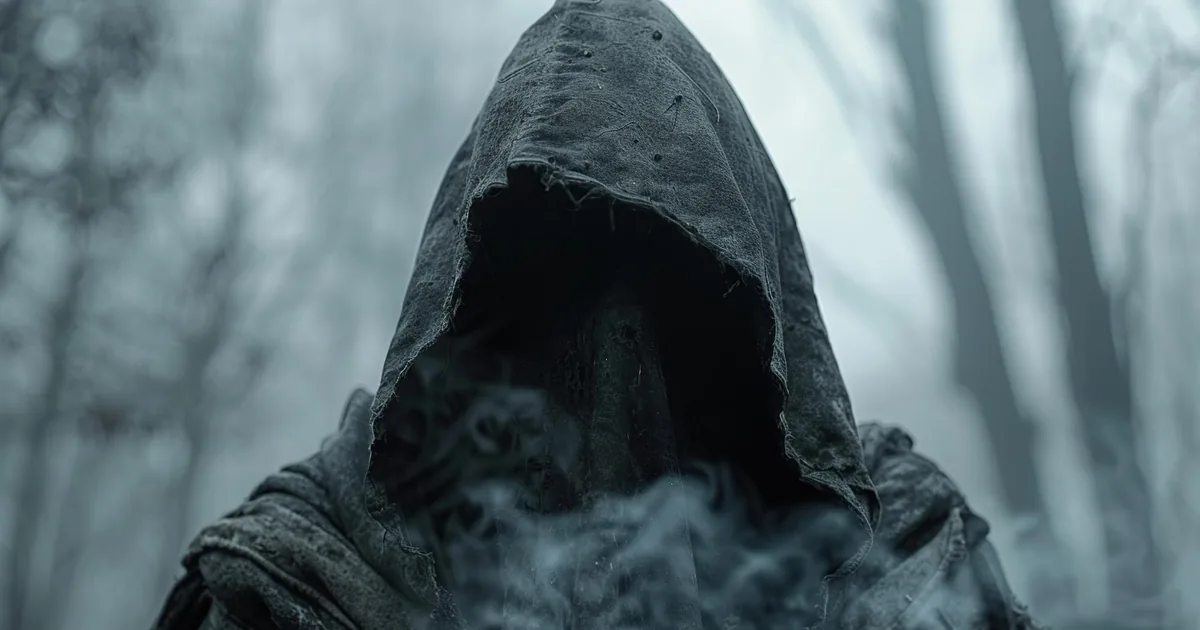
Upyrs in Slavic mythology: who they are
Upyrs in Slavic mythology are one of the most ancient images. Mentions of them are found as early as chronicles and sermons against paganism of the 11th-12th centuries, which speak of those who "lay offerings to upyrs." That is, upyrs in mythology are older than both vampires and vukodlaks in their literary form. This is not a demon in its pure form and not a ghost, but a restless deceased — one who died an unnatural, early or impure death and did not receive a proper passage.
How folk legends describe upyrs? Almost never as thin shadows. On the contrary: the face is red, the body is swollen, as if filled with blood. In the coffin he lies as if alive, his lips bright, his nails and hair keep growing. How upyrs differ from ordinary dead is precisely this — the absence of decay and signs of rest. An ordinary deceased person grows pale and departs, while this one "fattens" in the grave because he feeds on others.
Where upyrs live according to beliefs? By day — in the grave, most often at the edge of the cemetery, in a ravine, at a crossroads. At night he goes out to the house, to the cattle shed, to the bathhouse. How upyrs are dangerous to the living and livestock: he drinks up the life force, which is why undiagnosed illnesses begin in the house, melancholy, bad dreams, and cows lose their milk, horses sweat at night, chickens die for no reason. From the energetic point of view this is a classic: a sharp leak of the family's resource into one point. From the psychological point of view — an image of unfinished grief that does not let the living go.
The practical step here is observation, not panic. If after a funeral there is a series of coincidences in the house: knocking, heaviness, identical dreams about the deceased in the EXETERIC dream book are interpreted as calling, loss of strength — do not rush to diagnose yourself with an "attack." First close the basic things: sleep, health, airing out, order in inherited belongings. And only then work with the ritual hygiene of space, which we will talk about below.
How upyrs come into being and who becomes an upyr
The main question of tradition is how upyrs come into being and why upyrs appear at all. The answer is always the same: the passage is broken. The soul did not receive a send-off, the body did not receive rest, the kin did not receive closure. That is why the question of who becomes an upyr and how to determine who will become an upyr occupied the village more than the question of struggle.
Folk beliefs about upyrs name such risk groups: suicides and drowned people, those murdered without funeral rites, sorcerers and witches who did not repent and did not pass on their power, those cursed by their parents, those who died without repentance, those born in a "caul" with two rows of teeth or joined eyebrows, as well as those over whose coffin a cat jumped or a dog ran. To this group belong also those who died during a thunderstorm, on major holidays without ritual, and those buried in violation: without a baptismal cross, face down, without paying for the land.
Folk omens about upyrs, foretelling a dangerous deceased, were known by heart: the body does not stiffen for a long time, the blood does not stop, the face is warm after a day, under the left shoulder blade — a small hole or birthmark like a bite, one eye opens in the coffin. After the funeral — a dog howls at the house, knocks on the shutters without wind, milk sours by morning. Real upyr stories from 19th-century ethnographic records almost always begin precisely with these everyday markers, and not with mysticism.
How to apply this consciously? Not as a way to stigmatize the deceased, but as a map of incompleteness. If you are burying a loved one, make the passage clean: speak the unsaid aloud, give away belongings consciously, settle debts, order commemoration according to your tradition. This is both the psychology of grief and a spiritual path of respect for the boundary. The energy of the kin calms down when there is ritual and the intention to let go.
How vampires and upyrs differ, vukodlaks and sorcerers
There is a lot of confusion, because literature has mixed everything up. Let's sort it out, for queries like how vampires and upyrs differ, the difference between upyrs and vampires, the difference between upyrs and vukodlaks and why a vukodlak is scarier than a vampire are among the most frequent. A vampire is a book-and-film European: an aristocrat, a castle, a bite on the neck, immortality. An upyr is a peasant: one of your own, kin, who comes not for strangers but for his own family and livestock.
| Widespread myth | Why it is not so | How it really is |
|---|---|---|
| An upyr is the same as a movie vampire | The vampire is a 19th-century literary construct | The upyr is older, he is connected with kin and household, not with eroticism and a castle |
| Vukodlak and upyr are different peoples | Vukodlak is a literary distortion of the word "volkolak / upyr" by Pushkin | Among the folk these are almost synonyms, but vukodlak was more often the name for one who eats his kin |
| An upyr is always a stranger | Strangers have no access to the house | The most frightening is one of your own: that is why they said that a vukodlak is scarier than a vampire — he strikes his own |
Upyrs and witchcraft are directly connected: a sorcerer in life works with boundaries, and if he did not pass on his knowledge, did not confess, his posthumous will keeps walking. Hence upyr stories from villages about a grandfather-healer who after death knocks to his apprentice. This is not a horror story, but an image of untransferred responsibility.
Signs of upyrs in the behavior of the spirit: he comes only to his own, calls by name, asks to be let in, to eat, to warm up, complains of cold and thirst. He does not break down the door, but asks to open — because the connection with himself and kin gives him the right of entry only through consent. Practical conclusion: do not enter into dialogue in dreams and do not make promises to the deceased in the first forty days. Answer with the formula: "I will commemorate you, let go. To you — rest, to us — life." This is both protection and awareness.
How to tell an upyr apart from a human and recognize them among the living
The most alarming layer is how to tell an upyr apart from a human and how to tell an upyr apart from a human among the living. In legends an upyr may look like a human by day: he comes as a neighbor, a beggar, a distant relative. But there are markers that the attentive noticed.
Interesting facts about upyrs from folklore: the visitor has no shadow at noon, he is not reflected dimly in water and mirror, he does not cross himself or crosses himself backwards, with his left hand, he does not eat salt and bread, he smells of damp earth and decay even in clean clothes, his hands are cold with a red face, he speaks without pauses, as if hurrying before the roosters. His eyes are glassy, he does not blink. After he leaves, a dog stares into the corner for a long time, and milk in the house curdles.
From the esoteric point of view this is a description of a person or state with foreign energy: cold hands, heavy gaze, after communication — a sharp decline, headache, desire to sleep. Today we would call this energetic vampirism, and much is written about this in other practices in the EXETERIC blog. The difference is that a living "upyr" is not mysticism, but a type of behavior: he comes only to take, causes guilt, does not let go.
| Symbol / image | Traditional meaning | Manifestation in life | What to do |
|---|---|---|---|
| Red face with cold hands | Foreign blood / energy | After the meeting — weakness, yawning | Salt on the threshold, washing hands and face, pause in communication |
| Does not eat bread-and-salt | Does not accept the rules of the house | Guest violates boundaries, demands | Clear "no" without guilt |
| Calls by name at night | Binding through response | Anxious dreams, call of the deceased | Do not respond, in the morning — commemoration and cleaning |
| No shadow / reflection | No support of one's own | Person lives at others' expense | Distance, return to connection with yourself |
Everyday practice to understand how not to become a victim of upyrs in the domestic sense: track your state before and after contact. Keep notes for a week: energy on a scale of 1 to 10, sleep, mood. If the same person consistently "minuses" you by 3-4 points — this is a sign to reconsider boundaries, not to accuse him of magic. Awareness is stronger than any amulet.
Why upyrs were feared in Russian villages: real upyr stories
Why upyrs were feared in Russian villages? Not because of fangs. They feared for the household: the upyr struck at the most painful — children, the cow-nurse, the harvest. When real upyrs were told about by the stove, it was about survival. If a second child dies in the house within a month, and a cow gives blood instead of milk — there is no time for skepticism.
Real upyr stories recorded by ethnographers: in Oryol province, after the death of a miserly miller, the family began to hear footsteps in the attic, and horses refused to go into the stable. An invited healer ordered the grave to be checked — the body had not decayed, the face was turned to the side. In Vologda province, a girl who died of unhappy love without repentance "walked" to her mother for forty nights, until a priest ordered her dress to be given to beggars and a memorial service to be served at the crossroads. This is a typical scenario: grief + guilt + lack of closure = walking.
Folk beliefs about upyrs also explained epidemics: if people in a village die one after another, it means the first deceased is "pulling" others after him. Then the assembly gathered and decided to open the grave. From a modern point of view this is frightening, but psychologically understandable: the community needed action that returned control, a common ritual that removed panic. A symbol works when it is believed in together.
Interestingly, intuition plays the main role in such stories. People felt where it was "unclean" by dreams, by animal behavior, by the vibration of the house. If you want to develop this without superstition, study the astrology section and transits of periods of loss — not to predict death, but to understand your vulnerable cycles and strengthen rest and protection in advance. Knowing your rhythm reduces anxiety better than aspen.
How to protect yourself from upyrs: rituals to protect family and home
Let's move to the main thing: how to protect yourself from upyrs, what rituals protect a family from upyrs, protection rituals against upyrs. Village protection was always three-layered: threshold, house, grave. And this is a very competent system from the point of view of space energetics.
The first layer is the threshold. Poppy scattered at the door, a knife with the blade outward under the threshold, a strip of salt, an overturned broom, nettle and thistle in the doorframe. The meaning is to create a symbol of boundary that the subconscious reads as "stop." Practice: on Thursday clean the hallway, wash the floor with salt (a handful per bucket), say aloud your intention: "To our own — light and bread, to the evil stranger — there is no path." Without fear, calmly, as you lock the door for the night.
The second layer is the house and body. Aspen, garlic, wormwood, juniper — plants with a sharp smell that really disinfect the air and awaken attention. A baptismal cross, amulet pouch, red thread — anchors for the psyche. Washing after the cemetery, changing clothes, washing shoes — hygiene that any doctor today will confirm. Sleep separately: if you dream of a calling deceased, in the morning open the window, change the bedding, commemorate with pancake and kissel, give alms. Do not talk to him in sleep — this is the rule of both dream interpretation and the village.
The third layer is how to neutralize an upyr's grave, if everything is serious. Why upyrs' graves were staked with an aspen stake? Aspen in tradition is a tree that draws away trembling and fear, it "trembles," that is, it takes the shaking fever upon itself. A stake in the heart or back pinned the body to the earth, did not let it rise. Additionally: they turned it face down, tied the legs, poured poppy into the coffin so it would count until morning, put a sickle on the neck, drove nails into the heels, sprinkled the grave with poppy and outlined it with a plow. From the ritual point of view — fixation of the boundary: "lie, your place is here."
Doing this today literally, of course, is not necessary and is illegal. The modern analogue of neutralization is a proper commemoration: to hold a funeral service or a secular farewell rite, to complete the deceased's affairs, to give away belongings, to ask forgiveness and to forgive, to erect a monument and mark the boundary. If disturbing phenomena do not go away in forty days, turn to a priest of your faith or to a grief psychologist — often one honest conversation about guilt and incompleteness is enough for the "walking" to stop.
How to live calmly if the topic of upyrs has touched you
Fear of upyrs is almost never about the grave and the night. It is about incompleteness: unspoken words, guilt after a funeral, anxiety for home and children, a feeling that energy is leaking to nowhere. Village tradition was wise precisely in this — it did not offer to be afraid forever, it offered to complete: to say goodbye humanly, to put order in belongings and debts, to mark the boundary between the world of the living and the world of the departed. When there is a clear farewell ritual and a calm home, the psyche calms down, dreams become quieter, and strange coincidences gradually fade away.
Treat esotericism as a tool of self-knowledge and conscious life, not as a way to frighten yourself even more. Observe your state, keep sleep, body and space in order, learn to say no to those who live at your expense, and yes — to those who love you. If after a loss it is hard for longer than forty days, you dream calling dreams, there is no strength and joy, this is a reason not to go for an aspen stake, but for support: to loved ones, to a priest of your tradition, to a psychologist. Living help works stronger than any amulet.
And do not stay alone with anxiety. Look into the selection of other practices in the EXETERIC blog, where protection of the home, work with dreams and recovery after losses are examined calmly and without horror stories, and also see the astrology section to better understand your vulnerable periods and give yourself rest in time. The approach of EXETERIC practices is always the same: to sort out calmly, to try consciously and with respect — for yourself, for your kin and for the boundary between worlds. May your home have light, bread and silence, and may the departed receive rest and kind memory.
Frequently asked questions
What to do if after a funeral you have heavy dreams and knocking?
First of all do not panic and do not consider yourself cursed: in the first forty days disturbing dreams, knocking, a sense of presence and loss of strength are a frequent reaction of grief and stress. Start with the simple: normalize sleep, air out the house, clean and rewash belongings connected with the funeral, wash and change clothes after the cemetery. If you dream of a calling deceased, do not enter into dialogue with him and do not make promises in sleep, in the morning open the window, change the bedding, commemorate and give a small alms. Say aloud a calm formula of separation: To you — rest, to us — life, I will commemorate and let go. If the phenomena do not go away for longer than forty days, turn to a priest of your faith and to a grief psychologist.
Is it true that an aspen stake and poppy on the threshold help?
Yes, but not as magic from films, but as an ancient language of boundary. Aspen in tradition was considered a tree that takes away trembling and fear, and the stake fixed the body in the grave and symbolically said: lie, your place is here. Poppy, salt, a knife under the threshold, nettle in the doorframe worked the same way — as a stop sign for the alien and a support for one's own. Today graves must not be opened, it is illegal and does not solve the cause of anxiety. The modern analogue is cleaning the hallway, washing the floor with salt, a clear intention to close the house for the night and a proper commemoration with completion of the deceased's affairs. A symbol works when you are calm and consistent.
How to understand that an energy vampire is nearby, and not just a difficult person?
The main criterion is your state before and after communication, not the person's character. After contact with an energetically heavy person, sharp fatigue, yawning, headache, irritability and a desire to lie down to sleep usually roll in, although there are no objective reasons. Such a person almost always only takes: complains, demands, causes guilt, violates agreements and does not accept the bread-and-salt of your rules. Check yourself for a week: rate energy from 1 to 10 before and after the meeting, note sleep and mood. If the same contact consistently takes away 3-4 points, shorten the distance, introduce clear rules and pauses. This is not an accusation of witchcraft, but adult boundary hygiene.
Can I protect myself without sorcery and complex rituals?
Yes, village protection at its core was very domestic and calm, without complex rituals. Keep three layers: threshold, house and body. Threshold — order in the hallway, a strip of salt at the door, intention aloud whom you let in and to whom there is no path. House — light, airing, wormwood, juniper or garlic to freshen the air, clean bedding after disturbing dreams. Body — sleep, food, washing after heavy places and conversations, a red thread or cross as an anchor of calm. Add completeness: speak the unsaid to the deceased, give away belongings, close debts, order commemoration according to your tradition. Calmness, boundaries and a completed ritual protect more reliably than fear.