Demons in culture: from the Bible to modern cinema — how the image has changed
Demons as a Mirror of Culture
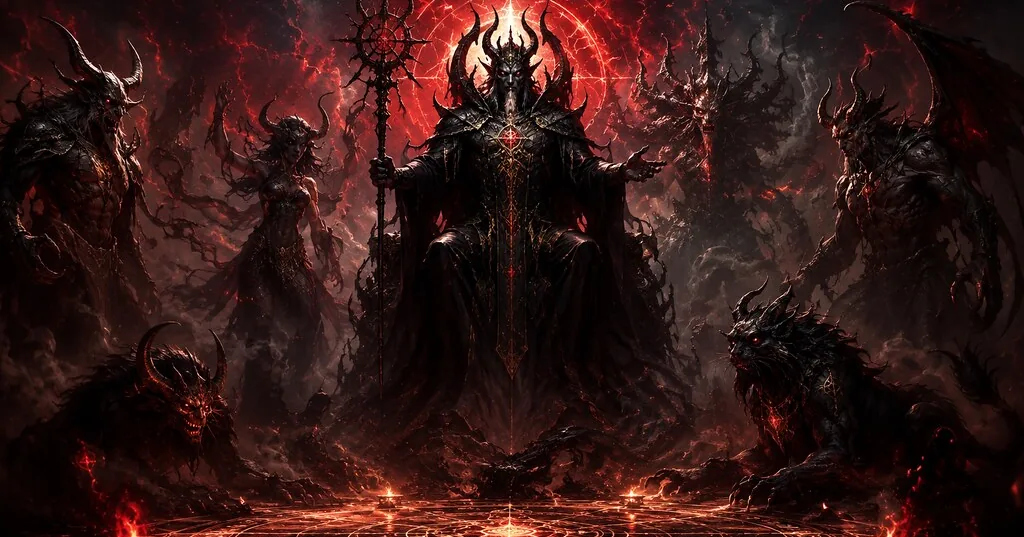
When we hear the word "demon," a horned monster with hooves and the smell of sulfur often comes to mind. This image is so ingrained in the collective consciousness that it seems it has always been this way. But if we dig deeper, an astonishing transformation is revealed: demons changed alongside human culture, reflecting its fears, hopes, and ideas about good and evil. In this article, we will trace how the image of the demon evolved — from biblical texts to modern blockbusters — and what this says about us ourselves.
Biblical Demons: From Servants of Satan to Fallen Angels
In the Christian tradition, demons are fallen angels who rebelled against God and were cast down from heaven. In the Bible, they are mentioned as unclean spirits that can possess people and cause them suffering. For example, in the Gospel of Mark, Jesus casts a legion of demons out of a possessed man. But interestingly, in the Old Testament, demons do not play a significant role — there is more talk about pagan gods, which were later identified with demons.
The image of the demon in the Bible is not simply evil for evil's sake. It is a symbol of temptation, spiritual struggle, and falling away from God. Demons act as a test for believers, a check of their steadfastness. They are part of the divine plan in which human free will is of decisive importance. Therefore, demons are not omnipotent: they can tempt, but they cannot compel.
In apocryphal literature, for example, in the Book of Enoch, demons appear as the offspring of fallen angels who had relations with earthly women. This gives them an even more sinister shade — they are not just spirits, but beings that have invaded the physical world.
Medieval Demons: From Theology to Folklore
In the Middle Ages, demonology turned into a complex system. Theologians such as Thomas Aquinas classified demons by rank and kind, believing that they possess a hierarchy similar to the angelic one. Demons became characters in numerous legends and folk beliefs. It was then that the familiar image took shape: horns, hooves, tail, the smell of sulfur. These details were not accidental — they were meant to inspire terror and recall the pagan deities that Christianity demonized.
However, in folklore, demons are not always unequivocally evil. In some stories, they are stupid, can be deceived, or even have a deal struck with them. This is where stories about pacts with the devil have their roots, which would later enter literature — think of Faust. In folk tales, the demon is often outwitted by a clever peasant, which testifies to the belief that a person, through wit and faith, can overcome even unclean forces.
Demons in Art: From Engravings to Painting
Visual art played a huge role in cementing the visual image of the demon. In medieval engravings and icons, demons were depicted as monstrous creatures with claws and wings, often in scenes of the Last Judgment. Hieronymus Bosch created entire hordes of demons tormenting sinners — their images are so vivid and fantastic that they still amaze the imagination.
During the Renaissance, artists began to depict demons as more human, sometimes even attractive. This reflected a change in views: the demon was no longer so much an external monster as an internal temptation. In paintings on the theme of the temptation of Saint Anthony, we see demons taking the form of beautiful women or alluring objects. Thus, art showed that evil can be attractive and treacherous.
In the 20th century, Surrealists and Expressionists turned to the demonic as a metaphor for internal conflicts. For example, in Salvador Dalí's work, demons are symbols of subconscious fears and desires. Thus, in art, the image of the demon gradually moves from the external to the internal plane.
Demons in Cinema: From Horror to Psychological Thrillers
Cinema could not pass by such a fertile theme. The first horror films used demons as monsters: "Nosferatu" (1922) and classic Hammer studio films showed vampire demons. But the real breakthrough came in the 1970s with the release of "The Exorcist" (1973). This film was the first to show possession not as external evil, but as a psychological and spiritual drama. The demon here is not just a monster, but an entity that torments a person, plays with their faith and fears.
Modern films such as "Insidious" and "The Conjuring" continue this trend, adding elements of the psychological thriller. Demons become a metaphor for trauma, family secrets, or mental disorders. In the series "Demons" (2021), demons are literally projections of human fears. Thus, cinema shows that demons are not only otherworldly beings, but also a reflection of the dark sides of our soul.
Demons in Popular Culture: From Comics to Video Games
Popular culture, including comics, video games, and anime, actively uses the image of the demon. In Marvel and DC comics, demons are powerful beings that can be both enemies and allies. For example, Ghost Rider made a deal with a demon but uses its powers to fight evil. In video games such as "Diablo" or "Doom," demons are armies of evil that must be destroyed, but in some games, for example, in "Persona," demons are archetypes that can be summoned and used.
In anime, for example, in "Death Note" or "Attack on Titan," demons are metaphors for the characters' inner demons, their fears and desires. Pop culture has made demons not just villains, but complex characters with motivation. This reflects the modern understanding of evil as an ambiguous phenomenon: sometimes the demon within us is not so bad, and sometimes it is our own choice.
A Psychological Perspective: Demons as Internal Conflicts
Modern psychology and esotericism often view demons as symbolic images of internal conflicts, fears, and unresolved problems. Carl Jung called such images the "shadow" — that part of the personality we do not acknowledge. Working with these "demons" is not about exorcism, but about integration: acknowledging one's dark sides, understanding them, and turning them into a source of strength.
In esoteric practices, for example, in meditation or shamanic journeys, a person may encounter "demons" as images of their blocks. This does not mean they exist objectively, but working with them helps to become aware of and process internal obstacles. For example, the demon of fear may be an image showing that we are too afraid of the unknown. Once we realize this, we can begin to act more boldly.
It is important not to fall into extremes: demonizing one's fears means giving them too much power. It is better to view them as signals that point to areas of growth. The practice of "dialogue with the demon" can be useful: imagine your "demon" and ask what it wants to tell you. Often the answer surprises — behind fear lies a desire to protect, behind anger lies a need for justice.
How to Use the Image of the Demon for Self-Discovery
So, what to do with this knowledge? First, stop fearing demons in movies and books as something alien. They are a mirror of our culture and our soul. Second, try to see the "demons" within yourself: ask yourself — what angers me, frightens me, irritates me? These are your "demons." Third, accept them as part of yourself. There is no need to banish them — you need to understand their message.
A specific technique for working with an inner "demon": take a sheet of paper, describe your "demon" — what it looks like, what it says, what it wants. Then answer it from yourself, as a wise, mature person. End the dialogue with gratitude — even a "demon" came to show you something important. This exercise helps reduce anxiety and integrate the shadow.
Remember that the image of the demon in culture is not a verdict, but an invitation to dialogue. The more we understand our "dark" sides, the more whole we become. And who knows, maybe in the next film the demon will turn out to be not such evil after all, but merely a reflection of our own fears.
An Invitation to Dialogue with Yourself
We have come a long way — from fearsome biblical spirits to video game characters and our inner shadows. And at every stage, demons turned out to be not just monsters, but mirrors reflecting the fears, desires, and values of the era. Perhaps this is why they do not disappear from our culture, but merely change their appearance. Today, when we watch a horror film or read a mystical novel, we can see in the demon not only evil, but also an invitation to look deep within ourselves.
Esotericism is not about fear or escaping reality, but about the conscious exploration of one's inner world. EXETERIC practices help you gently and safely touch those sides of yourself that we usually hide. Instead of demonizing our fears, we can learn to listen to their messages. After all, behind every "demon" often lies an unprocessed emotion, an ununderstood need, or a forgotten dream.
If you feel that the time has come to sort out your inner "demons," start small: look into your zodiac sign — astrology can be the first step toward understanding your strengths and shadows. And when you want to go deeper, turn to other practices on the EXETERIC blog — there you will find materials on meditation, shadow work, and energy practices.
Do not fear the unknown. Study, try, but always with respect and awareness. Demons are not enemies, but teachers that can show us what we do not want to notice. And when we accept them as part of ourselves, we become more whole and freer.
May your path to yourself be calm and inspiring. And if questions arise — we are here.
Frequently Asked Questions
Why are demons depicted with horns and hooves?
The familiar image of the demon with horns, hooves, and a tail took shape in the Middle Ages, when Christian artists and theologians sought to demonize pagan gods. Many ancient deities, for example, the Greek Pan or the Celtic Cernunnos, were depicted with horns and goat legs. The Church deliberately transferred these traits to demons to show their connection to paganism and evil. Over time, this image became entrenched in folklore, literature, and cinema, becoming archetypal. But in different cultures, demons can look completely different — from beautiful seducers to formless shadows.
Can you make a deal with a demon and come out ahead?
In folklore and literature, stories about pacts with the devil are common, where a person gains wealth, power, or knowledge but gives up their soul in return. However, almost always such a deal turns into tragedy, because the demon is a deceiver who will find a loophole to leave a person with nothing. In esotericism, it is believed that turning to demonic forces is dangerous, as they may grant temporary gain but will ultimately destroy the personality. It is better to develop your abilities through spiritual practices and self-knowledge, without resorting to dubious alliances.
How do demons differ from evil spirits and devils?
In different traditions, the terms may overlap, but there are nuances. In Christianity, "demons" are fallen angels, servants of Satan, who tempt people. "Evil spirits" (besy) are a synonym for demons, often used in the Orthodox tradition, emphasizing their hostility and tendency to possess people. "Devils" (cherti) are a more folkloric image, often foolish and cunning creatures that can be outwitted by a person. In esotericism, these concepts are also distinguished: demons are energy entities of the lower planes, evil spirits are smaller and more annoying, and devils are characters from folk beliefs, sometimes even comical.
How do I know if I have a "demon" inside?
In the psychological and esoteric sense, an "inner demon" is a metaphor for unconscious fears, traumas, or negative beliefs. The signs can vary: sudden outbursts of anger, constant anxiety, self-destructive behavior, obsessive thoughts. If you notice that something inside is preventing you from living, it may be your "demon." Instead of fighting it, try dialogue: describe it, ask what it wants to say. Often behind these images lies an unprocessed emotion or need. Working with a psychologist or esotericist can help integrate these parts of yourself.