Tarot Reading: 5 Ways to Get Answers Without Experience
What is tarot reading and why it works even without experience
Tarot reading is not magic for the chosen few, nor a trick for initiates. It is an ancient system of symbols that speaks to us through images, archetypes, and the subconscious. If you've never held a deck in your hands but feel that the answer is somewhere close—you are already ready. Because the main tool here is not experience, but attention to yourself.
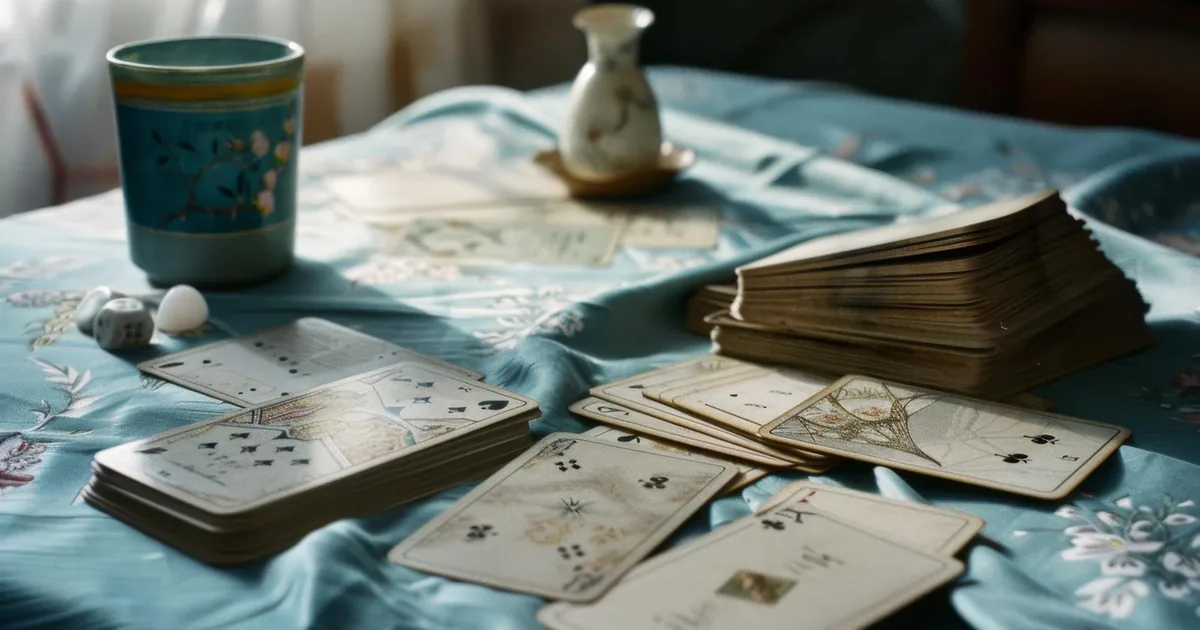
Historically, tarot cards appeared in 15th-century Italy as a game, but by the 18th century, they had become a tool for divination. Today, tarot card reading is a way to structure internal chaos: when thoughts scatter, a spread becomes a map of your state. Psychologists call this projection: you project onto images what you already know but are afraid to admit. Esotericists call it a dialogue with the field. Both work.
Many think that years of practice are needed for an accurate answer. In reality, tarot reading for beginners is built on three things: an honest question, a calm state, and a willingness to hear not what you want. Experience comes with the number of spreads, but you can get your first answer today. In this section, we'll explore what tarot reading essentially is, and then—five specific methods that require neither courses nor gurus.
It's important to separate the wheat from the chaff right away. Tarot reading is not a verdict or a guarantee. It's a tool, like a compass: it shows the direction, but you still have to walk. If you're looking for how to understand tarot cards without fear and mystical fog, start simple: the deck is a mirror. What you bring to it is what you'll see.
Method 1: Yes or No Tarot Reading—the simplest entry
If you're asking "should I do this?" and want a quick answer, yes or no tarot reading is the perfect start. This isn't oversimplification, but a precise tool. One card, one question, one answer. No complex schemes.
How it works. You formulate a closed question: "Will I get this job?" "Should I text him first?" You shuffle the deck while asking the question and draw one card. Then comes interpretation. In the classic tradition, upright cards more often mean "yes," reversed cards "no," but this is a rough simplification. It's much more accurate to look at the card's meaning: The Sun—yes, The Tower—no, Two of Swords—not now.
Why does this work without experience? Because you're not trying to grasp the entire system. You're learning to hear one symbol. Single tarot card reading is like the first step in a dark room: you don't see all the furniture, but you already understand where the wall is. For a beginner, this reduces anxiety and removes the temptation to "overdo it."
Practical step: take a deck, formulate the question aloud, draw a card. Look at it for 30 seconds without the internet. What do you feel? What emotion arises? Write down your first impression. Then check the interpretation. If the feeling and the meaning match—you're on the right track. If not, write down both options and return to them in a day. This is how intuition develops.
A beginner's mistake is asking the same question ten times until you get a "yes." This isn't divination; it's bargaining with yourself. Yes or no tarot reading requires respect for the first answer. If it's unpleasant—that's not a reason to redraw, but a reason to reflect on why you're afraid to hear "no."
Method 2: Online tarot card reading—without a deck or preparation
Sometimes you don't have a deck at hand, but you need an answer now. Online tarot reading isn't a compromise; it's a full-fledged format. The random selection algorithm works just like shuffling: it pulls a card from the usual order, and you receive a symbol you don't consciously control. Which means—a chance to see what's hidden.
Online tarot card reading is convenient for those just getting acquainted with the system. You can choose a spread, see the meaning of each card, and immediately read the interpretation. This removes the fear of "doing it wrong." But there's a nuance: the online format shouldn't turn into a vending machine for wishful thinking. If you do free online tarot reading ten times in a row until you get the answer you want—you're not divining, you're playing roulette.
How to use online spreads consciously. First: formulate the question before clicking the button. Second: choose one spread, not five. Third: record the result and return to it in a week—this way you'll see if it came true. Free tarot reading isn't a "cheap version," but a way to check if this tool is even for you. Many practitioners started exactly with online services and later bought their first deck.
By the way, if you want to delve into other divination systems, check out other practices on the EXETERIC blog—where we explore runes, oracles, and numerology. But back to tarot. The online format is also great because it allows experimenting with different decks: Waite, Thoth, Marseille tarot. You'll see which images resonate more with you, and that's already half the success.
Method 3: Tarot reading for a man—how to read without illusions
One of the most frequent requests is tarot reading for a man. And one of the most dangerous, because it's easy to slip into fantasies. Cards don't show other people's thoughts verbatim. They show the energy of the situation, the dynamics of the relationship, and your place in that dynamic. If you expect tarot to read his messages in a messenger—you'll be disappointed. If you're ready to see how you yourself behave in these relationships—you'll get gold.
How to do a spread for a man without experience. Take three cards: the first is him, the second is you, the third is what's between you. Don't ask the question "does he love me?" Ask: "What is happening in our relationship right now?" The difference is huge. The first question demands a miracle from the cards; the second demands honesty.
A practical example. A girl does a spread for a guy, and the Eight of Swords (him), Queen of Cups (her), and Five of Pentacles (between them) come up. She's in love and waiting. He's trapped in his own doubts. Between them—a sense of lack, emotional poverty. The cards didn't say "he doesn't love you." They said: "he's not free internally, and you're wasting your resources." This isn't a verdict; it's a fact. And something can be done about it.
The mistake is interpreting cards as tarot reading meaning out of context. The Five of Pentacles in relationships isn't always infidelity. Sometimes it's everyday difficulties or income differences. Always look at the combination of cards, not just one. And remember: tarot card reading spreads for relationships aren't surveillance of a person, but a map of your shared territory.
Method 4: Tarot reading on your own at home—a ritual without fear
Tarot reading at home isn't candles at midnight or a pentagram on the floor. It's silence, a question, and a deck. Everything else is ambiance that helps you tune in but doesn't replace the work. If you're calmer with a candle—light it. If not—just turn off your phone.
Why the ritual is important. Psychologically, the ritual creates a boundary: "here and now, I enter a dialogue with myself." Esoterically—you set an intention, and the field responds. Candle magic tarot reading isn't about the candle "amplifying" the cards. It's about the flame holding your attention. You look at the flame, breathe evenly, formulate the question. The brain switches from "racing" mode to "observation" mode. And then the cards speak more clearly.
A step-by-step algorithm for a beginner. First: remove distractions. Second: formulate the question so it starts with "what" or "how," not "why." "Why isn't he calling?"—a bad question, it seeks a culprit. "What do I need to understand in this situation?"—a good one. Third: shuffle the deck until you feel "stop." Fourth: draw the cards and write them down. Fifth: look at them without the internet, give yourself a minute for the first impression. Sixth: check the interpretation.
Tarot reading reviews often describe this moment as a "click"—when the card's meaning matches what you already suspected. This isn't mysticism; it's the lifting of an inner ban on knowing. You knew the answer but were afraid to voice it. The cards voiced it.
Method 5: Tarot reading spreads for a situation—three cards that say more than it seems
When the question is more complex than "yes or no," you need a spread. Tarot reading spreads aren't about the number of cards, but about structure. The most universal for a beginner is three cards: past, present, future. Or: cause, lesson, perspective. Or: what helps, what hinders, what's hidden.
Why three cards and not ten. Because ten cards without experience turn into mush. You'll look for contradictions, not meaning. Three cards give a clear line. How to understand tarot reading without experience? Through limitation. The fewer cards, the clearer the question.
An example of a situation spread. A woman asks: "Should I change jobs?" The cards drawn are: Six of Swords (past), Wheel of Fortune (present), The Star (future). Six of Swords—she's already leaving somewhere, perhaps emotionally. The Wheel—the situation is changing on its own, not everything is under control. The Star—hope and clarity ahead. The cards didn't say "quit tomorrow." They said: "the process is already underway, trust the flow, but don't expect an instant result." This is tarot reading interpretation—not an order, but a description of the landscape.
A table comparing three popular spreads:
| Spread | Number of Cards | Best For | Difficulty for Beginners |
|---|---|---|---|
| Yes — No | 1 | Quick answer to a closed question | Minimal |
| Three Cards | 3 | Situation, relationships, dynamics | Low |
| Celtic Cross | 10 | Deep analysis with details | High, requires experience |
Start with the first two. Leave the Celtic Cross for later, when you learn to hear a single card. Tarot reading types of spreads aren't about which is "more powerful," but which more accurately answers your question. If the question is simple—don't complicate it.
How to understand tarot cards without experience: 3 signs you're reading correctly
Tarot reading signs of a correct reading aren't trembling hands or "energy up the spine." It's calm certainty and the absence of a desire to redraw. Here are three markers that distinguish a working interpretation from self-deception.
First sign: the card evokes an emotion you didn't expect. If you drew The Sun and felt happy—that's not a sign. If you drew The Tower and felt relief ("finally, this will collapse")—that's a signal. An unexpected emotion means you've touched something real.
Second sign: the card's meaning matches facts you knew but ignored. For example, you ask about relationships, and the Five of Swords comes up—conflict, defeat. And you remember that for the last two weeks you've been arguing over trivial things. The card didn't create the problem; it highlighted it.
Third sign: after the spread, you feel calmer, even if the answer is unpleasant. This is a paradox, but it works. When you get clarity, anxiety goes away. If, however, after the spread you feel panic and a desire to urgently "fix" things—most likely, you're reading not the cards, but your fear.
A table of myths and reality:
| Common Myth | Why It's Not So | How It Really Is |
|---|---|---|
| Tarot predicts the future unambiguously | The future is variable; cards show probabilities | Tarot shows a tendency and a point of choice |
| You need a gift or initiation | A gift is attention; it can be developed | Practice and honesty are more important than a "gift" |
| You can't read for yourself | This is superstition; you can and should read for yourself | Reading for yourself is harder due to bias, but it's possible |
What is tarot reading really? It's a conversation with yourself through symbols. The less you fear making a mistake, the more accurately you read. Start with one card a day: draw it in the morning, check it in the evening. In a month, you'll understand the language of tarot without prompts.
Tarot reading and clairvoyance: where the boundary is and why it's needed
Clairvoyant tarot reading—this phrase is often placed together, but they are different things. Clairvoyance is the ability to receive information outside the senses. Tarot is a tool that helps structure that information. You can be an excellent tarologist without clairvoyance, and you can be clairvoyant without knowing how to read cards.
Why this is important for a beginner. If you think you need a "gift" for divination, you're sabotaging yourself. In reality, tarot is a language. Like English: it can be learned. Clairvoyance is like perfect pitch: it's easier with it, but you can still play music without it. Many practitioners develop clairvoyance through tarot: when you do many spreads, you start to "see" the situation before you turn over the card. This isn't magic; it's trained intuition.
How to train the connection. First: keep a spread journal. Write down the question, the cards, the interpretation, and what happened a week later. Second: check yourself. Before turning over a card, try to guess what energy will come. Third: don't cling to the result. If you didn't guess—it's okay; you're training attention, not taking an exam.
Tarot reading meaning of cards is the foundation, but not dogma. Every card has a classic meaning, but in the context of your question, it might sound different. For example, Death in tarot isn't physical death, but the end of a stage. If you're asking about work, Death might mean resignation or a change of position. If about relationships—a breakup or a transition to a new level. Always look at the question.
Tarot reading with candle magic: how to enhance practice without superstitions
Candle magic tarot reading isn't about the candle "charging" the cards. It's about the flame helping you enter a state. In the esoteric tradition, the candle symbolizes the element of fire—will, clarity, transformation. When you light a candle before a spread, you're essentially telling yourself: "I'm entering the space of practice."
How to do it right. Choose an unscented candle so the smell doesn't distract. Place it so the flame is at eye level but doesn't interfere with looking at the cards. Formulate the question while looking at the flame. Then shuffle the deck. If the candle starts smoking or crackling—don't be alarmed. It's physics: moisture in the wick or a draft. Don't look for signs where there are none.
Olga, a practicing tarologist with 15 years of experience, says: "I light a candle not for the cards to 'work.' I light it so I stop running around the room and sit down. The candle is an anchor. It burns steadily, and I breathe steadily. In this state, the cards are read much more easily." This is candle magic tarot reading Olga—not a ritual for ritual's sake, but a way to tune in.
If you're doing tarot reading at home, you don't have to wait for a full moon or a special day. Ten minutes of silence are enough. A candle, a deck, a notebook. Everything else is ambiance. The main thing is your intention and honesty. If you're tired or angry, it's better to postpone the spread. Cards don't like being used as a punching bag.
And finally: don't turn practice into an addiction. Tarot reading is a tool for clarity, not a substitute for decisions. If you catch yourself unable to make a step without a spread—take a pause. Cards are a compass, but you still have to walk.

Tarot as a mirror, not a crystal ball: what remains after the spread
If you've reached this line, something has already shifted inside. Perhaps you've considered for the first time that divination isn't about fate, but about attention. And this is the most important discovery you can make at the start. Cards don't cancel your responsibility or solve problems for you. They only illuminate what you already knew but were afraid to voice. In this sense, esotericism isn't an escape from reality, but a way to look at it soberly and with love.
We've explored five methods, and none of them require a special gift, initiation, or years of practice. All you need is an honest question, a calm state, and a willingness to hear not what you want. This is the foundation of EXETERIC practices: not mystical fog, but a clear dialogue with yourself. If this approach resonates with you, check out other practices on the EXETERIC blog—where we explore runes, oracles, and numerology with the same care and without fear-mongering.
And yet, tarot is just one of the tools. Some resonate more with astrology, others with working with symbols or meditation. It's useful to look at yourself more broadly: for example, check out the astrology section and see what your zodiac sign says about your character and rhythm. This doesn't replace tarot, but complements the picture. The more languages you know, the more precisely you formulate the question to yourself.
The main takeaway: esotericism is not a panacea or a reason for fear. It's a tool for self-knowledge and conscious living. If you feel calmer after a spread—you're reading correctly. If panic and a desire to urgently redraw appear—you're reading your fear, not the cards. Learn to distinguish these states, and practice will become a support, not an addiction.
Don't fear the unfamiliar. The unfamiliar is simply what hasn't yet become your language. Take one card, ask one question, write down your first impression. Do the same tomorrow. In a month, you'll be surprised how much you've started to notice. And remember: cards are a compass, but you still have to walk. May this path be calm, honest, and yours.
Frequently Asked Questions
How long does it take to learn to read tarot on your own?
You can get your first meaningful answer on the day you meet the deck—if you ask an honest question and don't redraw the spread ten times. A stable understanding of the language of symbols comes after about one to three months of daily practice with one card. What's important isn't the number of meanings memorized, but the habit of looking at an image and noticing your first emotion. Keep a journal: draw a card in the morning, check what happened in the evening. This rhythm trains intuition faster than memorizing a textbook. In six months, you'll be reading simple spreads without prompts.
Can I do tarot reading if I'm baptized or a believer?
Tarot is a system of symbols, not a religion, so the deck itself doesn't require renouncing faith. Many believers use the cards as a tool for reflection, not as a replacement for prayer or spiritual practice. If there's a conflict inside, ask yourself: does it help you understand your feelings and decisions more clearly? If yes—the practice doesn't destroy, but supports. If no—put the deck away without guilt. The main thing is not to turn the tool into an idol and not to shift responsibility for your life onto it.
What should I do if a scary card comes up—The Tower, Death, The Devil?
Scary cards in tarot almost never mean literal catastrophes. The Tower speaks of the destruction of the old, Death of the end of a stage, The Devil of dependency or temptation. Look at the question you asked: if it's about work, Death might mean a change of position, not a loss. Write down your first impression and return to it in a day—panic usually subsides, but the meaning remains. If the card caused strong anxiety, take a pause and don't read in that state. Cards show a tendency, not a verdict, and always leave you with a choice.
Is it true that you can't read for yourself and that it's "dangerous"?
The prohibition on reading for yourself is superstition, not a rule. You can and should read for yourself, because you know the context of your situation better than anyone. The only difficulty is bias: it's harder for you to accept an unpleasant answer, and the temptation to redraw the spread arises. To avoid this, record the result before you start interpreting, and return to the record in a week. This way you train honesty, not seek confirmation of what you wish. The danger here isn't mystical, but psychological: don't turn the cards into a way to avoid making decisions.