Celtic Cross Tarot: Meaning of Positions in the Main Spread
Celtic Cross Tarot: What It Is and Why It's So Popular
The Celtic Cross Tarot is perhaps the most famous and at the same time the most complex spread in world practice. It can be found in any book on Tarot, in any online course, and in the arsenal of almost every practitioner. But why exactly did it become the "main spread," even though at first glance its layout seems confusing? The answer lies in its structure: the Celtic Cross is not just a set of cards, but a holistic system that covers all levels of a person's life — from external events to deep subconscious motives.
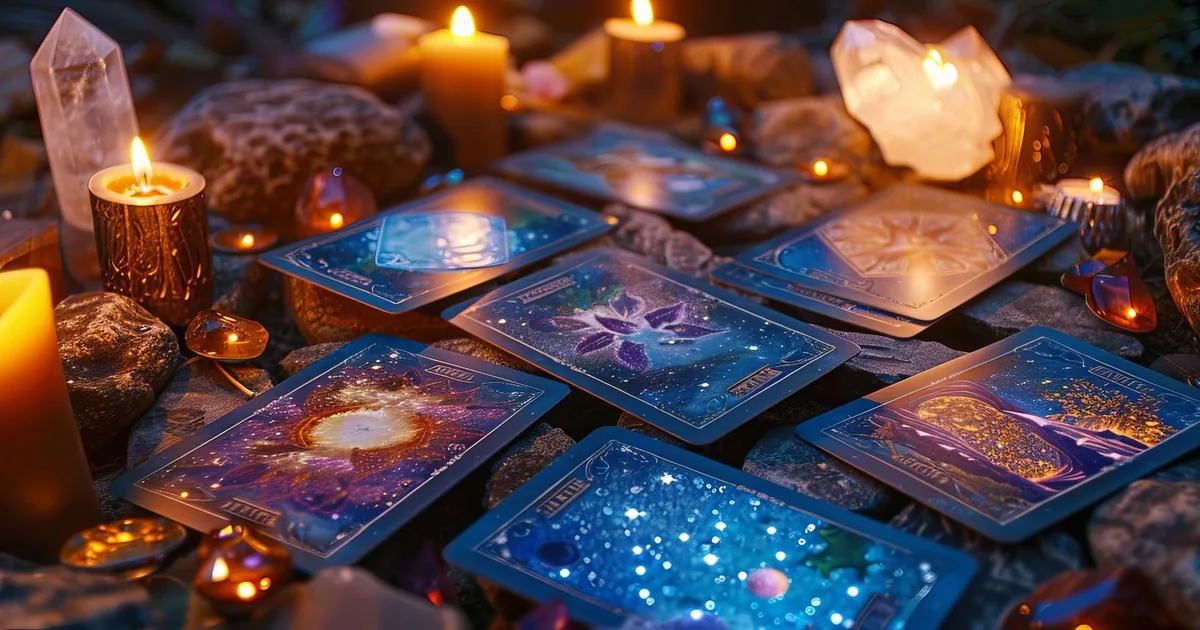
Historically, the Celtic Cross traces back to the traditions of Western esotericism, but its modern form was popularized in the early 20th century thanks to the Hermetic Order of the Golden Dawn. It was there that the spread acquired its classic form with ten positions, each of which answers a specific question. Since then, it has become the standard for Tarot readers of all schools, and even those who work with original spreads often return to it as a foundation.
Unlike simple three-card spreads, the Celtic Cross allows you to see the situation in volume: it shows not only the current state of affairs, but also hidden influences, past events, possible future, and the outcome. This makes it an indispensable tool for deep analysis. However, beginners often fear it because of the abundance of positions and the complexity of interpretation. In this article, we will break down each position in detail, with examples and practical advice, so that you can use the Celtic Cross Tarot with confidence and understanding.
It is important to understand that the Celtic Cross is not fortune-telling in the primitive sense, but a way to establish a dialogue with your own subconscious. Each card is a symbol that resonates with our inner knowledge. Therefore, when working with this spread, you not only receive a prediction, but also learn to see the situation from different sides, which helps you make conscious decisions. This is its main value.
Spread Layout and Preparation for Work
Before moving on to the meanings of the positions, it is important to understand how to properly prepare for the spread and how to lay out the cards. The Celtic Cross Tarot Spread requires a calm environment and concentration. Choose a time when no one will disturb you, light a candle or turn on quiet music — this will help you get into the right mindset for the work.
The Celtic Cross layout looks like this: the cards are laid out in the shape of a cross (positions 1-6) and a staff (positions 7-10). The first six cards form the cross: card 1 — in the center, card 2 — horizontally on top of it (crossed), card 3 — below, card 4 — to the left, card 5 — above, card 6 — to the right. Then cards 7, 8, 9, 10 are laid out in a column to the right of the cross (or, according to another version, vertically downward).
Before the spread, formulate your question. The accuracy of the answer depends on how clearly you ask it. For example, instead of "What awaits me?" it is better to ask "What are the prospects for my project?" or "What do I need to know about my relationship?" The question should be open-ended and relate to a specific area of life.
For the Celtic Cross, a full deck is usually used, including the Major and Minor Arcana. Shuffle the cards while thinking about the question, and draw ten cards. If you use reversed meanings, decide in advance whether you will take them into account. Some Tarot readers prefer to work only with upright cards to simplify interpretation, but reversed cards provide additional nuance. In any case, be consistent.
It is important to remember that the Celtic Cross is not a rigid script, but a flexible system. You can adapt it to your question by shifting the emphasis in interpretation. For example, if the question is about career, the positions will shift toward the professional sphere, and if about love — toward feelings and relationships. The main thing is to maintain the logic of the positions.
Positions 1-2: Situation and Obstacle
The first card of the Celtic Cross symbolizes the essence of the question, the current situation. It shows what is happening at the moment, what energy fills the situation. This is the foundation on which the entire spread is built. For example, if the Five of Swords appears, it may indicate a conflict or struggle currently taking place in your life. If the Ten of Cups appears — harmony and family happiness.
The second card, lying across the first, is the crossroad, obstacle, or challenge. It shows what is hindering or what needs to be overcome for the situation to resolve. It is important to understand that this card is not always negative — it can indicate an internal conflict or external influence that needs to be taken into account. For example, if the Eight of Wands lies across the first card, it may indicate haste or the need to act quickly, which can be both a help and a hindrance.
Together, the first and second cards form the core of the spread. They describe the energetic background of the question. For example, in a job search situation, the first card may show the current state (e.g., Three of Pentacles — teamwork), and the second — the obstacle (e.g., Five of Pentacles — financial difficulties). When interpreting these two cards, ask yourself: "What is happening now?", "What is hindering me?", "What am I not noticing?"
Practical advice: do not try to interpret the second card as an "enemy" or "evil force." It merely points to an aspect that requires attention. Perhaps it is your own insecurity or fear that is blocking movement. Once you realize this, you can work with the obstacle constructively.
Positions 3-6: Roots, Past, Consciousness, and Near Future
The third card, located below, symbolizes the roots of the situation — what has already happened and influenced the current state of affairs. This could be an event from the past, a long-ago choice, or a subconscious pattern. For example, if the Moon appears, it may indicate uncertainty or illusions that were in the past and led to confusion now.
The fourth card, to the left, is the past that is gradually receding. It shows what remains in the past but still exerts influence. This could be an unclosed gestalt or an experience you have already outgrown. For example, the Four of Swords may speak of a period of rest that has ended, or the need to let go of old grievances.
The fifth card, above, is consciousness, or what you think about the situation. It reflects your conscious thoughts, plans, and expectations. If the King of Pentacles appears, you are likely feeling practical and confident in your abilities. If the Ten of Swords appears, you may feel cornered, although in reality the situation is not so hopeless.
The sixth card, to the right, is the near future, which will arrive within a few weeks or months. It shows where the situation is heading if nothing changes. For example, if the Chariot appears, forward movement awaits you, possibly a trip or a new stage. If the Five of Cups appears, the future may be associated with disappointment, but also with the opportunity for reassessment.
These four cards together provide temporal dynamics: roots (past), receding past, present consciousness, and near future. They help you see how the past influences the present and what may happen if you continue to act as before. This is key information for decision-making.
Positions 7-10: Attitude, Environment, Hopes, and Outcome
The seventh card, the first in the column, is your attitude toward the situation, your stance. It shows how you yourself view what is happening, what your inner mood is. For example, if the Fool appears, you may be approaching the situation lightly, with humor, but perhaps not seriously enough. If the Empress appears — you are in a creative and nurturing mood.
The eighth card is the environment, external influences. It shows what people or circumstances are affecting the situation. These could be friends, family, colleagues, or even public sentiment. For example, if the Three of Swords appears, the environment may be a source of pain or conflict. If the Star appears — there is support from above or hope.
The ninth card is hopes and fears. It reflects your expectations, dreams, and concerns about the outcome. This position often shows what you want to get from the situation and what you fear. For example, if the Ten of Pentacles appears, you hope for stability and wealth, but may fear you will not achieve it. If the Tower appears — you may fear destruction, but also subconsciously desire change.
The tenth card is the outcome, the final result the situation will lead to if you follow the current path. This is not a fatal verdict, but a probable outcome if current trends continue. For example, if the World appears, the outcome will be harmonious and successful. If Death appears — the outcome is connected with transformation and the completion of one stage.
It is important to understand that the outcome is not inevitable. The spread shows the most likely scenario, but you always have free choice. Use the information from the spread to adjust your actions and change the future for the better.
How to Read the Celtic Cross as a Whole: Examples and Practice
Now that we have broken down each position, let's look at how to combine them into a holistic picture. The Celtic Cross Tarot Spread is not just the sum of individual card meanings, but their interaction. Start with the first card — it sets the theme. Then look at the second — what hinders or helps. Next, trace the dynamics from the third to the sixth: how the past led to the present and what lies ahead. Then pay attention to attitude (7), environment (8), hopes (9), and outcome (10).
Let's consider an example. Question: "What are the prospects for my new business project?"
- 1. Ace of Pentacles — a new project, potential for success.
- 2. Five of Swords — conflict with a partner or competition.
- 3. Four of Wands — a stable foundation, possibly previous experience.
- 4. Six of Cups — nostalgia, reliance on past connections.
- 5. Knight of Wands — enthusiasm, readiness to act.
- 6. Two of Pentacles — balancing between matters, possible fluctuations.
- 7. Queen of Pentacles — a practical approach, care for resources.
- 8. Three of Swords — the environment may be critical or bring disappointments.
- 9. The Moon — fears of the unknown, illusions.
- 10. The Sun — success, recognition, positive outcome.
In this example, we see that the project has good potential (Ace of Pentacles), but there is an obstacle in the form of conflict (5 of Swords). The past provides stability (4 of Wands), but also pulls backward (6 of Cups). Consciousness is set on action (Knight of Wands), but the future may be unstable (2 of Pentacles). The attitude is practical (Queen of Pentacles), but the environment is not supportive (3 of Swords). Fears are connected with the unknown (The Moon), but the outcome is success (The Sun). Thus, you need to overcome the conflict and not give in to fears, and then the project will be successful.
For practice, take your question and try to lay out the cards following this scheme. Write down your interpretations, then compare them with real events after a few weeks. This will help you develop intuition and better understand the language of Tarot.
Typical Beginner Mistakes and How to Avoid Them
Many beginners, when starting to work with the Celtic Cross, make the same mistakes. The first is trying to interpret each card in isolation, ignoring the connections between positions. For example, if Death appears in the "outcome" position, do not panic — it can mean the end of the old and the beginning of the new, especially if other positions contain cards indicating transformation.
The second mistake is too literal interpretation. Tarot speaks in symbols, and the same card can have many meanings depending on the context. For example, the Five of Pentacles can indicate financial difficulties, but also feelings of isolation or spiritual poverty. Pay attention to neighboring cards and your inner response.
The third mistake is ignoring reversed cards. If you use reversed meanings, be sure to take them into account, but do not turn them into a tragedy. A reversed card often indicates blocked energy or that the card's quality is manifested in a negative aspect. For example, the reversed Three of Cups can mean excess or gossip.
The fourth mistake is asking too general questions. The more specific the question, the more accurate the answer. Instead of "What awaits me?" ask "What do I need to know about my career in the next six months?"
The fifth mistake is trying to use the Celtic Cross for every minor question. This spread requires deep analysis and energy, so it is better to use it for important life situations, not for choosing between tea and coffee.
To avoid these mistakes, practice regularly, keep a spread journal, and analyze your results. Over time, you will learn to feel the cards and their interaction.
Celtic Cross and Other Spreads: Comparison
The Celtic Cross is often compared with other popular spreads, such as the "Horseshoe," "Celtic Cross," and "Tree of Life." Each of them has its own features and areas of application. To make it easier for you to choose the right spread, we have compiled a comparison table.
| Spread | Number of Cards | Focus | Complexity | When to Use |
|---|---|---|---|---|
| Celtic Cross | 10 | Deep analysis of the situation, all aspects | High | For complex questions requiring detailed examination |
| Horseshoe | 7 | Past, present, future, advice | Medium | For general questions about the development of events |
| Three Cards | 3 | Situation, action, result | Low | For quick answers to simple questions |
| Tree of Life | 10 | Spiritual development, karmic tasks | High | For questions about life path and self-knowledge |
As can be seen from the table, the Celtic Cross Tarot is a universal spread that suits most situations, but requires time and attention. If you need a quick answer, it is better to use simpler layouts. However, for a deep understanding of a problem, the Celtic Cross is indispensable.
It is also worth noting that there are variations of the Celtic Cross, for example, with additional positions or a changed order. But the classic layout we have examined is the basic and most common one.
How to Use the Celtic Cross for Self-Discovery
The Celtic Cross is not only a tool for predictions, but also a powerful method of self-discovery. By laying out cards, you enter into a dialogue with your subconscious, which conveys important messages to you through symbols. This spread helps you see hidden motives, fears, and desires that influence your life.
For example, if cards of Swords often appear in the "consciousness" position, this may indicate that you are too rational and suppress emotions. If Cups cards often appear in the "hopes" position, you are probably seeking love and emotional harmony. By analyzing recurring patterns, you can identify your strengths and weaknesses.
For self-discovery practice, it is recommended to ask questions related to personal growth, for example: "What do I need to understand about myself?", "What beliefs are hindering me?", "What is my next step on the spiritual path?" The answers received through the Celtic Cross can become a starting point for meditation or journaling.
It is also useful to use the Celtic Cross in combination with other practices, such as meditation or energy work. For example, after a spread, you can meditate on the card that affected you the most to understand its meaning more deeply. This will help integrate the knowledge gained into everyday life.
Remember that Tarot is a mirror that reflects your inner state. The more honest you are with yourself, the more accurate the answers will be.
Celtic Cross in Love Questions
The Celtic Cross holds a special place in questions of love and relationships. This spread allows you to see not only the current state of the couple, but also the hidden dynamics that affect the union. For example, the first card will show what is happening in the relationship now, the second — what obstacles exist (e.g., distrust or jealousy), the third — the roots of the problem (possibly past grievances), the fourth — what is leaving from the past, the fifth — what you think about your partner, the sixth — where the relationship is heading, the seventh — your attitude toward your partner, the eighth — the influence of the environment (e.g., relatives), the ninth — your hopes and fears, the tenth — the outcome.
Let's consider an example. Question: "What are the prospects for my relationship with Alexander?"
- 1. Two of Cups — mutual sympathy, union.
- 2. Five of Wands — conflicts, struggle for leadership.
- 3. Four of Swords — rest, possibly a pause in the relationship.
- 4. Six of Pentacles — unequal exchange, one gives more.
- 5. Queen of Wands — you feel passion and confidence.
- 6. Three of Swords — possible pain or disappointment.
- 7. Knight of Cups — you are romantic and idealize your partner.
- 8. Ten of Swords — the environment may be toxic or bring suffering.
- 9. The Moon — fears of betrayal or uncertainty.
- 10. Eight of Cups — withdrawal from the situation, possibly separation.
In this example, it is clear that the relationship has potential (2 of Cups), but there are conflicts (5 of Wands) and imbalance (6 of Pentacles). Your consciousness is set romantically (Queen of Wands), but the future may be painful (3 of Swords). The environment is not supportive (10 of Swords), and fears are strong (The Moon). The outcome is withdrawal (8 of Cups). This suggests that if conflicts are not resolved and balance is not restored, the relationship may end.
Use this spread to understand what is really happening in the relationship and make a balanced decision.
Celtic Cross in Career and Finance Questions
The Celtic Cross is also excellent for analyzing the professional sphere and financial matters. It helps you see what opportunities are opening up, what obstacles exist, and what the likely dynamics of events will be. For example, the first card will show the current state of affairs at work, the second — what hinders progress, the third — the roots of the problem (possibly unsuccessful experience), the fourth — what is leaving from the past, the fifth — your thoughts about your career, the sixth — near-term prospects, the seventh — your attitude toward work, the eighth — the influence of colleagues or the market, the ninth — your hopes and fears, the tenth — the outcome.
Example. Question: "Should I change jobs?"
- 1. Three of Pentacles — you work well in a team, but feel stagnation.
- 2. Four of Pentacles — fear of losing stability, greed.
- 3. Eight of Pentacles — you have worked hard but have not received recognition.
- 4. Five of Swords — conflicts with management or colleagues.
- 5. The Emperor — you want more control and power.
- 6. Two of Wands — you are on the threshold of a choice, there are opportunities.
- 7. The Chariot — you strive for victory, but may be too overconfident.
- 8. Ten of Pentacles — the environment may offer stability, but not growth.
- 9. The Moon — fears of the unknown, illusions about a new job.
- 10. The Star — hope, inspiration, positive changes.
Here we see that in your current position you are experiencing stagnation (3 of Pentacles), but you fear change (4 of Pentacles). In the past there were conflicts (5 of Swords), but you want more power (The Emperor). The future offers opportunities (2 of Wands), but you may be too overconfident (The Chariot). The environment is stable but not growing (10 of Pentacles). Fears are connected with the unknown (The Moon), but the outcome is hope and positivity (The Star). This suggests that changing jobs may be favorable if you overcome your fear.
Use the Celtic Cross to analyze career decisions, but do not rely only on cards — combine them with real facts and common sense.
Celtic Cross and Energy Work
The Celtic Cross Tarot is not only intellectual analysis, but also an energetic practice. When you lay out cards, you interact with the energies they symbolize. Therefore, it is important to approach the spread with pure intention and respect.
Before the spread, it is recommended to do a short meditation or space cleansing. You can light a candle, use incense sticks, or simply take a few deep breaths. This will help you tune into the work and create a protective field.
During the spread, pay attention to your sensations: which cards evoke warmth in you, which ones cause tension. These reactions can provide additional information. For example, if a card that usually seems neutral makes you uncomfortable, it may indicate a hidden problem.
After the spread, thank the cards and your intuition for the information. You can write down the results in a journal to track your patterns. Regular practice will help you develop sensitivity to energies and improve the accuracy of interpretations.
It is also important to remember that Tarot does not replace professional help in difficult life situations. If you are facing serious problems, consult a specialist.
Celtic Cross for Beginners: A Simple Algorithm
If you are just starting your journey in Tarot, the Celtic Cross may seem complicated. But do not be afraid — we have prepared a simple algorithm that will help you master this spread.
Step 1. Prepare your deck and space. Make sure no one will disturb you.
Step 2. Formulate your question. Write it down on paper so you do not forget it.
Step 3. Shuffle the cards while thinking about the question. Draw 10 cards and lay them out according to the layout.
Step 4. Start with the first card. Write down its name and your first impression. Then move to the second, and so on.
Step 5. After you have written down all the cards, try to combine them into a story. Start with the first card and move in order, connecting the meanings.
Step 6. Pay attention to suits and numbers. For example, many Swords indicate conflicts, many Cups — emotions.
Step 7. Write down the final interpretation and draw conclusions.
Step 8. After some time (e.g., after a month), return to this spread and compare it with real events.
This algorithm will help you structure the process and avoid chaos in interpretation. Over time, you will be able to move away from it and intuitively feel the cards.
Remember that the Celtic Cross is a practice that requires patience and regularity. Do not be upset if the first spreads seem confusing. With each time, you will understand the language of the cards better and better.
Celtic Cross and Other Esoteric Practices
The Celtic Cross Tarot is often combined with other esoteric practices, such as astrology, numerology, and Human Design. This allows for a deeper understanding of the situation. For example, you can compare the cards with your zodiac sign or your birth number. You can learn more about the connection between Tarot and astrology in the astrology section.
You can also use the Celtic Cross to analyze dreams. If a dream is bothering you, you can lay out cards on the question: "What does this dream mean?" and interpret the symbols in the context of your life. Read about dream interpretation in the EXETERIC dream book.
In addition, the Celtic Cross can be useful for studying your Human Design. For example, you can ask: "How can I best realize my type?" and use the cards to get hints. Learn more about types and strategies in the Human Design guide.
You can also combine Tarot with the Matrix of Destiny by calculating your arcana based on your date of birth and comparing them with the cards in the spread. This will help you see karmic tasks. Read about calculations and meanings of arcana in the Matrix of Destiny calculator.
Do not be afraid to experiment and find your own unique ways of working with the Celtic Cross. The main thing is that the practice brings you benefit and joy.
Celtic Cross: Frequently Asked Questions
In this section, we will answer the questions that most often arise among those who begin working with the Celtic Cross.
Question: Can the Celtic Cross be used for other people?
Answer: Yes, you can do a spread for another person, but it is important that they ask the question and are open to the information. You should be a neutral conduit, not projecting your own expectations.
Question: What to do if many negative cards appear in the spread?
Answer: Do not panic. Negative cards indicate problems that can be solved. Use the information to understand what needs to be changed. Remember that the future is not fatal.
Question: Do I need to use reversed cards?
Answer: This depends on your school. Some Tarot readers do not use reversed cards, believing it complicates interpretation. Others, on the contrary, see additional depth in them. Choose the approach that suits you best and be consistent.
Question: How often can the Celtic Cross be done?
Answer: It is not recommended to do the same spread on the same question too often, as this can cause confusion. It is better to wait at least a few weeks before repeating it.
Question: Can the Celtic Cross be used for fortune-telling about the future?
Answer: Yes, but remember that the future is not predetermined. The spread shows a probable scenario that you can change with your actions.
If you still have questions, you can find more information in the articles on magic and self-knowledge.
Celtic Cross as a Mirror of Your Life
The Celtic Cross is not just a spread, but a whole philosophy that teaches us to see life in all its complexity and beauty. It reminds us that behind every event lies a whole network of causes and effects, that our thoughts and feelings shape reality, and that the future is not a verdict, but a field of possibilities. By working with this spread, you learn not only to predict, but also to understand, to listen to your intuition, to trust your inner voice. This is a path to self-knowledge that can become a support in everyday life.
It is important to remember that Tarot is a tool, not a magic pill. It does not give ready-made answers, but merely illuminates hidden aspects of the situation, helping you make conscious decisions. Do not be afraid of "negative" cards — they often point to areas of growth, to what requires your attention. Use the knowledge gained as a guide to action, not as a reason for anxiety. This is the wisdom of esotericism: it does not run away from reality, but helps to understand it.
If you want to delve deeper into the world of symbols and meanings, check out the articles on magic and self-knowledge on EXETERIC — there you will find much useful information about various practices and approaches. And if you are interested in how Tarot is connected with astrology, be sure to explore the astrology section — perhaps you will discover new facets of your personality by looking into your zodiac sign.
Remember that every spread is a dialogue with yourself. Do not be afraid to experiment, ask questions, seek your own interpretations. Practice regularly, keep an observation journal, and over time you will feel how the cards begin to speak with you in the same language. The Celtic Cross is not just a technique, it is a way to live consciously, noticing signs and synchronicities around you. May this spread become your faithful companion on the path to harmony and self-understanding.
And remember: in the world of esotericism, there is no place for fear. There is only curiosity, respect, and the striving toward light. Start small — with one question, one card, one step. And you will see how gradually your life fills with meaning and clarity. And if you want to share your discoveries or ask questions, we are always glad to see you in the EXETERIC practitioner community. Together we can sort out the most confusing situations and find the answers your soul is seeking.
Frequently Asked Questions
Can the Celtic Cross be done every day?
The Celtic Cross is a deep and energy-intensive spread that is best used for important life questions, not for everyday trivialities. If you want to get quick daily hints, simpler spreads, such as three-card ones, are more suitable. However, if you feel the need for a detailed analysis of a specific situation, the Celtic Cross can be done more often, but it is important not to overload yourself and give time for reflection on the results. Regular practice with this spread will help you better understand its symbolism, but try not to overuse it so as not to lose the depth of perception.
How to interpret reversed cards in the Celtic Cross?
Reversed cards in the Celtic Cross indicate blocked energy, internal obstacles, or negative aspects of the card's meaning. For example, the reversed Three of Cups may speak of gossip or excess, and the reversed Ten of Pentacles — of financial instability. It is important to consider them in the context of the position: if a reversed card falls in the "obstacle" position, it intensifies the challenge, and in the "outcome" position it may indicate that the result will be achieved with difficulty. Some Tarot readers prefer not to use reversed meanings to simplify reading, but if you decide to take them into account, do so consistently and pay attention to neighboring cards.
What to do if many negative cards appear in the Celtic Cross?
Negative cards in the Celtic Cross are not a verdict, but rather indicate problems that require your attention. Treat them as hints: what needs to be changed, which aspects need to be worked through. For example, if the Five of Swords appears in the "obstacle" position, it may mean a conflict that can be resolved through diplomacy. If the Tower appears in the "outcome" position, it may speak of inevitable changes that in the long term will lead to liberation. Use the information from the spread for conscious action, not for fear. Remember that the future can always be adjusted, and the cards only show the most likely scenario given the current state of affairs.
How often can the Celtic Cross be repeated on the same question?
It is not recommended to repeat the Celtic Cross on the same question too often, as this can lead to confusion and contradictory answers. It is better to wait at least a few weeks so that the situation changes and you can see the dynamics. If you feel the answer is unclear, try reformulating the question or doing an additional spread on clarifying aspects. Constantly repeating the same spread may indicate your uncertainty or unwillingness to make a decision. Trust the first spread, give yourself time to reflect, and only then, if needed, return to the question with a fresh perspective.