Card of the Day: How to Pull and Read Tarot Every Morning
What is a card of the day and why is it needed
A card of the day is a single Tarot card that you draw in the morning to get a guide for the upcoming day. This is not a prediction of fate or fortune-telling in the usual sense. Rather, it's a way to calibrate your inner compass, a method to hear your own subconscious and view the day through the lens of a symbol. In the Tarot tradition, this practice has been known for a long time: as early as the beginning of the 20th century, English occultists used the morning card draw as a meditative ritual before working with the full deck. Today, the card of the day has become one of the most popular requests in esoteric blogs—and this is logical: it provides a quick but deep connection with yourself.
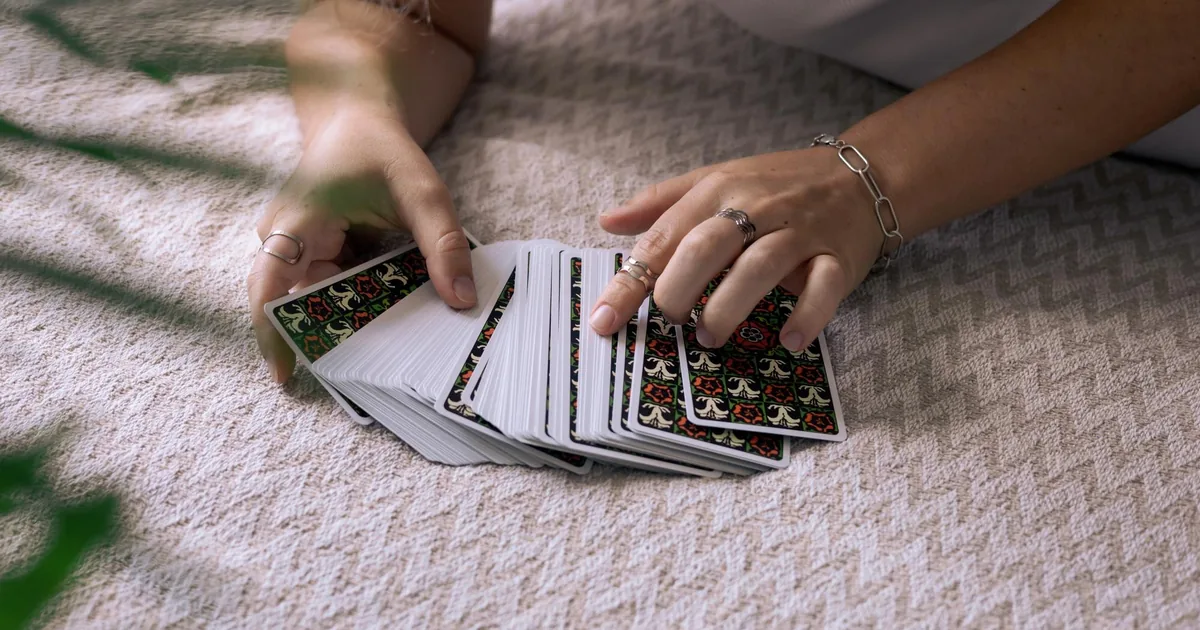
Why does it work? From a psychological perspective, the morning ritual triggers the mechanism of selective attention. You ask yourself a question, and the brain begins to search for answers in the day's events. The card becomes an anchor for reflection. From an esoteric perspective, each card carries a specific vibration that resonates with the energy of the day. You are not "attracting" events, but tuning into their perception. This is why the card of the day is a tool for mindfulness, not fatalism.
Many confuse the card of the day with a full spread. The difference is fundamental: a spread answers a specific question, while the card of the day sets the overall tone. It won't tell you whether you'll get a promotion, but it will hint at what energy will help you in negotiations today. It won't warn you of a quarrel, but it will show where you might be vulnerable. It's like a weather forecast: it doesn't decide whether to take an umbrella, but helps you choose your clothes.
For beginners, the card of the day is the perfect way to get acquainted with the deck without fear of making a mistake. You learn to read symbols, memorize meanings, and trust your intuition. If you are just starting out, check out other practices in the EXETERIC blog—there you'll find materials for a gradual immersion. And we move on: how to properly draw a card so that it speaks to you.
How to draw a card of the day: a step-by-step practice
The morning ritual doesn't require complex preparation. But there are nuances that distinguish a mindful practice from a mechanical draw. First: timing. It's best to draw the card right after waking up, while the mind is not yet burdened with plans and anxieties. If your morning starts with a phone and coffee on the go, try to set aside at least five minutes of silence. This is not dogma, but it makes the card's message clearer.
Second: your state. Don't draw the card in irritation or haste. Take three slow breaths, focus on the question: "What is important for me to know today?" Don't formulate a specific request—the card of the day answers a broad context. Hold the deck in your hands, shuffle, and cut with your left hand (traditionally, the left hand is associated with receptivity). Draw one card. If it's reversed—don't be afraid: in some schools, a reversed position is considered an additional nuance of meaning, while in others it's ignored. Choose an approach and stick to it.
Third: recording. Write down the card in a journal or note. In a day or two, come back and note how its energy manifested. This is a key moment: without feedback, the practice turns into fortune-telling for its own sake. A card of the day journal is your personal Tarot textbook.
If you prefer a digital format, there is a tarot card of the day online—but we recommend at least sometimes using a physical deck. The tactile contact with the cards strengthens the connection and helps you remember the symbols better. The deck for the card of the day can be any: the classic Rider-Waite, the Marseille Tarot, or modern author's decks. The main thing is that it feels pleasant to hold.
Mistakes that kill the practice
The first mistake is drawing the card multiple times until you get a "good" one. This is not wishful thinking, but a dialogue. If a card seems unpleasant, it means it carries an important signal. The second mistake is interpreting the meaning literally. "The Tower" doesn't mean your house will collapse today. It can speak of a sudden insight or a change of plans. The third is ignoring the context of your life. The same card will sound different for a student and for an entrepreneur.
How to read the card of the day: from symbol to meaning
Reading the card of the day is a skill that develops. Start with the basic meaning, but don't get stuck on it. Each card has several layers: traditional interpretation, astrological correspondence, and psychological archetype. For example, "The Sun" is joy, success, clarity. But in the context of the day, it might mean that you should step out of the shadows and show yourself. Or that today it's important to take care of your inner child.
A good method is to ask the card clarifying questions. Not "what awaits me?" but "what should I pay attention to?", "what to avoid?", "what resource to use?". This way you move from passive waiting to an active dialogue. If the card of the day seems vague, look at its suit and number. Swords speak of thoughts and conflicts, Wands of action and will, Cups of feelings and relationships, Pentacles of money and the body. Numbers add nuances: one is a beginning, five is a crisis, ten is completion.
For a deeper understanding of symbols, it's useful to keep a journal and refer to the EXETERIC dream dictionary—many Tarot archetypes resonate with dream imagery. This helps you see how your subconscious speaks to you in different languages.
| Suit | Life Sphere | Key Question of the Day | Example Card |
|---|---|---|---|
| Swords | Thoughts, communication, conflicts | What am I thinking and how does it affect reality? | Ace of Swords — clarity, a new idea |
| Wands | Action, will, creativity | Where am I directing my energy? | Three of Wands — expansion, anticipation |
| Cups | Feelings, relationships, intuition | What am I truly feeling? | Two of Cups — partnership, harmony |
| Pentacles | Money, body, material world | How am I taking care of my resources? | Six of Pentacles — generosity, balance |
This table is not a rigid scheme, but a starting point. Over time, you will notice that the same cards manifest differently in your life. This is normal: Tarot speaks to you in the language of your experience.
Meaning of the card of the day: examples for different suits
Let's look at specific examples so you can see how interpretation works. Let's start with Swords—the suit that most often frightens beginners. The tarot card of the day swords doesn't always mean conflict. The Ace of Swords is a moment of truth when you finally see the situation clearly. The Three of Swords can speak of disappointment, but also of necessary cleansing: sometimes you need to acknowledge the pain to move forward. The Five of Swords is a signal not to get involved in a pointless argument. If you drew the tarot card of the day swords meaning, ask yourself: where am I wasting energy on a struggle that brings no result?
Wands are fire, passion, action. The tarot card of the day wands often comes when you need to take initiative. The Knight of Wands is a day of quick decisions and impulsive actions. The Eight of Wands is news, movement, acceleration. But Wands can also overheat: if you drew the Five of Wands, be prepared for competition or an internal conflict of desires. The wands tarot meaning card of the day is always linked to the question: "What am I doing?"—not "What is happening to me?"
Cups are the element of water, emotions, and relationships. The tarot card of the day cups is an invitation to look into your feelings. The Nine of Cups is satisfaction, joy, but also the risk of complacency. The Seven of Cups is illusions, dreams that can lead you away from reality. The cups meaning in tarot card of the day helps you understand where you are deceiving yourself in the emotional sphere. If this suit is drawn, devote time not to deeds, but to relationships—with others and with yourself.
Pentacles are earth, money, the body. The pentacles tarot card of the day is about specifics: work, finances, health. The Ten of Pentacles is stability, family well-being. The Four of Pentacles is greed or fear of loss. The Ace of Pentacles is a new opportunity that requires a practical step. When this suit is drawn, ask: "What can I do today to strengthen my foundation?"
Card of the day for beginners: where to start and how not to get confused
If you've just picked up a deck, don't try to memorize all 78 meanings at once. Start with the card of the day—it's the safest and most effective way to learn. For the first week, draw a card and write down its name. In the evening, note which events or thoughts resonated with it. Don't judge yourself: even if the connection isn't obvious, it's normal. Tarot is not mathematics; here, experience is key.
The card of the day for beginners is great because it doesn't require complex spreads. You learn to feel the card, not to memorize dogmas. In parallel, you can read meanings in trusted sources, but always check them against your personal experience. If a meaning from a book doesn't resonate—set it aside. Perhaps your deck speaks differently.
What is the card of the day for a practitioner? It's a daily tuning that over time becomes a habit. Many tarot readers draw the card even after years of practice—not for prediction, but for connection with themselves. It's like a morning workout for intuition.
The card of the day at home doesn't require an altar or a special atmosphere. A quiet corner and five minutes are enough. If you want to enhance the practice, light a candle or use incense—but this is not necessary. The main thing is your intention and attention.
Tarot card of the day for today and for tomorrow: what's the difference
Many confuse the tarot card of the day for today and for tomorrow. The difference is not only in time. The tarot card of the day for today is read in the context of the day that has already begun: you can apply its advice immediately. The tarot card of the day for tomorrow is drawn in the evening and works as a tuning for the coming day. Some practices draw a card for tomorrow to prepare for a difficult event—for example, negotiations or a meeting.
There is another approach: the tarot card of the day for the year. This is not a single card, but a system where you draw a card for each month or for key events of the year. This tarot spread card of the day helps you see the overall dynamics, but it doesn't replace daily practice. If you want to look further than one day, it's better to use the matrix of fate calculator—there, calculations based on the date of birth give a more structured picture.
You shouldn't draw a card for today and for tomorrow at the same time if you don't understand how to separate them. This creates confusion. Choose one format: either a morning card for the current day, or an evening one for the next. And stick to it for at least a month.
Tarot card of the day 2026: what will change in the practice
Esotericism is not standing still. The tarot card of the day 2026 will increasingly combine with digital tools: apps, online decks, AI assistants. But the essence remains the same—it's a tool for self-knowledge. Technologies can simplify access, but they won't replace your intuition.
In 2026, we expect a growing interest in author's decks and personalized practices. More and more people will draw the card not according to a general scheme, but taking into account their psychotype, astrological chart, or human design. If you want to delve deeper into this topic, check out the guide to human design—it explains how personality type affects the perception of symbols.
Also in 2026, the trend towards a mindful attitude towards Tarot will strengthen: less fear-mongering, more psychology. The card of the day will become not fortune-telling, but daily reflection. This is good news for those who seek not mysticism, but support and clarity in esotericism.
Alexandra Tarot card of the day: features of the author's deck
Among author's decks, the Alexandra tarot card of the day holds a special place. This is not a separate card, but an approach to daily practice developed by the modern tarot reader Alexander. The essence of the method is to draw the card not in the morning, but in the evening, analyzing the day that has passed. This format is called the tarot house Alexandra card of the day—it implies a calm evening ritual with a journal.
Alexander's method is good for those who cannot find time in the morning. You draw the card in the evening, write it down, and in the morning of the next day, read the entry and keep the symbol in mind. This creates a delayed intention effect: the subconscious works with the card during sleep. Many note that this approach provides deeper insights.
If the evening format is close to you, try combining: in the morning—a tarot card of the day online for today, in the evening—the Alexandra tarot card of the day. But don't overload yourself. One card a day is better than three, none of which you understand.
Card of the day signs and types: how to distinguish practice from superstition
Card of the day what is it—a question often asked by beginners. And here it's important to separate the signs of healthy practice and superstition. Signs of mindful work: you draw the card in a calm state, record the result, analyze without fear, use it as a guide, not a verdict. Signs of superstition: you fear a bad card, draw multiple times, cancel plans because of a "negative" card, depend on someone else's opinion.
Card of the day types can be different: morning, evening, for an event, for relationships, for work. But they all boil down to one thing—it's a dialogue with yourself. If you feel that the practice is turning into anxiety, take a break. Tarot should not scare you.
| Common Myth | Why It's Not True | What's Actually Happening |
|---|---|---|
| The card of the day predicts fate | Tarot doesn't control reality; it reflects your perception | The card of the day gives a guide, but the choice is always yours |
| A bad card means a bad day | Symbols are multi-layered; "negativity" often leads to growth | A challenging card is an invitation to be attentive, not to panic |
| You must draw the card only in the morning | The time of day doesn't affect the card's power | Choose the format that suits your rhythm |
Card of the day how to understand if it seems contradictory? Ask a clarifying question and draw one more card—but no more. Or postpone the interpretation until evening: often the meaning unfolds through events. Don't try to logically explain everything at once. Tarot loves ambiguity.
Card of the day on your own: how to develop intuition without a guru
Card of the day on your own is not about loneliness, but about autonomy. You don't depend on others' interpretations and don't wait for someone to "correctly" read your card. Start with something simple: draw a card and describe it in your own words. What do you see? What emotions does it evoke? What detail catches your eye? This is the foundation of intuitive reading.
Then compare your description with the traditional meaning. Does it match? Great. Doesn't match? Even more interesting—it means your subconscious is speaking its own language. Write down these discrepancies. Over time, you will create a personal dictionary of symbols that will work more accurately than any book.
If you want a systematic approach, study the astrology section—the correspondences of cards to planets and zodiac signs will help you see additional layers. For example, The Empress is linked to Venus, and The Hermit to Virgo. This enriches the reading but doesn't replace personal experience.
The card of the day at home is also about discipline. Designate one and the same place for practice. Let it be a corner of the table or a windowsill. Over time, this place will become an anchor: you sit down, and your mind automatically switches to observation mode. This ritual helps even on days when you don't feel like drawing a card.
And lastly: don't compare your results with others. Everyone has their own pace and depth. The card of the day is a personal path, and it doesn't require external validation.
May the card of the day become your quiet guide, not your judge
Concluding the conversation about the card of the day, I want to remind you of the main point: Tarot is not a magic pill or a verdict. It's a tool that helps you hear yourself, notice the subtle signals of life, and make decisions from a state of awareness, not fear. If you're just starting out, don't rush, don't demand instant enlightenment from yourself, and don't compare your path with someone else's. The card of the day is a daily practice of kindness to yourself, a small ritual that brings you back to the present moment. Over time, you will notice that you've become calmer about uncertainty, learned to trust your intuition, and see meaning even in difficult events. And this is the most valuable thing esotericism can offer.
In the EXETERIC media, we have gathered many materials that will help you move forward without haste and unnecessary mystical fog. If our approach resonates with you, check out the EXETERIC guide to esotericism—there you will find careful explanations of complex topics, practical advice, and inspiring stories. And if you want to expand your horizons, explore the astrology section: the correspondences of cards to planets and zodiac signs add depth to readings and help you see how celestial rhythms resonate with your personal cycles. And of course, don't forget about other practices in the EXETERIC blog—there you'll find articles on magic and self-discovery that you can read in any order, finding what resonates with you right now.
May your practice be calm and honest. Don't be afraid of confusing cards—instead, ask yourself: "What does this card want to show me?" Try to draw the card of the day mindfully, with respect for yourself and the deck. Keep a journal, note coincidences, and allow the meaning to unfold gradually. And remember: you are not a passive observer, but the creator of your life. The card of the day only illuminates the path, but you take the steps. Trust yourself, be curious and gentle. And may each drawn card become not a prediction, but an invitation to a more attentive and conscious life.
Frequently Asked Questions
Can I draw a card of the day if I don't know Tarot meanings at all?
Yes, you can and it's even beneficial. The card of the day is the safest way to start getting acquainted with the deck because you don't need to memorize all 78 meanings at once. First, just draw a card and describe in your own words what you see in the picture: what emotions it evokes, what detail catches your eye. Then, if you wish, check the traditional interpretation in a trusted source. Over time, you will notice that the same cards begin to sound different depending on the context of your life. The main thing is not to be afraid of making a mistake and not to demand instant understanding from yourself. Intuition develops gradually, through daily practice and observation.
What should I do if the card of the day is drawn reversed?
A reversed card is not a bad sign or a reason for alarm. Different schools of Tarot treat reversed cards differently: some believe they carry an additional nuance of meaning, while others prefer to ignore the position and read the card upright. Choose the approach that feels closer to you and stick to it for at least a month to avoid confusion. If you decide to take the reversed position into account, perceive it as a gentle indication of an internal block, a delay, or the need to look at the situation from a different angle. For example, a reversed Empress might indicate that you are forgetting to take care of yourself, not that you are in for trouble. In any case, a reversed card is an invitation to more attentive self-observation, not a danger signal.
How often can I draw a card of the day, and does it become an addiction?
The optimal practice is to draw one card a day—morning or evening, depending on your rhythm. If you notice that you are drawing the card multiple times to get a "good" one, or you start canceling plans because of a "bad" card, this is a warning sign. A healthy practice is a dialogue with yourself, not a way to relieve anxiety or shift responsibility onto the deck. If you feel that the card of the day has become obsessive, take a break for a few days. Addiction to Tarot arises not from the practice itself, but from an inability to withstand uncertainty. The card of the day should provide support and clarity, not amplify fear. If the practice has ceased to be a resource, honestly ask yourself: what am I really looking for in these cards?
Do I need to write down the card of the day, and how does it help?
Writing down the card of the day is one of the most effective ways to deepen the practice. Keeping a journal helps you track how the card's energy manifests in real events, thoughts, and emotions. After a week or a month, you can return to your entries and see patterns: which cards appear more often during certain periods, how you react to challenging symbols, and which interpretations turned out to be accurate. This is your personal Tarot textbook, which is more accurate than any book because it's based on your experience. Furthermore, writing down the card disciplines you and prevents the practice from becoming a mechanical draw. A few sentences a day are enough: the card's name, your first association, and in the evening—a brief summary. Over time, the journal will become a valuable source of insights and support.