Tarot Cards: Where Should a Beginner Start So Their First Deck Speaks
Tarot Cards: Where Should a Beginner Start So Their First Deck Speaks
Tarot cards are not just a set of beautiful pictures, but a whole system of symbols that helps us look deep within ourselves and find answers to important questions. Many people think that tarot card reading is the domain of the chosen few or something supernatural. In reality, tarot is a tool for developing intuition and self-knowledge, accessible to everyone. If you feel ready to begin your journey in the world of tarot, this article is for you. We will tell you where a beginner should start, how to choose your first deck, master the meaning of tarot cards, and make your first spreads.
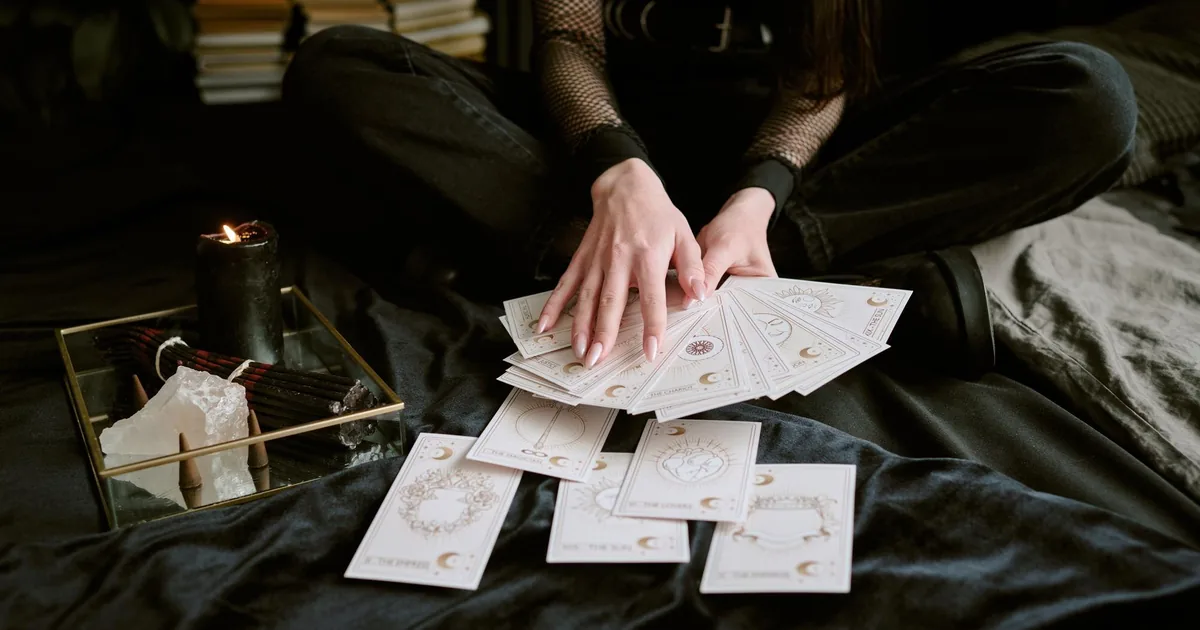
What are tarot cards and how do they work?
Tarot cards are a deck of 78 cards, divided into the Major and Minor Arcana. The Major Arcana (22 cards) describe the main life stages and archetypal situations, while the Minor Arcana (56 cards) describe everyday events and emotions. The Minor Arcana are divided into four suits: swords, cups, wands, and pentacles, each associated with a specific area of life.
The essence of tarot cards is not in predicting the future as fate, but in activating your subconscious and intuition through symbols and images. When you ask a question and draw cards, you receive not a ready-made answer, but a hint that helps you see the situation from different angles. Tarot cards can be compared to a mirror that reflects your thoughts, feelings, and hidden motives.
Many beginners fear that tarot cards can cause harm or attract negativity. In reality, it is simply a tool, and its impact depends on your intention and approach. If you treat tarot with respect and use it for personal growth, it will become your faithful assistant.
How to choose your first tarot card deck?
Choosing your first deck is a responsible step. Today there are many options, but for a beginner, the classic Waite tarot cards are the best choice. This deck, created by Arthur Edward Waite and artist Pamela Colman Smith in the early 20th century, is considered the gold standard in the world of tarot. Its images are clear and detailed, which makes the interpretation of tarot cards easier.
Why Waite specifically? Firstly, this deck is the most widely distributed, so many books and guides have been written about it. Secondly, its symbolism is intuitively understandable: the cards depict scenes that are easy to interpret even without deep knowledge. For example, on the "Fool" card, we see a young man standing on the edge of a cliff, which symbolizes the beginning of a journey and risk.
When choosing a deck, it is important that you like it visually. Hold the cards in your hands, feel their energy. If the images resonate with you, then this is your deck. Do not chase exotic options — start with the classics, and later you can expand your collection.
Structure of the deck: Major and Minor Arcana
To understand what do tarot cards mean, you need to understand their structure. The deck consists of 22 Major Arcana and 56 Minor Arcana. The Major Arcana are the main cards that point to important events and lessons in life. They represent the hero's journey: from the Fool (the beginning of the path) to the World (completion and harmony).
The Minor Arcana, in turn, are divided into four suits, each associated with a specific element and area of life:
- Wands — the element of fire, symbolize action, passion, creativity, and career.
- Cups — the element of water, associated with emotions, relationships, and intuition.
- Swords — the element of air, reflect thoughts, conflicts, and intellect.
- Pentacles — the element of earth, relate to the material world, money, and health.
Each suit contains cards from Ace to Ten, as well as court cards: King, Queen, Knight, and Page. Court cards can mean people in your life or aspects of your personality. For example, the king tarot card may indicate a mature man with leadership qualities, while the queen tarot card may indicate a woman with intuition and care.
Understanding the structure of the deck will help you navigate spreads and the interpretation of tarot cards better. For example, if there are many tarot swords cards in a spread, it indicates that the situation is related to thoughts and conflicts, and if there are many tarot cups cards — to emotions and relationships.
Meaning of tarot cards: where to start studying?
When you hold your first deck in your hands, the question arises: how do you remember the meaning of all 78 cards? In reality, you do not need to memorize the meanings. What is much more important is learning to understand the symbolism and trust your intuition. Start by studying the Major Arcana — they are the key to understanding the entire system.
Take one card and examine it carefully. What images do you see? What feelings does it evoke? Write down your associations. Then refer to the classical meanings, which can be found in books or online. Compare your feelings with the traditional interpretation. Over time, you will develop your own approach to the interpretation of tarot cards.
For the Minor Arcana, it is important to understand the meaning of numbers and suits. For example, an Ace is a beginning, energy, potential. A Two is a choice, partnership. A Three is growth, creativity. And so on. By combining numbers and suits, you can get a general idea of the card. For example, tarot aces cards in any suit symbolize a new start in the corresponding area: Ace of Cups — new emotions, Ace of Wands — a new project, Ace of Swords — a new idea, Ace of Pentacles — a new financial stage.
It is also important to consider reversed tarot cards. Some tarologists prefer to ignore them, but they add depth and nuance to the interpretation. A reversed card can indicate a delay, an internal conflict, or blocked energy. For example, a reversed Ace of Cups may speak of suppressed emotions or a breakup.
Basic principles of tarot card reading
Tarot card reading is not just drawing cards, but a whole ritual that requires preparation and concentration. Here are a few basic principles to help you get started:
- Create a calm environment. Find a quiet place where no one will disturb you. You can light a candle or incense to set the right mood.
- Formulate your question. Clearly define what you want to know. The question should be open-ended, for example: "What do I need to know about my situation at work?" Instead of a closed one: "Will I get a promotion?"
- Shuffle the deck. Hold the cards in your hands, think about the question, and shuffle them. When you feel ready, draw the cards.
- Choose a spread. To begin with, you can use simple spreads, such as the "Card of the Day" or "Three Cards" (past, present, future).
- Interpret the cards. Look at the cards, trust your intuition. Connect the meanings of the cards with your question and with each other.
Remember that a tarot card spread is not a verdict, but advice or a hint. You can always change your life, and the cards only show possible tendencies.
Simple spreads for beginners
Once you have mastered the basic meanings of the cards, you can move on to practice. Here are a few simple spreads that are suitable for beginners:
Card of the Day
Every morning, draw one card that will describe the energy of the day. This will help you tune into events and better understand what is happening. For example, if the world tarot card came up, it may mean a harmonious day and the successful completion of affairs. If the knight tarot card of Wands came up, perhaps an adventure or an unexpected event awaits you.
The "Three Cards" spread
This spread answers questions about the past, present, and future. Shuffle the deck and draw three cards. The first will point to the past, the second to the present, and the third to the future. For example, if in the past you had conflicts (tarot swords cards), in the present you are looking for a solution (Cups), and in the future stability awaits you (Pentacles).
The "Cross" spread
A more detailed spread that helps you understand a complex situation. Draw five cards and lay them out in the shape of a cross: the first is the essence of the question, the second is what helps, the third is what hinders, the fourth is hidden influences, and the fifth is advice.
Do not be afraid to experiment and create your own spreads. The main thing is that it is comfortable and clear for you.
How to interpret tarot card combinations
One of the most difficult tasks for a beginner is understanding tarot card combinations. The cards in a spread interact with each other, creating unique meanings. For example, if the "Tower" card (destruction) appears next to the "Ace of Wands" (new beginning), this may mean that after a crisis, a new start awaits you.
To learn how to read combinations, pay attention to the following aspects:
- Suits. If swords predominate in a spread, the situation is related to thoughts and conflicts. If cups — to emotions and relationships.
- Numbers. Sequential numbers (for example, 3 and 4) may indicate the development of events.
- Major Arcana. If there are many Major Arcana in a spread, this indicates the importance of events.
- Reversed cards. Consider their meaning; they can strengthen or weaken neighboring cards.
Practice, analyze your spreads, and over time you will learn to see the whole picture.
Common mistakes of beginners and how to avoid them
Beginning tarologists often make the same mistakes. Here are some of them and tips on how to avoid them:
| Common myth | Why this is not so | How it actually is |
|---|---|---|
| Tarot cards predict the future 100% | Tarot shows only probable tendencies, not a rigid fate | Cards help to see possible paths of events, but the choice is always yours |
| You need to memorize all the meanings of the cards | Meanings can be interpreted intuitively | Study the symbolism, but trust your feelings |
| Reversed cards are always bad | Reversed cards can indicate internal processes, not negativity | They often speak of blocked energy or the need for reconsideration |
Avoid these mistakes, and your practice will become more conscious and effective.
How to establish a connection with the deck
For tarot cards to "speak," it is important to establish a connection with them. This is not magic, but rather tuning into your intuition. Here are a few ways:
- Store the deck in a special bag or box. This protects the cards from foreign energy.
- Regularly take the cards in your hands. Simply shuffle them, look at the images, remember the details.
- Perform an introduction ritual. Shuffle the deck and draw one card that will symbolize your connection. For example, if the "Magician" came up, this indicates that you can use the energy of tarot for creativity.
- Ask the deck questions. Start with simple questions about yourself to understand how the cards respond.
Remember that tarot cards can be used not only for divination, but also for meditation, self-knowledge, and developing intuition.
Tarot cards for 2024 and 2026: what can they tell?
Many people look for forecasts for the year using tarot cards. For example, the tarot card 2024 may be associated with the energy of the year according to numerology or astrology. In 2024, many tarologists associate it with the "Emperor" card, which speaks of stability, structure, and leadership. And tarot cards for 2026 may point to the "Star" card, symbolizing hope and renewal.
To make a spread for the year, draw one card that will describe the overall energy of the year. Then you can draw one card for each month. This will help you understand which areas of life will be active and what to pay attention to.
For example, if the king tarot card of Wands came up in January, this may mean that at the beginning of the year you should show leadership qualities and initiative. And if the world tarot card came up in August, perhaps in that month you will achieve an important goal.
Use such spreads as a guide, but do not forget that the future depends on your actions.
Practice: the "Card of the Day" spread for beginners
One of the simplest and most effective ways of daily practice is the "Card of the Day" spread. It helps develop intuition and better understand the meaning of tarot cards. Here is how to do it:
- In the morning, before starting your affairs, sit in a calm place.
- Shuffle the deck, thinking about the upcoming day.
- Draw one card.
- Look at it and write down your first impressions.
- During the day, pay attention to events that may be related to the card. In the evening, analyze how it manifested.
For example, if the "Hermit" card came up, perhaps you should spend the day in solitude, engaging in self-analysis. If the "Chariot" came up, be ready for movement and overcoming obstacles.
This practice will not only improve your understanding of the cards, but also help you become more aware of your daily cycles and moods.
Tarot is a path to yourself, not a way to know your fate
When you are just beginning to get acquainted with Tarot cards, it is easy to succumb to the illusion that they will give ready-made answers to all questions. But in reality, Tarot is a mirror of your soul, a tool that helps you hear your own inner voice and see the situation from different angles. It is not magic or a prediction of fate, but a way to establish a dialogue with yourself, to understand your true desires and fears.
Our esoteric guide at EXETERIC is created precisely so that you feel confident on this path. We do not promise instant miracles, but we offer practices that will help you develop intuition and awareness. Remember: Tarot is not a reason for fear, but an opportunity to better understand yourself and the world around you. Do not be afraid of the unknown — calmly figure things out, try, ask questions. Cards are just a tool, and the main power is in you.
If you want to delve deeper into the topic, check out other articles about magic and self-knowledge in the EXETERIC blog — you will find much useful material for beginners and practitioners. And perhaps you will be interested in checking how the energy of the current period affects you personally — for this, look into the astrology section and find out what the stars say about your zodiac sign.
Start small: draw a card of the day, keep an observation journal, listen to your feelings. Gradually you will feel how the deck becomes your faithful friend and advisor. And may each card become a step toward a deeper understanding of yourself and your life.
Frequently asked questions
Can I read Tarot without special abilities?
Yes, absolutely. Tarot is not a gift, but a skill that develops with practice. Anyone can learn to understand symbols and intuitively interpret cards. The main thing is a sincere desire to understand and regular exercise. Start with simple spreads, study the meanings of the cards, trust your feelings — and over time you will notice how your intuition sharpens. Do not be afraid of mistakes: they are part of learning.
How often can I do Tarot spreads?
There are no strict restrictions, but it is important to listen to yourself. If you feel tired or emotionally exhausted, it is better to put the cards aside for a while. Ideally, do spreads no more than once or twice a day so as not to overload your psyche. Remember that Tarot is a tool for reflection, not for hourly checks. Give yourself time to process the information received and apply it in life.
What to do if a "scary" card came up, such as the Tower or Death?
Do not panic. Tarot cards do not predict literal death or catastrophe. "Death" more often symbolizes the end of one stage and the beginning of another, and the "Tower" — a sudden realization or the destruction of old illusions. Perceive such cards as an invitation to change and liberation from the unnecessary. Try to analyze which areas of life they affect, and think about what you can change. Remember: the future is in your hands.
Do I need to cleanse a new Tarot deck before using it?
Many practitioners recommend cleansing the deck to remove foreign energy. This is not a mandatory ritual, but it helps to tune in for work. Simple ways: hold the cards under running water (if they are not paper), place them under moonlight overnight, or fumigate with incense. The main thing is your intention. After cleansing, take the cards in your hands, shuffle them, and feel the connection with them. This way you will create a personal space for work.