Cemetery spirits: rules of visiting — 10 prohibitions
In short, cemetery spirits are a collective image of the memory of a place, residual emotions, and those very subtle sensations that wash over us between the grave fences. Someone feels a chill on a sunny day, someone hears footsteps on an empty alley, and someone simply suddenly starts thinking about their own loved ones. At EXETERIC, we suggest looking at this calmly: without horror and without denial. Below is an analysis — cemetery spirits what are they from the point of view of tradition and psychology, what manifestations occur, and how to behave respectfully so that a visit brings relief rather than anxiety.
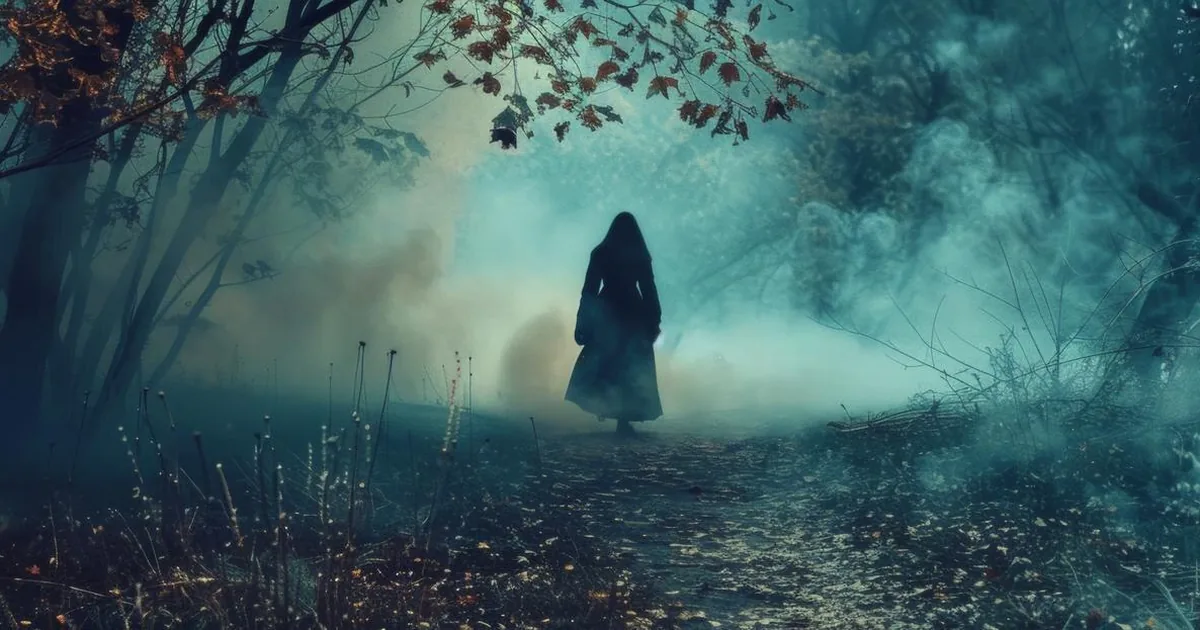
Cemetery Spirits: Meaning and History Without Horror Stories
Let's start with the basics: cemetery spirits meaning in folk culture is that of guardians of the boundary. A cemetery has always been considered a threshold: here the hustle and bustle ends and silence begins. That is why in Slavic, European, and even urban tradition, the churchyard was described as a place with its own master, its own rules, and its own quiet hierarchy. Hence cemetery spirits history: from ancestral patron spirits to images of watchmen who keep away ill-intentioned people and noisy crowds.
Interestingly, cemetery spirits legends and truth are indeed almost always intertwined. Legend says: "a white silhouette wanders here at night." The truth is usually more prosaic: fog over the lowland, the play of lamplight, the acoustics of the alleys, fatigue and impressionability after a funeral. But the esoteric view adds a third layer — the energetic one. A place where grief, love, guilt, and gratitude have been brought for decades truly has a dense atmosphere. Sensitive people read it with their bodies: heaviness in the chest, yawning, a desire to sit down and be silent.
A living example: a woman comes to clean her father's grave, doing everything quickly, on the run, wearing headphones, talking about work. And suddenly — irritation, headache, a feeling that "the place is pushing her out." And next time she comes without rushing, with water, a cloth, a couple of minutes of silence — and leaves feeling peaceful. The place is the same, but the state is different. That is why cemetery spirits tips for beginners are so important: don't run, don't make noise, don't treat the churchyard like a park for photo shoots.
A practical step for a conscious visit: formulate a simple intention before the gate. To yourself: "I have come with respect, to tidy up and to remember. I am not disturbing anyone." This attunes the subconscious and behavior: you automatically speak more quietly, move more slowly, notice the signs around you. And if the topic of boundaries and memory is close to you, take a look at other practices in the EXETERIC blog, where we explore working with ancestry and remembrance rituals without the mysticism of fear.
Cemetery Spirits: Types and How to Recognize Presence
The question of cemetery spirits types sounds like a classification from a bestiary, but in practice it is more convenient to divide not "entities" but types of sensations. Tradition distinguishes ancestral spirits, with whom we have a personal connection; spirits of place — that very dense silence of old plots; and wandering residual traces — emotional imprints of grief that a sensitive person may perceive as someone else's sadness. Therefore, the query cemetery spirits how to understand is better rephrased: what am I feeling right now and what is it about for me?
Let's break down cemetery spirits signs that people most often talk about. A sudden chill on a windless day, goosebumps for no reason, a feeling of being watched from behind, a quiet ringing in the ears, sudden drowsiness or, on the contrary, anxiety. This also includes cemetery spirits daytime manifestations: birds suddenly fall silent, a candle goes out for no reason, thoughts get confused. And cemetery spirits nighttime manifestations, which watchmen love to talk about: footsteps, light in the chapel windows, silhouettes in peripheral vision. Most of it is explained by physiology, but you should not ignore your feelings — they are a signal.
How to distinguish your own from someone else's? Here is cemetery spirits how to recognize in practice. Ask yourself three questions: did it start exactly on the grounds and end beyond the gates? Is this like my usual anxiety or something new? Does the sensation intensify near specific graves, crypts, alley intersections? If the answers are "yes, here, unusual, local" — you are simply reading the atmosphere. A simple grounding technique helps: feet firmly on the ground, slow exhale twice as long as the inhale, gaze at the horizon, warm palms on your knees.
| Symbol / image | Traditional meaning | Manifestation in life | What to do |
|---|---|---|---|
| Chill, goosebumps | Touch of the boundary | Anxiety, desire to leave faster | Slow down, ground yourself with breathing, continue calmly |
| Silence, frozen birds | The place asks for silence | Discomfort, ringing in the ears | Lower your voice, put away your phone, stay in silence |
| Dying candle, gust of wind | Movement of air, response of the place | Thoughts of the unfinished | Speak words of remembrance, complete the visit with gratitude |
| Dream of the churchyard after a visit | The psyche relives the visit | Vivid dream, meeting with the departed | Write down the dream, check the EXETERIC dream book |
10 Prohibitions in the Cemetery: Respect Instead of Fear
And now the main thing — the rules of visiting. This is not intimidation, but etiquette, which is also energetic hygiene. When people ask cemetery spirits how to protect yourself, the best answer is to behave in a way that you don't need protection: quietly, cleanly, respectfully.
The first prohibition — do not make noise, do not laugh loudly, do not play music without headphones. From the esoteric point of view, loud sound tears the subtle field of silence; from the psychological point of view, it interferes with other people's experience of grief. The second prohibition — do not litter and do not leave plastic, cigarette butts, bottles. The churchyard is a house of memory, and disorder is read by both people and yourself as disrespect. The third prohibition — do not take anything from other people's graves: flowers, sweets, coins. Even if "no one needs it." This is both about ethics and about cemetery spirits difference from superstitions: it is not about a "curse," but about the fact that you train yourself to take what belongs to others where you are supposed to give.
The fourth prohibition — do not take clowning photos, do not film other people's funerals and other people's monuments in close-up. The fifth prohibition — do not relieve yourself, do not spit, do not swear on the grounds. It sounds obvious, but this is what is most often violated. The sixth prohibition — do not come heavily intoxicated and do not hold a feast with alcohol on a grave. A glass as a memorial gesture in a family tradition is one thing, and a noisy feast is another. The seventh prohibition — do not touch monuments, fences, do not sit on tombstones. If you want to rest — there is a bench by the alley. The eighth prohibition — do not bring dogs without a leash, do not let them run over burials. The ninth prohibition — do not perform magic at alley intersections, do not bury "hexed objects," do not read incantations for someone else's misfortune. This is disrespect for the place and for yourself, plus someone else's pain will inevitably affect your state. The tenth prohibition — do not stay after closing and do not climb over the fence at night for a "test of courage." The nighttime churchyard is the watchmen's workplace and a place where it is easy to get injured in the dark.
Separately about children and pregnant women, which is often asked about: there is no prohibition as such, there is common sense. If a person is impressionable, tired, in acute grief — it is better to postpone the visit until morning, take company, shorten the time. These are the living cemetery spirits tips for beginners: morning, water, headwear for the weather, phone on silent, a plan — tidy up, remember, leave before fatigue sets in.
Cemetery Spirits What to Do Upon Encounter and How to Banish Peacefully
Suppose you feel uneasy: footsteps, a shadow, sudden sadness. Let's go through cemetery spirits what to do upon encounter step by step, without panic. First — stop, exhale, name it to yourself: "I am anxious, I am in a cemetery, this is normal." Second — turn on the light of awareness: look around, find the real source of the sound — a crow, a branch, a bag. Third — say a respectful formula: "I come in peace, I am minding my own business, I am not disturbing anyone." Fourth — finish your task calmly, do not run. Running intensifies fear and the risk of tripping. Fifth — at the exit, thank the place and switch your focus: wash your face, drink water, look at the sky.
Sometimes people ask about cemetery spirits cleansing ritual after a visit. The most peaceful option: at home, change your clothes, wash your hands and shoes, air out your clothes, take a shower, drink warm tea. Of the soft esoteric practices — salt in the hallway by the threshold overnight, wet cleaning with a pinch of salt, bell ringing or your favorite calm music. If you are a believer — cemetery spirits prayer according to your tradition: "Our Father," Psalm 90, a short prayer for the departed. The main thing is not out of fear, but as completion and gratitude.
And what does cemetery spirits how to banish peacefully mean if the feeling "came home"? In 90% of cases it is not an entity, but an emotional trail: you brought home fatigue and thoughts of death. Cemetery spirits home protection in the everyday sense helps: light, order, warm food, conversation with loved ones, sleep. Light a candle with the intention of peace, say: "Everything has its place. To the home — life, to memory — respect." If disturbing dreams repeat for more than a week, read about cemetery spirits connection with dreams and symbols in dream interpretation — often the psyche is asking to complete grieving in this way.
| Common myth | Why it is not true | How it really is |
|---|---|---|
| Something is sure to "attach" itself from the churchyard | Fear increases suggestibility and fatigue | More often an emotional trace is brought home, removed by rest and hygiene |
| You must not look back and talk in the cemetery | The prohibition is born of fear, not tradition | You can speak quietly and respectfully, looking back is normal for safety |
| All strange sensations are spirits | Acoustics, light, fatigue produce the same effects | Part is the physics of the place, part is subtle sensitivity, both require calm |
Protection, Rite, and When to Call a Priest
Let's put it into a system: cemetery spirits rite in a healthy sense is a sequence of actions, not magic. Before the visit — intention and modest clothing. During — silence, cleaning, living words of remembrance instead of memorized phrases. After — water, switching focus, gratitude. If you want a symbolic gesture, take a small "respect kit" with you: water, a cloth, a rubbish bag, a candle or vigil lamp. Cleaning up a neglected grave nearby is the best rite; it really changes the feeling of the place.
About cemetery spirits esotericists' opinion in brief: practitioners agree that the churchyard is a place with dense yin energy, where you should not assert yourself, joke with the boundary, or perform love or money rituals. If you want to work with your ancestry — do it at home by a photo, in a church, in nature, and at the cemetery simply visit and give thanks. If you study the subtle influences of planets on sensitivity, take a look at the astrology section — during full moons and eclipses, impressionability increases, and it is better to plan a visit for the morning.
A separate topic is cemetery spirits when to call a priest. Call if you want to consecrate a monument, hold a memorial service, receive support in grief, if there is anxiety in the family, obsessive fears, conflicts after a funeral. A priest is not an "exorcist on call," but a guide of the tradition of consolation. And if you need psychological help — insomnia, panic attacks, inability to go to the grave or, on the contrary, an obsessive need to go every day — that is for a psychologist, a grief specialist. And this does not contradict spirituality.
Finally — cemetery spirits interesting facts that reconcile us with the topic. In many cultures, the churchyard was considered a place of power for quiet reflection; people went there for decisions. Old cemeteries are also nature reserves: lindens, squirrels, rare mosses on stones. And the phrase "cemetery spirits how to recognize" in 19th-century diaries often described simply conscience: a person recalled the unsaid and undone. Therefore, the best outcome of a visit is not a test of courage, but a small completed task: a washed slab, planted flowers, a "thank you and forgive me" said aloud.
A Quiet Visit as a Practice of Respect and Inner Support
If you take one main feeling from this topic, let it be calm. The cemetery does not require fear, bravado, or special abilities from us. It asks for the simplest and most difficult thing at the same time: to be present, attentive, and honest with yourself. You came, tidied up, recalled something warm, said something important aloud, gave thanks, and left before fatigue. Such a visit works better than any complex ritual, because it restores a sense of completeness and connection with your ancestry.
At EXETERIC, we treat esotericism as a language of self-knowledge, not as a set of prohibitions and horror stories. Subtle sensations in the churchyard are a reason to better understand yourself: where your fatigue boundary lies, what remains unsaid, what memory asks for attention and care. The EXETERIC practices approach helps with this — without pressure, with respect for faith, psychology, and each person's personal experience. You can be a believer, a skeptic, or a seeker, and still leave the cemetery more grounded than you came.
Next time, try making your visit a conscious mini-practice. In the morning, without rushing, with water and a couple of minutes of silence at the grave. Less phone, more living gaze around: trees, light, birds, names on old slabs. If sensitivity is heightened, check your zodiac sign and the general emotional background of the week — on tense days we perceive everything more acutely, and it is normal to take this into account. And to go deeper into the topic, take a look at the selection of other practices in the EXETERIC blog, where we calmly explore working with ancestry, dreams of the departed, and remembrance rituals.
And remember: the incomprehensible is not necessarily frightening. Most often it is simply the unlived, unfinished, unsaid. Do not be afraid to explore it gently — with respect for the place, for the departed, and for yourself. May each of your visits end with a bright exhale and a quiet "thank you," and may memory become a support for living life, not a source of anxiety.
Frequently Asked Questions
Can I go to the cemetery after sunset?
Formally, the prohibition mainly concerns the rules of a specific cemetery and safety, but tradition advises coming in the morning or during the day. During the day it is easier to clean up, the road is more visible, there is less fatigue and anxiety, and the place itself feels calmer. In the evening and at night, shadows, sounds, and impressionability intensify, plus the risk of tripping, getting lost, or finding closed gates increases. If you find yourself nearby in the evening, it is better to limit yourself to a short visit at the entrance, and postpone full cleaning and commemoration until morning.
What to bring to the grave besides flowers?
The most appropriate is what brings benefit and order: clean water, a cloth, a rubbish bag, a small candle or vigil lamp. Of treats, what is customary in your family is acceptable — bread, cookies, sweets, which are then better given to people or left neatly. Live flowers in small quantities are preferable to plastic ones because they do not pollute the grounds. The main offering remains attention: tidying up a neighboring neglected grave, straightening flowers, spending a couple of minutes in silence and saying warm words of remembrance.
Can I take children to the cemetery?
Yes, you can, if the child is not afraid and the visit is short, calm, and understandable for them. It is important to explain to children in advance in simple words where we are going and why: to tidy up, to remember a loved one, to be quiet. You should not take small children during a period of acute grief of adults, in cold, rain, or for a long time when everyone is tired and irritated. It is better to come in the morning, take water and a snack, give the child a simple task — water the flowers, place a pebble, light a candle with an adult. If the child is capricious or frightened, the visit should be gently ended without reproach.
A photo on the monument fell or a candle went out — is this a bad sign?
Most often this is ordinary physics of the place, not a sign: wind, uneven surface, moisture, melted wax, birds, and temperature changes. A candle in the open air goes out very easily, and portraits and frames loosen over time from the weather. Treat this practically: adjust the photo, clean the candlestick, shield the flame from the wind, check the fastening. If the event alarmed you, say kind words of remembrance aloud and complete the visit with gratitude. The alarming signal is not an extinguished candle, but your prolonged anxiety, insomnia, and obsessive thoughts — with these it is better to turn to loved ones, a priest, or a psychologist.