Meditation for beginners: where to start without mistakes
What is meditation for beginners: in simple words about the main thing
Meditation for beginners is not a ritual for the chosen few, nor a way to "shut off thoughts." It is an attention training where you learn to observe your inner state without judgment. Imagine the mind as the surface of a lake: thoughts and emotions are waves. Meditation does not eliminate the waves, but allows you to stop drowning in them. From an esoteric perspective, it is a way to tune into a connection with yourself, your intuition, and subtle vibrations. From a psychological perspective, it is a method for reducing stress and developing mindfulness.
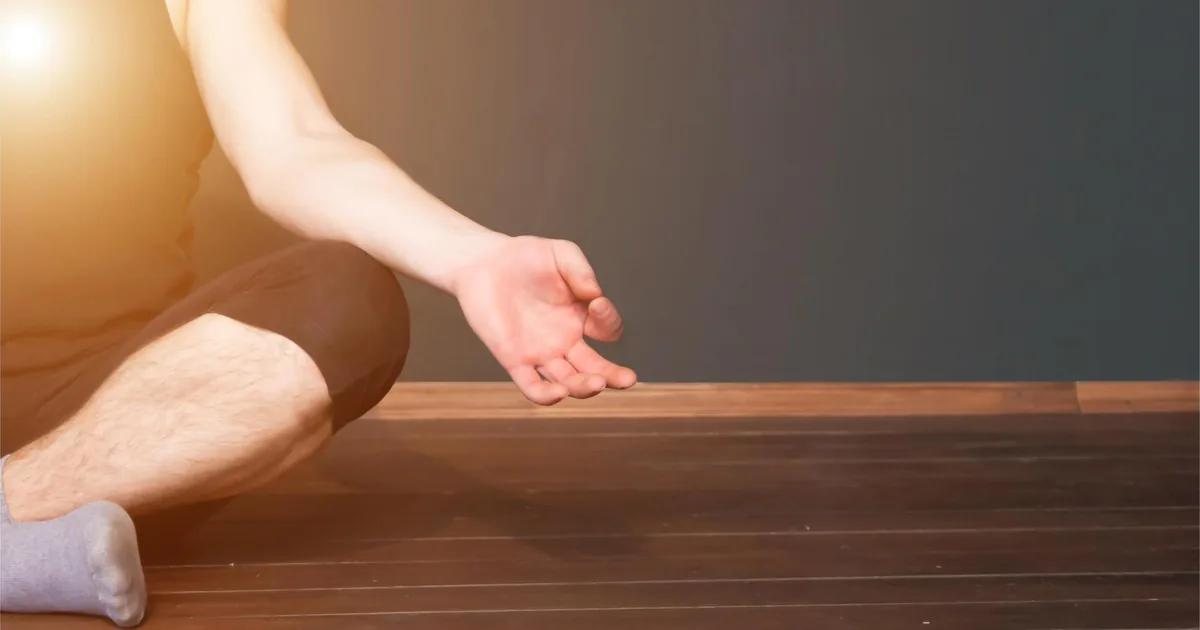
Many ask: "Meditation for beginners — what is it and why should I spend time on it?" The answer is simple: regular practice lowers cortisol levels, improves concentration, and helps you understand your desires more clearly. Research shows that even 10 minutes a day for 8 weeks changes brain structure, strengthening areas responsible for self-control and emotional regulation. In an esoteric context, this is also work with energy: you clear the thought stream of noise and allow intention to sound clearer.
It's important to understand: meditation for beginners is not about having an "empty head." It is about the skill of returning to the present moment. When you notice your mind has wandered to memories or plans, and gently bring your attention back to the breath — that is the practice. Each such return strengthens the "muscle of mindfulness." If you are interested in the theme of self-knowledge through symbols and signs, look into other practices in the EXETERIC blog — there we explore different tools for working with yourself.
Meditation for beginners: meaning and interpretation in esotericism and psychology
In the esoteric tradition, meditation for beginners has a deep meaning: it is a way to contact the higher "Self," hear the voice of intuition, and clear energy channels. The word "meditation" comes from the Latin meditatio — "reflection," but in Eastern practices it is more like "contemplation." The interpretation of this concept differs in various schools: in Buddhism, it is the path to enlightenment; in yoga, a step towards samadhi; in Western psychology, a method of self-regulation.
What is meditation for beginners on an energetic level? It is tuning vibrations. When you sit in silence and direct your attention inward, you literally change the frequency of your biofield. Beginners often notice that after practice, the world becomes brighter and reactions calmer. These are signs that energy has stopped leaking into anxiety and has begun to accumulate. Meditation for beginners also has meaning in the context of protection: you learn not to absorb others' emotions and to maintain an inner center.
How do you know you are moving in the right direction? Pay attention to the signs: decreased anxiety, deeper sleep, the ability to notice your emotions before they overwhelm you. Meditation for beginners signs of progress are not always obvious immediately, but they are there. If you feel you have become gentler with yourself and others — that is a sure sign. For those who want to understand their dreams, which often become more active during meditation, the EXETERIC dream dictionary is useful — there we explain the symbolism of nocturnal images.
Types of meditation for beginners: what to choose for your character
There are many techniques, and it's easy for a beginner to get lost. Meditation for beginners types are conventionally divided into two large groups: concentration (on an object) and open observation (without an object). The first suits those who like clear instructions, the second — those who want to develop spontaneous mindfulness. Here are the main options we recommend trying at home.
| Type of practice | Essence | Who it suits | Time to start |
|---|---|---|---|
| Breath meditation | Observation of the inhale and exhale | Beginners, anxious people | 5–10 minutes |
| Mantra meditation | Repetition of a sound or phrase | Those who get distracted easily | 10–15 minutes |
| Body scan | Sequential attention to sensations | People with physical tension | 10–20 minutes |
| Candle meditation | Concentration on the flame | Visual types, those practicing magic | 5–10 minutes |
| Loving-kindness meditation | Wishing well-being to oneself and others | Those working with grievances | 10–15 minutes |
When choosing a type, orient yourself to your temperament. If you are hyperactive, start with the breath or mantra — they provide a point of focus. If you tend towards self-analysis, try open observation. Meditation for beginners on your own is possible with any of these types. The main thing is not to chase the "perfect" technique, but to find the one that brings you peace.
Meditation for beginners at home: a step-by-step guide
Meditation for beginners at home is simpler than it seems. You don't need a special altar or expensive accessories. A quiet corner, a timer, and 10 minutes are enough. Here is a step-by-step guide we recommend for beginners.
Step 1. Choose a time. The best time is morning, right after waking up, or evening before bed. The main thing is that no one distracts you. Tell your family that for the next 10 minutes you are unavailable.
Step 2. Sit comfortably. You can sit on a chair, a meditation cushion, or the bed. Keep your back straight but not tense. Hands rest freely on your knees. You can close your eyes or leave them half-closed.
Step 3. Direct your attention to the breath. Don't try to control it. Just notice how the air enters and leaves. Feel the coolness on the inhale and the warmth on the exhale.
Step 4. When the mind wanders — return. This is inevitable. You will start thinking about tasks, plans, memories. At the moment of awareness, gently say to yourself "thoughts" and return to the breath. This is not a mistake; it is the practice itself.
Step 5. Finish with gratitude. After 10 minutes, open your eyes, take a slow inhale and exhale, and thank yourself for this time. Gradually increase to 15–20 minutes.
Meditation for beginners step by step may seem mechanical, but over time you will feel it is a natural state. If you are interested in how meditation connects with other self-knowledge practices, for example with the matrix of destiny, explore the materials in the matrix of destiny calculator — there we explore the arcanes and their influence on life.
Meditation for beginners: frequently asked questions and myths and truth
There are many myths surrounding meditation for beginners. Let's explore the most popular ones so you don't waste time on fears and false expectations.
| Common myth | Why this is not so | How it really is |
|---|---|---|
| "Meditation is about stopping thoughts" | The mind naturally generates thoughts; this is its function | You learn not to get involved in thoughts, but to observe them from the side |
| "You need to sit for hours, otherwise it's useless" | Regularity is more important than duration | 10 minutes daily is more effective than an hour once a week |
| "Meditation is a religious ritual" | Secular practices do not require faith | It is attention training, accessible to anyone |
| "If I can't do it — I'm incapable" | Distractions are part of the process | Each return of attention strengthens the skill |
Meditation for beginners frequently asked questions often concern reviews: "I can't do it, everyone says it should be easy." In reality, the first weeks can be difficult. The brain resists the new. But if you continue, there comes a moment when practice becomes a resource. Meditation for beginners reviews from real people confirm: the main thing is not to give up after the first "failure."
Meditation for beginners tips: how not to quit and get results
For practice to take root, you need simple but effective tips. Meditation for beginners tips from experienced practitioners boil down to a few principles.
Tip 1. Start small. Don't set a goal to sit for 30 minutes right away. Start with 3–5 minutes. This will reduce resistance.
Tip 2. Attach it to a habit. Meditate right after brushing your teeth or having a cup of coffee. This way, practice becomes automatic.
Tip 3. Use a timer. It frees the mind from time control. Set a gentle sound so you don't startle.
Tip 4. Don't judge the session. Don't divide meditations into "successful" and "failed." Any practice is an investment in mindfulness.
Tip 5. Keep a journal. Write down what you felt afterward. In a month, you will see progress.
If esoteric practices resonate with you, try combining meditation with astrological cycles. For example, during the full moon, energy is particularly strong, and meditation can be deeper. Learn more about planetary influences in the astrology section. And for those studying human design, it's useful to consider your type when choosing a practice — this is covered in the human design guide.
Meditation for beginners: how to understand that you are progressing
Progress in meditation for beginners is not always measured in minutes. It manifests in daily life. You may notice you react more calmly to criticism, calm down faster under stress, and understand your desires better. This is how to understand meditation for beginners results — through changes in behavior and well-being.
One of the key signs is the pause between stimulus and reaction. Previously, you might have flared up immediately, but now a moment of awareness appears in which you choose your response. This is a sign that the practice is working. Another marker is improved sleep. Many beginners note they fall asleep faster and wake up rested.
If you want to deepen self-knowledge, meditation is just one of the tools. Explore other practices, such as working with arcanes or dream analysis. The wider your toolkit, the more conscious your path. And remember: meditation for beginners is not a sprint, but a marathon. Start with 5 minutes today, and in a month you will be surprised how much your perception of yourself and the world has changed.

Meditation for beginners: a path that begins with a single breath
If you have reached this point, it means there is already a readiness inside to try. And that is the most important thing. Meditation for beginners is not an exam or a test of "spiritual maturity." It is a quiet conversation with yourself, where there are no right or wrong answers. Some start with five minutes in the morning, others with one minute before bed. Both are real practice. Do not compare your path with someone else's: everyone has their own pace, their own questions, and their own discoveries.
Esotericism in general and meditation in particular are tools for self-knowledge, not a panacea or a reason for fear. They do not replace a doctor, a psychologist, or common sense. They help you hear yourself, notice your reactions, and choose a more conscious response. If this approach resonates with you, explore the EXETERIC practices — we gather tools that gently lead to clarity, without scare tactics or promises of instant miracles. And if you want to see the bigger picture, look into other practices in the EXETERIC blog: there we explore different ways of working with yourself — from simple rituals to deep symbolic systems.
Meditation does not require belief in anything specific. It requires only your presence. Start small: sit down, close your eyes, feel the breath. If the mind has run away — gently return. That is the whole secret. Over time, you will notice you react more calmly to stress, understand your desires better, and recover faster after difficult days. This is not magic in the usual sense, although the result sometimes seems magical. It is attention training that changes the quality of life.
If you are interested in how meditation combines with other esoteric systems, check out the materials in the astrology section — there you can find your zodiac sign and understand which practices resonate with your nature. Astrology does not dictate how to live, but helps you see your strengths and growth areas. Meditation and astrology together give an amazing effect: you begin to notice cycles, feel rhythms, and choose the moment for important decisions. This is not about predictions, but about consciousness.
Do not fear the unknown. Esotericism has been surrounded by myths and scare stories for centuries, but at its core, it is about the same thing as meditation — attention to yourself and the world. Approach practice calmly, with respect for your boundaries and without expecting instant results. Start with five minutes today. Tomorrow — another five. In a month, you will look back and be surprised at how differently the silence within sounds. May your path be gentle, curious, and honest. And if you need support or new ideas — we are always here, in the articles and practices of EXETERIC.
Frequently Asked Questions
How many minutes a day should a beginner meditate?
Starting with 3–5 minutes a day is enough. This reduces resistance and helps you get used to the very fact of practice. After a week, you can increase to 10 minutes, and then to 15–20 if you wish. The main rule: regularity is more important than duration. Five minutes daily is better than an hour once a week. The body and psyche gradually adapt, and you will feel yourself when you want more.
What should I do if I keep getting distracted during meditation?
Distractions are not a mistake, but part of the practice. The mind naturally generates thoughts, and this is normal. Your task is not to stop thoughts, but to notice that you have wandered into them and gently return your attention to the breath or chosen object. Each such return strengthens the skill of mindfulness. Over time, the intervals between distractions will become longer, but perfect silence in the head will never happen — and that is not the goal. The goal is to learn not to get involved in the stream of thoughts.
Can I meditate lying down, or must I sit?
You can meditate lying down, but there is a risk of falling asleep, especially if you are tired. For beginners, it is better to sit — on a chair, cushion, or bed, with a straight but not tense back. This position helps maintain wakefulness and concentration. If sitting is difficult due to health, you can lie on the floor with a bolster under your knees, or meditate in a chair with back support. The main thing is that the body is relaxed but not sinking into sleep.
How do I know meditation is working if there are no instant results?
The results of meditation do not appear immediately and not in the practice itself, but in daily life. Pay attention to whether you have become calmer in reacting to criticism, faster at calming down under stress, and better at understanding your desires. Another marker is the pause between stimulus and reaction: previously you might have flared up immediately, but now a moment of awareness appears. Improved sleep, reduced anxiety, a gentler attitude toward yourself — all these are signs of progress. Keep a journal to notice these changes.