Minor Arcana: 56 Tarot Cards Without Rote Memorization
What are the Minor Arcana and Why the Fear is Unwarranted
The Minor Arcana are the 56 cards out of 78 that make up the majority of any Tarot deck. If the Major Arcana represent destiny, major lessons, and archetypes, then the Minor Arcana are life itself: work, money, arguments, reconciliations, daily life, emotions, and small events. Many beginner tarot readers get scared: "56 cards, how can I memorize them?" In reality, the Minor Arcana are structured more logically than they seem. This isn't chaos, but a coherent system where each card is part of a unified puzzle.
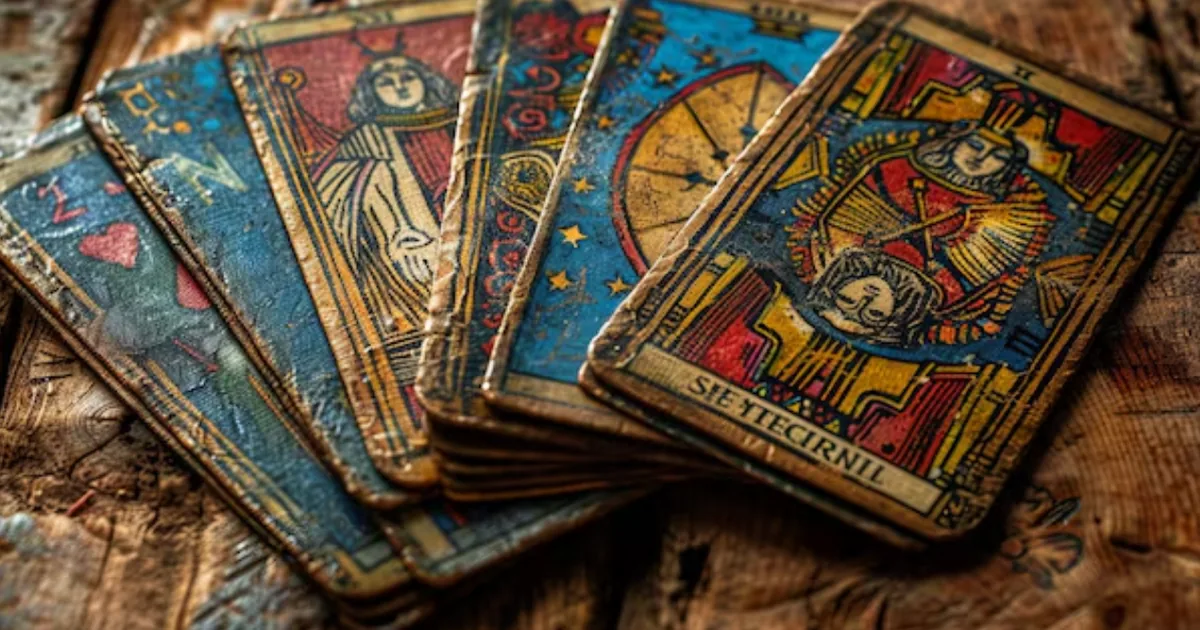
What are the Minor Arcana in essence? They are four suits — Wands, Cups, Swords, and Pentacles — each of which follows a path from the Ace to the Ten, and then moves into the court cards: Page, Knight, Queen, and King. If you understand the logic of one suit, you automatically understand the other three. It's like learning not 56 foreign words, but four grammar rules.
In the esoteric tradition, the Minor Arcana of Tarot are connected to the four elements: Fire (Wands), Water (Cups), Air (Swords), and Earth (Pentacles). These elements are not just symbols. They describe four types of energy that manifest in our lives daily. Fire is action and will. Water is feelings and relationships. Air is thoughts and conflicts. Earth is money, the body, and resources. When you draw a Minor Arcana card, you are essentially asking: "Which element is currently active in my situation?"
So why does fear arise? Because many try to mechanically memorize 56 meanings, like a multiplication table. This is indeed difficult. But if you approach the Minor Arcana as a system where each card is a combination of an element and a number, everything falls into place. The number from 1 to 10 shows the stage of development of the situation, while the suit indicates the sphere in which this situation unfolds.
In our EXETERIC blog, we often repeat: Tarot is not about rote memorization, but about understanding. The Minor Arcana are a perfect example of this. Having mastered their logic, you will be able to read any deck, even an unfamiliar one, because the structure remains unchanged. It's like learning not a specific text, but the alphabet — and then you can read any book.
Minor Arcana: Types and Structure — Four Suits, Four Elements
The Minor Arcana types are divided into four suits, and each has its own character, its own stories, and its own typical manifestations in life. Understanding these differences is the first step to making the Minor Arcana meaning no longer a sealed mystery for you.
Wands (Fire). These are cards of action, passion, inspiration, and will. When a spread has many Wands, it's about movement, initiative, creativity, or conflict born of ambition. Wands do not tolerate passivity. They ask: "What are you going to do?"
Cups (Water). These are feelings, relationships, intuition, and emotional life. Cups speak of love, friendship, inner experiences, and what we call "the voice of the heart." If Cups appear, the situation requires not logic, but emotional honesty.
Swords (Air). These are thoughts, words, conflicts, truth, and lies. Swords are the most "mental" suit. They show how we think, argue, analyze, and sometimes create problems for ourselves due to anxious thoughts. Swords often speak of the need for clarity and an honest conversation.
Pentacles (Earth). These are money, work, the body, health, and material resources. Pentacles are the most "grounded" suit. They answer questions like "where is the money?", "how to earn?", "what about my health?". When Pentacles appear, it's about concrete, tangible things.
Here is how you can compare the suits in a table to make the Minor Arcana for beginners clearer:
| Suit | Element | Sphere of Life | Key Question | Typical Manifestations |
|---|---|---|---|---|
| Wands | Fire | Action, will, creativity | What am I doing? | Initiative, passion, conflict, growth |
| Cups | Water | Feelings, relationships, intuition | What am I feeling? | Love, friendship, longing, inspiration |
| Swords | Air | Thoughts, words, conflicts | What am I thinking? | Arguments, truth, anxiety, clarity |
| Pentacles | Earth | Money, body, resources | What do I have? | Income, health, stability, daily life |
As you can see, the Minor Arcana are not 56 disparate cards, but four stories, each of which develops from the Ace (beginning) to the Ten (completion), and then moves into the court cards (people or roles). If you memorize this structure, you won't need to cram each card individually. You will simply know: "Aha, this is the Five of Swords — meaning a conflict at the crisis stage, in the sphere of thoughts and words."
By the way, if you are already familiar with the arcana system in numerology, it will be easier for you: in the Matrix of Fate calculator, arcana also work on the principle of "number + meaning." The Minor Arcana of Tarot follow the same logic, only with the addition of the element.
How to Understand the Minor Arcana: The Logic of Numbers from Ace to Ten
How to understand the Minor Arcana if you've never studied Tarot? The secret is that the numbers from 1 to 10 are a universal language that works in any suit. One is the beginning, two is choice, three is growth, four is stability, five is crisis, six is harmony, seven is trial, eight is movement, nine is result, ten is completion. It's like the narrative arc of any film: setup, development, climax, resolution.
Let's break this down using the example of Pentacles, because money and work are the most understandable topic for most people. The Ace of Pentacles is a chance to earn, a new job, an idea that can bring income. The Two of Pentacles is balancing between two sources of income or between work and personal life. The Three of Pentacles is teamwork, collaboration, recognition of your skills. The Four of Pentacles is stability, but sometimes greed or fear of loss. The Five of Pentacles is a financial crisis, loss, a feeling of lack. The Six of Pentacles is help, fair exchange, charity. The Seven of Pentacles is waiting, evaluating investments, patience. The Eight of Pentacles is diligent work, learning, skill growth. The Nine of Pentacles is independence, comfort, the fruits of labor. The Ten of Pentacles is wealth, legacy, family well-being.
Now imagine you've drawn the Five of Pentacles. You already know: this is a crisis (five) in the sphere of money (Pentacles). You don't need to memorize the meaning — it follows from the logic. This is the Minor Arcana in simple words: the number speaks of the stage, the suit of the sphere. Combining these two parameters, you get a precise and vivid interpretation.
The same works with Cups. The Ace of Cups is a new feeling, falling in love. The Two of Cups is reciprocity, partnership. The Three of Cups is friendship, celebration. The Four of Cups is boredom, apathy, unwillingness to see opportunities. The Five of Cups is disappointment, loss, regret. The Six of Cups is nostalgia, childhood, returning to roots. The Seven of Cups is illusions, dreams, choice. The Eight of Cups is departure, seeking something new. The Nine of Cups is satisfaction, wish fulfillment. The Ten of Cups is emotional fulfillment, family, happiness.
How does this Minor Arcana system work? Very simply: you memorize not 56 meanings, but 10 numbers and 4 suits. That's 14 units of information instead of 56. Admittedly, the difference is significant. And most importantly, you understand the logic, rather than memorizing someone else's interpretations. In the Human Design guide, we use a similar principle: not to memorize centers and channels, but to understand their function. It's the same here.
Minor Arcana Interpretation: Court Cards — People and Roles
Minor Arcana interpretation is impossible to imagine without the court cards. The Page, Knight, Queen, and King are not just "people"; they are roles we play or types of people we interact with. Court cards are the most flexible tool in Tarot because they can mean a specific person, an aspect of your personality, or a way of acting.
The Page is the student, the novice, the messenger. He is curious but inexperienced. In a spread, the Page often speaks of news, the beginning of learning, or a person younger than you. The Knight is action, movement, sometimes haste. The Knight is always going somewhere, doing something. He can be both a hero and a reckless hothead. The Queen is mature energy, care, intuition, the ability to manage gently. The King is mastery, authority, control, maturity.
It's important to understand: court cards do not always mean other people. Very often they show you yourself — your role in the situation. For example, if you ask "how should I behave in negotiations?" and the King of Swords appears, the advice is: be logical, speak clearly, don't give in to emotions. If the Queen of Cups appears — be softer, listen to your intuition, show empathy.
Here is a table to help you quickly navigate the court cards of the Minor Arcana:
| Court Card | Role | Age / Status | Way of Acting | Advice |
|---|---|---|---|---|
| Page | Student, messenger | Child, teenager, novice | Learns, tries, reports | Be open to the new, don't fear mistakes |
| Knight | Doer, traveler | Young person, active age | Acts, moves, takes risks | Act, but don't rush |
| Queen | Guardian, mentor | Mature woman or inner maturity | Cares, feels, manages gently | Trust your intuition, stay in touch with your feelings |
| King | Master, authority | Mature man or inner strength | Controls, decides, leads | Take responsibility, act with confidence |
The Minor Arcana should be studied in detail starting with the court cards, because they are the most "alive" and multifaceted. The same card in different spreads can mean a person, advice, or a characteristic of the situation. This is not a bug, but a feature: Tarot is a tool for dialogue with the subconscious, not a rigid correspondence table.
If you want to delve into symbolism and learn to read signs in different systems, check out our EXETERIC dream dictionary — there we analyze how the subconscious speaks to us through images. The court cards of Tarot work on the same principle: they are archetypal images that resonate with our inner experience.
Minor Arcana Meaning: How to Read Cards in a Spread Without Rote Memorization
The Minor Arcana meaning in a spread is not an isolated interpretation of each card, but a story that emerges from the interaction of the cards. Beginners often make a mistake: they draw a card, look it up in a reference book, read the meaning, and try to apply it to the question. This works, but lacks depth. A true reading begins when you see the connections between the cards.
Here is a step-by-step algorithm for reading the Minor Arcana in a spread:
- Identify the dominant suit. If in a five-card spread three are Cups, the situation revolves around feelings and relationships. If three are Pentacles, it's about money and resources.
- Look at the numbers. Many fives mean crisis. Many sixes mean harmony. Many tens mean the completion of a cycle.
- Find the court cards. They show who is acting or what role you should take.
- Connect the cards into a story. Not "the Ace of Cups is love, and the Five of Swords is conflict," but "love (Ace of Cups) encounters conflict (Five of Swords), and this leads to..."
How to understand this Minor Arcana logic in practice? Imagine you are asking about the prospects of a project. The cards drawn are: Eight of Pentacles, Three of Wands, Six of Swords. Eight of Pentacles is diligent work. Three of Wands is expansion, growth, awaiting results. Six of Swords is transition, moving forward, sometimes leaving problems behind. The story: you are working hard (Eight of Pentacles), the project is growing (Three of Wands), and this will lead to a transition to a new stage (Six of Swords). No rote memorization — just logic.
Minor Arcana advice on reading: don't try to memorize all 56 meanings at once. Start with one suit. Take Pentacles and lay them out from Ace to Ten. Look at the story: how does the narrative change from beginning to end? Then take Cups and do the same. After a week of such practice, you will be reading the Minor Arcana independently, without a reference book.
Studying the Minor Arcana at home is even more convenient than in courses: you can lay out the cards on a table, write down your associations, keep a journal. Personal experience is more important here than someone else's interpretations. Reviews from experienced tarot readers confirm this: those who learned the cards through logic and personal associations read more accurately than those who memorized meanings from books.
Minor Arcana Myths and Truth: What Hinders Learning
Minor Arcana myths and truth is a topic worth addressing separately, because many misconceptions surround them. These myths don't just hinder learning — they create fear and uncertainty. Let's break down the most common ones.
| Common Myth | Why It's Not So | How It Really Is |
|---|---|---|
| "Minor Arcana are more complex than Major Arcana" | Major Arcana are 22 cards with unique stories, making them harder to memorize. Minor Arcana are a system of 4 suits and 10 numbers. | Minor Arcana are simpler because they follow logic. Learn one suit, and you understand the rest. |
| "You need to memorize 56 meanings" | Mechanical memorization doesn't work — cards in a spread interact, and context changes meaning. | It's enough to understand the logic of numbers and elements. The meaning is derived on the spot. |
| "Minor Arcana are just mundane, nothing spiritual" | Daily life is spiritual practice. Money, relationships, health — these are spheres where we grow. | Minor Arcana show how the spirit manifests in everyday life. It's not "low," but "grounded." |
| "You can't figure it out without a teacher" | A teacher can speed up the process but cannot replace personal practice. | You can and should study the Minor Arcana independently. Personal experience is the best teacher. |
Minor Arcana frequently asked questions from beginners: "Where to start?", "Which deck to choose?", "How long does it take to learn?". The answer is simple: start with one suit, choose a deck that you like visually, and dedicate 15 minutes a day. In a month, you will be confidently reading the Minor Arcana. Where to start with Minor Arcana — with Pentacles or Cups, as they are the most "understandable" for everyday experience.
Minor Arcana basic rules: don't read for yourself too often, don't ask the same question ten times, don't treat the cards as a verdict. Tarot is a tool for reflection, not for predicting an inevitable future. Minor Arcana signs that you are on the right path: you start to see connections between cards, your interpretations become more accurate, you stop fearing "bad" cards.
The Minor Arcana guide for beginners can be reduced to three principles: learn the logic, not the meanings; practice daily; trust your intuition. Everything else is details. And remember: even experienced tarot readers sometimes consult reference books. This is normal. The Minor Arcana are a language, and any language requires practice.
Minor Arcana Step by Step: Practice for Beginners
Minor Arcana step by step is not about theory, but about action. Here is a specific practice you can do today to start understanding the Minor Arcana without rote memorization.
Step 1. Choose one suit. Start with Pentacles if the topic of money and work is closer to you, or with Cups if it's relationships. Lay out the cards from Ace to Ten in a row. Look at them as a story. What happens to the card's hero from beginning to end? Write down your associations.
Step 2. Add the court cards. Place the Page, Knight, Queen, and King after the Ten. How do they continue the story? The Page is a novice just starting the journey. The King is the one who has mastered this element. Which stage are you currently going through?
Step 3. Do a daily draw. Each morning, draw one card from the Minor Arcana and ask: "What awaits me today in the sphere of this suit?" In the evening, check if it matched. This develops intuition and helps memorize cards through personal experience.
Step 4. Keep a journal. Record which cards appeared, what happened, and how you felt. After a month, you will see patterns. Minor Arcana personal experience is the most valuable source of knowledge. No book can replace your own observations.
Step 5. Study the second suit. When you feel confident with the first, move on to the next. Don't rush. It's better to know one suit deeply than four superficially.
How does this Minor Arcana practice work? It engages not only memory but also associative thinking. You are not memorizing — you are experiencing the cards. This is the same principle as in the astrology section, where we study not just the characteristics of signs, but their manifestation in real life. The Minor Arcana are the astrology of everyday life: four elements, ten stages, four roles. Having mastered this system, you will have a tool that works in any situation. And for this, you don't need to cram 56 cards — it's enough to understand 14 principles.

Tarot as a Mirror of Everyday Life: A Path Without Fear and Rush
The Minor Arcana are not an exam you need to pass with flying colors, nor secret knowledge accessible only to the chosen few. They are a calm, honest conversation with yourself about what is happening here and now: about work, feelings, money, arguments, and reconciliations. When you stop seeing 56 cards as an insurmountable mountain and begin to perceive them as four elements and ten stages, the fear disappears on its own. In its place comes curiosity — and that is the best teacher there can be.
Esotericism in general, and Tarot in particular, is a tool for self-knowledge and conscious living, not a panacea or a reason for anxiety. The cards do not decide for you, do not predict the inevitable, and do not punish for mistakes. They help you notice what you already feel but are afraid to name out loud. This is why in the EXETERIC practice, we always emphasize: first comes your life, your observations, and your responsibility, and only then the symbolism of the deck. This approach removes unnecessary pathos and returns Tarot to its true function — to be a mirror, not a fortune-telling oracle.
If you want to move forward, don't rush. Start with one suit, keep a journal, draw one card a day and compare it with real events. Gradually, you will notice that you have become more attentive to yourself: to your reactions, your desires, your fears. This is the main result of the practice — not memorized meanings, but a more honest and warm connection with your own life. And if you want to broaden your horizons, check out the astrology section — there the elements and rhythms are described with the same care and without mystical fear-mongering.
Don't fear the unknown — only fear haste. The Minor Arcana reveal themselves slowly, but permanently: once understood, the logic of numbers and elements stays with you, no matter which deck you work with. Allow yourself to learn calmly, with respect for your own pace and for the tradition itself. And remember: even experienced tarot readers sometimes return to the basics — this is not a sign of weakness, but a sign of maturity.
If you are ready to go further, we have many more materials to help you gently and stress-free explore esotericism. Read other practices in the EXETERIC blog, try what resonates, set aside what isn't for you yet. Let Tarot become not a source of anxiety, but a calm interlocutor, always ready to suggest a direction — but the choice remains yours.
Frequently Asked Questions
How long does it take to learn the Minor Arcana?
If you learn the Minor Arcana through logic rather than mechanical memorization, a basic understanding comes in two to four weeks of regular practice. It's enough to dedicate fifteen minutes a day: lay out one suit, write down associations, draw a card of the day, and in the evening compare it with events. Full, confident reading develops over several months, because personal experience is more important here than speed. Don't compare yourself to others: for some, Pentacles "click" immediately, while others are closer to Cups or Swords. The main thing is not to abandon practice on the second day and not to demand instant results from yourself.
Can you read the Minor Arcana without the Major Arcana?
Yes, you can, and for beginners, it's even more beneficial. The Minor Arcana describe everyday life: work, money, relationships, everyday conflicts — things that are easy to verify and relate to your experience. The Major Arcana speak of major lessons and fateful turns, and without life context, they can easily be understood too grandly or incorrectly. Start with one suit of the Minor Arcana, master the logic of numbers and elements, and only then add the Major Arcana. This way, you will have a solid foundation upon which deeper meanings can be built.
What to do if a "bad" Minor Arcana card appears?
First of all, take a deep breath and remember: in Tarot, there are no verdict cards. The Five of Pentacles, Five of Swords, or Eight of Cups speak of a difficult stage, not an inevitable disaster. This is a signal: currently, there is a crisis or transition in this sphere, and you should be more attentive to yourself. Ask the card not "what will happen?" but "what should I pay attention to?". Often, this question transforms a frightening card into useful advice. And remember: even the most difficult card in a spread is part of the story, not its finale.
Is a special deck needed to study the Minor Arcana?
No, there is no special "training" deck, and you don't need to buy an expensive set just for learning. Choose the deck that you like visually and where the Minor Arcana are depicted with scenes, not just as a set of symbols. The classic Rider-Waite system is convenient because each card has a scene that can be read as a small story. If another aesthetic resonates with you — take it, the main thing is that you want to hold the cards in your hands. A deck that your soul is drawn to teaches faster than any "correct" one.