Chakras of a person: the meaning of the seven energy centers and balancing practices
What are chakras and why do you need them
The word "chakra" is translated from Sanskrit as "wheel" or "vortex." In esoteric tradition, this is how energy centers located along the spine are called — from the tailbone to the crown of the head. It is believed that life force circulates through them, which is called "prana" in yoga and "qi" in Chinese medicine. When chakras are open and balanced, energy flows freely, and we feel healthy, calm, and fulfilled. If a center is blocked or works too actively, it affects physical well-being, emotions, and even how our relationships with the world unfold.
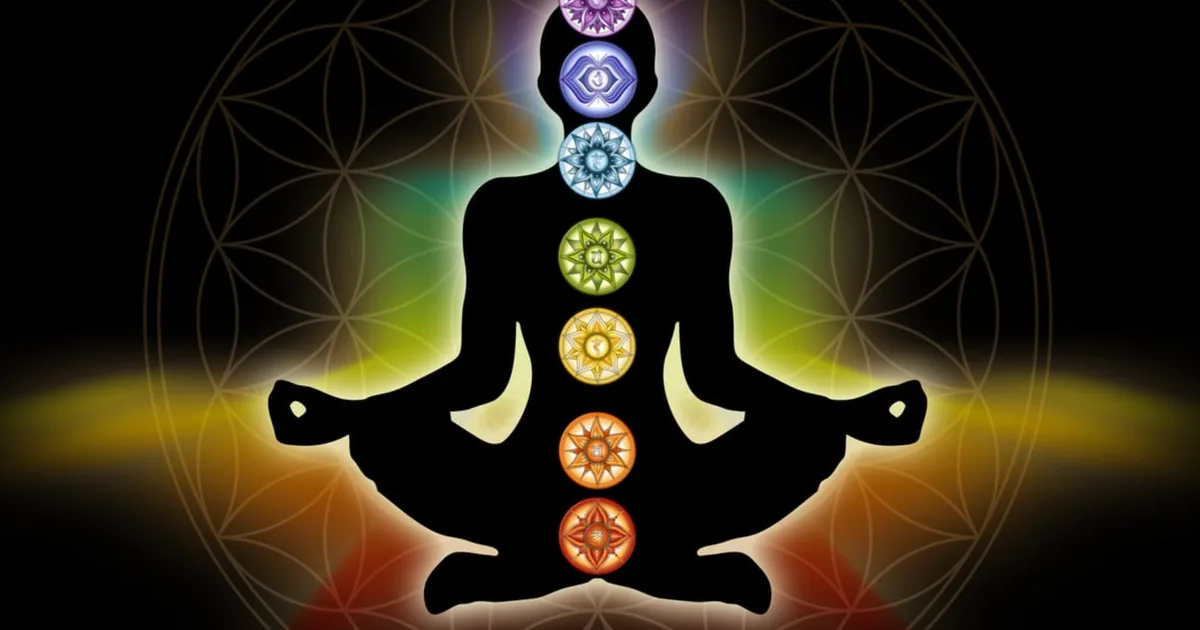
It is important to understand: chakras are not anatomical organs, but rather a metaphor for describing subtle energy processes. Modern psychologists often draw parallels between chakras and psychosomatics: for example, throat problems may be linked to unexpressed emotions, and lower back pain — to feelings of insecurity. Therefore, working with chakras is not only an esoteric practice but also a way to better understand yourself, your habits, and your reactions.
If you are just starting to explore this topic, do not rush to be intimidated by complex diagrams. All you need is attention to yourself and a few simple exercises, which we will discuss further. The main thing is not to treat chakras as a magic pill, but to perceive them as a tool for self-discovery.
The seven chakras: meaning and location
Traditionally, seven main chakras are distinguished, each associated with certain aspects of life and areas of the body. Here is a brief table to make it easier to navigate:
| Chakra | Location | Sphere of influence |
|---|---|---|
| Muladhara (root) | Tailbone | Survival, safety, basic trust |
| Svadhisthana (sacral) | Lower abdomen | Creativity, sexuality, pleasure |
| Manipura (solar plexus) | Above the navel | Self-esteem, willpower, personal power |
| Anahata (heart) | Center of the chest | Love, compassion, relationships |
| Vishuddha (throat) | Throat | Communication, self-expression |
| Ajna (third eye) | Between the eyebrows | Intuition, clarity of thought |
| Sahasrara (crown) | Crown of the head | Spirituality, connection with the higher |
Each chakra has its own color, element, and even sound (mantra). But for practice, what matters more than these attributes is how imbalance manifests in everyday life. For example, if you constantly worry about money, your root chakra is most likely imbalanced. If you find it difficult to express your thoughts — there may be a block in the throat. Understanding these connections helps you notice signals in time and adjust your state.
Root chakra: the foundation of your stability
Muladhara is responsible for the feeling of security and connection with the earth. When it is in order, you stand firmly on your feet, know how to take care of basic needs, and do not panic during changes. If the chakra is blocked, fears, anxiety, and problems with money or health appear (especially with legs, spine, and intestines).
Practice: a simple exercise — "grounding." Stand barefoot on the floor, close your eyes, and imagine roots growing from your feet, going deep into the earth. Breathe with your belly, feeling the support. Do this every day for 5 minutes — and within a week you will notice that you have become calmer.
How to understand that your chakras are imbalanced: signs of imbalance
Our body always signals about problems, but we often ignore these signs. Here are typical manifestations of imbalance for each chakra:
- Root: chronic fatigue, financial difficulties, feeling "lost."
- Sacral: creative block, problems in the intimate sphere, inability to experience pleasure.
- Solar plexus: low self-esteem, indecisiveness, the urge to please everyone.
- Heart: distrust of people, withdrawal, resentment.
- Throat: fear of public speaking, feeling of a "lump in the throat."
- Third eye: difficulty making decisions, lack of intuition.
- Crown: cynicism, lack of meaning in life, feeling disconnected from the world.
Do not rush to diagnose yourself on all points — it is only important to notice which areas are "sagging" for you. It often happens that one chakra blocks another: for example, self-doubt (Manipura) prevents building relationships (Anahata). Therefore, working with chakras should be systematic.
Another useful way of diagnosis is chakra meditation. Sit comfortably, close your eyes, and alternately concentrate on each chakra, noting what sensations arise: warmth, cold, pressure, or nothing. This will give you a hint about what to work with first.
Practices for balancing chakras: meditation, breathing, colors
There are many ways to bring chakras into balance — from ancient techniques to modern ones. The main thing is to choose those that resonate with you personally and practice regularly. Here are a few basic approaches.
Chakra meditation
Sit with a straight back, close your eyes, and take several deep breaths. Imagine a column of light running along your spine. On the inhale, mentally raise the light from the tailbone to the crown; on the exhale, lower it. Then alternately concentrate on each chakra, imagining it as a spinning wheel of light (you can use traditional colors: red, orange, yellow, green, light blue, blue, violet). Continue for 2-3 minutes on each chakra. This practice helps remove blocks and harmonize the flow of energy.
Breathing exercises
Breathing is directly connected to energy. A simple exercise: sit up straight, place your hands on your knees. Inhale for 4 counts, hold your breath for 4, exhale for 6, pause for 2. Repeat for 5 minutes. This calms the mind and evens out the overall energy. For specific chakras, you can use visualization: on the inhale, "draw" light into the chakra area; on the exhale, "blow out" stagnation.
Working with color
Each chakra is associated with a specific color. If you feel an imbalance, add this color to your clothing, interior, or diet. For example, red foods (beets, apples) are useful for the root chakra, green foods (leafy vegetables) for the heart, and blue foods (blueberries) for the throat. This is a simple but effective way to maintain harmony.
Yoga asanas
Some yoga poses stimulate specific chakras. For example, the tree pose (Vrkshasana) strengthens the root chakra, the camel pose (Ustrasana) opens the heart chakra, and the fish pose (Matsyasana) opens the throat chakra. If you do not practice yoga regularly, you can simply stretch while directing attention to the desired area.
The main thing in any practice is regularity and mindfulness. It is better to do 10 minutes every day than an hour once a month. And do not forget that chakras are not an end in themselves, but a tool for better understanding yourself.
Myths about chakras: what you should know to avoid harming yourself
The topic of chakras is surrounded by many myths, especially on the internet. Let us examine the most common misconceptions so you do not fall into a trap.
| Myth | Why this is not true | How it actually is |
|---|---|---|
| "Chakras can be 'opened' once and for all" | Chakras are not static: they react to our state, just like emotions. | Chakra balance is an ongoing process, like maintaining physical fitness. |
| "If a chakra is blocked, it is forever" | Blocks are the result of habits and stress; they can be changed. | Regular practice and working with psychological causes help restore the flow of energy. |
| "Opening chakras is dangerous, you can go crazy" | The fear arises from misunderstanding, but the practice itself is safe with a reasonable approach. | Opening chakras is more of a metaphor for developing awareness. No one goes crazy from meditation. |
It is important to remember: chakras are not a substitute for medical care. If you have physical symptoms, see a doctor. And energy practices are a supplement to a healthy lifestyle, not a panacea.
Another myth is that chakras can be "cleaned" in one session. In reality, this is a lifelong work, but that is precisely where its value lies: you learn to hear yourself and notice imbalance in time.
Chakras and health: how energy centers are connected to the body
The connection between chakras and physical health is one of the most discussed topics. In Eastern medicine, it is believed that a blocked chakra leads to disorders in the organs within its sphere of influence. For example, thyroid problems may be linked to the throat chakra, and stomach diseases — to the solar plexus. Modern psychosomatics partially confirms this: emotional tension indeed manifests in the body.
But do not go to extremes and attribute every disease to chakras. It is much more productive to use this system as a way of prevention: if you feel tension in some area, pay attention to the corresponding chakra and work with it.
For example, if you constantly catch colds, perhaps the issue is in the throat chakra: you do not say what you think, and energy stagnates. Try practices for opening Vishuddha — sing, talk to yourself, express feelings. Often, improvement in physical condition does not take long to come.
Practice "Body scanning"
Lie down, close your eyes, and mentally go through your body from feet to crown, noting any sensations: warmth, cold, tingling, tension. Pause on areas where there is discomfort and imagine breathing into that place. This will help you realize where exactly energy is "getting stuck" and start its movement. Do this exercise before bed — it also improves sleep quality.
How to use chakras in everyday life: practical tips
Knowledge about chakras can be applied not only in meditation but also in ordinary situations. For example, before an important meeting, it is useful to activate the solar plexus to feel confident. To do this, you can clench your fists and imagine a yellow fire igniting in the abdominal area. Or before a conversation with loved ones — massage the chest area around the heart to speak with love.
Here are a few more ideas:
- If you feel tired from socializing, close your eyes for a couple of minutes and imagine a silvery light entering through the crown of your head, cleansing your aura.
- To strengthen the root chakra, wear a red bracelet or simply touch the earth more often — walk barefoot in the park.
- To develop intuition (Ajna), try guessing who is calling you, or choose a route at random.
The main thing is not to turn this into rituals for the sake of rituals, but to use it as a reminder of your inner strength. Chakras are not external magic, but a way to establish a connection with yourself.
Common mistakes when working with chakras: how to avoid disappointment
Many beginners quit the practice because they expect instant results. Let us examine typical mistakes.
| Situation | Reactive approach | Conscious practice | Result |
|---|---|---|---|
| Felt discomfort during meditation | You quit the practice, thinking it is "not for you" | You note the sensation and breathe, without clinging to it | Discomfort goes away, depth appears |
| No visible changes after a week | You get disappointed and look for another "miracle cure" | You continue regularly, but without fanaticism | Changes come gradually and become stable |
| You overdo it, trying to "open" all chakras | You burn out and lose interest | You work with one chakra, achieve balance, then move to the next | Harmony without overload |
Remember: chakras are not a race. They are a way to become more attentive to yourself. If you treat the practice as a game rather than an obligation, the result will come on its own.
Technique "Chakra cleansing": a step-by-step ritual for beginners
This simple technique will help you feel your energy centers and gently balance them. Perform it in the evening when no one will disturb you.
- Sit comfortably, straighten your back, place your hands on your knees palms up.
- Take 10 deep breaths in and out, relaxing.
- Imagine a stream of pure white light above your head. It enters through the crown and slowly descends, filling each chakra.
- At the root chakra (tailbone), imagine the light becoming bright red and spinning clockwise. Feel warmth in this place.
- Raise the light higher to the sacral chakra (lower abdomen) — imagine orange light cleansing the pelvic area.
- Move to the solar plexus — yellow light fills the belly and gives confidence.
- Heart chakra — green light, feel love and compassion.
- Throat chakra — light blue light, feel freedom of self-expression.
- Third eye — blue light, clarity and intuition.
- Crown chakra — violet light, connection with the higher.
- Stay in this state for 5-10 minutes, then slowly bring your attention back to the room, stretch, and open your eyes.
This practice can be done every evening. It not only balances the chakras but also calms the mind, preparing you for sleep. Over time, you will begin to notice that you have become calmer, more confident, and more energetic.
Your path to harmony begins with small steps
When exploring chakras, we often expect instant miracles — but real magic happens when we begin to hear ourselves. Esotericism is not a way to escape reality, but a tool that helps you face it head-on. When you understand how your energy centers work, you begin to notice that your body, emotions, and even thoughts are a single system that constantly speaks to you. And learning this language is a fascinating adventure available to everyone.
Do not be afraid to experiment: try different practices, observe your sensations, trust your intuition. Perhaps chakra meditation will become your evening ritual, or maybe you will find techniques closer to you — such as working with color or sound. The main thing is to approach this with respect and self-love, without violence or rigid expectations. Remember that chakra balance is not a final destination, but an ongoing process, similar to caring for a garden: you water, prune, fertilize — and the plant grows, delighting you with its beauty.
If you want to deepen your knowledge, check out EXETERIC practices — there you will find inspiring materials that will help you stay in harmony with yourself. And for those who want to explore other directions, I recommend studying articles about magic and self-discovery — perhaps you will discover new tools for personal growth. And of course, do not forget about your zodiac sign: astrology can be an excellent complement to working with chakras, because both systems speak of the connection between the cosmos and the human being.
Allow yourself to be curious. Esotericism is not scary; it is fascinating. Start small: just sit down, close your eyes, and observe your breath. Feel how energy moves within you. And let this small step become the beginning of a great journey to yourself.
Frequently asked questions
How do I know if I have a blocked chakra?
Usually, a blocked chakra manifests not only in physical discomfort but also in the emotional background. For example, if the root chakra (Muladhara) is imbalanced, you may experience constant anxiety, uncertainty about the future, or money problems. The sacral chakra (Svadhisthana) can cause creative block or difficulties in relationships with a partner. The solar plexus (Manipura) is responsible for self-esteem: if you are often indecisive, afraid to take initiative, perhaps it is worth paying attention to it. The heart chakra (Anahata) is blocked by resentment, distrust, and the desire to close off from people. The throat (Vishuddha) — a lump in the throat, fear of expressing your opinion. The third eye (Ajna) — difficulties with intuition and decision-making. And the crown chakra (Sahasrara) — a feeling of being lost, lack of meaning. If you notice several signs in yourself, try a simple meditation: sit down, close your eyes, and mentally go through each chakra, noting sensations. Where you feel heaviness or cold, there is most likely a block.
Can I open all chakras on my own?
Yes, you can open and balance chakras on your own, but this requires regularity and a conscious approach. There is no magic pill that will instantly open all energy centers — this is a process that can take weeks or even months. Start by studying the basics: understand where each chakra is located and what it is responsible for. Then choose a practice that resonates with you: meditation, breathing exercises, yoga, or working with color. For example, for the root chakra, it is useful to walk barefoot on the earth; for the heart chakra, to practice compassion and openness. The main thing is not to force events. If you feel strong discomfort during practice, pause and return later. Listen to your body and trust yourself. Remember that open chakras are not an end in itself, but a way to live more consciously and harmoniously.
How are chakras connected to astrology?
Astrology and chakras are two ancient systems that describe the connection between the human being and the cosmos. In astrology, planets and zodiac signs influence our character traits and life events, while in the chakra system, each energy center is connected to certain aspects of life. For example, the root chakra is associated with the planet Saturn, which is responsible for discipline and structure, and the heart chakra — with Venus, the planet of love and harmony. It can be said that astrology shows which energies are given to us at birth, and chakras — how we distribute and use these energies. For example, if you have a strong Mars in your natal chart, this may manifest as excessive activity of the solar plexus (Manipura), which gives leadership qualities but can cause outbursts of anger. Understanding these connections helps you become more aware of your strengths and weaknesses. Start by studying your zodiac sign and its connection to the chakras — this can become a fascinating journey into the world of self-discovery.
Which chakra is responsible for intuition?
The sixth chakra — Ajna, or the "third eye" — is responsible for intuition. It is located in the center of the forehead, slightly above the eyebrows. When Ajna is balanced, you sense people and situations well, trust your inner voice, and make decisions easily. If the chakra is blocked, you may experience doubt, distrust of your intuition, and often make mistakes in choices. To develop Ajna, practice meditations on the point between the eyebrows, visualize blue or indigo light in this area. It is also useful to keep a dream journal and notice coincidences — this way you learn to trust signs. Another exercise: before making a decision, pause and listen to the sensations in your body — if you feel warmth and expansion in the forehead area, the choice is probably correct. Remember that intuition is a skill that can be trained, and the more you trust it, the stronger it becomes.