Do ghosts really exist: scientific facts and evidence
Do Ghosts Really Exist: An Honest Breakdown Without Fear or Sensationalism
The question of whether do ghosts really exist is heard in almost every home where a floorboard has creaked at night or a shadow has flashed in the hallway. At EXETERIC we hear it constantly: from skeptics, from practitioners, from people who have never been interested in mysticism but once woke up in a cold sweat from the feeling of a stranger's presence. And this is normal — the topic touches the most vital thing: what happens to us after death, do ghosts really exist, and why we feel the invisible so acutely.
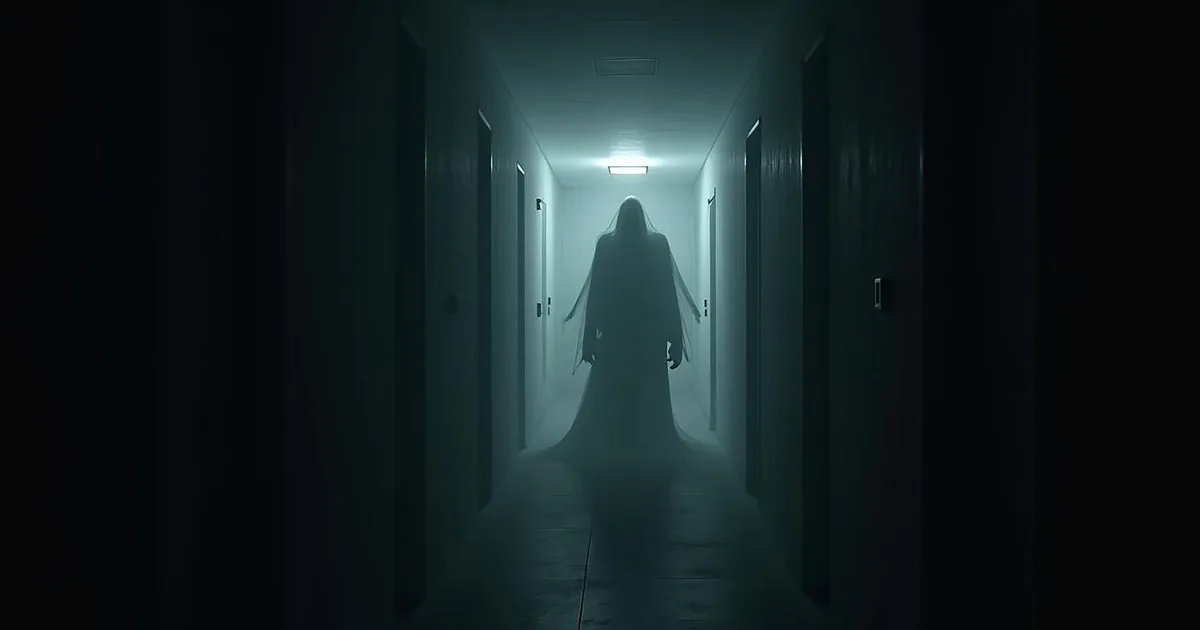
Let's agree right away: we will neither frighten nor ridicule. The question of do ghosts exist or not is not a test of naivety, but a meeting point of psychology, physics, tradition, and personal experience. Some see in a ghost the soul of the deceased, others — a glitch of perception, others — a trace of a place's energy. All three views have the right to exist if they are examined consciously.
In this article we will bring together two poles: do ghosts really exist scientifically and do ghosts exist in real life according to people's accounts. We will examine what do ghosts really exist science says, which do ghosts really exist facts have already been verified, and where interpretation begins. And most importantly — we will give practical guidance: how to distinguish anxiety and fatigue from a real sign and what to do calmly, without superstitions.
Why This Question Never Leaves Culture
Stories about spirits exist among all peoples — from Slavic house spirits and restless dead to Japanese yurei and English ladies in grey. If it were only about fantasy, the plots would not repeat so precisely: cold in a room, footsteps, a silhouette seen out of the corner of the eye, the feeling of being watched, technology behaving strangely. The subconscious, intuition, and collective memory work with the archetype of presence. From the esoteric point of view, a ghost is not necessarily a personality in a sheet, but a clump of information and vibration that our psyche completes into a familiar image.
A living example: a 38-year-old woman moved into her grandmother's apartment. The first week everything was calm, then she began waking up at 3:12 to the sound of footsteps in the kitchen. Fear grew until she started keeping a diary: time, well-being, cycle phase, stress at work, what she dreamed. It turned out the footsteps coincided with the old refrigerator switching on and her anxious dreams about her grandmother. When she made a simple intention — thanked the space, tidied up, established a ritual of evening tea in silence — the episodes faded away. This is mindfulness: not denying the experience, but decoding it.
What Science Says: Brain, Physics, and the Psychology of Perception
When people ask about do ghosts really exist scientists' opinion, the answer is usually cautious: there is no direct evidence of the soul as an object, but there are dozens of explanations for why people see and feel ghosts. And this does not mean that people are lying. The brain is an excellent storyteller; it completes reality from fragments.
Neuroscience knows several reliable mechanisms. Sleep paralysis: a person wakes up while the body is still asleep, and to this are added hallucinations of presence, pressure on the chest, whispering. Pareidolia: we see faces in stains, silhouettes in curtain folds — that is how recognition is wired. Infrasound at 17-19 Hz from ventilation, pipes, a passing subway causes anxiety, trembling, a feeling of cold, and even visual distortions. Electromagnetic fields, carbon monoxide, lack of sleep, grief, and stress increase susceptibility. That is why do ghosts really exist research most often begins not with cameras, but with measurements of the environment and the state of the observer.
There are also famous experiments. Michael Persinger with his “God helmet” stimulated the temporal lobes with a weak magnetic field — some subjects felt a presence, a touch, sacred awe. A group from Goldsmiths University recreated a “haunted house” with infrasound and suggestion: people in the “bad” room more often reported something strange. And the story of the laboratory in Coventry, where engineer Vic Tandy saw a grey figure, was resolved prosaically: a new fan was producing a standing infrasonic wave at 18.9 Hz, which resonated with the eyeball.
| Common Myth | Why This Is Not True | How It Really Is |
|---|---|---|
| Science has proven that ghosts don't exist | Absence of evidence is not evidence of absence; science studies what is reproducible | It is correct to say: there is no reliable do ghosts really exist evidence yet, but there are explanations for most cases |
| All eyewitnesses are impressionable or deceivers | The experience of presence happens to healthy, sober, skeptical people | Perception depends on fatigue, grief, environment, expectations, and nervous system sensitivity |
| A photo with an orb is a soul | In 95% of cases it is dust, moisture, flash reflection near the lens | Only a complex is considered valuable: independent witnesses + environment + repeatability |
| If it is cold, it means a spirit | Drafts, cold bridges, pressure drops produce local cold | Measure with a thermometer and check windows, ventilation, and the basement before drawing conclusions |
A practical step, if you are interested in do ghosts really exist scientifically: become a researcher of your own case. Write down the date, time, who was home, what you ate, how much you slept, what the weather was like, whether appliances were running. Photograph the place by day and by night from the same angle. Check your CO detector, ventilate, get good sleep three nights in a row. If the phenomenon repeats under the same conditions and different people see it independently — this is already material for a deeper analysis, including an esoteric one.
Typical Encounters: Home, Living People, and Dreams
Most often people ask not abstractly, but very specifically: do ghosts exist in the house and do ghosts of living people exist. Yes, the second wording is not a mistake. In folklore and in readers' letters there is the phenomenon of “crisis apparitions”: a mother sees her soldier son in the doorway a minute before a call with bad news, a husband feels his wife's touch while she is having an accident in another city. Esotericism describes this as a strong connection with yourself and with a loved one, a release of energy in a moment of stress, while psychology describes it as intuition, coincidence, and selective memory. Both languages describe the same thing: connection can be stronger than distance.
Do humans have ghosts in the sense of an “attached entity”? Traditions distinguish three different phenomena: a trace of place, when an emotional scene seems to have been recorded in space and plays like an echo; an active contact, when there is a sense of dialogue, answers, intention; and a person's own field — fatigue, unprocessed grief, anxiety, which are felt as someone else's presence. Bodily sensation helps distinguish them: an echo of place is usually neutral and repeats identically, contact is changeable and reacts, while an inner state moves with you from room to room and intensifies at night.
A separate large topic is do ghosts really exist and dreams. The deceased often come precisely in dreams: calm, luminous, saying something or simply looking. Psychology sees in this the work of the subconscious and the processing of loss, tradition sees a form of meeting where symbol becomes language. We suggest not choosing one answer forever, but looking at the fruits: after which dreams do you wake up with warmth and clarity, and after which — with heaviness and fear? The first usually bring closure and support, the second more often speak of your anxiety rather than a guest. You can learn more about the symbols of nighttime meetings in the EXETERIC dream book, where we analyze dream interpretation without intimidation.
How to Check Your Home Calmly in 7 Days
Take a notebook and agree with yourself: for a week you are an observer, not a hunter. Days 1-2 — baseline: clear cluttered corners, fix dripping taps, check wiring, replace light bulbs, ventilate. Energy loves movement and light. Days 3-4 — observation: note sounds, smells, cold, time, who is home. Day 5 — an experiment with intention: aloud, calmly state your boundaries: “This is my home, I live here, I ask not to be disturbed at night.” Days 6-7 — review: have episodes decreased after order and sleep? In 70% of everyday stories this is enough. If steps, knocking, and silhouettes are seen by two or three people independently and at the same time — move on to the next section about research.
Stories and Research: Why Accounts Are Similar Around the World
When do ghosts really exist stories from different countries are collected, the identical details are surprising. The Tower of London, Chillingham Castle, the Paris catacombs, abandoned hospitals, ordinary apartment blocks — everywhere there are cold spots, footsteps, whispers, children's voices, a female silhouette by the window. Is there do ghosts exist people's evidence in the form of photos and audio? Yes, the archives are huge: from the famous “Brown Lady of Raynham Hall” of 1936 to thousands of modern recordings from baby monitors. The problem is that no single photograph by itself answers the do ghosts really exist answer definitively, because a camera is easy to fool.
Serious do ghosts really exist research has tried to move away from single photos to statistics. The Society for Psychical Research in Britain has collected cases of crisis apparitions since 1882. The “Ghost Atlas” project and YouGov polls show a stable 30-40% of adults in the US and Britain who believe in contact with the deceased, and about 15-20% claim to have seen something themselves. University parapsychologists conducted experiments in “haunted houses” with a double-blind protocol: one group knew the legend, the other did not — the first reported strangeness many times more often. This neither proves nor disproves spirits, but it proves the power of expectation and place.
| Type of Phenomenon | Traditional Meaning | Manifestation in Life | What to Do |
|---|---|---|---|
| Echo of place, residual trace | Emotional imprint of an event in space | Identical footsteps, a silhouette in the same corridor, with no reaction to you | Cleansing, repair, light, sound, new intention for the space |
| Crisis apparition of the living | Signal of a strong bond in a moment of danger | Vivid image of a loved one, a call or news following | Call, check, ground yourself, write down details immediately |
| Dream-meeting with the departed | Closure, forgiveness, support of the lineage | Warm, clear dream, feeling of peace in the morning | Give thanks, write down the message, do a good deed in memory |
| Active contact in the house | Intelligent presence requiring dialogue | Reaction to questions, movement of objects, different witnesses | Calm boundaries, diary, consultation with a specialist, checking the environment |
A look to the root: the similarity of stories does not necessarily mean the same ghost. It may be the similarity of the human nervous system and the similarity of old buildings: creaks, drafts, half-darkness. But there is another level — archetypes and symbols of death that live in culture. That is why we advise reading do ghosts exist people's evidence as a map of the narrator's inner world too: what was the person going through — grief, guilt, a move, a divorce? Often a ghost appears on the threshold of change, when the psyche seeks a sign and protection. Understanding this does not cancel mysticism, but makes it human.
Arguments For and Against: Weighing Without Fanaticism
If you gather do ghosts really exist arguments into one table of the mind, you get an honest draw, and that is good. The skeptical side is strong in reproducibility: show a ghost in a laboratory under controlled conditions — and the dispute is closed. A million-dollar prize waited for this for many years but remained unclaimed. The esoteric side is strong in the mass scale and persistence of experience: too many sane people in different eras describe the same thing to write it all off as stupidity.
The question of whether do ghosts exist in real life comes down to the definition of life after death. Physics does not forbid the preservation of information; quantum speculations about consciousness are beautiful, but for now these are hypotheses, not do ghosts really exist facts. Biology shows that consciousness is closely connected with the brain: brain damage changes personality. Does this mean that after the brain stops there is nothing? A strict scientist will say: we don't know, we have no instruments to measure. An honest esotericist will say the same, only adding: we have a thousand years of experience of practices of attention, dreams, meditations, where contact is experienced as real.
A practical criterion we offer readers: evaluate not belief, but consequences. An experience after which a person becomes calmer, kinder, more collected, completes grief and begins to live fully — is working, even if science does not explain it. An experience after which fear, dependence on “mediums,” expenses, insomnia grow — is toxic, even if wrapped in spiritual words. The conscious path is connection with yourself, not handing over control to an invisible authority. If you want to expand your picture of the world without extremes, look at other practices in the EXETERIC blog and in the astrology section, where we analyze how periods of stress and transits increase sensitivity — for example, why at full moon and on anniversaries of loss “guests” come more often.
Three Questions for Self-Check
First: what changed in life before the encounters — a move, a loss, lack of sleep, illness? Second: do others see it without your prompting, describing the same thing verbatim? Third: what do you feel in your body — curiosity and warmth or constriction and panic? The answers usually immediately show where there is more psychology, where there is environment, and where it is really worth working with space as something living. And yes, the question of whether do ghosts really exist in your particular apartment is not solved by an argument in the comments, but by a week of observation and bringing order to your head and your home.
If Something Is Strange at Home: A Quiet Plan for Cleansing and Boundaries
Suppose you have checked your appliances, slept well, and the footsteps and feeling of being watched remain. There is no need to immediately call an exorcist or install cameras in every socket. Start with the body and the home as a single system. Energy stagnates where life stagnates: a cluttered hallway, unwashed dishes, a dark corridor with a burnt-out bulb, belongings of the deceased that you have been afraid to touch for years. Cleaning with an open window and the intention “I am taking my place back” is already a ritual recognized by both psychologists and traditions.
Next — boundaries and dialogue. Sit during the day in a calm room, breathe slowly, feel the support under your feet. Say aloud in an even voice: “I am the master of this house. I respect everyone who was here before me. At night I need silence for sleep and recovery. If there is a message — let it come in a dream clearly and kindly.” Write down the dream in the morning. Repeat for three evenings. For many this is enough, because most of the “activity” is unspoken grief and anxiety that have finally been given words and form. Add light, sound, life: a bell on the door, a living plant, favorite music during the day — a space where people live “buzzes” less.
If after two weeks of order, sleep, and boundaries the phenomenon persists and others confirm it, do not stay alone. Invite a calm friend to spend the night as an independent observer, change your sleeping place for several nights, check the history of the house without fanaticism. Sometimes a change in the vibration of the place helps: a small repair, rearrangement, blessing or cleansing according to your tradition — not as a battle, but as a renewal. And a separate note about the frequent query with a typo do ghosts really exist: yes, search engines understand you even with a mistake, and spirits, judging by stories, understand intention all the more, not perfect wording. So speak simply, in your own words, and keep the focus on calm, protection, and respect for yourself.
How to Live On Without Fear, but With Respect for the Invisible
If you have read this far, you already have the most important thing — a calm gaze instead of fear and lively curiosity instead of denial. The question of whether do ghosts really exist ceases to be a dispute about faith and becomes a practice of attention: to the body, which gets tired and signals anxiety, to the home, which sensitively reflects your inner state, to dreams, in which memory of loved ones and unprocessed feelings continue to live. We see esotericism exactly this way — not as a panacea for all troubles and not as a reason to seek mysticism in every nighttime creak, but as a careful tool of self-knowledge and conscious life. It helps to put into words what troubles you, to separate fatigue from a sign, grief from the habit of fearing the dark, guilt from real responsibility, and to gently return to yourself a sense of home — both inside yourself and within the walls of your apartment.
Try to treat the unclear as a letter without a return address: it does not need to be immediately taken on faith or torn up in panic; first read it carefully and calmly. Tidy your room, get good sleep for several nights in a row, ventilate your home, talk to loved ones about what troubles you, write down your dream right after waking, thank the space for protection and ask for quiet for recovery. If you want to understand your sensitivity, reactions, and periods when intuition sharpens more deeply, treat the EXETERIC guide to esotericism as a calm mentor: it contains grounding practices, dream work, and gentle home cleansing without struggle or intimidation. And to understand why right now you have begun to feel the invisible more acutely, look at the description of your zodiac sign, because often transits, full moons, and anniversaries of loss highlight fatigue and inner transitions that we mistake for someone else's presence.
And remember the main thing: a calm person attentive to themselves is the best protection for the home. There is no need to fear the unclear; sort it out step by step, with respect for yourself and for those who lived in this space before you. If the strange repeats, you already know the plan: observe, write down details, check the environment and health, speak boundaries aloud and ask for support, rather than staying alone with fear. Continue this warm conversation with yourself — read about other practices in the EXETERIC blog, choose one small practice for the evening and do it without haste. Let your home be a place where people live, not fear, and let the invisible become not a threat, but a gentle reminder to cherish the light within.
Frequently Asked Questions
undefined
undefined
undefined
undefined
undefined
undefined
undefined
undefined